Many years ago I had a friend who was a retired engineer from Continental. Fascinating guy. He commented that the IO-550 was the first of their big engines that actually met the horsepower claim. He was justifiably proud of the design. Fine engine.The S35 was the fastest V tail without a turbo from the factory. There are plenty of V tails with IO-550s today that are faster than the S35. My M35 with a 550 was faster and climbed better than my S35 with a 520.

You are using an out of date browser. It may not display this or other websites correctly.
You should upgrade or use an alternative browser.
You should upgrade or use an alternative browser.
Next plane...
- Thread starter UngaWunga
- Start date
UngaWunga
Pattern Altitude
- Joined
- Oct 27, 2014
- Messages
- 2,265
- Display Name
- UngaWunga
- Home Airfield
- 7B3
Soooo... I was on vacation in France a few weeks back. walking around Marseille. Hilly city, and there was a winding staircase between two streets in the direction I wanted to go. Started down the stairs, and this red balloon starts just floating up the stairs, about head height, in my direction. Having read the book IT, I decided that was a sign to take a different direction towards my destination... 
Recently I've been looking at 182RGs. Talking to my insurance broker, they highly suggested getting some seat time in one before purchasing/getting a quote so insurance won't be such a big hit. KSFM flight school just took theirs off the line, I believe due to problems with the aircraft. Reached out to another school/club, and they responded saying theirs is grounded until the fall due to gear being retracted on the ground and that they've had a helluva time with the gear. I should probably take this as a sign to look elsewhere.
Recently I've been looking at 182RGs. Talking to my insurance broker, they highly suggested getting some seat time in one before purchasing/getting a quote so insurance won't be such a big hit. KSFM flight school just took theirs off the line, I believe due to problems with the aircraft. Reached out to another school/club, and they responded saying theirs is grounded until the fall due to gear being retracted on the ground and that they've had a helluva time with the gear. I should probably take this as a sign to look elsewhere.

- Joined
- Oct 16, 2019
- Messages
- 8,855
- Location
- Atlanta / Marietta
- Display Name
- Vintage Snazzy (so my adult children say)
- Home Airfield
- KPUJ
So...... Love the 182RG, when it works and as long as I don't have to pay for it to be fixed. 
I've mentioned before, our club has a 182 RG. Nice speed. The saddles can crack (ours did) and cost about $30k to install used parts back in the day, more probably today. And the nose gear collapsed - there was a SB from decades ago that should have been addressed. Nice engine IRAN, new prop, out about 9 months, etc. etc. etc. And the nose gear door. And there was that electro hydraulic pump. And that issue with the main gear brake lines. And........
Insurance. Twice that of straight leg 182.
Age. I'm 65, and have been told that in a few years I can't get retract insurance at all.
That's why wife and I got the straight leg 182 version. Lots of folks have the RG version and love it, and it is a nice bump in X Country speed. Quite a few have good experience with with. Quite a few don't.
All in all, it just was not the cost, risk, and shelf life we wanted or could use.
Last edited:

Rcmutz
Pattern Altitude
Old post, I know, but I’d say a Grumman Tiger.Since these tend to be fun threads... I have some ideas floating around about what to get next, but am open to suggestions.
Currently fly a 172M.
Most flights are under 3 hours, with 2-3 passengers. If two people, generally cargo is either the dog or two bicycles. No folding bikes.
Ex: NH -> northern Maine/NY/VT, MA Cape, NYC.
Other flights are NH to VA or NC, a couple of times a year. And 1-2 times a year down the FL. Two passengers with baggage and dog.
And of course out to Oshkosh.
Would like to bring occasionally 4 on the 2-3 hour trips.
I love my 172 for its simplicity, and the 172 can do most of these flights, but its really slow. The few flights where I caught a tailwind and my groundspeed got close to 140kts was an eye opener. And I won't take off from my home airfield with 3 passengers in the summer, especially with full fuel, as its 2000' long.
Looking for something faster that can carry a bit more. I don't have a PC-12 budget unfortunately. Its more of a what can I get when I sell the 172 + a bit type budget.
There are no larger/faster planes that I know of locally for rent.
Rcmutz
Pattern Altitude
Yep, that’s my problem at 68. In 2-3 years, I’m into that $3000 range for liability and approximately $100k hull.Sadly, I don't think you'll get a good benefit/cost ratio from any plane upgrade. More speed puts you into constant speed prop/retractable gear territory, and at that point cost/hr will jump a good bit. And insurance might not like you, depending on age.

Catfish47
Pre-takeoff checklist
- Joined
- Oct 23, 2021
- Messages
- 100
- Display Name
- Catfish47
I'm in a similar situation in that I'd like to buy an airplane, but I do not currently own one and I'd really like to buy new. Unfortunately a new 172S is $760k.
A new 182 is $813k. For about $50k more than a 172 it makes more sense, although I would prefer the reduced maintenance costs for the fixed-pitch prop, 4 cylinder 172.
A new Maule MXT-7-180 starts at $435k. Unclear on what avionics it comes with.
A nosewheel CubCrafters NX Cub is about $500k. Also has an adjustable pitch prop.
Experimentals and STOLs like Zeniths have always interested me and I think a two seater would be fine for the majority of my needs, but I really would prefer a factory built aircraft.
The price of new 172's is insane, after tax and other up-front costs you're looking at basically a million dollars. I get why people see buying a brand new airplane as insane. That said, I still would like to find the best option.

flyingcheesehead
Taxi to Parking
- Joined
- Feb 23, 2005
- Messages
- 28,184
- Location
- UQACY, WI
- Display Name
- iMooniac
- Home Airfield
- KUES/KMKE
I mean, that's true for any airplane!So...... Love the 182RG, when it works and as long as I don't have to pay for it to be fixed.
Ours cracked in around 2014-2015. Cessna wanted $19K for the part, but there's a company in Oregon that now has an STCed repair process that cost us $4K and about six weeks.I've mentioned before, our club has a 182 RG. Nice speed. The saddles can crack (ours did) and cost about $30k to install used parts back in the day, more probably today.
This is nothing more than a rumor that gets incessantly passed around, IME.Insurance. Twice that of straight leg 182.
When our 182 was destroyed (13 years ago today!) we started looking at alternatives.
Of course, we looked at just getting another straight leg 182, but there was also a desire for 6 seats and for retracts. So, I got insurance quotes for another 182, an R182 (retract 182), a 206 (a "six seat 182"), and a 210 (a "retract six seat 182") as well as the Piper equivalents where applicable (Dakota, Cherokee Six/Saratoga FG, Lance/Saratoga).
Adding retracts cost only 15% more in insurance. Adding two extra seats cost 100% more. Adding both was a "No, we won't insure that."
Get the quotes, you might find that it's close enough that the extra speed makes up for it.
- Joined
- Oct 16, 2019
- Messages
- 8,855
- Location
- Atlanta / Marietta
- Display Name
- Vintage Snazzy (so my adult children say)
- Home Airfield
- KPUJ
When our 182 was destroyed (13 years ago today!) we started looking at alternatives.
Of course, we looked at just getting another straight leg 182, but there was also a desire for 6 seats and for retracts. So, I got insurance quotes for another 182, an R182 (retract 182), a 206 (a "six seat 182"), and a 210 (a "retract six seat 182") as well as the Piper equivalents where applicable (Dakota, Cherokee Six/Saratoga FG, Lance/Saratoga).
Adding retracts cost only 15% more in insurance. Adding two extra seats cost 100% more. Adding both was a "No, we won't insure that."
Get the quotes, you might find that it's close enough that the extra speed makes up for it.
I think things were different 13 years ago with retracts. I did get quotes from 2 years ago when we were plane shopping, and for a PPL with 500 hours instrument rated and my age, yeah, it was about twice.
But sounds like you have an RG and having a great time with it. Well done!
Last edited:
UngaWunga
Pattern Altitude
- Joined
- Oct 27, 2014
- Messages
- 2,265
- Display Name
- UngaWunga
- Home Airfield
- 7B3
Yeah, things are a little different now. I have zero retract time as well, which adds to the fun.I
I think things were different 13 years ago with retracts. I did get quotes from 2 years ago when we were plane shopping, and for a PPL with 500 hours instrument rated and my age, yeah, it was about twice.
But sounds like you have an RG and having a great time with it. Well done!
Am looking around for CFI+retract rentals in the NE area so I can get some time in one.
flyingcheesehead
Taxi to Parking
- Joined
- Feb 23, 2005
- Messages
- 28,184
- Location
- UQACY, WI
- Display Name
- iMooniac
- Home Airfield
- KUES/KMKE
Maybe, maybe not - That "it will cost you double for retracts" thing had been around for a long time even then, but reality didn't match it. Many of those oft-repeated sayings in aviation were true once but just got repeated enough times that they're accepted as gospel.I think things were different 13 years ago with retracts. I did get quotes from 2 years ago when we were plane shopping, and for a PPL with 500 hours instrument rated and my age, yeah, it was about twice.
Not sure why you didn't have better luck. In the club scenario there were a few different minimums for hours, but most members didn't have much retract time except the couple of guys who were airline pilots, as the club had no retracts before that (at least not when any of the same members had been there). But, a 200-hour VFR pilot with some 182 time and a 5-hour checkout was enough.
There are times I wish I was still in the club - That R182 will definitely get into shorter strips than the Mooney, and I really loved flying the DA40. And, of course, it was relatively cheap. But, it sure is nice to have a plane closer to me and not have to worry about whether I'll be able to fly on the first nice day of spring.But sounds like you have an RG and having a great time with it. Well done!
Again, still worth getting the quotes. There are enough variables that you never know what you'll get.Yeah, things are a little different now. I have zero retract time as well, which adds to the fun.
- Joined
- Oct 16, 2019
- Messages
- 8,855
- Location
- Atlanta / Marietta
- Display Name
- Vintage Snazzy (so my adult children say)
- Home Airfield
- KPUJ
Well, this was from a couple of insurance guys I called. I’m assuming they would have reasons / data behind those quotes.Maybe, maybe not - That "it will cost you double for retracts" thing had been around for a long time even then, but reality didn't match it.
In any rate, agree OP should get his own quotes.
UngaWunga
Pattern Altitude
- Joined
- Oct 27, 2014
- Messages
- 2,265
- Display Name
- UngaWunga
- Home Airfield
- 7B3
Oh I have been. When the insurance agent asks the carriers for a quote, they generally all ask the same major carriers. So shopping around to different agents doesn't change much. Had a discussion with mine that basically said it would be beneficial to get time in type. If I can show X number of landings in type, my insurance will be cheaper and more carriers will be willing to pick up me. No retract time? Fewer companies will look at me. ~500hrs + IFR, no retract time. Not that I can't get insurance, just that it'll be more expensive with no time in type.Well, this was from a couple of insurance guys I called. I’m assuming they would have reasons / data behind those quotes.
In any rate, agree OP should get his own quotes.

AnotherAviationGeek
Pre-Flight
- Joined
- Jun 25, 2026
- Messages
- 66
- Location
- Spencer, IN
- Display Name
- AnotherAviationGeek
- Home Airfield
- KGPC
Have you looked at older DA40s or SR20s?
Not very experienced yet but I'm pretty sure they are about the same as a 172. About the same useful load and range as the 172 but an almost 50% increase in speed
Not very experienced yet but I'm pretty sure they are about the same as a 172. About the same useful load and range as the 172 but an almost 50% increase in speed
flyingcheesehead
Taxi to Parking
- Joined
- Feb 23, 2005
- Messages
- 28,184
- Location
- UQACY, WI
- Display Name
- iMooniac
- Home Airfield
- KUES/KMKE
Great idea! The DA40 especially has amazingly good performance for a 180hp fixed-gear aircraft, and it is one of the safest and most fun-to-fly non-aerobatic GA singles there is.Have you looked at older DA40s or SR20s?
Not very experienced yet but I'm pretty sure they are about the same as a 172. About the same useful load and range as the 172 but an almost 50% increase in speed
When I was still in a flying club, we bought one and it was a GREAT purchase. Everyone loved flying it, and it had very low operating costs, and because of that combination we were able to pay it off early.
A couple things made it really fun to fly: The view is amazing - The top of the cowl is low and sloped, so I was able to see down about 30º below the horizon out the front. The leading edge of the wing is about where the pilots' seat back is, so you can look straight down out the side. The lateral view is completely unobstructed because of the canopy (no pillars), and you can look just about straight up too. Because of this, taking off feels completely different than in any other plane I've flown: It doesn't feel like you're rotating and pointing above the horizon at all because the cowling never covers the horizon. It just feels like the earth falls away from you when you lift off. Super cool.
The other is the controls. They're as perfectly harmonized as anything I've flown except maybe the P-51 Mustang. It also doesn't really feel like you're moving the stick, you're just putting light pressure on it and "thinking" it in the direction you want to go and it responds. In spite of this, it's not twitchy, it's still well behaved.
Performance-wise, "normal" was about 140 KTAS on 9 gph, or you could pull it back to about 7.5 gph and still get 135 KTAS. Useful load is about 900 pounds and it's got either 40 gallons with standard tanks or 50 gallons with extended tanks, so full fuel gets you between 600-660 pounds of payload.
Safety-wise, it's a very sturdy composite structure that has dual main wing spars and integral metal fuel tanks. In a crash, metal bends but composites fracture; that is the main reason Cirruses often burn after a crash - The fuel isn't contained well during the crash. Diamond, OTOH, put metal tanks in between the dual main wing spars so they're really well protected. I think they still haven't had a fire after an otherwise-survivable crash. Oh, and speaking of those dual main spars: The plane passed the structural certification tests with one of those spars missing, so there is no airframe life limit like there is with other composite airframes.
Compared to the 172, you get a much sexier airplane that performs much better on the same hp (as a 172SP) and is safer and WAY more fun to fly. I definitely recommend giving them a look.
Catfish47
Pre-takeoff checklist
- Joined
- Oct 23, 2021
- Messages
- 100
- Display Name
- Catfish47
This may be excessively cautious, but the fact that a loss of electrical power results in engine failure after 30 minutes once the backup battery is depleted gives me pause on the Diamond.Great idea! The DA40 especially has amazingly good performance for a 180hp fixed-gear aircraft, and it is one of the safest and most fun-to-fly non-aerobatic GA singles there is.
When I was still in a flying club, we bought one and it was a GREAT purchase. Everyone loved flying it, and it had very low operating costs, and because of that combination we were able to pay it off early.
A couple things made it really fun to fly: The view is amazing - The top of the cowl is low and sloped, so I was able to see down about 30º below the horizon out the front. The leading edge of the wing is about where the pilots' seat back is, so you can look straight down out the side. The lateral view is completely unobstructed because of the canopy (no pillars), and you can look just about straight up too. Because of this, taking off feels completely different than in any other plane I've flown: It doesn't feel like you're rotating and pointing above the horizon at all because the cowling never covers the horizon. It just feels like the earth falls away from you when you lift off. Super cool.
The other is the controls. They're as perfectly harmonized as anything I've flown except maybe the P-51 Mustang. It also doesn't really feel like you're moving the stick, you're just putting light pressure on it and "thinking" it in the direction you want to go and it responds. In spite of this, it's not twitchy, it's still well behaved.
Performance-wise, "normal" was about 140 KTAS on 9 gph, or you could pull it back to about 7.5 gph and still get 135 KTAS. Useful load is about 900 pounds and it's got either 40 gallons with standard tanks or 50 gallons with extended tanks, so full fuel gets you between 600-660 pounds of payload.
Safety-wise, it's a very sturdy composite structure that has dual main wing spars and integral metal fuel tanks. In a crash, metal bends but composites fracture; that is the main reason Cirruses often burn after a crash - The fuel isn't contained well during the crash. Diamond, OTOH, put metal tanks in between the dual main wing spars so they're really well protected. I think they still haven't had a fire after an otherwise-survivable crash. Oh, and speaking of those dual main spars: The plane passed the structural certification tests with one of those spars missing, so there is no airframe life limit like there is with other composite airframes.
Compared to the 172, you get a much sexier airplane that performs much better on the same hp (as a 172SP) and is safer and WAY more fun to fly. I definitely recommend giving them a look.

- Joined
- Aug 9, 2022
- Messages
- 1,171
- Location
- Surrounded by Civil War ghosts
- Display Name
- Probably AI
- Home Airfield
- KHWY
The newer models have a mechanical lever which actuates a fore-aft rudder pedal configuration on a rotational axis, linked to an electrical generator. Diamond reports flight endurance times can exceed 60 minutes depending on pilot motivation and lower-body conditioning.This may be excessively cautious, but the fact that a loss of electrical power results in engine failure after 30 minutes once the backup battery is depleted gives me pause on the Diamond.
Catfish47
Pre-takeoff checklist
- Joined
- Oct 23, 2021
- Messages
- 100
- Display Name
- Catfish47
I'm not gonna lie, it took me a moment to realize you were joking and I wondered for a second how the hell that would even workThe newer models have a mechanical lever which actuates a fore-aft rudder pedal configuration on a rotational axis, linked to an electrical generator. Diamond reports flight endurance times can exceed 60 minutes depending on pilot motivation and lower-body conditioning.
flyingcheesehead
Taxi to Parking
- Joined
- Feb 23, 2005
- Messages
- 28,184
- Location
- UQACY, WI
- Display Name
- iMooniac
- Home Airfield
- KUES/KMKE
What are you talking about? The DA40 uses a pretty standard Lycoming IO-360-M1A with standard mags and has no such limitation.This may be excessively cautious, but the fact that a loss of electrical power results in engine failure after 30 minutes once the backup battery is depleted gives me pause on the Diamond.
You may be thinking of one of their diesel models. Even then, though, if you've experienced a complete electrical failure and you're still flying 30+ minutes later, that's on you. Most airplanes' avionics will have all lost power by then too. Get it on the ground.
Catfish47
Pre-takeoff checklist
- Joined
- Oct 23, 2021
- Messages
- 100
- Display Name
- Catfish47
I must've been thinking of the diesel models. I'm glad to hear the Lycoming engine models do not have this. What about the DA20? I know some use a Rotax and some use a Continental, right? Those shouldn't have that limitation.What are you talking about? The DA40 uses a pretty standard Lycoming IO-360-M1A with standard mags and has no such limitation.
You may be thinking of one of their diesel models. Even then, though, if you've experienced a complete electrical failure and you're still flying 30+ minutes later, that's on you. Most airplanes' avionics will have all lost power by then too. Get it on the ground.
As for the models that do have it, I dunno... if Murphy's having a day with me enough to cause failures of that magnitude, it wouldn't be that much more for my main airport to have the weather take a catastrophic crap and alternates to be 30+ mins away. Or whatever other scenarios might preclude being able to land at an airport or appropriate landing spot within 30 minutes.
flyingcheesehead
Taxi to Parking
- Joined
- Feb 23, 2005
- Messages
- 28,184
- Location
- UQACY, WI
- Display Name
- iMooniac
- Home Airfield
- KUES/KMKE
Correct.I must've been thinking of the diesel models. I'm glad to hear the Lycoming engine models do not have this. What about the DA20? I know some use a Rotax and some use a Continental, right? Those shouldn't have that limitation.
All HK36s and DA20s are gasoline.
The "DA40NG" is diesel, but all other US DA40s are gasoline, while most foreign DA40s are diesel models.
The DA42 originally came as a Thielert diesel, then with a pair of IO-360s, and then back to diesel with the Austro engine.
The DA50 and DA62 lines are all Austro diesels.
FWIW, the DA42 was originally certified without the backup battery for the engine computers. Then, a couple guys decided to go fly one that had a dead battery. They started both engines off external power which was specifically prohibited by the POH, and the battery was so dead that it wasn't able to fully energize the alternator field coils so even with engines running, it wasn't charging, just barely keeping up with normal electrical loads.
Then, they took off, pulled the (electric) gear up, which caused a voltage drop that killed all the avionics and all four engine computers, failing both engines. They walked away from the resulting crash (Diamond does build a tough, safe airplane) but an AD was issued for the backup battery solution shortly thereafter.
To my knowledge, there have been no electrical or engine computer issues resulting in engine failures since then.
Do you fly singles at all?As for the models that do have it, I dunno... if Murphy's having a day with me enough to cause failures of that magnitude, it wouldn't be that much more for my main airport to have the weather take a catastrophic crap and alternates to be 30+ mins away. Or whatever other scenarios might preclude being able to land at an airport or appropriate landing spot within 30 minutes.

AnotherAviationGeek
Pre-Flight
- Joined
- Jun 25, 2026
- Messages
- 66
- Location
- Spencer, IN
- Display Name
- AnotherAviationGeek
- Home Airfield
- KGPC
Not as dangerous as, say, a Columbia 400, where there was an airworthiness directive requiring you to remove/deactivate the de-icing system so the composite structure doesn't short out the airplaneThis may be excessively cautious, but the fact that a loss of electrical power results in engine failure after 30 minutes once the backup battery is depleted gives me pause on the Diamond.
AnotherAviationGeek
Pre-Flight
- Joined
- Jun 25, 2026
- Messages
- 66
- Location
- Spencer, IN
- Display Name
- AnotherAviationGeek
- Home Airfield
- KGPC
Makes me even more excited for flight school — if I end up at LIFT Academy like I’m planning, I’ll get to fly that airplane almost daily!Great idea! The DA40 especially has amazingly good performance for a 180hp fixed-gear aircraft, and it is one of the safest and most fun-to-fly non-aerobatic GA singles there is.
When I was still in a flying club, we bought one and it was a GREAT purchase. Everyone loved flying it, and it had very low operating costs, and because of that combination we were able to pay it off early.
A couple things made it really fun to fly: The view is amazing - The top of the cowl is low and sloped, so I was able to see down about 30º below the horizon out the front. The leading edge of the wing is about where the pilots' seat back is, so you can look straight down out the side. The lateral view is completely unobstructed because of the canopy (no pillars), and you can look just about straight up too. Because of this, taking off feels completely different than in any other plane I've flown: It doesn't feel like you're rotating and pointing above the horizon at all because the cowling never covers the horizon. It just feels like the earth falls away from you when you lift off. Super cool.
The other is the controls. They're as perfectly harmonized as anything I've flown except maybe the P-51 Mustang. It also doesn't really feel like you're moving the stick, you're just putting light pressure on it and "thinking" it in the direction you want to go and it responds. In spite of this, it's not twitchy, it's still well behaved.
Performance-wise, "normal" was about 140 KTAS on 9 gph, or you could pull it back to about 7.5 gph and still get 135 KTAS. Useful load is about 900 pounds and it's got either 40 gallons with standard tanks or 50 gallons with extended tanks, so full fuel gets you between 600-660 pounds of payload.
Safety-wise, it's a very sturdy composite structure that has dual main wing spars and integral metal fuel tanks. In a crash, metal bends but composites fracture; that is the main reason Cirruses often burn after a crash - The fuel isn't contained well during the crash. Diamond, OTOH, put metal tanks in between the dual main wing spars so they're really well protected. I think they still haven't had a fire after an otherwise-survivable crash. Oh, and speaking of those dual main spars: The plane passed the structural certification tests with one of those spars missing, so there is no airframe life limit like there is with other composite airframes.
Compared to the 172, you get a much sexier airplane that performs much better on the same hp (as a 172SP) and is safer and WAY more fun to fly. I definitely recommend giving them a look.
There was the DA-62 in 2022 that landed on the street due to a complete electrical failure under a similar scenario but ultimately due to the back-up batteries were improperly connected. So 5 independent power sources went off-line in a cascade of failures.To my knowledge, there have been no electrical or engine computer issues resulting in engine failures since then.

Pinecone
Final Approach
To be clear, M20F is a Mid Body. M20L and later are Long Body.The 1967 M20F is IMO the sweet older model. Long body, plenty of room in the back seats, 9 more gallons of fuel, lots of useful load, and all of F models (the Executive) are 200hp.

- Joined
- Sep 25, 2019
- Messages
- 828
- Location
- Lancaster, Pennsylvania
- Display Name
- Rick A
- Home Airfield
- KLNS
Yes, good point. The F became the mid body when the long body models were introduced years later.To be clear, M20F is a Mid Body. M20L and later are Long Body.
Pinecone
Final Approach
Age. I'm 65, and have been told that in a few years I can't get retract insurance at all.
Not correct. You might not start a policy on a retract after 70, but if you are already insured, with the CORRECT company, you can continue.
Steamflyer
Line Up and Wait
- Joined
- Mar 23, 2022
- Messages
- 954
- Display Name
- Steamflyer
That was for the Thermawing deice system. Never sure if that ever got fully debugged. 70V and a separate alternator. Later ones just came with TKS if I recall. Then there were none.Not as dangerous as, say, a Columbia 400, where there was an airworthiness directive requiring you to remove/deactivate the de-icing system so the composite structure doesn't short out the airplane
- Joined
- Oct 16, 2019
- Messages
- 8,855
- Location
- Atlanta / Marietta
- Display Name
- Vintage Snazzy (so my adult children say)
- Home Airfield
- KPUJ
Thanks for the additional information.Not correct. You might not start a policy on a retract after 70, but if you are already insured, with the CORRECT company, you can continue.
So if I'm 70 I can't get a new policy.
If I have a policy I can't change it / switch carriers, such as if the cost goes up substantially, etc.
Or if they do cancel me for some reason I won't be able to start another.
Or I might be able to keep the insurance at some rate until I quit owning the plane / quit flying.
For those who fly a retract past 70, great for all of you. It's still something I just don't want to have to deal with, and poking along in a fixed gear still works. Although yeah, I would like the speed a retract gives. And the altitude a turbo would give. And....

UngaWunga
Pattern Altitude
- Joined
- Oct 27, 2014
- Messages
- 2,265
- Display Name
- UngaWunga
- Home Airfield
- 7B3
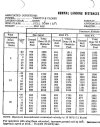
I've been looking through planes for sale, looking up their tail numbers on adsb tracking sites to see what kind of real world performance they're seeing. Its been interesting. Also looking at POHs have helped me rule out some, specifically Mooneys. I love living close to my local airfield, but its runway is pretty short. With trees. While landing at full weight might never happen, having to be perfect with every landing to not run off the end ain't going to work.
- Joined
- Oct 16, 2019
- Messages
- 8,855
- Location
- Atlanta / Marietta
- Display Name
- Vintage Snazzy (so my adult children say)
- Home Airfield
- KPUJ
That's actually pretty smart, ahead of what many others would research.
I loved renting/flying the Tiger, but among other things the take off distance was just not what I was wanting.
I loved renting/flying the Tiger, but among other things the take off distance was just not what I was wanting.
- Joined
- Sep 25, 2019
- Messages
- 828
- Location
- Lancaster, Pennsylvania
- Display Name
- Rick A
- Home Airfield
- KLNS
Also looking at POHs have helped me rule out some, specifically Mooneys. I love living close to my local airfield, but its runway is pretty short. With trees. While landing at full weight might never happen, having to be perfect with every landing to not run off the end ain't going to work.
Can’t blame for passing on a Mooney for that runway with trees. Owned a few over the last 40 years and nearly 6000 Mooney hours and I wouldn’t base one there.
Home base should be comfortable and accessible during all but the worse conditions. There’s enough excitement in life without having to add perfect flight operations to the list of scare.
Pinecone
Final Approach
Your
But I found a good broker and should be good to go for a number of more years.
Just want to have the correct info out there for others that might want to keep flying retracts.
Your choice.Thanks for the additional information.
So if I'm 70 I can't get a new policy.
If I have a policy I can't change it / switch carriers, such as if the cost goes up substantially, etc.
Or if they do cancel me for some reason I won't be able to start another.
Or I might be able to keep the insurance at some rate until I quit owning the plane / quit flying.
For those who fly a retract past 70, great for all of you. It's still something I just don't want to have to deal with, and poking along in a fixed gear still works. Although yeah, I would like the speed a retract gives. And the altitude a turbo would give. And....
But I found a good broker and should be good to go for a number of more years.
Just want to have the correct info out there for others that might want to keep flying retracts.
UngaWunga
Pattern Altitude
- Joined
- Oct 27, 2014
- Messages
- 2,265
- Display Name
- UngaWunga
- Home Airfield
- 7B3
Bumping this thread as I'm actually looking instead of just browsing while paying attention in meetings.
Hard to find a Comanche with good avionics (newer than 1990s). Hard to find Debs or non-piano-keys V tails via OK avionics that don't have runout engines. Learning a lot about the variations in TBO in Continental engines, thanks to SIL98-9E.
Many decent looking Beeches with owners that don't have their logs scanned that are across the country and/or have single yoke controls. I'd need dual for initial flight training and any recurrent IFR training I may need in the future.
Y'all have scared me off of 182RGs, even though I think it'll fit exactly what I'm looking for.
Took a look at early Cirrus, but they're still expensive. Many with hidden costs of chute/rockets/line cutter refurbs in their near future and no WAAS.
Early Diamond DA40s have less useful load than the 172 I just sold. No idea what the hidden gotchas are on Diamonds yet.

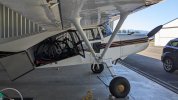
a 235 Hp Maule is also a good option. With the barn door on the right hand side, it's easy to load/unload bicycles. I have the 180 Hp MX-7 version and its speed is very close to the 172, but I have a 1,015 lb useful load (more than the 182s that are being suggested. The Maule M6 with the IO 540 can cruise at 140 kts, has a useful load of 1,000 lbs. and is cheap to operate and maintain. The back seat comes out by pulling 2 fast pins - no tools required. Here's my MX7-180C with a bike in the back. The MXT-7 is a nose dragger if you are tailwheel adverse, and it is also available with the IO-540 engine.

camorton
Pre-takeoff checklist
- Joined
- Nov 29, 2018
- Messages
- 282
- Display Name
- Craig Morton
The 182RGs are very popular planes, but personally I never saw the big advantage over the 210. The same systems to maintain/insure, but the 210 is faster, has more room and WAY more UL. Plus they don't have the gear saddle issue (there is an AD on the older flat-gear models built prior to 1970).
C.
C.

KLRDMD
Pre-takeoff checklist
Each airplane has advantages and disadvantages, of course. Some of the advantages of the R182 over the 210 are:The 182RGs are very popular planes, but personally I never saw the big advantage over the 210.
Four seats versus six; insurance is lower
Lycoming versus Continental engine
Higher-displacement engine making less HP, working less hard
Normally aspirated versus turbo; it is hard to find a late-model 210 that isn't a turbo
Carb versus fuel injection is cheaper to maintain
Essentially no prop management; it stays at 2,400 RPM the entire flight
UngaWunga
Pattern Altitude
- Joined
- Oct 27, 2014
- Messages
- 2,265
- Display Name
- UngaWunga
- Home Airfield
- 7B3
C210 had their own gear issues... https://www.tennesseeaircraft.net/2009/01/18/210-gear-doors-the-un-solution/

Wrench978
Pre-takeoff checklist
If you don’t plan on buying anything until the new year, I’ll be able to lend you a dual control for a bonanza. I’m moving to the Philly area once I get through some classes at the FAA academy.
flyingcheesehead
Taxi to Parking
- Joined
- Feb 23, 2005
- Messages
- 28,184
- Location
- UQACY, WI
- Display Name
- iMooniac
- Home Airfield
- KUES/KMKE
Bumping this thread as I'm actually looking instead of just browsing while paying attention in meetings.

If it's appropriately priced, these days that's not the worst thing. Rip the whole dang thing out and put in a two-screen Axis system, and you have better avionics than anyone, for a pretty reasonable price. In fact, it's almost better to have nothing worth saving now that the Axis displays have so much integrated in them.Hard to find a Comanche with good avionics (newer than 1990s).
We can scare you off from anything if you let us! So don't let us if it's the right plane.Y'all have scared me off of 182RGs, even though I think it'll fit exactly what I'm looking for.
I think you're probably right that it'd be a great plane for you. Full fuel payloads in the 725-750 pound range, can get off your short obstructed runway no problem, and will go 150 KTAS without a turbo and its operational/mx headaches. There probably isn't a more mission-capable bird in the GA fleet than the R182.
The early early ones (2001-2002) have less interior room and insufficient cabin ventilation. 2003 is when they hit their stride, with those issues fixed. From 2004, they all have had G1000.Early Diamond DA40s have less useful load than the 172 I just sold. No idea what the hidden gotchas are on Diamonds yet.
Unfortunately, that last one can be an issue because of the way G1000s work. They are certified as part of the airplane, not an STC, so Garmin doesn't "own" them as far as support, the OEM does. That has led to some issues with support especially in the older non-WAAS G1000s that were sold from 2004 up through 2007-8. While Garmin can write new software all day, the OEM has to approve it for it to be installable in the aircraft, and the OEMs don't really care about supporting old planes when they're trying to sell new ones, so new software doesn't get approved much. Our club had a 2006, and it had a GTX 345 installed but couldn't display TIS-B NEXRAD on the MFD because the software didn't support it; we had to get XM WX ($50/mo) for datalink radar.
So, if you're going to get a G1000 model, at the very least get one with WAAS (GIA 63W computers instead of GIA 63) and the Garmin GFC700 autopilot. Or, stick with a 2003 that had steam gauges and then you can put in whatever panel you want. Many of the modifications such as increased gross weight and increased landing weight that came from the factory on the newer planes are available as a retrofit to the older planes.
Most of the "gotchas" on DA40s, aside from the G1000 one noted above, are actually positives. For example, some people complain that you can't see fuel in the tanks when you open the fuel caps unless they're full, and if you want to physically check the fuel level you have to use a funny little contraption that you hold on the wing and connect to the sump. BUT... This is a good thing. You can't see the fuel in the tanks because the tanks are really long and skinny. The tanks are really long and skinny because they are made of aluminum and mounted between dual main wing spars. That makes them very well protected during crashes, and has contributed to the DA40's stellar safety record. So, while it's different and unusual, overall it's a positive.
(Go back and review post 94 in this thread for more, and I'd be happy to share more info about the DA40 if you're interested - It's a really great airplane.)
- Joined
- Oct 16, 2019
- Messages
- 8,855
- Location
- Atlanta / Marietta
- Display Name
- Vintage Snazzy (so my adult children say)
- Home Airfield
- KPUJ
Several planes do that, and for that reason alone I’d buy an older model. I wonder why manufactures just don’t certify the planes with the old steam gauges and make the Garmins of the world do the STCs for their equipment. Easy enough to sell a G1000 as factory installed “option”.Unfortunately, that last one can be an issue because of the way G1000s work. They are certified as part of the airplane, not an STC, so Garmin doesn't "own" them as far as support, the OEM does.