[NA]7/4/25 Central TX flooding

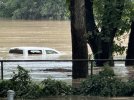
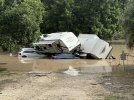
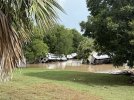
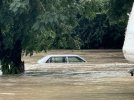
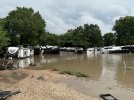
So on Saturday, the floods moved into our area, on the San Gabriel River. I was down there watching the flood water rise and heard the local news crew say they were heading to Shady River RV Park because they were being evacuated. I went down there to see if we could help, maybe throw some belongings in the back of my truck, etc. Quite a few people refused to leave. About four hours later, a wall of water came through. The fire department had to risk their lives to save these morons who were now sitting on the top of their RVs. I was mad and vocal about it. A lady accused me of victim shaming. I told her yes, that's exactly what I'm doing and I will keep doing it. They were victims for losing their belongings, there was not enough time to get all of the trailers out of there. If their lives were lost, they chose to take that risk.

To be very clear, this is not the same flood that cost so many lives in Kerr county and in no way do I think those people did anything wrong. They had no warning.

IMG_7885.JPG
IMG_7886.JPG
IMG_7887.JPG
IMG_7891.JPG
IMG_7892.JPG
 
I was with my mom out in that weather for one of those really bad flash floods in San Antonio. Pretty crazy, but yeah, this is not all that weird or actually unusual in the grand scheme of things, and the last 10 years of growth in Texas has probably exacerbated the situation with more habitation and resultant drain-off vs absorption / retention of water.
It's been bad as long as I remember. I moved to Central Texas in the early 90's. We're known for flash floods. The problem is, we haven't had one like this since the early 2000's so people don't seem to understand what flash flooding is. There's a video going around showing State Troopers watching a wall of water coming toward them near a bridge. The water took the pavement off of the bridge!
 
We lost a family friend who was also a pilot in the Wimberly flood maybe 8 years ago. In this one, we lost 4 somewhat distant inlaws. SWMBO opined earlier today that they need better systems for flood warnings around the rivers, but I'm wondering if people got NWS warnings on their phones and ignored them because "we're 10, 20, 30 feet above the river."

So, question for those in the area... Are there NWS warnings by phone for flash floods?
 
Yes, but cell coverage is limited, especially down in the valleys/canyons. We have held our family reunion the last two summers at Mo-Ranch in Hunt. Once you turn off the highway you basically don't have cell coverage.

And I have slept through the NWS warnings that come in the middle of the night here in the city.
 
So, question for those in the area... Are there NWS warnings by phone for flash floods?
Yes. As has been highlighted, these narrow hill country river vallyeys are notorious for reception dead spots. Some camps did the prudent thing and had lookouts through the night, and got their people out in time. The suggestion of having a NOAA radio has also been brought up, which is prudent, provided you keep a night watchman. It's how it was done in the days before cell phones.

As to the county preparedness issue, Kerr co commissioners are on public record scoffing siren and rainfall sensor measures on the basis of cost. In fairness, that myopia/reflex isn't unique to Texas conservatives.

Increasing carriage costs in all manners of living, and monetary debasement by national policy, will continue to wreck our standards of living and make anything worthwhile in this country not durable. Insurance non-renewals/go-away pricing in this area are going to consolidate things in pretty short order. Wronful death lawsuits will tie up the rest of it. Quantitative easing has consequences.
 
various news sources:

“That system was never built because commissioners were denied funding from state grants and there was public pushback.“


“Locals were concerned about the more than $1 million price tag. "People did not like the idea of sirens throughout the county,"

“Since 2016, Kerr County officials have pursued state and federal grants to upgrade their outdated flood warning infrastructure, including applications for a $1 million grant in 2017 and consideration of a $75,000 software-based system in 2025. These efforts were unsuccessful due to funding denials and concerns over the financial burden on local taxpayers.”

“Public opposition also played a role; some residents expressed concerns about the cost and potential noise from sirens, leading officials to remove sirens from the project plans. “
 
Adding to the above, by the time it got serious enough that folks needed to leave for higher ground, they’d have to get past the already flooded low water crossings in the middle of a torrential downpour. Now, there’s some complacency around the risk since every time it rains (we’ve been in drought since September of 2021) the river rises and some flooding occurs. But to get a year’s worth of rain in 90 minutes ain’t exactly predicable. For perspective, 100 billion with a B gallons of water fell on Kerr County overnight, not raising the river a few feet like normal, but 22+ feet in an hour. It’s been nearly 40 years since that’s happened here.

The cold hard truth is the only way to prevent deaths from flash floods is to prohibit human access to areas where a flash flood could occur because you can’t predict with enough certainty when or where they will occur.
 
The suggestion of having a NOAA radio has also been brought up, which is prudent, provided you keep a night watchman. It's how it was done in the days before cell phones.
Ask people in Hawai'i how effective sirens are when no official is available to flip the switch.
 
The cold hard truth is the only way to prevent deaths from flash floods is to prohibit human access to areas where a flash flood could occur because you can’t predict with enough certainty when or where they will occur.
Truth. The other thing that comes to mind for me is that if "people" want a warning system, they can use the NWS warning system via their smartphones and if their location is such that they don't have cell service, a NWS radio ain't expensive (like $30/ea). It would be far more responsible for those along the river (businesses and individuals) to take their own precautions as opposed to hoping big brother will shake a million dollars out of taxpayers to fund a system that only benefits those along the river.
 
various news sources:

“That system was never built because commissioners were denied funding from state grants and there was public pushback.“


“Locals were concerned about the more than $1 million price tag. "People did not like the idea of sirens throughout the county,"

“Since 2016, Kerr County officials have pursued state and federal grants to upgrade their outdated flood warning infrastructure, including applications for a $1 million grant in 2017 and consideration of a $75,000 software-based system in 2025. These efforts were unsuccessful due to funding denials and concerns over the financial burden on local taxpayers.”

“Public opposition also played a role; some residents expressed concerns about the cost and potential noise from sirens, leading officials to remove sirens from the project plans. “
Other side of that is that sirens aren't often heard indoors. They're used a warning to those who are outdoors already. Tornado sirens shouldn't be relied-upon to wake you out of a sleep, especially over the sound of rain/thunder. A NOAA radio in multiple locations would probably have been sufficient warning to anyone in harms way. When those alerts go off, it'll wake up anyone.
 
No matter the warning system, threats such as this in the early AM hours will always catch people off guard. Either they won't receive the alert, or won't hear the alert, or will not heed the alert in their drowsy state. I know I've slept through my fair share of alerts, and I receive multiple from all the different agencies I'm attached to. Even if they did, a half awake evacuation in the pitch black from a nearly invisible threat is also dangerous in its own right.

Add to it the amount of over hype and false activations of storm warning systems, many people choose to ignore them. Our county recently installed an all new tornado siren system centrally controlled by the county EMA. They have made it a policy to activate the sirens county-wide every time there is a warned thunderstorm with potential winds over 60 MPH. The sirens go off all the time now and no one pays attention to them anymore. The new system was even defective when first installed, the siren in my neighborhood would go off every time it got wet. Must have some exposed wires that were shorting out.
I bet that really irritates the local NWS folks. There was a fair amount of angst from some of the meteorologists in the Nashville area about the 'boy who cried wolf' syndrome due to different counties' approaches. You'd have sirens going off in areas of counties that were never in danger. I believe that got changed in the last 5ish years to use the polygons that's in the NWS warnings.

I can't imagine living in a thunderstorm-prone location and hearing a siren for 60 MPH winds, though. :rolleyes2: That's just another Tuesday in the summertime for much of the US.

Other side of that is that sirens aren't often heard indoors. They're used a warning to those who are outdoors already. Tornado sirens shouldn't be relied-upon to wake you out of a sleep, especially over the sound of rain/thunder. A NOAA radio in multiple locations would probably have been sufficient warning to anyone in harms way. When those alerts go off, it'll wake up anyone.
Our dogs even know what it means when our weather radio goes off. The one who's afraid of storms immediately barks and runs to one of us shaking in fear, even if it's still sunny outside. :)

The weather radio we have is also configurable so it only goes off for certain warnings, which I like. Basically, don't wake me up unless it's a tornado warning. If I lived in a flood-prone area I'd have that turned on as well.
 
I bet that really irritates the local NWS folks. There was a fair amount of angst from some of the meteorologists in the Nashville area about the 'boy who cried wolf' syndrome due to different counties' approaches. You'd have sirens going off in areas of counties that were never in danger. I believe that got changed in the last 5ish years to use the polygons that's in the NWS warnings.

I can't imagine living in a thunderstorm-prone location and hearing a siren for 60 MPH winds, though. :rolleyes2: That's just another Tuesday in the summertime for much of the US.


Our dogs even know what it means when our weather radio goes off. The one who's afraid of storms immediately barks and runs to one of us shaking in fear, even if it's still sunny outside. :)

The weather radio we have is also configurable so it only goes off for certain warnings, which I like. Basically, don't wake me up unless it's a tornado warning. If I lived in a flood-prone area I'd have that turned on as well.
Yup, same here. I don't have any warnings set to audio alert except Tornado Warnings (not watches). We aren't in any danger of floods due to being up on a hill, and I'm not worried about thunderstorms or other weather phenomena. As an Okie, we're usually pretty weather aware for tornado watches and such, so I only want to be alerted if there's one that's radar indicated within my 20-mile area.
 
As a kid, we had a weather radio, and we did the same thing - programmed it to alert audibly for tornado warnings for us and the surrounding few counties, especially southwest of us, and for severe thunderstorm warnings for our county only. We never got a true tornado, but we always got ready just in case. My dad was a weather "nerd", though, and we did all the Skywarn classes and learned about what the different types of clouds and what they might mean. Weather was something taken very seriously.

Our town had a siren as well that would go off for tornado warnings or watches, but often the wind would be blowing so hard you couldn't hear the siren at that point.
 
It would be far more responsible for those along the river (businesses and individuals) to take their own precautions as opposed to hoping big brother will shake a million dollars out of taxpayers to fund a system that only benefits those along the river.
well, insurance is about to make that "individual imperative" moot for most of them. Hill country was a bargain 30 years ago, no more. The whole country is getting economically priced out; see my prior comments on quantitative easing, and the theft that it is, while people sleepwalk into their own eventual gentrification.

And monied interests in hill country are the controlling interest in a place like Kerr County. It's not like it was some sort of tyranny of the poors (which they've largely been run out of the county by economic displacement anyways) that said no to the sirens. It was the recalcitrant NIMBY old money themselves; they should own that.

Of course, I say that in a TX-centric SM forum and I get tar and feathered. Which is fine, a Boricua/Sooner couple was never gonna be met with open arms in a place like Comal. They love to take my property and consumption tax money without complaint though, so there's that. Digressing.

My point being, the demographic opposed to the sirens included the riverfront asset holders in the first place. Read the county commissioner minutes, they're all over reddit.

Now I'm not gonna say FAFO, that would be considered uncouth since people have a natural sensitivity towards pediatric death ( I do as well). There's a clear element of lack of consent that surrounds the loss of life in a child, that we do consider different from fully consented adult choices.

My only point with that is, if we're going to argue that we have reached the mathematical limit of what is technologically possible when it comes to weather-related fatality mitigation (and many wx expert types have been interviewed in SM making that argument, it's not a novel point), then you are talking about FAFO then.

People should own that and stop hiding behind euphemistic pretenses. If they're not willing to say that, then they should allow the discussion about mitigation, and yes blaming too, to go forth in the interest of progress. I see both sides of the argument; I'm not advocating any position beyond calling out those who want to blame the victims under the banner of american individualistic morality, without saying they are doing just that, just because kids are involved. gtfo with that double speak.

I've been on record for years stating I defend people's right to die recreationally, because it would be hypocrisy for me not to given my own recreational interests as an American. But that is in the context of non-revenue activity. Start charging money and all bets are off in my book, I've also been consistent on that distinction.

 
Read the county commissioner minutes, they're all over reddit.
I was taken aback by a couple things in the transcripts, like when they said they didn't want to install the warning systems because the federal money that would have paid for them had been approved by a Democrat... And the admonition that "I'm just trying to keep us out of trouble here, okay? The media's still here." I read that as "we know we're doing the wrong thing, but we need to be able to pretend we did the right thing."
 
My only point with that is, if we're going to argue that we have reached the mathematical limit of what is technologically possible when it comes to weather-related fatality mitigation (and many wx expert types have been interviewed in SM making that argument, it's not a novel point)
I find it very hard to believe that the viewpoint that we know all that we can know about weather and that no improvement in weather forecasting and harm mitigation is possible is anything beyond a fringe viewpoint in the meteorological community. Frankly, I doubt almost any credible expert in any field would ever declare in good faith that there is nothing more to be learned or improved in their field.
 
I find it very hard to believe that the viewpoint that we know all that we can know about weather and that no improvement in weather forecasting and harm mitigation is possible is anything beyond a fringe viewpoint in the meteorological community. Frankly, I doubt almost any credible expert in any field would ever declare in good faith that there is nothing more to be learned or improved in their field.
Just to clarify, the statement in question was not "nothing else can be learned about the weather", the point that was being proferred and debated was "no additional loss of life mitigation can be achieved wrt flash flooding". And the latter was indeed a point made by others on here upthread, as well as on some podcasts I listen to which did include employees of the NWS.

Now in fairness, when interviewed, the NWS employee (offering his opinion outside his relationship to his employer, standard caveat we public peons are always expected to utter) offered it as an open question for pondering, not a definitive statement. And he made that rhetorical statement as a response to the interviewer offering examples from the current "individual morality" crowd making the criticism that focusing on sensors and sirens wouldn't have made an appreciable difference in the death rate.

I agree with your position that science pursued in good faith will always seek improvement and falsify prior invalid assumptions. And I do think it's indeed a worthwhile endeavor, even if it's stipulated that it's "uneconomical" to do so.
 
Tornado sirens shouldn't be relied-upon to wake you out of a sleep, especially over the sound of rain/thunder.
Depends on where you are. When I was much younger, I was driving myself cross-country to college in the east, and stopped for the night at some flea bag motel in a small town in tornado alley. Middle of the night, I was jolted awake by a deafening shrieking sound that could have woken the dead, or at least an overtired college student. I staggered outside to see a huge siren on a short tower just about directly over my room. With no obvious better place to go, I could only return to my room to wait it out.
 
Just to clarify, the statement in question was not "nothing else can be learned about the weather", the point that was being proferred and debated was "no additional loss of life mitigation can be achieved wrt flash flooding". And the latter was indeed a point made by others on here upthread, as well as on some podcasts I listen to which did include employees of the NWS.

Now in fairness, when interviewed, the NWS employee (offering his opinion outside his relationship to his employer, standard caveat we public peons are always expected to utter) offered it as an open question for pondering, not a definitive statement. And he made that rhetorical statement as a response to the interviewer offering examples from the current "individual morality" crowd making the criticism that focusing on sensors and sirens wouldn't have made an appreciable difference in the death rate.

I agree with your position that science pursued in good faith will always seek improvement and falsify prior invalid assumptions. And I do think it's indeed a worthwhile endeavor, even if it's stipulated that it's "uneconomical" to do so.
That’s a difference without a distinction imo. With new understanding of the fundamental phenomena at play, comes the opportunity to leverage that understanding into new and better technology and application. I’d wager that there were people back in the 50s and 60s willing to say that “planes or cars or <insert technology here> are as advanced and safe as they ever will be” and yet technology only continued to improve as we learned more about how cars, planes, and all other fields work. “People” claimed the Titanic was unsinkable and the zenith of naval design and safety, yet clearly that was absolutely not the case. I see no reason why the niche field of flash flood damage mitigation should be any different. We still have improvements and new technologies in the world of fasteners, something humanity has been making and using for centuries.

People in this thread are almost certainly not experts in this field in any way. The NWS employee, per your own words, was essentially conducting a thought experiment and not actually making that statement.

With respect to economics, there is no intrinsic aspect as to whether something is “economical or not economical”. Economics are only an expression of societal values and those can change and evolve. What is uneconomical today can be considered well worth it tomorrow, even if the cost hasn’t changed. Throw in lower cost and better returns from improved technology, the calculus can and often does shift.
 
…With new understanding of the fundamental phenomena at play, comes the opportunity to leverage that understanding into new and better technology and application…
I don’t disagree; what has to be overcome is human behaviors. Let’s take fairly predictable weather event - hurricanes - and no matter how dire the threat nor the lead time, there will still be those who choose to stay behind. Hell, there’s some who choose to go to the impacted area just to ride it out.

Local agencies have tried to forcibly/mandatorily evacuate folks without success; technology won’t change that.
 
Local agencies have tried to forcibly/mandatorily evacuate folks without success; technology won’t change that.
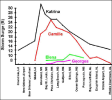
Hurricane Katrina killed 1400 people. The majority of them had plenty of warning, but refused to leave. Some couldn't leave due to health reasons, but most just chose to ride it out. Their mentality: We've always survived before. Why would we leave and return to find our house looted?
 
Hurricane Katrina killed 1400 people. The majority of them had plenty of warning, but refused to leave. Some couldn't leave due to health reasons, but most just chose to ride it out. Their mentality: We've always survived before. Why would we leave and return to find our house looted?

I lived in Mississippi during Katrina. It was said that Hurricane Camille (1969) killed a lot of people in Katrina. Everyone on the Mississippi Gulf Coast considered Camille to be as bad as it could ever get, my house survived Camille, it will survive this.

That was not the case...

1752244680728.png
 
Hurricane Katrina killed 1400 people. The majority of them had plenty of warning, but refused to leave. Some couldn't leave due to health reasons, but most just chose to ride it out. Their mentality: We've always survived before. Why would we leave and return to find our house looted?
Possibly the only advantage that the poorer, lesser educated, and more menially* employed underclass has over the "experts" is having a ton of real world experience. Privileged, educated (so that they know "more and more about less and less"), "experts" with multiple viable choices often fail to comprehend that while the hoi palloi* don't use a formal system of logic to make "informed" decisions on a single topic (which would please the "experts"), their far less centralized decision making matrix includes all of the detrimental possible (or imagined) outcomes they are aware of (possibly only subconsciously).

In that context, taking the higher probability chance that a Cat 3 hurricane will not come ashore in Lake Pontchartrain and push all its water through your neighborhood after 3 Cat 5 hurricanes (Allen [1980] killed 281, Cammile [1969] 259, Opal [1995] killed 63) landed elsewhere . . . even Wilma, later in 2005, which was stronger yet killed only 52 . . . is far from indefensible. (Wrong, but not indefensible.)

*I hate auto-incorrect.
 
One great way to make people head warnings more is improving forecasting and modeling to better estimate the true expected impact of weather so there are fewer false positives (reducing alarm fatigue). That means more data, more research, and more development.

Technology doesn’t only mean warning systems. It can also mean building technology and infrastructure that better handles ever more frequent extreme weather events. Of course all that requires investment in our country for the betterment of all, so not likely to happen in the near future.
 
Technology doesn’t only mean warning systems. It can also mean building technology and infrastructure that better handles ever more frequent extreme weather events. Of course all that requires investment in our country for the betterment of all, so not likely to happen in the near future.
It also requires accepting the fact that the climate is changing (man-made or not), instead of resorting to rectal craniosis, and investing in the NWS instead of decapitating it.
 
One great way to make people head warnings more is improving forecasting and modeling to better estimate the true expected impact of weather so there are fewer false positives (reducing alarm fatigue). That means more data, more research, and more development.

Technology doesn’t only mean warning systems. It can also mean building technology and infrastructure that better handles ever more frequent extreme weather events. Of course all that requires investment in our country for the betterment of all, so not likely to happen in the near future.
It also means telling the news to keep their traps shut when they say every storm is "a storm of the century!" Forecasting has improved over the past 40 years, but we never had all this shelter in place, do not leave, do this do that, 30 and 40 years ago. While not a cause, even with the improved forecasting over the past few decades, all everyone has done is ratchet up the warnings even with getting more and better data. So then when it actually IS "impending doom" most people just say, "**** it, not this **** again."

As an aside to the betterment of all, who determines that? One of the NE states (VT or NH I think) had a number fatalities from car-deer accidents in a certain area. It was determined that it was due to displacement of mountain lions. So the deer population went up. and the accidents went up. The initial idea was to re-introduce mountain lions to the area, and they would reduce the deer population and 100 lives could be saved due to reduced crashes. HOWEVER, the down side to it was if there was a re-introduction, about 30 children could get picked off by the mountain lions as a tasty snack. We would be plus 60, but is that a betterment of all? Yes? No? No matter the answer, who determines whether it is or isn't. Granted your point was more toward the funding part of it, but who gets to determine what is for the betterment of all. Nothing comes without a cost.
 
Last edited:
It also requires accepting the fact that the climate is changing (man-made or not), instead of resorting to rectal craniosis, and investing in the NWS instead of decapitating it.

Not really; I’ve long said every weather prognosticator should be required to provide a batting average like accuracy of their forecasting. The gold standard is 100% accuracy with zero defects/false positives. For kicks and grins, let’s just call it five 9s reliability in forecasting and warning (location, timing, severity). Whether it’s a .gov solution or not, that kind of reliability gets adopted.

The next step is actually delivering the message in austere conditions and remote locations. Perfect forecasting and warnings not delivered is worthless. Then, even if the message is delivered, you have to overcome human behavior to ignore the message. Just assuming the message is sent doesn’t ensure the message is communicated and the call to action will be taken.
 
Not really; I’ve long said every weather prognosticator should be required to provide a batting average like accuracy of their forecasting. The gold standard is 100% accuracy with zero defects/false positives. For kicks and grins, let’s just call it five 9s reliability in forecasting and warning (location, timing, severity).

That requires a lot more real-time data. When you decapitate a weather agency and reduce their budget such that they can't launch enough weather ballons to gather real-time data, forecasting will suffer.
You start selling the frequency spectrum normally allocated for Earth resource satellites to mobile phone companies, impacting the quality of the data gathered from outer space, forecasting will suffer again.

News outlets blowing weather out of proportion in the name of ratings and ad revenue, don't get me started. I'd pass laws to take them off the air for days/weeks for each offence if I was king for a day.

Joe Public being clueless and uneducated doesn't help either. Forecast calls for a foot of snow, and when it doesn't happen they laugh at the forecaster. It never registers to them that all it takes is a minute shift on the weather front for that foot of snow to drop 50 miles away. All they see is "the weatherman was wrong again".
 
Last edited:
Joe Public being clueless and uneducated doesn't help either. Forecast calls for a foot of snow, and when it happens they laugh at the forecaster. It never registers to them that all it takes is a minute shift on the weather front for that foot of snow to drop 50 miles away. All they see is "the weatherman was wrong again".
Joe & Karen Public are definitely idiots. We have a local meteorologist that I think is new to the area and I really like him. He even laughs at himself when he misses the forecast. In this case, he predicted the flooding, but is hurting because he feels he didn't scream loud enough about it.

Before he knew it was going to flood, he predicted heavy rain that would be benefit the area lakes. Joe & Karen went after him for posting this insensitive post during a flood that was taking lives. He had to point out the post was before the flooding. Everyone wants to blame someone.

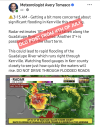
From Avery Tomasco: "This is the post that will probably haunt me most. 3:15 AM on the 4th of July. It was the moment I knew this wouldn’t be a normal flood. 10” of rain had already fallen over the Guadalupe River, and another 2-4” was still to come. The river was already rising into minor flood stage at this point, but would surge another 25 feet over the following two hours to its highest crest in recorded history. In those two hours, unimaginable scenes were unfolding as sleeping kids and families were waking up to their homes and cabins floating down the river. Some were lucky to survive, many others are no longer with us."

Screenshot 2025-07-11 at 2.07.04 PM.png
 
Sad that it takes something like this to highlight the importance for data gathering, modeling, forecasting, warning, and emergency preparedness. Not to mention the manpower and $ that’s required to do it well.
 
Sad that it takes something like this to highlight the importance for data gathering, modeling, forecasting, warning, and emergency preparedness. Not to mention the manpower and $ that’s required to do it well.
The people doing the cutting won’t learn or care. They are already deflecting and defending the cuts. There might be some bone thrown to the NWS to make a show but nothing of substance will be done to rectify the cuts. Even if they were, there is permanent damage done with the loss of talent, many of whom won’t come back out of retirement. We saw it before when they backtracked cuts in other agencies. In these specialized fields, there isn’t a ton of talent and a lot of institutional knowledge wrapped up in individuals that gets passed on when people leave on their own timeline and have the opportunity to foster and develop internal talent. When you suddenly cut people out of the org, none of that happens.
 
Sad that it takes something like this to highlight the importance for data gathering, modeling, forecasting, warning . . .
Sad, yes. The normal course of human history . . . again . . . yes.
 
Sad that it takes something like this to highlight the importance for data gathering, modeling, forecasting, warning, and emergency preparedness. Not to mention the manpower and $ that’s required to do it well.

And there will be another something again no matter the solutions provided. There’s a reason words like tragedy and disaster exist.
 
Also words like mitigation and preparedness. Also resignation.

I’m not resigned to nothing can be done; I am resigned to the limits of the ability to control human behavior.

As for mitigation and preparation, I’m not convinced every single thing can be fully mitigated or fully prepared for. If it were, there wouldn’t need to be parameters for ejection seats or CAPS and there wouldn’t be a loss of life associated with each, in parameter or not.
It didn’t seem to come close to “fully” in this case. I’m not ready to write off 100+ lives to “no matter the solutions.” Seems like a good time to review things so maybe it won’t happen again to someone else. Unfortunately that requires a lot of resources and participation in the process, both of which some folks are loathe to commit.
 
The one item not given equal discussion time are the numbers of people who did heed the warnings and either moved or monitored the situation in real time. If one were to look at most events of this nature, there are those who take heed and those that don't. No amount of technology or warning will ever fix that. And it doesn't matter if its a flood warning, forest fire warning, hurricane warning, tornado warning, and so on.
 
Back
Top