MOSAIC does NOTHING to lower the cost of GA

I've never known anyone with a piston single that ran their engine "at the edge of their performance limits" on a consistent basis. Are there really people out there running that way? Everyone I know is in the 65-75% power range. Heck, most of us don't even have the option of being on the edge because once we climb a few thousand feet there isn't enough oxygen to mix with the fuel to make that happen.
Might not be at the edge, but it's far beyond the demands on the car's engine.

I put a Subaru 2.2L in a Glastar. I have experience with this stuff. I'm also an aircraft mechanic, familiar with Lycs and Continentals, having worked on and flown many of both. What's your experience with LycCon maintenance?
 
reduce cost just to rent a plane and participate and you will will see a substantial increase in interest.
Not my experience at all. I’ve been assisting the younger generations find their path in the aviation industry for many years and have seen a shift away from legacy aviation. While I think MOSAIC’s changes will bring some back into the fold so to speak, I don’t see any surge comparable to the 70s or 80s. However, when the e-aviation side filters down to the recreational level, then I think you’ll see a surge and maybe even at the prices you claim with your E/E 172. Time will tell.
 
How many people would notice if their airplane engine wasn't making the specification horsepower on the specification fuel burn?

How many people would notice if their car engine wasn't making the specification horsepower on the specification fuel burn?
 
Might not be at the edge, but it's far beyond the demands on the car's engine.

I put a Subaru 2.2L in a Glastar. I have experience with this stuff. I'm also an aircraft mechanic, familiar with Lycs and Continentals, having worked on and flown many of both. What's your experience with LycCon maintenance?
Not sure why you felt the need to post your resume, given that we seem to agree that aircraft engines are not being run at the edge of performance.
 
I let a few local CFIs build time in it, they pay own gas ..two flew it to OSH this year at 4.7 gph about 80'ish kts ..they calculated a new efficiency matric of cruise speed....lowest time building cruise cost for flight time hungry CFIs.
Too many CFIs getting minted lately (2x previous decade run rate) anyhow. Is there another space where a newly certified professional mints the next class immediately?!

Any C120 or Luscombe 8E or C150 will do 80 or more knots on 5 gph all day. Don't need a 150k machine to do it in. Yeah, the interior is less nice. But you are still in the air, which is the point.
 
It sounds to me like one of the most effective ways to get any kind of worthwhile production out of a MOSAIC model would be for the puppy mills to get together and put out design specs…we need this combination of characteristics for the most effective primary training, that set of characteristics for the most effective instrument training, and the other set of characteristics in a multi trainer (although I’m not sure how well a multi trainer would work under MOSAIC.) Between them, they could generate a certain number of each per year for 5 or 10 years, and make worthwhile targets development and production.
This is a good idea.... on paper.

One could, right now, build any number of available designs and come in under the $100k/unit price. But there are some huge limitations. One being they are currently not able to be used for IFR training. Second would be that there are more than enough 172s/pipers out there for less than $100k available.

Why hasn't someone made a bolt for bolt copy of a 172? They are not patented, and are very well know quantities. You could do the same for an IO-360... the patents for them are long gone. You just can't call them Skyhawks or Lycomings. Heck you could even run them off 100% ethanol and save $2-4/gal on gas. Yes, there are STCs to run on 100% ethanol and yes, ethanol is a great fuel source.

An IO-360 powered 172 could make a very, very fine aircraft. All you need are the stamping dies and molds. Although I would personally prefer the lines of a 170B.

So, scrape together say $20MM for dies, materials, avionics and support staff and I'm sure you'll get 3, maybe even 4 mid sized Florida or AZ based flight schools as happy customers.
 
And what auto or truck engine runs at 100% power for ten minutes and then 75% for the next several hours? How long would they last if run like that? Cars typically cruise at maybe 30% power, max, after ten seconds of 60% power for acceleration.

Cars are not airplanes. Airplanes are not cars. Making comparisons that ignore the vast differences in operating parameters is just foolishness.

Not this again. You cannot take on road vehicle engines, maintained by random jabronies and derive any sort of conclusion. Looking at the EAB arena is also hit or miss. I can list car motors that ran for THOUSANDS of hours in airplanes becuase they were properly designed and installed.

Face it, a new $60k lycoming, if it makes it past 500 hours, is gonna start needing cylinders and unless flow regularly, a teardown for a new cam. Magneto's need to be (at $500 or more a pop) inspected IRAN at 500 hours because we KNOW they break.. but hey spending $1000+ on mags is normal. LOL Leaded fuel will stick valves, foul plugs and makes the oil turn to sludge.... but THOSE repairs are not even a second thought.

Certificated motors are kept alive with cash and owner niativity.

There currently is a LEAST one STC for a LS motor in a 172. Many other car motor airplane installs are in Expirimental Exhibition not becuase they are expirimental, but the cost of an STC is prohibitive (SeeBee for one).

Also the DA40 is using car motors and no one is complaning.

So hows about not repeating uninformed old wives tales and actually look at the current state of auto engines. And if you think an LS1 or a Pentastar can't make 200-300 continuously out of the box then I KNOW you are uninformed.

From the book "Corvette C5" by Mike Mueller, "Out of the Car, two Gen III V-8s were run on dyno stands at full throttle for 50 hours with no complaints. Although that achievement met GM specifications, Gen III Chief Engineer Ed Koerner was not convinced; he raised the bar to 260 hours for two more LS1s, then 520 for a single engine. When torn down after its dizzying run, that latter V-8 reportedly looked like new inside."

That's 21 2/3 days at full throttle ! Pretty amazing.

From the book, "ALL CORVETTES ARE RED" by James Schefter.

Page 356, ". . . they all developed between three hundred thirty-eight and three hundred forty-five horsepower for every minute they were running."

and "Every one of those engines looked absolutely new when we tore them down,"

Newsweek http://www.newsweek.com/id/237905 The CEO of Hyundai USA, John Krafcik said in his interview: "For example, right now every Hyundai engine goes full-throttle red-line for 300 hours on a test stand."

(just to clairify just the development engines are tested this way, not every production motor -pf)

What would you rather have, an engine you MIGHT need to rebuild every 1000 hours (that's about 5-10 years for the average VFR-PPL) at a cost of $2000-4000 or a lycosaur that MIGHT go 2000 hours but would need $4000 in mag rebuilds (2000/500 * 2 * $500) at least 1 cylinder replaced $1500+, $200+ oil changes every 20-50 hours?

 
Doesn't sound like any of y'all have ever actually manufactured anything for real.

100k to build a 172 clone? Copy a 172 rivet for rivet? (almost no bolts in a 172, so there's a tell already).

All you need is dies and molds? Have you ever order a simple mold for a small part. Talking 15 to 50k per part! Dies - you probably mean forms.

IO-360 powered Cessna 172 is available today from Cessna, COD. About 650k. That's the cost of hand built American skilled labor. Yeah there's profit in there, but not very much I suspect.

If Cessna can't make a 200k 172 today, damn sure the average Joe, even copying the airplane exactly, won't be able to get anywhere close.

There's barely a difference between Cessna hand making a 172 in Independence and you making an RV-8 in your garage, except that Cessna has more special tools, forms, a few dies, and jigs all ready to go. You'd have to make them the first time.

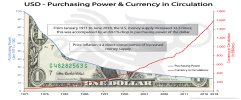
FWIW, that 650k Cessna 172 was about 200k 25 years ago. This is my favorite true inflation metric, because it is an all-US built and sourced product. So about 250% inflation in 25 years. As opposed to maybe about 100% "official" rate - that's with offshoring and cheaper overseas labor. Not much of that for a 172.
 
Not my experience at all. I’ve been assisting the younger generations find their path in the aviation industry for many years and have seen a shift away from legacy aviation. While I think MOSAIC’s changes will bring some back into the fold so to speak, I don’t see any surge comparable to the 70s or 80s. However, when the e-aviation side filters down to the recreational level, then I think you’ll see a surge and maybe even at the prices you claim with your E/E 172. Time will tell.
Presuming you mean electrically powered, the current state of the art in battery technology just isn't there yet.


I understand one of the selling points of electric cars is full torque at any speed. Isn't that benefit wasted turning a propeller through air?
 
Too many CFIs getting minted lately (2x previous decade run rate) anyhow. Is there another space where a newly certified professional mints the next class immediately?!
Isn't that a reflection of the pig working its way through the snake? CFI is just a stop on the train to airline cockpit. Send a bunch of ab initio pilots into one end of the tube, you're going to see a bulge in CFIs along the line.

As to toddlers teaching babies to walk, I thought that is precisely how the military does it (being a big influence on why civil aviation does it the same way).
The military uses the very best pilots as the next teachers - not so much in the civilian world.

The airlines must have unbelievable training programs or the airplanes don't need real pilots to fly them based on what I see going out there at a very busy training base.
 
Presuming you mean electrically powered, the current state of the art in battery technology just isn't there yet.


I understand one of the selling points of electric cars is full torque at any speed. Isn't that benefit wasted turning a propeller through air?

Then why do a lot of turboprops have torque gauges? On a constant speed prop airplane there is definitely torque involved. As the rpm increases so does the pitch to keep it in check.
 
Why hasn't someone made a bolt for bolt copy of a 172?
They have. There was one out of Canada and one out of Brazil that I recall, but I believe it was a 180 clone. End result too expensive build vs other options available.

Face it, a new $60k lycoming, if it makes it past 500 hours, is gonna start needing cylinders and unless flow regularly, a teardown for a new cam.
You do realize your average Lycoming or Continental run well past recommended OH hours? Do some specific models need cylinder work before then? Sure. But all in all how long an engine lasts is directly proportional to how it was broke-in and operated. For example, I knew a pipeline guy who consistently got 3000+ hours out of his engines. On the auto engine side, as mentioned previously, the only auto engines that come close to meeting the performance and safety standards as aircraft recips are purpose-built racing engines. And if you check the price of those race engines you'll see that Lycoming is still the better deal.

Presuming you mean electrically powered, the current state of the art in battery technology just isn't there yet.
The context of my post was only directed to what it would take to increase the participation on the recreational aviation side. However, considering at this point the 1st certified commercial eVTOL operation started this year overseas, they are finishing up the eVTOL operational certifications in a 2nd country, and both US based eVTOLs are about to start the final phase of the FAA type certification process, I believe the battery tech is sufficient for what your average recreational owner does today.

Regardless, I don’t believe these eVTOLs or the 2nd GEN eVTOLs will be available at the rec level for another 8-10 years. However, once the Joby and Archer become more mainstream, I think you’ll see smaller versions similar to the Jetson1 hit the US recreational market. Even MOSAIC and Part 22 have made provisions for those e-aircraft to enter in service when that does happen. Interesting times in my view.
 
Last edited:
. And considering at this point the 1st certified commercial eVTOL operation started this year overseas, they are finishing up the eVTOL operational certifications in a 2nd country, and both US based eVTOLs are about to start the final phase of the FAA type certification process, I believe the battery tech is sufficient for what your average recreational owner does today.
Define "recreational".

There won't be anything resembling a e-plane that can duplicate the way I use my Bonanza within our lifetimes.

As noted above, the energy density just isn't there, and the laws of physics and chemistry effectively rule out battery-powered flight as anything more than a fringe novelty.
 
Define "recreational".
Privately owned, non-commercial or business use. The weekend warrior and burger clan. But I didn't state it would be a "plane." Again, the context of this is growing participation of the younger generations into that recreational group. So while it won't fit your specific needs at this point, from what I've seen and heard these younger folks tend to put more faith in drones than your Bonanza. And so far, the current use of eVTOLs has already shown they're beyond the fringe novelty stage with more examples to come in the next couple years.
 
Making comparisons that ignore the vast differences in operating parameters is just foolishness
foolishness? maybe we should have considered your points when designing our system.... even our GM engineer that worked on the GM engine we used would have benefited from your insight and wisdom. Or our team engineer from the boat industry that converts same V8 from auto to boat applications (which is even harder on engines than planes) ... I only wish you could of counseled us on the foolishness of our design before we even started. I would also pled you advise Continental and other certified diesel engine manufacturers that used MB car engines of your opinion and their foolish mistake, as well. Thank you for setting record straight.
 
"MOSAIC does nothing to lower the cost of aviation."
comparison.jpg
Realistically, how could it?
 
Then why do a lot of turboprops have torque gauges? On a constant speed prop airplane there is definitely torque involved. As the rpm increases so does the pitch to keep it in check.
Big radials also had torque gauges.
 
Face it, a new $60k lycoming, if it makes it past 500 hours, is gonna start needing cylinders and unless flow regularly, a teardown for a new cam. Magneto's need to be (at $500 or more a pop) inspected IRAN at 500 hours because we KNOW they break.. but hey spending $1000+ on mags is normal. LOL Leaded fuel will stick valves, foul plugs and makes the oil turn to sludge.... but THOSE repairs are not even a second thought.
OK. so now we know that you have NO real experience in maintaining aircraft engines. As the Director of Aircraft maintenance for a flight school, I bought numerous Lycoming overhauls and ran them to TBO with NO cylinder work at all. No cam or lifter work either. I estimate about 35,000 hours of air time during my time in that position.
What would you rather have, an engine you MIGHT need to rebuild every 1000 hours (that's about 5-10 years for the average VFR-PPL) at a cost of $2000-4000 or a lycosaur that MIGHT go 2000 hours but would need $4000 in mag rebuilds (2000/500 * 2 * $500) at least 1 cylinder replaced $1500+, $200+ oil changes every 20-50 hours?
I ran across many engines with ~1500 hours on them that had last been built or rebuilt 40 and 50 years earlier. I found mags that had not been opened in 1700 hours.

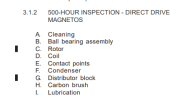
And you STILL don't know the manufacturer's requirements for magneto work. Both Slick (Champion) and Bendix (TCM) specify 500-hour INSPECTIONS, not overhauls. The mag is overhauled at engine TBO. The 500-hour inspection doesn't need to be inexpensive., but ignorant mechanics take them off and send them to a mag shop and ask for an overhaul because they have not read the relevant stuff. The airplane owner gets shafted.

From the Slick 4300/6300 magneto manual, the inspection requirements:

1765328567577.png

Note that this stuff is only replaced if it needs to be. Otherwise, it's just inspected and tested where applicable. I did them, using the manual as the reference and quoting it as approved data in the maintenance release. Sure didn't cost $500 per.


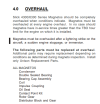
For an overhaul:

1765328493820.png

Almost everything other than the case, rotor and drive gear gets replaced. It's almost a completely new mag and it's expensive, AND TOTALLY UNNECESSARY AT 500 HOUR INTERVALS.
 
Define "recreational".

There won't be anything resembling a e-plane that can duplicate the way I use my Bonanza within our lifetimes.

As noted above, the energy density just isn't there, and the laws of physics and chemistry effectively rule out battery-powered flight as anything more than a fringe novelty.
I read the same comments here about electric cars when they first came out. They are practical now.
The batteries won't fully replace gasoline (or Jet A) in aviation, but they just need to be good enough for a couple of hours local flying to be useful for a lot of people.
Current E-aircraft aren't there yet, but it appears they are using older battery technology too.
 
I read the same comments here about electric cars when they first came out. They are practical now.
The batteries won't fully replace gasoline (or Jet A) in aviation, but they just need to be good enough for a couple of hours local flying to be useful for a lot of people.
Yes, because they could increase the weight of the vehicle substantially to use batteries. Nearly a ton of batteries to replaced about 120 to 150 pounds of liquid fuel.

Even a couple hours duration in an electric will probably head butt the laws of physics. A Bonanza has 74 gallons of fuel. Call that 450#. Gonna need around 2000# of batteries to have even a couple hours range. Cars cruise around 10-20 hp at most once at speed; aircraft like a Bonanza around 200 hp continuous.
 
Nearly a ton of batteries to replaced about 120 to 150 pounds of liquid fuel.
And that battery limitation is why you see such movement to increase the hybrid-propulsion offerings. While the initial eVTOL designs meet the required performance goals with batteries only, the Gen2 versions and some eSTOL designs use turbo-generators to supply the main electrical power with only a nominal battery pack. However, that weight increase is offset by the increased efficiency of the propulsion unit. Plus it provides a certain level of scalability for future designs.
 
MOSAIC gets us one step closer to the FAA getting out of a business they should have never started in to begin with. Any step where medical decisions are made by qualified doctors and not some moron in OKC that has never even seen the patient is positive

Long term, the savings come from having more pilots wanting to fly, temporarily increasing demand on the curve, until supply catches up. Then you have real competition possibilities.

But savings is not what gets me excited about MOSAIC. Being able to fly whether someone who only loosely qualifies as a doctor sees my medical information or not is much more beneficial. BasicMed got us close. MOSAIC is closer. Driver's license private is where the marker should land once we get a competent FAA administrator
 
And that battery limitation is why you see such movement to increase the hybrid-propulsion offerings. While the initial eVTOL designs meet the required performance goals with batteries only, the Gen2 versions and some eSTOL designs use turbo-generators to supply the main electrical power with only a nominal battery pack. However, that weight increase is offset by the increased efficiency of the propulsion unit. Plus it provides a certain level of scalability for future designs.
Hybrid design make zero sense in weight-critical applications. Why would anyone accept the weight penalty of duplicating both the motor/engine and the fuel storage? Maintenance cost and complexity?

Let's walk through the math. Cap'n Jack said above that a 2-hour range is the target. I disagree strongly given that this is a lot shorter than the range of the majority of GA planes, but it will serve as an example.

2 hours of fuel in my IO-470 Bonanza is about 23 gallons (140 ktia, LOP). That's 138 lbs., which transates to about 806 kWh of energy (12.86 kWh/kg).

The equivalent Li-Io battery weight for 806 kWh of energy would be in the range of 3224 lbs. (4 kg/kWh).

Even if you could claim a 100% increase in conversion factor, you would be at 1612 lbs vs. 138 lbs. That's additional 1474 lbs, which is more than nearly any of the most common light airframes can carry.

Next, add in the fact that as we burn fuel, our planes get lighter, improving our efficiency along the flight. No such efficiency gain exists with batteries, meaning that we would always be landing at full takeoff weight. Does anyone think that this is a good idea?

Even if beef up the airframe to hold that massive extra weight, you have removed the ability to adjust fuel load to accomodate payload weight.

Then there is re-charging time.

The math for e-planes simply doesn't work - it doesn't even come close.
 
And that battery limitation is why you see such movement to increase the hybrid-propulsion offerings. While the initial eVTOL designs meet the required performance goals with batteries only, the Gen2 versions and some eSTOL designs use turbo-generators to supply the main electrical power with only a nominal battery pack. However, that weight increase is offset by the increased efficiency of the propulsion unit. Plus it provides a certain level of scalability for future designs.
How does hybrid help for aircraft? In cars, a substantial part of the their advantage is the infinite torque at zero speed, which greatly helps improve efficiency in the worst part of the gas engine curve - the 0 to 5 or 10 mph start. Also helps with acceleration when at speed for the same reason. Thought that was why unlike gas vehicles, hybrids often have better mileage in the city (stop and go) than on the highway, the inverse of a gas vehicle.

Aircraft only stop and go once per flight.
 
Hybrid design make zero sense in weight-critical applications. Why would anyone accept the weight penalty of duplicating both the motor/engine and the fuel storage? Maintenance cost and complexity?
One reason that might pencil out would be to have a less powerful three or four cylinder engine for cruise, but boosted by an electric motor during takeoff. So the takeoff power of a 260hp io540, but the weight of a 90-100hp smaller engine a small battery, motor and a motor coupling.
 
Last edited:
Yes, because they could increase the weight of the vehicle substantially to use batteries. Nearly a ton of batteries to replaced about 120 to 150 pounds of liquid fuel.

Even a couple hours duration in an electric will probably head butt the laws of physics. A Bonanza has 74 gallons of fuel. Call that 450#. Gonna need around 2000# of batteries to have even a couple hours range. Cars cruise around 10-20 hp at most once at speed; aircraft like a Bonanza around 200 hp continuous.
It's helpful to actually read my reply. You are comparing apples to oranges. Your post is like saying "electric cars are impractical because they don't do the same as my pickup truck". I really don't care that you fly a bonanza. I'm happy with a plane that flies slower, 100 to 120 knots, and I'm happy with 2 1/2 hours (2 hours plus VFR reserves), with a ten minute recharge. Going from 250 knots for a Bonanza to 125 knots reduces the drag to 1/4 that of the bonanza. Reducing the range from 900 nm to maybe 300 also reduces the energy needed to be carried on board. I only need 2 seats, but I don't expect any efficiency because I'll replace the weight of the passengers with batteries.
Using modern batteries, solid state and other developments, will reduce the weight further. They are just getting into automobiles now, giving over 600 miles range on a single charge of 10 minutes (or less) on a car you can buy now, if you don't live in the USA. You did read that we won't get there with current batteries that we currently use on planes, didn't you?
I think that an E-airframe the size of a C-172, two seats, could suit my kind of flying. This probably would carry the batteries and make the speed and range that I want. I'm not going to assume that most people have the same needs as I, but note that most EAB aircraft are two seaters. A lot of them fly at the same speed that I specified.

I don't see a certificated plane, in the traditional sense, being affordable enough but one built to ASTM standards might work as MOSAIC extended the parameters for such planes.

This plane exists, but it doesn't have the range, speed, or charging time I want:
It needs modern batteries, and perhaps near-post-modern batteries, to get there.

While the initial eVTOL designs meet the required performance goals with batteries only, the Gen2 versions and some eSTOL designs use turbo-generators to supply the main electrical power with only a nominal battery pack.
eVTOL (or any VTOL) is rather inefficient in range and speed compared to an airplane that can carry the same payload with the same power.
 
One reason that might pencil out would be to have a less powerful three or four cylinder engine for cruise, but boosted by an electric motor during takeoff. So the takeoff power of a 260hp io540, but the weight of a 90-100hp smaller engine a small battery, motor and a motor coupling.

So a 400 lb O-540 (avg) vs a O-235 which is 250 (avg). Now add in that small battery, electric motor and a system to integrate it and............where's the weight savings? o_O
 
So a 400 lb O-540 (avg) vs a O-235 which is 250 (avg). Now add in that small battery, electric motor and a system to integrate it and............where's the weight savings? o_O
What's the weight e-train? 25 lbs for the battery? 25 for the motor and mount? that would save 100lbs if it can be done.
 
What's the weight e-train? 25 lbs for the battery? 25 for the motor and mount? that would save 100lbs if it can be done.
How much for the mechanism to drive the prop from the electric motor? I would assume this will be automatic, so how much for the wiring? Additional battery cables? Computer? Brackets? Plus the gas engine will need modifications.

The battery. You are assuming an additional battery will provide enough power to make up for the lost hp of a bigger engine?
 
The dry, no accessories, weight of a 300 HP IO-540-K1A5 is listed at 438 pounds. The dry, no accessories, weight of a 80 HP Rotax 912 is listed at 130 pounds. Using such an engine in a hybrid would save 298 pounds. But at the cost of a far heavier, and far more complex, hybrid operating system.

More power to those who push technological innovation. But, at the current (punny) state of battery technology, even the small electric motors used on ultralights and sustainers are much less efficient than internal combustion engines.
 
How much for the mechanism to drive the prop from the electric motor? I would assume this will be automatic, so how much for the wiring? Additional battery cables? Computer? Brackets? Plus the gas engine will need modifications.

The battery. You are assuming an additional battery will provide enough power to make up for the lost hp of a bigger engine?
For five minutes at take off, yes.
 
For five minutes at take off, yes.

Better do the math on this one.

So after 5 minutes take off power you are reducing hp by roughly 150. How are you going to climb to a reasonable altitude? Or you take off from a lower elevation and approach mountainous terrain, how much battery power to climb above it?

And what about a go around on landing? How much complexity will be needed for that? Or a CFIT event?
 
How does hybrid help for aircraft?
Because aircraft hybrid is completely different than auto hybrids. In aircraft the turbo-generator only provides electrical power to the props with zero mechanical interface. And while turbo-generators have been around aviation for decades its only been in the last 10 years or so were they are being scaled to provide primary propulsion power vs aux power. So a completely different dynamic than found in vehicles. For example, in its current use, the turbo-generator produces 75% of the power and the battery pack supplies the additional 25% for take-off and landing. Plus while in cruise the turbo-gen recharges the batteries.

The math for e-planes simply doesn't work - it doesn't even come close.
Except the eSTOLs are flying now and most turbine engine OEMs are developing purpose built hybrid propulsion systems to meet the future demand.

eVTOL (or any VTOL) is rather inefficient in range and speed compared to an airplane that can carry the same payload with the same power.
Since VTOLs were never designed to replace airplanes there really is no comparison on an efficiency level except maybe at the STOL level.
 
Last edited:
Better do the math on this one.

So after 5 minutes take off power you are reducing hp by roughly 150.
Yes. Did you miss the entire point of my question? The entire point was whether there might be an approach to hybrid that had a benefit for take off.

How are you going to climb to a reasonable altitude?
More slowly after the e-boost is used up.

Or you take off from a lower elevation and approach mountainous terrain, how much battery power to climb above it?
Dunno. Different problem than the one I'm wondering about.
 
Since VTOLs were never designed to replace airplanes there really is no comparison on an efficiency level except maybe at the STOL level.
Agreed. That was why I broke out eVTOL from eAirplanes because someone won't make the distinction between them with respect to range. This one does surprisingly well:
~155 statute mile range (I don't know if they counted any reserve, or being a VTOL, whether the reserves are different, using USA rules. I forgot the reserve rules for helicopters).
~107 knots
~800 pound payload

This uses only electric power. I wonder if those wings help the range?
 
I would say that even though weight to thrust ratio and time aloft will always be factors in commercial or defense sector design viability, for recreational GA it still comes down to cost.

any new plane, electric or otherwise. will cost considerably more than feasible for rental fleet, clubs or personal use. Moreover, modernization of existing GA piston fleet remainsq
mostly economically infeasible due to cost of upgrade vs aircraft value. .example being things like Continental diesel cost over $100k for c172 or new glass cockpit with auto pilot being about $20k+.

current legacy fleet will remain basis for ga fleet for much longer for most of us, so evolving tech not likely to have much impact as fleet gets older and fewer, reducing RIO for those wanting to produce solutions for existing fleet. would suggest this should be focus for greatest impact. thus, I think the discussion of new aircraft tech coming will take a while to reach most of us not in expensive flight schools or have such disposable income to partake, is just not a practical concern. hope I'm wrong.

I make a decent living but cringe paying $160-175/hr for a SE...$300-$350/hr for a twin trainer , and $500 for a cabin class twin rental. that's why many like me went experimental.
 
Back
Top