MOSAIC does NOTHING to lower the cost of GA

For five minutes at take off, yes.
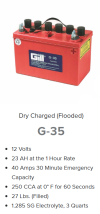
Out of a 25-pound battery? Even a Gill G-35 battery, common in many aircraft for starting, weighs 27 pounds, at it sure doesn't store much power. It's not going to help the airplane take off. Maybe a lithium battery at 25 pounds might help a little, but not for 50 HP for ten minutes or whatever.

We don't see such systems flying, and there are hard reasons for that.
 
25 lb battery? That will get you about 10-15 seconds of max power.
I started to look at how much power would be consumed to provide a worthwhile climb and quickly ran into a problem. Even before battery weight, the power handling system looks like it has to be able to move 110kw of power from storage to motor to make up for the missing 150hp. Seems likely the cabling and management will eat up a lot of our weight savings. Then you have to decide how many batteries. 10-15 seconds seems like it's in the ballpark. 20-30 seconds could turn a 100HP into a STOL contender, but costs another 25lbs in battery life. And if we're not at break even at this point, it's getting pretty tight.
 
I started to look at how much power would be consumed to provide a worthwhile climb and quickly ran into a problem. Even before battery weight, the power handling system looks like it has to be able to move 110kw of power from storage to motor to make up for the missing 150hp. Seems likely the cabling and management will eat up a lot of our weight savings. Then you have to decide how many batteries. 10-15 seconds seems like it's in the ballpark.
Yes, it is in the ballpark. My day gig is energy systems R&D.

The laws of physics are not kind to the snake oil being sold in the e-flight market space.
 
Yes, it is in the ballpark. My day gig is energy systems R&D.

The laws of physics are not kind to the snake oil being sold in the e-flight market space.
Let's say the goal is to apply boost power for a minute. Our modern 25lb battery has about a sixth of that. So, I started looking at a few energy density graphs for batteries. Looks like it's taken about 40 years for batteries to improve by a factor of six. So I'm going to tag this thread in my calendar for 2065 and we can see if it's any more plausible.
 
I started to look at how much power would be consumed to provide a worthwhile climb and quickly ran into a problem. Even before battery weight, the power handling system looks like it has to be able to move 110kw of power from storage to motor to make up for the missing 150hp.
A Gill G-35 is a 23-amp-hour battery. That means it can theoretically deliver 23 amps for one hour at or around 12 volts. That is 276 watt-hours, or 0.276 kwH. If we draw much more amperage, we won't get the 23 amp-hour rating. Double the draw and we'll get much less than a half hour.

0.276 kwh is equivalent to about one-third of one horsepower. The battery can start the engine because it can deliver the necessary 200-250 amps for a few seconds, but it's not going to fly anything. We need far more capacity, so we need really light batteries with huge capacities.

1765391825697.png
 
A Gill G-35 is a 23-amp-hour battery. That means it can theoretically deliver 23 amps for one hour at or around 12 volts. That is 276 watt-hours, or 0.276 kwH. If we draw much more amperage, we won't get the 23 amp-hour rating. Double the draw and we'll get much less than a half hour.

0.276 kwh is equivalent to about one-third of one horsepower. The battery can start the engine because it can deliver the necessary 200-250 amps for a few seconds, but it's not going to fly anything. We need far more capacity, so we need really light batteries with huge capacities.
Or maybe capacitors instead of batteries. It's gotta be related to the reason so called 'capacitor batteries' have found success in jump packs for cars.
 
If you are dead set on electric boost for take off I think the best way with current tech is a water tank, heating element, and rocket nozzle (steam rocket). Plug it in heat up the water, then blast it out the back on take off so you only have to carry the weight of the tank and not a super heavy battery it would take to give equivalent power levels

 
This uses only electric power. I wonder if those wings help the range?
I don't know much about the Auto Fight or another similar design the Beta Alia, however, the wings on the Joby and Archer do contribute to the range and forward flight efficiency. So I would assume the same for those designs.

thus, I think the discussion of new aircraft tech coming will take a while to reach most of us
I think in the next 5 years we will see which direction the new aircraft tech will take especially toward the recreational level. But there will always be a place for the legacy fleet regardless how the industry evolves. However, the big unknown is still the real effect of the eVTOLs, etc. on the industry and market.
 
Hybrid design make zero sense in weight-critical applications. Why would anyone accept the weight penalty of duplicating both the motor/engine and the fuel storage? Maintenance cost and complexity?

Let's walk through the math. Cap'n Jack said above that a 2-hour range is the target. I disagree strongly given that this is a lot shorter than the range of the majority of GA planes, but it will serve as an example.

2 hours of fuel in my IO-470 Bonanza is about 23 gallons (140 ktia, LOP). That's 138 lbs., which transates to about 806 kWh of energy (12.86 kWh/kg).

The equivalent Li-Io battery weight for 806 kWh of energy would be in the range of 3224 lbs. (4 kg/kWh).

Even if you could claim a 100% increase in conversion factor, you would be at 1612 lbs vs. 138 lbs. That's additional 1474 lbs, which is more than nearly any of the most common light airframes can carry.

Next, add in the fact that as we burn fuel, our planes get lighter, improving our efficiency along the flight. No such efficiency gain exists with batteries, meaning that we would always be landing at full takeoff weight. Does anyone think that this is a good idea?

Even if beef up the airframe to hold that massive extra weight, you have removed the ability to adjust fuel load to accomodate payload weight.

Then there is re-charging time.

The math for e-planes simply doesn't work - it doesn't even come close.
Not for a Bonanza style aircraft with a Bonanza style mission. I've done the math too, for my airplane to have its equivalent capability in terms of power over time, the battery alone would weigh more than my MGTOW.

For a trainer, maybe. For eVTOL intra-city air taxi, we'll see. If nothing else, we'll see whether massive piles of investor cash get us anywhere with battery, motor, and autopilot tech.

How does hybrid help for aircraft? In cars, a substantial part of the their advantage is the infinite torque at zero speed, which greatly helps improve efficiency in the worst part of the gas engine curve - the 0 to 5 or 10 mph start. Also helps with acceleration when at speed for the same reason. Thought that was why unlike gas vehicles, hybrids often have better mileage in the city (stop and go) than on the highway, the inverse of a gas vehicle.

Aircraft only stop and go once per flight.
A car-style hybrid doesn't help an aircraft in terms of efficiency. But, an electric motor doesn't lose power as you climb, and if you have a battery that's good for, say, 20 minutes on its own, an engine failure becomes nearly a complete non-event - Engine fails, you divert to the nearest airport and land safely. Efficiency isn't the only reason for electrification.

That said, it's not going to happen with our traditional airplanes. STCs are just too expensive, and there aren't very many existing aircraft types that are out there in numbers large enough to justify the cost of an STC. 172, SR22, maybe... And as I said, the mission of the SR22 does not lend itself to electrification.

A Gill G-35 is a 23-amp-hour battery. That means it can theoretically deliver 23 amps for one hour at or around 12 volts. That is 276 watt-hours, or 0.276 kwH. If we draw much more amperage, we won't get the 23 amp-hour rating. Double the draw and we'll get much less than a half hour.

0.276 kwh is equivalent to about one-third of one horsepower. The battery can start the engine because it can deliver the necessary 200-250 amps for a few seconds, but it's not going to fly anything. We need far more capacity, so we need really light batteries with huge capacities.
...which is why nobody is talking about doing this with dinosaur Gill batteries. FWIW, even if you're just looking at starting batteries, the EarthX is 12 pounds.
 
I don't see a certificated plane, in the traditional sense, being affordable enough but one built to ASTM standards might work as MOSAIC extended the parameters for such planes.

This plane exists, but it doesn't have the range, speed, or charging time I want:
It needs modern batteries, and perhaps near-post-modern batteries, to get there.
The most sorted e-plane doesn't have the most modern batteries?! Or maybe really needs the post-modern ones. Certainly is absolutely ok for the lovely afternoon jaunt of 40 minutes, grant you that. Often that's all that one needs to enjoy the freedom of the sky. But only higher energy density batteries will increase the endurance, since will quickly run into the squared vs. cubed laws that lurk behind so many scalings. Maybe in ten years it'll have the two hour range, who knows. Won't be much cheaper I suspect than other new airplanes.
 
Doesn't sound like any of y'all have ever actually manufactured anything for real.

100k to build a 172 clone? Copy a 172 rivet for rivet? (almost no bolts in a 172, so there's a tell already).

All you need is dies and molds? Have you ever order a simple mold for a small part. Talking 15 to 50k per part! Dies - you probably mean forms.

IO-360 powered Cessna 172 is available today from Cessna, COD. About 650k. That's the cost of hand built American skilled labor. Yeah there's profit in there, but not very much I suspect.

If Cessna can't make a 200k 172 today, damn sure the average Joe, even copying the airplane exactly, won't be able to get anywhere close.

There's barely a difference between Cessna hand making a 172 in Independence and you making an RV-8 in your garage, except that Cessna has more special tools, forms, a few dies, and jigs all ready to go. You'd have to make them the first time.

FWIW, that 650k Cessna 172 was about 200k 25 years ago. This is my favorite true inflation metric, because it is an all-US built and sourced product. So about 250% inflation in 25 years. As opposed to maybe about 100% "official" rate - that's with offshoring and cheaper overseas labor. Not much of that for a 172.
You didn't read (or understand) my post. Next time breathe, count to 10, then reread.

I said SELL for $100k. I said 'Start with $20MM' (that millions).

You don't need to design all the parts.

Once the dies are made the cost per unit goes way down. Making a die is not prohibitive, finding a market that would want 200 $100k NEW, LSA 172's with a LS engine would not be difficult. What would a 180hp or 200hp 172 be like? Amazing would be the answer

Quiet Aviation was offering an LS-1 STC but apparnetly that may or may not be available.
 
The most sorted e-plane doesn't have the most modern batteries?!
I don't understand this sentence. Guessing the meaning; no, it doesn't have the most modern batteries. Not with a charge time of 1:20 hours. As I posted earlier, existing modern car batteries have a range >600 miles in a sedan, and charge in ~10 minutes. You can't buy or charge them in the USA. There are better batteries that will be available Real Soon Now, but that could mean years.
Maybe in ten years it'll have the two hour range, who knows. Won't be much cheaper I suspect than other new airplanes.
Given my experience of adding fairly simple features to a product, ten years sounds about right. You are probably right about the price, and to keep the cost down, it will probably be certified under ASTM

This doesn't count the infrastructure to charge the plane quickly- it needs more current than most FBOs can provide, otherwise the flight radius is only an hour and it gets charged overnight in a hangar.
 
That said, it's not going to happen with our traditional airplanes. STCs are just too expensive, and there aren't very many existing aircraft types that are out there in numbers large enough to justify the cost of an STC.
I find it doubtful you could make any legacy aircraft <12,500lbs work with an electric conversion. Perhaps there might be a twin or two that could be viable, but to take full advantage of what an e-propulsion system offers it will require a purpose-built aircraft. And that is the route most up and coming OEMs have pursued. Personally, I believe it will be the eV/STOL type aircraft that will transform the private recreational market in due time vs sticking an electric motor on a 172 with a battery pack in the baggage compartment.
 
...which is why nobody is talking about doing this with dinosaur Gill batteries. FWIW, even if you're just looking at starting batteries, the EarthX is 12 pounds.
Yes. So we get a little more than twice the power per pound, if the amp-hour rating is the same as the Gill. But we need batteries that are ten times better, at least.
What would a 180hp or 200hp 172 be like? Amazing would be the answer
It's not amazing. The 172S and SP are 180-hp airplanes, and many of the 172R models (160HP) were converted to 180 HP via an RPM increase because 160 HP just couldn't cut it with the increased gross weight in the restart models. Even at 180 HP it's not spectacular. An older model such as the 172M, grossing at 2300, will benefit from an additional 30 HP, but it's still only 30 HP, and it shows up in better takeoff and climb but it's still no great performer. Cessna built the R172K for a few years, 2550 gross like the 172R/S, with 195 HP, and some of those got STC'd to 210 HP with an RPM increase. That airplane still only had a bit better climb rate and a bit more cruise speed.

The 182 is a much better bet, with 235 HP and constant-speed prop to maximize the engine's capabilities.
 
Or maybe capacitors instead of batteries. It's gotta be related to the reason so called 'capacitor batteries' have found success in jump packs for cars.
Capacitors have very limited capacity, which is why we don't see them used as batteries in vehicles. A capacitor stores energy in the form of static fields between the plates, so one needs huge plate areas. That's hard to achieve at the scales required. Batteries store energy in the form of chemical conversions and can carry far more power.

The jump pack has to provide a couple hundred amps for just a few seconds. Then it's dead.
 
I said SELL for $100k. I said 'Start with $20MM' (that millions).

You don't need to design all the parts.

Once the dies are made the cost per unit goes way down. Making a die is not prohibitive, finding a market that would want 200 $100k NEW, LSA 172's with a LS engine would not be difficult. What would a 180hp or 200hp 172 be like? Amazing would be the answer
If it was so easy and cheap, how come no one is doing it? Have you ever made dies? Have you ever built an airplane and flown it? It all takes much more time and money than you figured it would. I've been building things for nearly 60 years, and they always take at least twice as long as planned, and cost four times as much. Boats, airplanes, vehicle restorations, automated production machinery, jigs, dies, lots of stuff.
 
You didn't read (or understand) my post. Next time breathe, count to 10, then reread.

I said SELL for $100k. I said 'Start with $20MM' (that millions).

You don't need to design all the parts.

Once the dies are made the cost per unit goes way down. Making a die is not prohibitive, finding a market that would want 200 $100k NEW, LSA 172's with a LS engine would not be difficult. What would a 180hp or 200hp 172 be like? Amazing would be the answer

Quiet Aviation was offering an LS-1 STC but apparnetly that may or may not be available.
Yikes. No, I did understand your post, variants of it have been all over the press and now the net for the 40 years I've been flying. And another 40 years in manufacturing from 100% vertically integrated at times to 100% outsourced at times. With yearly Capex budgets sometimes much bigger than the 20M you propose to spend to build, populate, and start a factory to make 200 airplanes a year!

Have made dies, molds, forms, jigs, tooling, etc. Nothing you wrote shows slightest knowledge of manufacturing; not throwing an arrow, but facts are facts. No idea why you think a 180 hp C172 would be amazing - every restart is exactly that. Super nice airplane, hand built in the US from US parts, maybe 100 a year, sold for say 600k. Still only goes 110 to 115knots, but that's aerodynamics and physics.

Some math. It's fairly well known that the Cherokee was designed to be built with around 1500 man hours. Let's say the more complicated 172 requires 2000 man hours. You want to build 200 in a year. That's 400,000 man hours of labor. Let's say your fully burdened labor cost is $50/hour. You just spent your 20M on wages. Oh, and your gross income is also 20M at your 200 airplane 100k/airplane run rate. And you haven't paid a single vendor a penny, including the maker of the LS which gets trotted out every now and then as the salvation of the power plant. Most homebuilts aren't even fitted with an LS, and they can do whatever they want. Some folks in Canada spent years making a V8 for aviation before they gave up.

If it were easy and profitable, it would have already been done. Only Cirrus has succeeded and they left some investors high and dry along the way. Mooney is gone, and Piper has been bankrupt at least once, maybe twice. So only the Piper assets remained to carry on making a few trainers and some lovely much higher end pressurized piston singles and SETPs. Cessna builds business jets as their business - great product; they could probably quit making piston singles and the engines (Lycoming) tomorrow and it would barely do anything to their balance sheet. Already gave up on the Beech pistons last month.
 
If it were easy and profitable, it would have already been done.
Disagree - It could be "a little" profitable and nobody would do it except someone who's dedicated to the cause. People with $20M to invest aren't looking to make a 1% annual ROI.

To get that kind of investor money, there needs to be either a *really* solid chance of getting 20% or better, or at least a small chance of getting "FU" money a la tech startups. Nobody's going to put in $20M to get back 5%.

Occasionally, you do find someone with a crap-ton of money who will invest that way because it's something they want to support, but they're not doing it for the profit at that point.
 
One wonders what's the business model for those companies that are surviving making small planes... e.g. Carbon Cub, Legend (Cub), Aviat (Pitts, Eagle, Husky), Vashon (Ranger), WACO, Maule, a few others. Van's is now selling the RV-12 as a factory built SLSA in addition to their kit line. I know several if not all of them also do repairs and restoration (not just on planes they built) as a significant part of their business.
 
One wonders what's the business model for those companies that are surviving making small planes..
I've found those small OEMs know their market and customer intimately and act accordingly. And when things get tight they also have the flexibility to pursue oppotunities their larger cousins cannot for various reasons.
 
One wonders what's the business model for those companies that are surviving making small planes... e.g. Carbon Cub, Legend (Cub), Aviat (Pitts, Eagle, Husky), Vashon (Ranger), WACO, Maule, a few others. Van's is now selling the RV-12 as a factory built SLSA in addition to their kit line. I know several if not all of them also do repairs and restoration (not just on planes they built) as a significant part of their business.
It is probably similar to other companies making small numbers of product for a small market- high margins to support the fixed costs. Employees with special skills are almost like a fixed costs. Also, they probably have relatively few employees that are cross-trained. I think there are long lead times for kits or planes? That's consistent with a lean operation. Laboratory equipment has a business model like I described, for the same reasons.
 
For we the chosen people, MOSAIC is a step backward. The "helicopter" referenced in the regulation does not exist and except for cutting a few corners, the training and evaluation requirements for an actual rotorcraft without "simplified controls" is still the same as it is now.
The idea is to strap yourself into a giant quadcopter and control it with a game controller...
 
The "helicopter" referenced in the regulation does not exist
I believe there are 2 examples of helicopters that meet the requirements of MOSAIC. Now whether they will be successful is a different matter. As to eVTOLs, will have their own separate requirements from rotorcraft or helicopters.
 
One wonders what's the business model for those companies that are surviving making small planes... e.g. Carbon Cub, Legend (Cub), Aviat (Pitts, Eagle, Husky), Vashon (Ranger), WACO, Maule, a few others. Van's is now selling the RV-12 as a factory built SLSA in addition to their kit line. I know several if not all of them also do repairs and restoration (not just on planes they built) as a significant part of their business.
The research and design for those airplanes was paid for a long time ago, in a world where costs were lower. A new design now isn't going to have a paid-for design history.
 
The research and design for those airplanes was paid for a long time ago, in a world where costs were lower. A new design now isn't going to have a paid-for design history.
Vashon Ranger is new, isn't it? And Van's has some new stuff in the process too. It's obviously a struggle, tho.
 
Not at all, but it does require more competent instructors - the kinds of instructors that used to solo people in BC-12 Taylorcrafts and J-3 Cubs.
The kind of daily abuse that a 152, Cherokee 140, or Cub can take for decades - many, (most?) LSA‘s can take… once.

I have a bunch of hours in a Reno’s. (remember those?). Fun airplane. But it didn’t like hard landings.

Hard landings are part of training.
 
The kind of daily abuse that a 152, Cherokee 140, or Cub can take for decades - many, (most?) LSA‘s can take… once.

I have a bunch of hours in a Reno’s. (remember those?). Fun airplane. But it didn’t like hard landings.

Hard landings are part of training.
Some LSAs can handle more. I’ve flown a few of them.
 
Back
Top