Loss of Control in IMC - Glass vs. Steam data

robertb

Pre-takeoff checklist
Joined
May 9, 2007
Messages
141
Location
San Diego
Display Name
robertb
Home Airfield
KSEE
I live in San Diego where we have seen two twin Cessna accidents hit close to home - the recent 414 into the ocean and a 340 in 2021. Other apparent IMC loss of control accidents which come to mind are the the PC-12 accident near Reno in 2024, the RV-10 enroute to Camarillo on 5/2/25, and I am sure you all can add to the list. While I haven't seen reports of how the 414 was equipped avionics-wise, it had me thinking about glass vs steam.

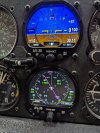
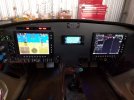
I fly a Cessna 182 with a small, single Aspen 1000 PFD with backup steam gauges. A buddy just upgraded his twin from steam to a larger Garmin PFD (G3X, iirc). We both trained for our instrument ratings before glass panels were common.

I am wondering if there are enough datapoints, and glass/steam date available, to show if glass panels are reducing IMC loss of control accidents. While pilot training and competence is critical to a safe IMC flight, I am wondering if the extra technology fosters more pilot confidence or allows for a truly safer flight.

Any points in the direction of studies or data are appreciated.
 
I got my IFR in a steam gage round dial airplane with no AP back in the day. My current plane has an Aspen Pro Max PFD. I am old school I guess and routinely hand fly departures (takeoffs into IMC) and Approaches. Mostly because I am scared to death of losing proficiency to hand fly in case of AP failure.

That being said, I had the opportunity to fly a new G1000 Cessna 182 in actual IMC. Taking off and entering the clouds within 800' AGL was literally a non -event - it was extremely easy and stress free. That giant G1000 screen almost made it seem to me like I was looking outside through the windscreen.

So in my opinion, modern glass panels have improved safety and ease of flying in IMC tremendously.

Now do they create a generation of pilots that don't have good stick and rudder skills? That is another question.
 
I find hand flying glass harder. Specifically the attitude indicator in anything other than smooth air. Don't know if its the reactivity or just the way Garmin laid it out, probably a combination. It seems like gyros take out some of the micro movements that come through magnified on glass. Every little bump and jostle throws the indicator around much much more than a gyro based instrument.
 
I find hand flying glass harder. Specifically the attitude indicator in anything other than smooth air. Don't know if its the reactivity or just the way Garmin laid it out, probably a combination. It seems like gyros take out some of the micro movements that come through magnified on glass. Every little bump and jostle throws the indicator around much much more than a gyro based instrument.
It doesn’t throw it around more, it’s just more obvious because of the level of precision visible in the display.
 
It doesn’t throw it around more, it’s just more obvious because of the level of precision visible in the display.
I find the range and rate of motion more difficult to use than a traditional gyro for hand flying. Is the message I was trying to convey.
 
I live in San Diego where we have seen two twin Cessna accidents hit close to home - the recent 414 into the ocean and a 340 in 2021. Other apparent IMC loss of control accidents which come to mind are the the PC-12 accident near Reno in 2024, the RV-10 enroute to Camarillo on 5/2/25, and I am sure you all can add to the list. While I haven't seen reports of how the 414 was equipped avionics-wise, it had me thinking about glass vs steam.

I fly a Cessna 182 with a small, single Aspen 1000 PFD with backup steam gauges. A buddy just upgraded his twin from steam to a larger Garmin PFD (G3X, iirc). We both trained for our instrument ratings before glass panels were common.

I am wondering if there are enough datapoints, and glass/steam date available, to show if glass panels are reducing IMC loss of control accidents. While pilot training and competence is critical to a safe IMC flight, I am wondering if the extra technology fosters more pilot confidence or allows for a truly safer flight.

Any points in the direction of studies or data are appreciated.
I find that little triangle thingy that is supposed to be the ball terrible
 
The only instrument time I have in a 6 pack was the PPL requirement and checkride. I did all my IFR training and subsequent flying in a G1000 (insert all the your not a real pilot comments here)
I love my G1000 for any kind of flying. I look at 1 screen and instantly get all the information I need to stay right side up. This just happens to be my personal preference and what I am used to. I also know enough to know I'm not that I am never ever going to launch into IMC in a 6 pack airplane. So many of these accidents all start with p!ss poor ADM.
 
I got my PPL and IR in six-pack planes. Then spent the next 15 years behind a six-pack in my 182-RG.

The Velocity got the latest glass from Grand Rapids Tech. Took me about 5 minutes flying to be totally comfortable with the presentation. My guess is going the other direction would take a LOT longer. After a couple years I was flying from FL back up to Chicago and the starter motor failed at my fuel stop. Fortunately, the fuel stop was at my old A&P/IA's new home field. We pulled the starter off and he gave me the keys to his 182. I was a bit nervous but as I was rolling down the runway, I was back in steam gauge mode. Honestly, it was like riding a bike. The worst part was he had an HSI which I had never flown with before.

All that said, I have to think that LOC accidents in IMC are a lot fewer with glass as opposed to steam gauges.


2017-01-10 IMG_20170110_143659 (Large).jpg
 
I live in San Diego where we have seen two twin Cessna accidents hit close to home - the recent 414 into the ocean and a 340 in 2021. Other apparent IMC loss of control accidents which come to mind are the the PC-12 accident near Reno in 2024, the RV-10 enroute to Camarillo on 5/2/25, and I am sure you all can add to the list. While I haven't seen reports of how the 414 was equipped avionics-wise, it had me thinking about glass vs steam.

I fly a Cessna 182 with a small, single Aspen 1000 PFD with backup steam gauges. A buddy just upgraded his twin from steam to a larger Garmin PFD (G3X, iirc). We both trained for our instrument ratings before glass panels were common.

I am wondering if there are enough datapoints, and glass/steam date available, to show if glass panels are reducing IMC loss of control accidents. While pilot training and competence is critical to a safe IMC flight, I am wondering if the extra technology fosters more pilot confidence or allows for a truly safer flight.

Any points in the direction of studies or data are appreciated.

I don't think the real issue is glass versus analog, since both display the same essential information. The challenge with glass panels is their complexity—multiple layers of menus and extensive customization can become overwhelming unless you are using it frequently. In a high-stress moment, getting lost in those menus can lead to problems. Steam gauges have no menus, but their simplicity can make them safer for pilots who don’t fly regularly.
 
I'm an almost ready for IFR check ride student.

At this point I don't like the PFD synthetic vision turned on. It is not as "obvious" which way is up. I like Blue up and Brown down. I may change that, but for now I like the more oldish presentation. I have also used the back up electric AI when an issue with the EFIS/PFD came up.

In IMC I have also used the backup analog CDI when the main navigator succumbed to operator error.

I don't like flight director either. But that may be a get used to it thing. For now, through check ride, I won't change much.
 
Last edited:
Personally I much prefer glass to a 6 pack. A lot of my flying is contract pilot work in 414’s . I’m not thrilled when I have to fly a 6 pack one. And yes I’m comfortable hand flying either in IMC.
Regarding flight directors. That to me is the gold standard. How could a pilot not like them. Makes your hand flying as good as an autopilot.
 
... I am wondering if there are enough datapoints, and glass/steam date available, to show if glass panels are reducing IMC loss of control accidents. While pilot training and competence is critical to a safe IMC flight, I am wondering if the extra technology fosters more pilot confidence or allows for a truly safer flight. ...
It could conceivably go the other way, as extra technology such as glass panels and autopilots contribute to automation dependency and loss of basic skills.
Warren Vanderburgh said it better than anyone:
 
I don't think the real issue is glass versus analog, since both display the same essential information. The challenge with glass panels is their complexity—multiple layers of menus and extensive customization can become overwhelming unless you are using it frequently. In a high-stress moment, getting lost in those menus can lead to problems. Steam gauges have no menus, but their simplicity can make them safer for pilots who don’t fly regularly.
Yes, the critical tradeoff between complexity, workload and intuition. Steam gauges are simpler and less distracting, but require the pilot to maintain the "moving map" in his head with situational awareness.
 
It isn't steam vs glass, it's pushing the AP button at 500' and letting the AP fly the approaches for you to maintain IR currency. Then when you DO have to fly in IMC with quick vectors, heading changes, altitude changes something with the AP glitches, it's not going to matter if it's glass or steam. Unless you have something so old school that's it's black on top and black on the bottom, just put the blue side up, get the bars level, and make sure the little bar isn't pointed too deep into the tan area. Then worry about everything else. If you can't do that on steam, you probably shouldn't be PIC.

It's when you have "experts" in buttonology that hand fly less than 5% of the time that issues arise.
 
Personally, I fly with both glass and analog regularly. I prefer glass but feel equally comfortable and proficient in either. As an instructor I do mostly recurrent instrument training and avionics transition training in multiple configurations from Garmin, Avidyne, Aspen, Dynon (and various autopilots). In my non-scientific sample, I see many, many more issues with basic GPS/FMS competence than analog vs glass.
 
Personally, I fly with both glass and analog regularly. I prefer glass but feel equally comfortable and proficient in either. As an instructor I do mostly recurrent instrument training and avionics transition training in multiple configurations from Garmin, Avidyne, Aspen, Dynon (and various autopilots). In my non-scientific sample, I see many, many more issues with basic GPS/FMS competence than analog vs glass.
All you need to know is the -D-> button!!!
 
Personally I much prefer glass to a 6 pack. A lot of my flying is contract pilot work in 414’s . I’m not thrilled when I have to fly a 6 pack one. And yes I’m comfortable hand flying either in IMC.
Regarding flight directors. That to me is the gold standard. How could a pilot not like them. Makes your hand flying as good as an autopilot.
I'm a luddite. I have to GI 275s and when the AP isn't on, I shut off the command bars.....
 
  • Like
Reactions: WDD
Personally, I fly with both glass and analog regularly. I prefer glass but feel equally comfortable and proficient in either. As an instructor I do mostly recurrent instrument training and avionics transition training in multiple configurations from Garmin, Avidyne, Aspen, Dynon (and various autopilots). In my non-scientific sample, I see many, many more issues with basic GPS/FMS competence than analog vs glass.
This is what I've noticed too. Even with pilots in their own plane, with plenty of hours in it.
 
It isn't steam vs glass, it's pushing the AP button at 500' and letting the AP fly the approaches for you to maintain IR currency. Then when you DO have to fly in IMC with quick vectors, heading changes, altitude changes something with the AP glitches, it's not going to matter if it's glass or steam. Unless you have something so old school that's it's black on top and black on the bottom, just put the blue side up, get the bars level, and make sure the little bar isn't pointed too deep into the tan area. Then worry about everything else. If you can't do that on steam, you probably shouldn't be PIC.

It's when you have "experts" in buttonology that hand fly less than 5% of the time that issues arise.
In addition, the complexity of modern autopilots themselves can be a hazard and a distraction. There’s nothing worse in IMC than when the plane starts to behave unexpectedly. The temptation then is to start playing with the autopilot rather than just turning it off and hand flying. I’m thinking, for example, of the crash a year or so ago in the Outer Banks where the pilot didn’t really understand the AP buttonology, and crashed while trying to configure it to fly his flight plan.
 
My experience with steam exceeds glass by decades. Even so, I strongly prefer glass. Buttonology is harder but once you become proficient it’s very easy.

The big thing about steam is the failure modes are more insidious. A horizon that starts slowly rolling over dead can really twist your mind up.
 
I'm a luddite. I have to GI 275s and when the AP isn't on, I shut off the command bars..
I see a lot of pilots who opt for that. In one case, I had a pilot who wanted to because he fond out it was distracting but didn't realize he could turn it off when he turned off the autopilot. What I've discovered along the way is, for GA pilots who have never used one before following command bars is not as simple as "just tuck the aircraft wedge up under it." Actually, it sort of is but doing so without fixating on it, chasing it, overcorrecting, and all those wonderful things we thought we trained ourselves out of over the years, takes some really targeted training and practice.
 
I'm a luddite. I have to GI 275s and when the AP isn't on, I shut off the command bars.....
I turn them off when hand flying. EXCEPT I do shoot a hand flown WITH command bars practice approach every so often.

If the AP failed, but I had the command bars, I would use them on a real life approach.
 
I'm a luddite. I have to GI 275s and when the AP isn't on, I shut off the command bars.....
I also have twin GI 275s, and I’ve yet to ever use the GFC 500 FD.
 
If the AP failed, but I had the command bars, I would use them on a real life approach.
More specifically, the servos failed. A total AP failure should be comparatively rare on a GFC500. And one possible scenario is that the system decides that there's too much turbulence for the servos to keep up.
 
Are you not able to trim it during setup?
No its not adjustable unfortunately. So the indication during straight and level flight is slightly pitch up, with the indicators sitting above the zero pitch line. Its a pretty common frustration with the system. It is not going to cause a loss of control but I feel it causes a loss in precision when hand flying in choppy air because true straight and level is just an unmarked point in space above the zero line.
 
It is easy enough to really induce the leans with just a safety pilot and the equipment most people or their buddies have. I wonder if it wouldn't help folks out to do it a few times a year just to stay familiar with the sensations. It seems like when things go wrong IFR it can really go wrong in multiple ways and fast. Staying familiar with the sensation may help keep one doing what they need to do when things don't operate like you expect.
 
It is easy enough to really induce the leans with just a safety pilot and the equipment most people or their buddies have. I wonder if it wouldn't help folks out to do it a few times a year just to stay familiar with the sensations. It seems like when things go wrong IFR it can really go wrong in multiple ways and fast. Staying familiar with the sensation may help keep one doing what they need to do when things don't operate like you expect.
Not quite the same, but when I do unusual attitude recovery during IPCs, I have the pilot put themselves in an unusual attitude. It’s artificial because I have them fly with their eyes closed, but I have them open up their eyes after I’ve instructed them to return to straight and level. They are invariably surprised to find themselves in a steep bank with the nose pointed down. It’s a lesson in “what you feel is not what you get.”

It’s pretty effective. They get the point. And when I get my own IPC, I have the instructor do it to me. Even though I know what the result will be it’s a bit of a surprise just how “out of control” I am.
 
If you really want to induce the leans the guy flying has to be committed to the exercise and not trying to be super pilot or cheating, plus using something that totally blocks the vision out of the sides.

Cover up the aircraft instruments somewhat. Safety pilot uses a board or clipboard or something flat on their lap with GDL52 or similar ADHARS box. Display the flight instruments on an ipad and focus on the attitude indicator. As you just fly straight and level with the attitude indicator the guy with the box on his lap slowly starts tilting it. Nothing crazy maybe up to 10 degrees or a little more. If you do this for 15 min or so changing the angles and pitch attitudes slowly and gradually stopping at maybe a 15 degree bank to one side or the other slightly up or down. Pilot flying goes back to the aircraft instruments, when the adjustments are made to level the plane and turn to a heading it is just like in IMC where the leans just coming over a person almost out of nowhere.

It doesn't take a whole lot, nothing real steep turning or up and down. If your body feels level at a 10 degree right 2 degree down stop point, when you level the wings and bring the nose up with the aircrafts instruments the bad sensations will hit.
 
Best way: Throw a blackout blanket over the pilots head and tell him to do is best. Then yank it off and say, "save it."
 
For me, the safety of flying glass vs steam comes down to how that particular glass treats the ball. If it resembles a traditional ball, I have no problems with it, but if it has that stupid tiny moving block under the even smaller triangle, I want to throw it out of the airplane.
 
I have the twin GI275s as well as the steam gauge Air Speed, Turn Coordinator, Altimeter, and Vertical Speed Indicator. My scans feel much easier, and situational control feels much better.

Would be fascinating if I could get a portable eye tracker to make a heat map of how I’m now scanning. How much I look at the large analogue vs the digital I can’t say.
 
Last edited:
Back
Top