Loss of Control in IMC - Glass vs. Steam data

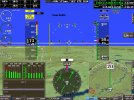
No its not adjustable unfortunately. So the indication during straight and level flight is slightly pitch up, with the indicators sitting above the zero pitch line. Its a pretty common frustration with the system. It is not going to cause a loss of control but I feel it causes a loss in precision when hand flying in choppy air because true straight and level is just an unmarked point in space above the zero line.

That is how most all of them work. Most airplanes (%99.99) have a slightly nose up attitude in level flight. The slower you go the more nose up it'll be. At 0 your longitudinal axis is parallel to the surface of the earth. So you just learn the new level point for that speed and weight.

If you have an unreliable airspeed indicator (bee or wasp flies into pitot tube). You need to have a good idea of where you need to put the attitude indicator, and what power setting to use for your airplane to get the desired airspeed you need. In the airlines we have charts like this.


56913a89fcfd61e829e2d338c5f93658.jpg
 
No its not adjustable unfortunately. So the indication during straight and level flight is slightly pitch up, with the indicators sitting above the zero pitch line. Its a pretty common frustration with the system. It is not going to cause a loss of control but I feel it causes a loss in precision when hand flying in choppy air because true straight and level is just an unmarked point in space above the zero line.
I thought that whoever sets up the indicator (at least for G5s) adjusted for what they thought was level, at the time. In our two different club 172s, both with G5s, one is at zero in level cruise; the other needs 1 mark nose-up for level cruise (+2.5). The intent of the mechanical adjustments was to correct for 'parallax' (which is very, very slight, given the short distance between the pieces of the AI) - but I think most of us use it to set for level in cruise.
 
I thought that whoever sets up the indicator (at least for G5s) adjusted for what they thought was level,
They have to jack the plane to level and then set the AHRS.
 
Pitch on the AI is just a starting point anyways, to be confirmed or adjusted by performance with VSI.

AV-30 self levels on the ground at startup ... how it does that baffles me, since my aircraft is a taildragger. But it works. It has a pitch trim function in the pilot-accessible setup menu to fine tune.
 
All else being equal, including pilot training and familiarity, in-cockpit weather information, and a trustworthy autopilot, glass is safer. Instrument scan, cross-check, and interpretation workload differences are probably all subjective. But failure modes and partial panel are generally going to be programmed to be much easier for the pilot than steam gauges. There will be some common failure modes between the two, like a blocked pitot tube or static port, but if the AHRS finds a way to fail the chances are good you’ll get a red X instead of a slowly dying and leaning attitude indicator 30” away from the low vacuum warning light.

Glass also comes with an added safety improvement, because things are rarely equal. A glass panel is more likely to include some form of in-cockpit weather, often very close to the instruments you’re supposed to be scanning. An integrated EIS also means your engine gauges and warning lights are right there with your core scan, not scattered around the panel, so an engine problem or low fuel condition will be caught earlier and without as much distraction from the instrument scan. And there’s a better chance you’ll have a reliable two-axis autopilot to help when the workload is greater, such as briefing an approach or trying to find a diversion airport with fuel and good weather.
 
The one pause for a primary EIS such as the G275 is that it by design and regulation has no battery back up. If you loose electrical with steam you still have manifold and rpm.
 
A big difference between glass and steam is the electronics' ability to detect a lot of failure conditions and remove erroneous information from the display before it becomes a problem. Most of us have heard of (or even experienced!) a vacuum pump failure in flight where the attitude indicator slowly goes belly up, and this can be very hard to detect in IMC. And even once the pilot knows the AI can't be trusted, it's hard to ignore it when it's staring right at you, showing erroneous misleading data.

I believe this difference is more significant when it comes to avoiding a loss of control in IMC than the somewhat different portrayal or sizes.

- Martin
Understanding that there are still failure modes that won’t ❌.

 
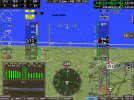
For me, the safety of flying glass vs steam comes down to how that particular glass treats the ball. If it resembles a traditional ball, I have no problems with it, but if it has that stupid tiny moving block under the even smaller triangle, I want to throw it out of the airplane.
I felt the same way. Fortunately, GRT lets you pick which representation you want. I put it on the old style ball for a while. Then I switched it to the brick. Didn't take long to get used to it.
SNAP0004.jpg

SNAP0008.jpg
 
If you have an unreliable airspeed indicator (bee or wasp flies into pitot tube).

Just happened to me yesterday. I had been working on my aircraft and left the pitot tube uncovered in the hangar. Some enterprising insect stuffed it with leaf clippings. Airspeed was somewhat normal at rotation, but as I climbed and accelerated the air pressure shoved the obstruction back to a bend. As I leveled out at pattern altitude, I noticed airspeed was obviously not right and decided to land. When I slowed down, the ASI stopped indicating at all, showing zero KIAS while I was turning base to final.

It was not a major event. As described, I just gave it my standard power settings and kept the sight picture and control forces looking and feeling normal. Landing was a bit ugly for a taildragger, with a nice big bounce that used up most of my 4k runway. Got back to the hangar and blew the line out from the cockpit using compressed air.
 
I'm an old-school and very rusty pilot who has only flown behind "basic" glass a scant few times...and never behind any of the big-screen gee-whiz stuff

This isn't really meant to be a question here, but I wonder if getting lost in the menu's and settings for these things can generate real problems with regard to loss of control, safety, etc...

I really can't imagine that there's much of a question that situational awareness regarding position is almost a non-issue nowadays, especially with the big-screen moving maps. Wow what an improvement!

otherwise, I speculate that
generally speaking "glass" = better safety all around...
after the pilot becomes familiar with that brand and model of box...and even with the switch layout in that particular plane​
​
but
the learning curve and time required to become expert level familiar is long.
and then for that very proficient pilot jumping into another airplane with a different brand/model/layout...even if it's the same airframe, suddenly "glass" = reduced safety​
​
maybe though
after a pilot becaomes proficient with enough differnet version of these things it beomes less of a factor....
but does it ever approach what it was with six-pack analog stuff?
I mean, back in the day a pilot could jump into almost any small GA airplane and within a few minutes learn where everything is and be ready to go (I don't mean aircraft systems knowledge, just basic avionics and controls)
6-pack-feature.jpg
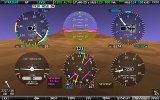
Here is an image of a Dynon Skyview display option. Its not a bad idea, teach people with the 6 pack, and then switch modes into regular glass later on in training
 
AV-30 self levels on the ground at startup ... how it does that baffles me, since my aircraft is a taildragger. But it works. It has a pitch trim function in the pilot-accessible setup menu to fine tune.
Yes, but that pitch trim setting will shift the zero point. Of course even in level flight that depends on your AoA (consequently, your weight & airspeed). But you can set it to something reasonable/typical - which may be a relatively big downward correction for a taildragger that sits on the ground at high AoA.
 
Last edited:
This isn't really meant to be a question here, but I wonder if getting lost in the menu's and settings for these things can generate real problems with regard to loss of control, safety, etc...
Yes. That’s why training is so essential. It’s the very rare pilot who can teach themselves. Whether you like “the Man in the Pink Shirt,” Gary Reeves or not, he makes a valid point in creating a specialty in avionics mastery. I see pilots who got their instrument rating in glass who know zip beyond the basics. I consider it a service when I do an IPC or recurrent training and give them a real world task they can’t do.
 
I can easily switch between planes with GI 275s and G5s. Like anything new to you, it requires study and some training just as you needed study and training to use the steam gauges.
 
Glass CAN make IFR flying simpler and safer. However, it also introduces all sorts of new complexities when interfaced with an autopilot and a GPS navigator. It is very easy to get lost in the knobology and have no clue how to set things right. Even in a simple aircraft like mine (dual G5s, GNS-430W, single-axis autopilot) there are multiple ways to go wrong configuring the airplane for approach. To this day, I still prefer hand-flying from the IAF in. I trained on the old gauges back in the late 80s (including ADF) but transitioned quickly to electronics and was happy to ditch the vacuum pump.

Ultimately, it comes down to currency and proficiency with what you have. In the olde days, the biggest challenge was visualizing your situation from the analog gauges and needles. Now, the biggest challenge is configuring all the boxes to work with each other to do what you want. (Knowing where you are is easy now.) Electronic configuration is frequently complicated by often having at least 2-3 ways of doing any particular task. Now, would I want to go back to the old vacuum gauges. No way. But pilots will still find ways to fall into traps. Hence, the need for recurrent training.
 
know in some ways this idea is...well kinda stupid....
.... I understand that these multitaskers are very smartly set-up and it's not nearly as bad as all of that.... but

and of course tech advantages such as getting rid of things such as vacuum pumps and mechanical gyros.... getting rid of complexity and failure points...is good, of course

but the multitask nature of pretty much all of our electronics these days is a real potential problem.... they try to be jacks of all trades which can lead to fat fingering settings and plain old getting lost in the menu with no idea how to get out.

Look at cell phones. Impossible to buy just a simple cell phone for someone such as my > 80-year-old mother who has never wanted to even touch a computer mouse. Even the most simple jitterbug type flip phones that are still available, and marketed as simple devices for the elderly, have all sorts of menu levels for embedded cameras, phone books, navigation, texting, browsing, etc.... She just needs a phone with a number pad and a green button to call and a red button to hang up.

I remember a few years ago my father in law (RIP), who was not like my mom and was willing to use a smartphone, would pretty regularly get some obscure setting switched, and I'd have to dig through the thing to figure out what he'd fat-fingered. I bought him one of those jitterbug type phones for a time, and it was just as bad....actually worse in some ways.

Bringing this back to avionics, maybe this might mean unitasking electronics.

I know it's not as bad as all of that, but in concept, maybe uni-tasking avionics with a much more simplified (i.e. no-existant) menu tree, could be the best of both worlds!
 
IMHO, being proficient with your GTN650xi/whatever Nav computer you have is no different than the need to be proficient with your twin CDIs and twin Nav radios.

Train, understand it like the back of your hand, and it’s easy.

If one is unsure of the menus, chances are that person is trying to learn the system in the air and not on the ground on an IPad or PC.
 
….Bringing this back to avionics, maybe this might mean unitasking electronics….

Avionics ain’t the problem, it’s the pilot’s failure to have taken this endeavor seriously to begin with that is. Single pilot IFR is probably the biggest threat to a pilot’s life after inadvertent VMC into IMC yet we fail to accept that as fact.

Convincing one’s self that 6HITS on foggles behind a patchwork panel is all one needs to be proficient happens everyday.
 
Last edited:
Glass CAN make IFR flying simpler and safer. However, it also introduces all sorts of new complexities when interfaced with an autopilot and a GPS navigator. I
When panel GPS came along, the common wisdom was that a GPS approach was easier to fly but more difficult to set up. It was true then and, if anything, even more true today.

There was an adage that the day of the instrument checkride is the most proficient you will ever be. It was nonsense even then - you may have been at your best hand flying, but you had basically zero real world IFR experience. But at least the simple avionics - VOR, LOC, NDB - were easy to set up for almost any contingency.

That's not true today. The flight portion of the IFR checkride, if not actually simple, covers a bare minimum of avionics knowledge. Even common real world tasks may be things the newly-rated instrument pilot has never heard of. I've mentioned in the past one of my "GPS Tasks Pilots Don't Know How to Do." It's to be flown with the AP fully coupled. The setup is, you load an approach from a direction where the HILPT at the IAF/IF is included automatically. Then ATC vectors you into a position where they can and do instruct, "Proceed direct [IF]. Cleared [name] approach straight in." Three pilots in a row, two relatively new instrument pilots and one relatively new CFII, turned outbound in the hold.
 
I have a good amount of experience in Cirrus with the G1000, I'm now flying a Mooney Bravo with a 6 pack, hands down, I like the glass better. One thing I haven't seen mentioned here (sorry if I missed it) is the envelope protection available with many glass systems. That alone is a big plus for safety, add to that the "blue" level button that you can push if things go south plus the redundancy of systems along with not relying on vacuum pumps for instrumentation it's really no contest. So when things go bad, the glass (at least the g1000) gives you many more tools to recover.

Like anything, transitioning is important. I went from six packs to the g1000, it takes a bit to learn all the differences and how to efficiently use the system. Button pushing skills are important and are a perishable skill. However, once you have it down, it's much easier to use than a six pack. All pertinent information is literally at your fingertips. I had an instructor who would only use the G1000 to fly, all charts, airport data, IFR plates, everything you need is in that little box. He would have his IPAD nearby, but rarely looked at it.

The flight display is much more efficient than a six pack, all six pack data is concentrated in an area that can be scanned pretty much just using peripheral vision. That triangle "thingie" (the ball) it's right there, no need to move you eyes from the AI really, very small movement if any. It does take a little getting used too, I think it took me one flight. Book work is important if you want to get proficient quickly.

As far as flight directors go, I use it most of the time. One of the first things I was taught when using the FD was to keep it up to date for the mode you are in. For instance, if you are in heading mode and need to turn 20 degrees right, set the heading bug, then commence your turn. When you stop updating it (stop using it) turn it off.

My Mooney is well equipped. It had a king flight director connected to a 225 autopilot. Works pretty much like the G1000 (or vice versa I suppose). The plane has dual batteries and alternators, plus a back up vacuum pump. But the 530W gps is dated and while it works well, it's no comparison to a newer gps.

That's my take on it.
 
IMHO - being able to trust the DG / HSI without it precessing is an underrated advantage to glass.
 
IMHO - being able to trust the DG / HSI without it precessing is an underrated advantage to glass.
Slaved gyros aren’t exclusive to glass.

The real question is, how do you know when the slaving fails, and how do you manage heading and navigation afterwards?
 
Slaved gyros aren’t exclusive to glass.

The real question is, how do you know when the slaving fails, and how do you manage heading and navigation afterwards?
The vacuum driven DG precesses all the time. My electronic HSI does not.

Periodically cross check with the GPS track, and the compass.
 
I'm an old-school and very rusty pilot who has only flown behind "basic" glass a scant few times...and never behind any of the big-screen gee-whiz stuff

This isn't really meant to be a question here, but I wonder if getting lost in the menu's and settings for these things can generate real problems with regard to loss of control, safety, etc...

I only do that type of configuration while on the ground. My philosophy is that if it can only be done going through configuration menus, then it shouldn't be done in the air.
 
I only do that type of configuration while on the ground. My philosophy is that if it can only be done going through configuration menus, then it shouldn't be done in the air.
Not sure what you mean by configuration menus. Changing what data is shown by default, setting up auto glide function, updating your databases, etc., yes - do that on the ground.

Moving between different menu pages in the air should not be a problem.
 
Couple thoughts -
- "glass" can range anywhere from a single G5 to a panel with multiple full size screens, synthetic vision, ADSB traffic, geo-referenced approach plates etc. The complexity goes up, but so does situational awareness as more stuff gets added. IMO the situational awareness with Glass is far better than with steam, recognizing that good "steam only" IFR pilots have good SA. It's just easier to me with glass. I don't think I look outside less with glass than steam in VMC.

- Operational complexity. There's a learning curve for sure, but once you have mastered your's, it's pretty much muscle memory. You have to exercise the muscle to retain it, but it's not that difficult if you make a point of doing some different scenarios in practice flights. I do an "approach" on nearly every non-xc flight I do. Set it up, join it, get the glide slope etc. Try to do it a slightly different way each time. Usually do that at a quiet non-towered airport as most of the complex stuff is getting established (from a buttonology POV). I monitor approach ATC to make sure no one else is getting vectored on to it, but don't work with them. This is in VFR conditions, no safety pilot, just getting the flows down. Often break off once established and do again with a different scenario (VTF, Activate a leg etc).

Hand flying - When I do practice in actual or with a safety pilot, I try to do some with AP, some all by hand and some a mix of both. I am trying to get to the point where I'm not "surprised" when the AP does something I don't expect. Pretty much have that down with the practice, but will turn the AP off if something unexpected happens. I also bug my current heading so switching from NAV to HDG is one button away. That will buy time to figure things out and fix them.

I trained in a steam 172 until I soloed when I bought a full glass Archer. There was definitely a learning curve, and I was only utilizing a fraction of the capabilities of the GTN at first. I was lucky to have a good IFR instructor who really knew the GTN which got me very proficient in using it. I've also gotten a lot more from some of the threads here.

Not sure I have a point in all this. Maybe just it's not the equipment, but the proficiency of the pilot with that particular equipment. I could fly IFR in a steam plane if I had to, but I wouldn't choose to without a lot of re-training.
 
Back
Top