There is no Vo. There once was a Vo but there is no Vo only Va. And Va has a problem. Va is supposed to consider full yaw but it doesn’t. There should be a Vo of the sort to which you wrote. But there is no Vo. Only Va.
I have no idea what you're talking about. I've never heard of "corner speed."
As to corner, it it the meeting of the lift limit and load limit as seen in both the aircraft load envelope and also the energy-maneuverability diagram; in this latter, it is also peak instant turn rate and minimum instant turn radius. It is the most energy depleting aka highest drag point a plane can safely reach.
As a former semi professional race car driver, I've got a hunch.
It's when the tires screech.
Such is sub-optimum turning hence not corner. Corner would be holding the turn to a point just before the tires screech. Maximum traction to the turn.
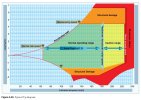
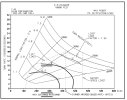
Our numbers are calculated for symmetric pulls with pull being the operative word meaning only positive longitudinal, not negative nor in the other axes and especially not mixed axes.
No, that's actually Vo which is less than or equal to Vs*√n. Va must be greater than or equal to Vs*√n (in practice it is usually equal to). But the airplane must be strong enough to support loads on the horizontal and vertical stab from full rudder or aileron deflection at Va, not just elevator.
Well, I’m not finding Vo. Not in Part One definitions and abbreviations. Not in Part 23 airworthiness standards. Not in Part 25 airworthiness standards transport aircraft, the section to which excessive rudder loads would be most relevant and with those to whom they’d be most of concern. Did find Vo in the Airplane Flying Handbook but there it is used interchangeably with Va with no real distinction between the two. PHAK only has Va. The PHAK did recognize pull only as safe for Va but then flips to any moment any axis in the next sentence.
As to Va, it cannot be greater than Vs*√n. If it were, you could overstress with a full pull. Such defeats the idea of a Va.
PHAK:
“The maneuver speed is a valuable reference point, since an aircraft operating below this point cannot produce a damaging positive flight load. Any combination of maneuver and gust cannot create damage due to excess airload when the aircraft is below the maneuver speed.”
PHAK also gave
“This speed is called the “design maneuvering speed” (VA), which is the speed below which you can move a single flight control, one time, to its full deflection, for one axis of airplane rotation only (pitch, roll or yaw), in smooth air, without risk of damage to the airplane… Operating at or below design maneuvering speed does not provide structural protection against multiple full control inputs in one axis or full control inputs in more than one axis at the same time.”
Wiki in its maneuvering speed section mentions a Vo dating back to 1993. I have found a historical Vo in their linked wayback machine. But it is no longer present. The concept is gone. Note this same Wiki does discuss corner speed.

This makes no mention of such being to accommodate roll or yaw moments. It definitely could be such. Would be good if we had such. But it seems merely to enable a manufacturer to produce extra margin against corner speed such that one wouldn’t overstress as Vo would be less than Va and if one were to be a touch faster than Vo they’d still be below Va and stall out before load out. Note with full yaw, you might not stall out a vertical stab and rudder, hence have to be strong enough to sustain the force.
If we look more thoroughly at part 25, there are inconsistencies in Va that suggest vestiges of a Vo. Part 23 has been short changed and no longer has the specificity within it. We don’t see anything useful in Part 23.
§ 25.331:
“(c) Maneuvering pitching conditions. The following conditions must be investigated:
(1) Maximum pitch control displacement at VA. The airplane is assumed to be flying in steady level flight (point A1, § 25.333(b)) and the cockpit pitch control is suddenly moved to obtain extreme nose up pitching acceleration. In defining the tail load, the response of the airplane must be taken into account. Airplane loads that occur subsequent to the time when normal acceleration at the c.g. exceeds the positive limit maneuvering load factor (at point A2 in §25.333(b)), or the resulting tailplane normal load reaches its maximum, whichever occurs first, need not be considered.”
This says Va can be at or slower than corner and can be seen a the difference A2 vs A:
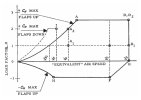
But there is a problem as subsequently we are told Va must be at the speed of A.
§ 25.335:
“(c) Design maneuvering speed VA. For VA, the following apply:
(1) VA may not be less than VS1 √n where—
(i) n is the limit positive maneuvering load factor at VC; and
(ii) VS1 is the stalling speed with flaps retracted.”
Note while Va cannot be less than corner, it cannot be more than corner either,
§ 25.335 (c):
“(3) VA need not be more than VC or the speed at which the positive CN max curve intersects the positive maneuver load factor line, whichever is less.”
(They use Cn max where most would label Cl max. See the V-n diagram included in the part.)
They then stipulate that structure must meet this Va for roll and yaw moments. I presume they felt such rendered need for a Vo moot.
§ 25.349:
“(a) (2) At VA, a sudden deflection of the aileron to the stop is assumed.”
§ 25.351:
“(a) With the airplane in unaccelerated flight at zero yaw, it is assumed that the cockpit rudder control is suddenly displaced to achieve the resulting rudder deflection, as limited by:
(1) The control system on control surface stops; or
(2) A limit pilot force of 300 pounds from VMC to VA and 200 pounds from VC/MC to VD/MD, with a linear variation between VA and VC/MC.”
Special Airworthiness Information Bulletin CE-11-17:
“Many pilots believe that as long as the airplane is at or below this maneuvering speed, they can make any control inputs they desire without any risk of harm to the airplane. This is not true.The design maneuvering speed (VA) is the speed below which you can move a single flight control, one time, to its full deflection, for one axis of airplane rotation only (pitch, roll or yaw), in smooth air, without risk of damage to the airplane.”