
I hate trailer wiring.

cowman

Final Approach
PoA Supporter
Joined
Aug 12, 2012
Messages
5,894
Location
Danger Zone
Display Name
Cowman
Home Airfield
KUIN
Bad grounds, broken wires, corroded terminals… all the flipping time. That said, this one is just plain impressive.
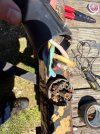
IMG_1987.jpeg

I put this on less than 5 years ago…. whole thing fell apart when I popped it open, every wire broke. Unfortunately the only place I can park this is outside. Any good ideas on how to protect the next one from corrosion? I was thinking of fluid film or maybe packing it with grease but that seems like it might make things messy.
 
Ziplock baggie over the plug when you’re not using the trailer?

Maybe some terminal grease rather than stuffing it full.
 
Marine crimp terminals, bus bars, and wire. Use Ancor adhesive heat shrink splices and terminals. Enclose everything in multiple layers of adhesive lined heat shrink tubing. Use only tinned marine wire. Order crimper jaws for marine crimps from Amazon. Do everything like a salt water boat trailer.
 
Last edited:
Any good ideas on how to protect the next one from corrosion?
For permanent solution either purchase a sealed trailer harness or build your own to the same spec. For the open connection contacts use Dow Corning #4 or NO-OX-ID.
 
Trailer wiring is simple enough (and light kits are inexpensive enough) you can install a new system every 10 years or so and avoid most of the hassle of chasing random issues at inopportune times.
 
One big lesson learned from saltwater boat trailers: do not ground to frame. Run ground wires back to a junction box or grounding block at the tongue, through the trailer light connector to vehicle ground.

Also every time someone uses liquid electrical tape, God kills a puppy.
 
One big lesson learned from saltwater boat trailers: do not ground to frame. Run ground wires back to a junction box or grounding block at the tongue, through the trailer light connector to vehicle ground.

Also every time someone uses liquid electrical tape, God kills a puppy.

I heard about that puppy thing…damn, but I get it…

Good tips above. I fought the good fight over the years and I’ve never met a trailer light project I couldn’t conquer. For boat trailers, ensure you comply with ABYC standards and you’ll be good to go.
 
Bad grounds, broken wires, corroded terminals… all the flipping time. That said, this one is just plain impressive.

View attachment 151967

I put this on less than 5 years ago…. whole thing fell apart when I popped it open, every wire broke. Unfortunately the only place I can park this is outside. Any good ideas on how to protect the next one from corrosion? I was thinking of fluid film or maybe packing it with grease but that seems like it might make things messy.
In addition to the baggie suggestion look for a grease is electrically conductive. Where electrical connectors were prone to corrode some of the mechanics used the dielectric grease because it was white. When the connection failed the avionics guys had to clean up the mess, and remove the dielectric and apply the grease is electrically conductive.

Conductive vs. Dielectric Grease
It is crucial to distinguish between conductive and dielectric grease, as they serve opposite purposes. [1]
  • Conductive Grease: Contains conductive materials, used to enhance electrical flow between connectors.
  • Dielectric Grease (e.g., Permatex): Silicone-based and non-conductive. It insulates, lubricates, and seals out moisture to protect connections, but should not be used in gaps where conductivity is required. [1, 2, 3, 4, 5]

Benefits
  • Lubrication: Reduces wear on moving electrical parts.
  • Corrosion Protection: Protects, metal contacts from environmental damage.
  • Performance Improvement: Lowers, resistance and prevents arcing/hot spots.
  • Anti-Static: Helps, dissipate static buildup. [1, 3, 4, 5]
 
One big lesson learned from saltwater boat trailers: do not ground to frame. Run ground wires back to a junction box or grounding block at the tongue, through the trailer light connector to vehicle ground.

Also every time someone uses liquid electrical tape, God kills a puppy.
That’s fresh water too.
 
Back in 2001, when I had my first Navion engine failure, I borrowed a trailer from the repair shop to transport it. It blew the fuses on my Truck (Chev. Avalanche) and I ended up without running lights (disconnected them, and ran my flashers all the way instead).

In 2018, when I had a second failure, I again borrowed the same trailer. It still had the same problem. Fortunately, my RAM has separate fuses for the trailer than the runway. A few hours down the road I bought a cheap multimeter and found that the running light pin was hard wired to the trailer frame for some unexplained reason. Cut that and they all worked fine.

I had better experience with my own boat trailer. Other than backing the left turn light over a rock at one point and cracking it, I never had any other problems. Never had a problem with the lights on my pig cooker trailer either. Both of those lived in my hangar when I wasn't using them on the road.
 
I had better experience with my own boat trailer. Other than backing the left turn light over a rock at one point and cracking it, I never had any other problems. Never had a problem with the lights on my pig cooker trailer either. Both of those lived in my hangar when I wasn't using them on the road.
NOW YOU’VE DONE IT! There are some things best left unspoken, lest Murphy is within earshot.
 
I wouldn't put any splices or connections under the vehicle. Bring splices up to a box above the tongue or frame in a small waterproof box with holes in the bottom for water to drain out, because water will get in. Use a molded plug with cable attached, bring that up into the box, use crimp terminals and lugs or barrel crimps with a ratcheting crimper. You can use heat shrink, name brand, that has hot melt sealant inside with a heat gun.

Splices of any type that get direct road spray aren't going to last, in my experience, even if sealed. Screw terminals aren't good with bare stranded wire even in dry conditions. Full ratchet crimp terminals are pretty good even when wet. Wire nuts and electrical tape trap moisture and make things worse. Potting everything in non-corrosive silicone or potting epoxy can work well, but everything needs to be crimped or soldered, and the assembly becomes non-repairable. Many types of silicone sealant are corrosive to copper.
 
Lot of good ideas... this particular trailer gets used to haul cars, tractors, hay... basically whatever big thing I need to move but the key words here are big things so the electric brakes working kinda matters. I did one emergency hay pickup with it over winter. I wouldn't think the one drive would do all that but something had to have accelerated that. I've got other trailers with the same type of plug that are also parked outside and have had no issues.... might be because this one has been under trees in tall grass and maybe there was more moisture getting into the connector but not drying out. Don't really want to redo the whole thing... also I kinda need it soon. Naturally the store I usually get those things from was out of new plugs. My standard method of doing wiring is solder & shrink tubing... actually all my splices were in decent shape the issue was the actual plug that connects to truck. I like the baggie idea but I worry about it filling up with condensation/leaks and becoming a baggie full of water with the trailer plug suspended inside. If I can get my hands on a plug I'm leaning towards just greasing the terminal connections and maybe it would be worthwhile to silicone up the hole where the cable comes in.

I'm just always frustrated with how often things seem to go wrong with trailer wiring. I guess this one had the novelty of not being a grounding issue. I've had 50 year old cars with no electrical problems and I can't seem to keep trailer lights going for more than a couple of years at a time.
 
I'm just always frustrated with how often things seem to go wrong with trailer wiring. I guess this one had the novelty of not being a grounding issue. I've had 50 year old cars with no electrical problems and I can't seem to keep trailer lights going for more than a couple of years at a time.
American cars are generally excellent at getting the wiring right, at least 1980's forward. So take a look at what they do and copy it. Almost never any splices on the bottom part, just heavy wire. Terminals and connections are almost always in boxes in the engine compartment, inside, or in other compartments that can drain out. Connectors are lightweight and plastic so they don't cause strain on the wires and create weak points. So kinda copy that thinking where you can and you'll be good. Where you can't, go cheap and easy and consider it disposable, because it kinda will be.

(I spent a lot of time trying to sort out trailer/truck wiring in my youth before I figured any of this out.)
 
The fun is continuing. Finally got a replacement plug… and now I have to go hunt down a length of cable because the wires were corroded so far back there was no saving it. Literally just broke when I tried to strip them even after cutting several inches back. I’ve never seen it this bad before especially on wiring that’s not that old.

Wondering if this was just garbage wire or if something else is at play here.
 
How many wires? Ground, brake power, tail, left signal, right signal?

Five in total?
 
How many wires? Ground, brake power, tail, left signal, right signal?

Five in total?
7. Although I think I’m only using 6. There’s a wire to charge the brake away box. It’s the 7-blade RV style plug. I could cobble together something that would work with scrap wire but I’d rather just not.

Local store has this in stock according to their website. Sending my wife to pick it up so hopefully we’ll be back in service this evening.

 
Actually that gets me thinking... the brakeaway box is basically just a 12v battery that activates the brakes in case the trailer gets separated from the truck.... but that means there's a live 12v battery connected to the pins on that cable even when it's parked. I wonder if with a little moisture in the plug that could have set up a galvanic corrosion type situation.... it would explain a lot here.
 
Actually that gets me thinking... the brakeaway box is basically just a 12v battery that activates the brakes in case the trailer gets separated from the truck.... but that means there's a live 12v battery connected to the pins on that cable even when it's parked. I wonder if with a little moisture in the plug that could have set up a galvanic corrosion type situation.... it would explain a lot here.
good thought, but it wouldn't be even and on all the wires. What happened here is that moisture wicked up that stranded cable and corroded everything, because nothing was sealed. Aluminum would be worse, but it can happen with copper, too.
 
:) Yep! The seals are never perfect, and there are seals around the cables going in and often the lid itself. Eventually water gets in and you need a place for it to go. The purpose of the "waterproof" box is to greatly reduce the amount of water and salt that comes in.
 
:) Yep! The seals are never perfect, and there are seals around the cables going in and often the lid itself. Eventually water gets in and you need a place for it to go. The purpose of the "waterproof" box is to greatly reduce the amount of water and salt that comes in.
There are waterproof boxes that are actually waterproof. But whether it's waterproof or water resistant, once you start drilling holes in it, it's just a box. :p
 
There are waterproof boxes that are actually waterproof. But whether it's waterproof or water resistant, once you start drilling holes in it, it's just a box. :p
:) There are, and your logic is sound. With waterproof/water resistant containers, I go back to my introduction to technical data sheets for things like voltage regulators or even resistors when I was in school. 3 Amp voltage regulator? Yep! More or less, if the input voltage is just above the dropout voltage, and you have a heatsink made out of silver, and it has a 70mph fan on it, and... 5 watts through a 5W resistor? All day long. But it'll turn your circuit board to charcoal. So it's easier to just recognize the spec sheet as a fairy tale.

Back to the boxes, if you get an actually waterproof box, and make everything perfect, then at least for a while it'll stay waterproof. Potentially with regular maintenance of the seals. But... If you take something that is "mostly waterproof", and drain it at the bottom, you're going to have something mostly dry inside for forever. Or to put it in the specs, you can try to use a NEMA 6P box and get the openings sealed right, or you can try something like a NEMA 4X, but you might find that long term a 3R, which drains at the bottom, or a 4X that you've put drain holes in, is going to be more corrosion resistant than a sealed 4X or 6P after a couple of years. Take all of it with a grain of salt...I've designed less than a dozen waterproof/water-resistant wiring setups in 20+ years, which isn't a lot.
 
Back
Top