bonefishpete
Cleared for Takeoff
- Joined
- Nov 10, 2024
- Messages
- 1,362
- Display Name
- Bonefishpete
Got my PPL in 77' the peak of GA production. Been riding it down ever since.
Depressing Really.
Depressing Really.


Eh, not saying one shoe fits all. Do what works for you. Folks usually do. Just offering the idea for consideration that saving $X dollars on a plane has a cost; and that is trading away not having the plane for Y years. Is that cost worth it to you? Only you know for you.But you err in attempting to generalize your bias for that urgency by suggesting its true of consumption choices writ large.
Or..... you've seen and been in a peak few have ever experienced nor will. Lucky you.Got my PPL in 77' the peak of GA production. Been riding it down ever since.
Depressing Really.
This combined with the fact that discretionary spending on niche goods by definition defies macroeconomic trends best represents where the piston airplane market is headed.Eh, not saying one shoe fits all. …
There are already two lead free fuels available. If TEL were to suddenly vanish tomorrow, in 2050 we would look back at the event as a much needed kick in the pants to finally get alternatives made widely available.We’re one TEL refinery closure away from extinction.
Yeah..... almost. One has a question on if if it is also a paint stripper, and the other is an unknown if it works on turbos. So, they're close.There are already two lead free fuels available. If TEL were to suddenly vanish tomorrow, in 2050 we would look back at the event as a much needed kick in the pants to finally get alternatives made widely available.
Taking the precaution of wiping up spills of G100UL is a pretty easy fix to avoid an "extinction" level event if TEL was to disappear tomorrow.Yeah..... almost. One has a question on if if it is also a paint stripper, and the other is an unknown if it works on turbos. So, they're close.
eh.... if I accidentally overfill, and get some fuel running in a sheet down to the wing's trailing edge, I really don't want to have to break out the haz mat cleaning supplies. I'm up on a ladder as it is for fueling.Taking the precaution of wiping up spills of G100UL is a pretty easy fix to avoid a "extinction" level event if TEL was to disappear tomorrow.

The training fleet is also mostly mogas capable.
Maybe if TEL is gone there would be more people going for that STC. It is also not beyond the imagination that old engines could be retrofitted for TEL free fuel even if they don’t have 100UL or similar. Challenging yes, and expensive, but technically possible?

Mogas is more prone to vapor lock, and many low wing planes (like my Musketeer) can’t use it.


There has been a steady drum beat of objectively bad news. I'm puzzled by anyone looking at jobs/hiring data, housing/homebuilder data, retail data, energy industry data, and concluding "yeah, everything is doing G-R-E-A-T!". And you really need things to be doing GREAT in order to justify valuations where they are.All points well said. I did want to highlight your bullet #1, as that was the literal case study and reason I bought the Arrow in 2013 from people who resemble your stated remarks in 2007. That time gap is important to the macro point.
This is something many of the polyannas on here will never acknowledge: to people who are incapable of seeing evolutions that take half a decade, everything is either fake or a doomer conspiracy. Housing/asset class reset second tier effects are not immediate. When and only when the street dynamic is obvious, or touches them personally, only then they turn around handwave it away as something else while pretending they never denied it. Using the fact it took 5 years as plausible deniability to a collective of equally short-attention spanned of course. I've seen this movie before, they'll never change, which is why we deserve the inflationary pain we tacitly encourage by our own collective myopia. Keep eating that marshmallow, and I'll keep dancing on the proverbial Walmart $5 bin left behind by those who play out-of-turn.




Also this is intentionally dramatic...
But I had to dial into a bunch of earnings calls this quarter with a co-worker and we created a shared-file compilation of all the great news. Some macro, some company specific.
Again, this is intentionally dramatic, and some (though not many) companies gave rosy outlooks. Though if you chop out AI tech/infra that number was pretty small from the sample we heard.
View attachment 147721


You missed the auto industry which, to me, is a huge tell for consumer sentiment.
But when has America abided by such financial wisdom?Sound financial advice says one should have a net worth of $1M and/or a family income of $333k/yr to comfortably buy a $50k car.


"You don't need to afford the things you are buying, Bryan. You need to afford the interest on the money you need to borrow in order to buy them."Pulling into your garage with a new truck you'll soon find you can't afford, now that's the REAL ticket to happiness
Your posts are really fascinating, as someone who is developing a spec house and about to add a rental mobile home to a seperate property to retain and rent.Yes - but the broader market reaction will be lower prices across the board.
Yep, and related: It's not impressive to end up a billionaire when you start with a few hundred million from Dad. You aren't a genius. You simply won the lottery. Depending on who you believe, this represents between a quarter and half of billionaires.Don't believe anyone who claims they can predict the future and is not a billionaire.

Yep, one of my mantras.Don't believe anyone who claims they can predict the future and is not a billionaire.
There's quite a spectrum between routinely predicting the future and predicting select events.Don't believe anyone who claims they can predict the future and is not a billionaire.
.Business schools will look back at this as a lesson in "What?".
1) Complexity and costs have been added far beyond the added value IMHO. Can we live without radar warning sensors that make a replacement tail light cost over $1,000? Do we really need a computer module driving an oil pump?
2) Ford and especially GM invested billions and billions into developing electric vehicles that weren't faster, better, cheaper than what they were to replace. And thus, outside of Tesla, very few electrics are being bought. And Tesla is still and will be a niche player. They are now laying off / "right sizing" those GM and Ford operations. Those costs can only be covered by the money people spend to buy "normal" vehicles.
3) Maybe someone at Ford or GM will develop a much simplified vehicle at a noticeably lower price. Or maybe they'll go the way of Chrysler and become just a brand owned by another company.
4) The over complication of vehicle is making things more prone to failure, cost of repair higher not lower. Also degrading the skills of the mechanic. I had a torque converter start to go out on my Acura. Acura knew of this high failure rate problem, and issued a "quiet" extended warranty (it's a 2017 with 75000 miles). Dealership service guy test drove car, yep the trans kept slipping. But wouldn't do the warranty work. Why? Despite the real world evidence of the trans slipping, he said there was nothing wrong because no error code was logged in the computer. I can't make this up if I tried.
You in the market for one?Prices seem to be lower on the piper cherokees I’ve been eyeing the last few months.
With a new job I've pushed some of my hobby aircraft sales listing work to the backburner, and haven't been able to look at it for a while. But since I'm subscribed to the VREF newsletter on valuations and get their quarterly reports, this email caught my eye.
"""
I saw a headline this week saying the pre-owned aircraft market is flourishing.
Deals are closing faster.
Pricing is stabilizing.
Buyers are active.
And I had to stop for a second.
Because either I’m looking at the wrong data… or the narrative and the market have completely disconnected.
In the latest episode of The Truth About the Market, I break down what I’m actually seeing in the numbers.
Here’s what we get into:
The market is not broken.
- Why the “flourishing market” narrative does not match the data
- Why lower asking prices are not bringing buyers back
- How transaction volume can collapse even when inventory stays flat
- Why this is not a simple supply problem
- Why sellers are adjusting, but still chasing the market from behind
- Why buyers are not pricing where the market is today, but where they think it is going
- How bid-ask deadlock forms before true price discovery happens
- Why time on market is becoming one of the clearest stress signals
- Why long-sitting aircraft are not just “waiting for the right buyer”
- How helicopters, older jets, turboprops, midsize aircraft, and super-mids are each showing different pressure points
- Why some aircraft are not just depreciating, but becoming functionally obsolete
- And why confidence, not inventory, is the real problem right now
Not yet... But it is under pressure.
And if you are buying, selling, financing, appraising, or advising on aircraft right now, this episode is worth your time.
Because the real question is not whether prices are down.
They are.
"""
So even though I pretty much completely dislike podcasts, I might actually have to listen to this one!
Every time you post something you had AI write, God kills a puppy.
Hey - I’m a cat person. How about some simple locust and frog plagues?Awww, I like puppies. Couldn’t He kill a kitten instead?
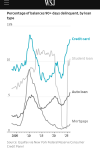

Probably in the same plane as signature/unsecured loans. Our purchase is an n of 1, but our negotiated price last November was the 10-day payoff quote which was 15% below asking. Seller held the plane for about nine monthsView attachment 152348
I wonder where piston aircraft loans fall on this chart.
Curious... From the time the seller had bought it to the time they flipped it was 9m? Or they tried to sell it for 9m? Glad you all negotiated a good price.Probably in the same plane as signature/unsecured loans. Our purchase is an n of 1, but our negotiated price last November was the 10-day payoff quote which was 15% below asking. Seller held the plane for about nine months
Seller purchased in Feb 2025. We closed at the end of November, 2025. He actually held it less than nine months, during which time he bought a Cirrus.Curious... From the time the seller had bought it to the time they flipped it was 9m? Or they tried to sell it for 9m? Glad you all negotiated a good price.