How Much Systems Knowledge Do We Need?

Here's a good example of why understanding some obscure facts could be a life saver:

Some years ago an L-39 had an engine failure on take-off.

They found a lot of heat damage in the turbine section, traced it back to a few clogged injectors, I think.

But that engine had a weird EGT set-up, with multiple thermocouples in series.
Because of the uneven gas temperatures (caused by the clogged injectors), some thermocouples saw much cooler temperatures, masking the fact that others were being cooked, together with the turbine blades.

Knowing that detail might make the pilot pay more attention to secondary engine indications.
 
Last edited:
There's more, though I can't think of them all right now.
There are lots of examples of negative transfer. The one I recall from a long time ago was the CFI (it could be any pilot, but I thought it was especially funny from a CFI) whose gear kept going up and down up and down when they were trying to extend it. Turned out the CFI had done all of their retract training in a Cutlass.

The landing gear system in a Cutlas is hydraulic. Abnormal gear extension involves using a hand pump to manually build up pressure to extend it.

"Of course," that's what this pilot did with the Johnson bar in a Mooney.
 
I like the way that this reads. But I don’t grasp what you mean when you equate checklists to religion. Would you elaborate?
Checklists are baseline action lists based on a set of a priori assumptions, and are repeated without application of independent thought.

They work really well in most situations, but you cannot be a slave to them when things go outside of the normal envelope. Sometimes you have to think for yourself.

Example: During a long flight earlier this year, a weak friction grip on my mixture knob allowed it to progressively vibrate in the leaning direction, finally resulting in the engine sputtering and nearly dying.

The fix is simple: Add mixture and it comes back to life....but you don't have very long to figure out what needs to be done.

How do you figure it out? Look at your engine and fuel indicators - what are the fuel levels, temp readings, fuel pressure, fuel flow, etc., and determine what could cause the combination being displayed. It's not on the checklist, but understanding the engine and fuel systems makes it easy to detect and resolve rapidly.
 
Last edited:
A good example of a pilot who did not understand his systems, and died for it:

After reading the report, I’m not at all convinced that the accident resulted from a lack of systems knowledge. It doesn’t take much systems knowledge to manage the throttle so as to keep the MP from exceeding the limit. It seems to me another case in which the pilot was in a great hurry and allowed his haste to seriously degrade his judgement. That particular cognitive malfunction does not respect hours in a logbook, and we are all vulnerable. I suspect that, once airborne, he may have been distracted, perhaps trying to catch-up on tasks that he had neglected in his rush to get off the ground i.e. entering the route into the GPS. What is most striking to me is that this 22,000-hour pilot allowed the airplane to stall, but that seems almost like a foregone conclusion given the mindset that I have presumed for him in this scenario.

But he’s not here to give us the true story, so all we can do is speculate.

As a wise pilot once said, when you are in an airplane and you are in a hurry, you are in trouble.

Perhaps a better (and very thoroughly investigated) example of going too far beyond one’s system knowledge can be found in the tragic case of Alaska 261.
 
Example: During a long flight earlier this year, a weak friction grip on my mixture knob allowed it to progressively vibrate in the leaning direction, finally resulting in the engine sputtering and nearly dying.

The fix is simple: Add mixture and it comes back to life....but you don't have very long to figure out what needs to be done.
And since this is to explain your checklist analogy, what does the checklist say to do for this? And what is the simple fix that systems knowledge dictates?
 
Last edited:
Checklists are baseline action lists based on a set of a priori assumptions, and are repeated without application of independent thought.
I wondered the same thing as @Roger Wilco. I guess that depends on the checklist and the way the pilot uses them. I see belief vs knowledge all the time, but I really don't see checklist use in the "belief" category unless the pilot chooses to elevate rote over understanding. But that's usually a pilot thing that isn't limited to aircraft operation.

And, there are scientists who hold strong personal religious beliefs. The two are not mutually exclusive.
 
Last edited:
Checklists are baseline action lists based on a set of a priori assumptions, and are repeated without application of independent thought.
Perhaps you are thinking of one of those silly pilot shop checklists that lists every single action starting with brushing one’s teeth (the a priori assumption being that the pilot has teeth). I suggest that a properly constructed checklist consists of a concise series of logical, well-ordered steps that guide a pilot’s actions toward achieving a desired outcome. The SME(s) who create checklists assume that pilots already know how to fly the plane and have an operation-level grasp of the aircraft’s systems. Checklists that address time-critical situations identify primary actions that should be accomplished from memory in a timely manner in order to establish/maintain a safe condition of flight and/or stabilize the situation until the pilot has an opportunity to consult the appropriate checklist. Most checklists are living documents that are revised and improved in response to lessons learned from real-world experience.
They work really well in most situations, but you cannot be a slave to them when things go outside of the normal envelope. Sometimes you have to think for yourself.
Always. You always have to think for yourself.
Example: During a long flight earlier this year, a weak friction grip on my mixture knob allowed it to progressively vibrate in the leaning direction, finally resulting in the engine sputtering and nearly dying.

The fix is simple: Add mixture and it comes back to life....but you don't have very long to figure out what needs to be done.
If you consult the appropriate checklist in your AFM/POH, it most likely includes a step to check/adjust the mixture control among other initial steps that should be accomplished from memory.
How do you figure it out? Look at your engine and fuel indicators - what are the fuel levels, temp readings, fuel pressure, fuel flow, etc., and determine what could cause the combination being displayed. It's not on the checklist, but understanding the engine and fuel systems makes it easy to detect and resolve rapidly.
With regard to the OP, none of the above require comprehensive, in-depth knowledge of, say, the fuel injection system. If you were to study a TCM Bendix fuel injection manual that details the manner in which air metering force acts on a diaphragm to operate a ball valve, what good would that do you when the engine sputters and quits in flight?
 
Last edited:
I have trouble deciding how to describe this.

The point has been made up thread of an un airworthy rental.

I have been a renter/club member for all of the 35 years I have been flying. I've rented in Massachusetts, Connecticut, Florida, California, North Carolina, South Carolina, New York and probably a few I've forgotten. So far, I have not come across one which would deny a customer the ability to view the aircraft logbooks if they wanted to check something. I figure it would take one checkride discontinuance when the DPE asked the applicant to prove airworthiness and all they had was a dispatch sheet (let alone an investigation into a pilot for flying something unairworthy).

That sort of happened with my first private pilot student. Dispatch sheet showed the airplane was current, but it had been out of annual for several months. My student - of course - checked the logbooks that morning and discovered what everyone else had missed or not looked for.


I had an un airworthy rental Piper Arrow, provided with no notice of any problem.
Preflight and pretakeoff checks all good, including 3 green lights.
At my destination, gear selected down, 2 green...
Exchanged bulbs, they were good. Did my first go around, and notified tower that I would do a fly by to see if I had 3 gear down.
Fly by, gear looked good to the tower, but they asked for another flyby with a local Arrow owner, to get a better assessment.
The gear was left down for all this extra flight, an Arrow with gear down has very little climb available.
The 4th approach resulted in a safe landing.
After parking, called a cab to go to the event.
Returning, removing tie, jacket and white shirt, I inspected the micro switch on the gear, and found it was miss adjusted, the gas man in the cockpit called green, and out, as I slightly moved the arm. The switch worked every time.
Returning to the home base, in the pattern, called Unicom that I had only 2 green lights, they responded that I should do a fly by to verify 3 gear down, the plane had intermittent failures of the lights for the past week.
I replied that they should run out on the runway, and if there were only 2 gear down, wave their arms violently, and I would do a go around, otherwise, I was landing without a close fly by inspection.
As expected, the gear were down and locked.

They were furious, the gear might not have been locked.

I told them they should have told me of the written squawk in THEIR files, so that I would have been prepared, and had someone out for my first approach at the destination, and save me 15 minutes of circuits of the pattern.

I also suggested they subtract that time from my bill, but did not press it

I did make very clear that if the gear had collapsed, I would have had no sympathy for them. I would have flown a different plane if I had known of the problem.

A 2 gear landing at the destination would have left me over a hundred miles from home without alternate transportation.

There was a mechanic on the home field...and over a week without addressing the failure.

For those critical of no flyby, I had done the emergency extension, and the Arrow gear really slams in place, latching is pretty much guaranteed. I knew the systems of that plane well, and knew the emergency made a more positive engagement of the latch.

 
I have trouble deciding how to describe this.

The point has been made up thread of an un airworthy rental.


I had an un airworthy rental Piper Arrow, provided with no notice of any problem.
Preflight and pretakeoff checks all good, including 3 green lights.
At my destination, gear selected down, 2 green...
Exchanged bulbs, they were good. Did my first go around, and notified tower that I would do a fly by to see if I had 3 gear down.
Fly by, gear looked good to the tower, but they asked for another flyby with a local Arrow owner, to get a better assessment.
The gear was left down for all this extra flight, an Arrow with gear down has very little climb available.
The 4th approach resulted in a safe landing.
After parking, called a cab to go to the event.
Returning, removing tie, jacket and white shirt, I inspected the micro switch on the gear, and found it was miss adjusted, the gas man in the cockpit called green, and out, as I slightly moved the arm. The switch worked every time.
Returning to the home base, in the pattern, called Unicom that I had only 2 green lights, they responded that I should do a fly by to verify 3 gear down, the plane had intermittent failures of the lights for the past week.
I replied that they should run out on the runway, and if there were only 2 gear down, wave their arms violently, and I would do a go around, otherwise, I was landing without a close fly by inspection.
As expected, the gear were down and locked.

They were furious, the gear might not have been locked.

I told them they should have told me of the written squawk in THEIR files, so that I would have been prepared, and had someone out for my first approach at the destination, and save me 15 minutes of circuits of the pattern.

I also suggested they subtract that time from my bill, but did not press it

I did make very clear that if the gear had collapsed, I would have had no sympathy for them. I would have flown a different plane if I had known of the problem.

A 2 gear landing at the destination would have left me over a hundred miles from home without alternate transportation.

There was a mechanic on the home field...and over a week without addressing the failure.

For those critical of no flyby, I had done the emergency extension, and the Arrow gear really slams in place, latching is pretty much guaranteed. I knew the systems of that plane well, and knew the emergency made a more positive engagement of the latch.
We've all had unairworthy rentals. And, in line with the general state of many aviation businesses, some has horrible squawk policies. I even gave an example of an airplane that had been flown for months out of annual. But that's not the same as an assertion that
You can ask for log books buy they don’t have to let you.
 
Agree with that, Dan. And all that is needed is a very basic understanding of how a carburetor (and the heat system) works. Operation-level stuff. I have been flying my plane for years without knowing a lot about the carburetor. Recently I studied an exploded diagram of the thing and the complexity was almost frightening. Lots worse than even an old Quadrajet. I wish I’d never seen it.
More than a basic understanding of the carburetor is needed. The pilot absolutely needs to know that the carburetor chills the air passing though it, due to the pressure drops though the venturi and past the partially-closed throttle plate, and a pressure drop also comes with a temperature drop. That's physics, one of the gas laws. Fuel evaporating into the airstream also causes a further temperature drop, another fact of physics: liquid turning to a gas absorbs heat. The upshot is that one can get a temp drop in the carb of over 70 degrees F, and if there is enough moisture in the air, even as an invisible vapor, it can and will turn to ice in that carb and clog the airflow and kill the engine.

It seems that too many pilots never read and understand a carb ice chart:

1763247593604.png

Look at that. Ice possible, according to this chart (which may be aircraft-model-specific) at temps up to over 100°F. That happens when the dewpoint is at around 65°F. That's a real threat and it will kill the uninformed pilot. Every METAR gives you the temps and dewpoint, and when they are close together, even if the temp is 30°C (around 86°F) and the dewpoint is 25 (77°F) one had better watch out.
Then there are anecdotal information passed down that are either inaccurate or incomplete which a more logical and curiosity-driven mindset could unravel.
Oversquare operation - in most airplanes, there is no such thing.
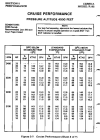
Oh, really? No oversquare? From the R182 POH:

1763248084580.png

I see 23"/2200 RPM here as well as 23" and 22"/2100RPM. Oversquare.

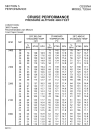
From a T206H POH:

1763248272490.png
Turboed. I see 30" over everything there.

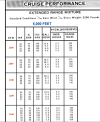
From a Cessna 177B POH:

1763248490736.png

Lots of oversquare settings.

POH's are fun. They have actual facts in them. Too bad they are so often ignored.


Shock cooling - ok, this may still be up in the air, but I maintain that in the ordinary NA pistons that we fly, it's not possible to shock cool under normal operations. Air simply does not have the thermal conductivity or thermal capacity to quench a hot metal at a rapid rate. If it did, welders could use a fan instead of a bucket of water.
Shock cooling has more to do with metals than that. The aluminum head of an aircraft engine cylinder is thick and very hot on the inside and much, much cooler on the outside. That creates thermal stresses in it. When one pulls the throttle back from climb or cruise and abruptly dives the airplane, those stresses can increase.

Lycoming used to have problems with heads cracking between the spark plug holes and the exhaust valve seat due to that. They're still wary of rapid temp changes. You treat your engine the way you want to treat it, and accept the risks.

With regard to the OP, none of the above require comprehensive, in-depth knowledge of, say, the fuel injection system. If you were to study a TCM fuel injection manual that details the manner in which air metering force acts on a diaphragm to operate a ball valve, what good would that do you when the engine sputters and quits in flight?
A TCM system doesn't have diaphragm-actuated ball valves. That's in the Bendix/RSA/Lycoming system.
 
Lycoming used to have problems with heads cracking between the spark plug holes and the exhaust valve seat
So did ford flat head v-8’s, (and they were developed closer to each other than either of them to present times). It is a very high stress area and these thing were blueprinted with slide rules and French curves not finite analysis. In fords case it was liquid cooled and had zero “shock cooling” factor, it is just an extremely hard area to get correct. To thick it doesn’t transfer heat fast enough, to thin it cracks. (I’d bet a dollar that the final thickness decision came from empirical data collection and not math).
 
More than a basic understanding of the carburetor is needed. The pilot absolutely needs to know that the carburetor chills the air passing though it, due to the pressure drops though the venturi and past the partially-closed throttle plate, and a pressure drop also comes with a temperature drop. That's physics, one of the gas laws. Fuel evaporating into the airstream also causes a further temperature drop, another fact of physics: liquid turning to a gas absorbs heat. The upshot is that one can get a temp drop in the carb of over 70 degrees F, and if there is enough moisture in the air, even as an invisible vapor, it can and will turn to ice in that carb and clog the airflow and kill the engine.
Yes, absolutely. I consider that to be basic, operation-level understanding for pilots of carburetor-equipped aircraft.
Oh, really? No oversquare? … Lots of oversquare settings.
Actually, I read sarangan’s post to mean that old-school warnings* against it are based on misinformation and lack of knowledge.
A TCM system doesn't have diaphragm-actuated ball valves. That's in the Bendix/RSA/Lycoming system.
Thanks Dan—I had misremembered.

*AKA “old-wives tales,” but I doubt any actual wives—old or otherwise—were involved.
 
Last edited:
Yes, absolutely. I consider that to be basic, operation-level understanding for pilots of carburetor-equipped aircraft.

Actually, I read sarangan’s post to mean that old-school warnings against it are based on misinformation and lack of knowledge.

Thanks Dan—I had misremembered.

Yes, you are correct.
In fact, the definition of oversquare itself is rather odd - dividing rpm by 100 and then comparing to manifold pressure in inches of Hg. There is no mathematical basis for such a comparison. It's just a made up rule. I also don't see what the "square" refers to.
 
Yes, you are correct.
In fact, the definition of oversquare itself is rather odd - dividing rpm by 100 and then comparing to manifold pressure in inches of Hg. There is no mathematical basis for such a comparison. It's just a made up rule. I also don't see what the "square" refers to.
Interesting point ! Definitely odd !, two different units ?, If made up, made up by who ? and why?
 
There are lots of examples of negative transfer. The one I recall from a long time ago was the CFI (it could be any pilot, but I thought it was especially funny from a CFI) whose gear kept going up and down up and down when they were trying to extend it. Turned out the CFI had done all of their retract training in a Cutlass.

The landing gear system in a Cutlas is hydraulic. Abnormal gear extension involves using a hand pump to manually build up pressure to extend it.

"Of course," that's what this pilot did with the Johnson bar in a Mooney.
Sounds like the mooney guy, didn't even get a check out.
 
Immediate actions
  • Reduce throttle: Close the throttle to the idle position to reduce engine power and slow the propeller.
  • Pitch up: Gently raise the aircraft's nose to increase the angle of attack. This reduces the indicated airspeed and the load on the propeller, which can help decrease RPM.
  • Check oil pressure: This is a critical step, as many overspeed events are caused by oil system failure.
  • Follow the checklist: Refer to your aircraft's specific emergency checklist for the correct sequence of actions.
  • Use speedbrakes (if applicable): On larger aircraft, deploying speedbrakes can help slow the aircraft down more quickly.

Pretty much common sense. My first point is ss a pilot say renting a plane you go by check list pretty much. You really have no knowledge of said aircraft.

Owner aircraft you should know how many hours is on the prop and governor. When were they last overhauled. Does either one leak oil. Especially when were they removed for OH and a big one how many years ago was it done. 5 years ago? 25 years ago?

Rental planes you never know.
But this is not the question OP asks. You are doing immediate actions not based on your knowledge of the constant speed prop mechanisms but as reactions to an event.

Your not using your knowledge of governor counterweights or hub piston seals but of high uncommanded engine RPMs.... better pull the power and keep it out of the redline.

Similiarly if your engine starts losing power you pull carb heat first... you're not thinking of fuel pumps/filters/selectors.... you're just doing an immediate action.
 
When I first started flying jets, I was expected to know that the secondary fuel nozzles were positioned at the 2 and 8 o’clock stations in the second stage burner.

Later in my career the FAA realized that nothing can be done about a fuel nozzle from the cockpit.
I know that milk of magnesia is an authorized anti-sieze for ignitors on CRJs. Doesn't help me at all when troubleshooting a R Engine (warning) EICAS message.

THe QRH for some pretty serious problems are little more than 'turn it off and on again. Does it work? No? Turn it off and leave it off'. Quite a few are no more than 'make sure its really, really off'.
 
Perhaps a better (and very thoroughly investigated) example of going too far beyond one’s system knowledge can be found in the tragic case of Alaska 261.
If you mean the maintenance team and those that supervised them at Alaska Air and possibly Boeing, I agree. But I don't think it was a lack of knowledge that caused that accident. From reading through that 250 page report - and thanks for posting it - it reads to me like multiple decisions to reduce maintenance costs with no data of any sort to justify the reduced maintenance. Maybe it went beyond that, and the people at Boeing didn't understand how the MD-80s actually were supposed to work? No idea. But to your point of thinking you know more than you know, yes, an excellent example.
 
Perhaps you are thinking of one of those silly pilot shop checklists that lists every single action starting with brushing one’s teeth (the a priori assumption being that the pilot has teeth). I suggest that a properly constructed checklist consists of a concise series of logical, well-ordered steps that guide a pilot’s actions toward achieving a desired outcome.
Most checklists are living documents that are revised and improved in response to lessons learned from real-world experience.
You sound like a pro pilot, who maybe hasn't seen a GA checklist in a while.

Most GA checklists are absolute garbage, and never get updated.

And I say all this because one of the biggest impressions I got the first time I flew a jet was "Wow, these checklists are beautiful." Quick and concise. Meanwhile, almost every GA checklist I've ever seen is a step-by-step do-list of everything you need to do to fly the plane, and contains about 3x the number of items that it should.
 
Meanwhile, almost every GA checklist I've ever seen is a step-by-step do-list of everything you need to do to fly the plane, and contains about 3x the number of items that it should.
I suspect it might have something to do with the lack of cockpit discipline you might find in a GA pilot.
You need three reminders to place the fuel valve in the ON position because you might miss one or two of them.
 
. I also don't see what the "square" refers to.
Just means equal, like the sides of a square.

As you point out, oversquare is MP > RPM/100.
Under square is MP < RPM/100.
Square is MP = RPM/100.

I’ve heard a couple of explanation for the myth, but I suspect that, like some, it arose from the extremes. It might well be a bad idea to pull the prop back to 1000 RPM with 30” MP so, “of course!” 25”/2300 must be just as bad.
 
If you mean the maintenance team and those that supervised them at Alaska Air and possibly Boeing, I agree. But I don't think it was a lack of knowledge that caused that accident. From reading through that 250 page report - and thanks for posting it - it reads to me like multiple decisions to reduce maintenance costs with no data of any sort to justify the reduced maintenance. Maybe it went beyond that, and the people at Boeing didn't understand how the MD-80s actually were supposed to work? No idea. But to your point of thinking you know more than you know, yes, an excellent example.
Both of those pilots had operation-level systems knowledge of their aircraft. They were presented with a situation in which the trim system failed in a way that compromised controllability/maneuverability but left them with a flyable airplane. They accomplished the appropriate checklists, which did not resolve the malfunction. They contacted a dispatcher and a maintenance technician, neither of whom were any help to them. They didn’t know what they didn’t know, and in their efforts to figure it out they unwittingly made the problem worse until the aircraft became uncontrollable. Re-reading the findings after many years, I am impressed by their valiant efforts to regain control of the jet right up to the moment of impact.

Apropos the OP, we might propose that, had their training provided a deeper and more comprehensive understanding of the system and all possible failure scenarios, they might have recognized what they were up against early in the accident sequence and their subsequent actions might have resulted in a safe landing. But even the maintenance tech who presumably possessed that knowledge and who had access to the relevant manuals and guidance, sitting at a desk (perhaps with a nice cup of coffee), wasn’t able to figure it out. At some point, they exacerbated the problem such that no amount of system knowledge would have mattered at all.

My takeaway: regardless of our level of systems knowledge, sometimes we are presented with malfunctions or situations that defy our best efforts to solve with the tools that we have available in flight. When that happens, we have to remind ourselves that we don’t know what we don’t know, and no matter how good we think we are we must avoid trying be a test pilot and risk making a bad situation worse. We instead want to get the airplane safely on the ground ASAP and do our troubleshooting after a well-earned beer and a good night’s sleep. The crew of 261 had an opportunity to do just that. The Captain had long, wide runways available at LAX, Ontario, two USAF bases, and of course, Edwards, any of which might have offered a good shot at a safe landing if only he had decided to do so while the aircraft was still controllable.
 
You sound like a pro pilot, who maybe hasn't seen a GA checklist in a while.
Guilty as charged, but also a GA pilot owner/operator. I see a GA checklist every time I fly my own airplane.
Most GA checklists are absolute garbage, and never get updated.
Your point is well-taken. Some POH/AFM checklists are pretty good; others are not. Manufacturers that are still in business and still revise the manuals for their aircraft sometimes make changes to checklists that result in a net improvement, but many pilots never utilize those revisions.

I do recall that the non-normal/abnormal and emergency checklists in most manuals are better than those for normal procedures. But my experience is limited to 30 or so GA aircraft that I’ve actually flown, and more limiting, that I can remember.
And I say all this because one of the biggest impressions I got the first time I flew a jet was "Wow, these checklists are beautiful." Quick and concise. Meanwhile, almost every GA checklist I've ever seen is a step-by-step do-list of everything you need to do to fly the plane, and contains about 3x the number of items that it should.
Do the “step-by-step do-lists” that you refer to come from the POH/AFM or some other source? Armed with the checklists published in the manual and sufficient real world experience flying the airplane, we can devise our own checklists that vastly improve the signal/noise ratio and resemble the “beautiful” checklist you referred to. I’ve been doing that for decades.
 
Both of those pilots had operation-level systems knowledge of their aircraft. They were presented with a situation in which the trim system failed in a way that compromised controllability/maneuverability but left them with a flyable airplane. They accomplished the appropriate checklists, which did not resolve the malfunction. They contacted a dispatcher and a maintenance technician, neither of whom were any help to them. They didn’t know what they didn’t know, and in their efforts to figure it out they unwittingly made the problem worse until the aircraft became uncontrollable. Re-reading the findings after many years, I am impressed by their valiant efforts to regain control of the jet right up to the moment of impact.

Apropos the OP, we might propose that, had their training provided a deeper and more comprehensive understanding of the system and all possible failure scenarios, they might have recognized what they were up against early in the accident sequence and their subsequent actions might have resulted in a safe landing. But even the maintenance tech who presumably possessed that knowledge and who had access to the relevant manuals and guidance, sitting at a desk (perhaps with a nice cup of coffee), wasn’t able to figure it out. At some point, they exacerbated the problem such that no amount of system knowledge would have mattered at all.

My takeaway: regardless of our level of systems knowledge, sometimes we are presented with malfunctions or situations that defy our best efforts to solve with the tools that we have available in flight. When that happens, we have to remind ourselves that we don’t know what we don’t know, and no matter how good we think we are we must avoid trying be a test pilot and risk making a bad situation worse. We instead want to get the airplane safely on the ground ASAP and do our troubleshooting after a well-earned beer and a good night’s sleep. The crew of 261 had an opportunity to do just that. The Captain had long, wide runways available at LAX, Ontario, two USAF bases, and of course, Edwards, any of which might have offered a good shot at a safe landing if only he had decided to do so while the aircraft was still controllable.
Thanks for that. I don't fly for a living, but have a great appreciation of the knowledge that most professional pilots have, and I think it's generally above and beyond not just the requirements, but that of pilots of other country's airlines. Maybe that's personal bias, but I like to think there's more than a little truth in there, too.

Those two guys just didn't have any idea that stripping all of the threads of the system was within the realm of possibility, and I don't think the engineers did, either. From the read, they were working with the belief that the worst possible outcome was for the trim to be stuck in a worse position than it already was, not become decoupled. They also knew that what they were doing was potentially going to make it worse - I think one said "we're test pilots now". Willing to bet that most MD-80 pilots had a different perspective on the dangers of trim failure after that accident, and from the doc it's clear that a lot of procedures changed, especially around maintenance. A little bit like the shuttle Challenger disaster. Engineering around single points of failure and extrapolated data, which is not a great combination.

Back to your post that started this thread, I think one of the things that has become clear to me is that additional systems knowledge is never a bad thing, as long as the information is accurate, and as long as it isn't used as an excuse to take risks or otherwise push the envelope.
 
A little bit like the shuttle Challenger disaster.
From what I have read (and I could be very wrong) in my opinion the challenger disaster was not the fault of maintenance, …possibly engineering (but I would argue against that), but lays in the hands of the finance and planning departments. The leaking o-ring issue was known before launch and had been a reoccurring problem, but they became complacent and decided to accept the risk rather than scrub the launch or pay for funding an alternative solution to the problem when it first became apparent that it was an issue long before challenger was even moved to the launch pad.
 
From what I have read (and I could be very wrong) in my opinion the challenger disaster was not the fault of maintenance, …possibly engineering (but I would argue against that), but lays in the hands of the finance and planning departments. The leaking o-ring issue was known before launch and had been a reoccurring problem, but they became complacent and decided to accept the risk rather than scrub the launch or pay for funding an alternative solution to the problem when it first became apparent that it was an issue long before challenger was even moved to the launch pad.
100%, not a maintenance problem w/ Challenger. But they both were bad calls in terms of the risks taken with assemblies that had no backup.
 
I suspect it might have something to do with the lack of cockpit discipline you might find in a GA pilot.
You need three reminders to place the fuel valve in the ON position because you might miss one or two of them.
Therein lies the problem. When the checklist asks you to do/check the same thing three times, the pilot begins to ignore the checklist.

In addition, having three reminders instead of one means the dang things are printed in tiny print so they fit on the page, thus making it easier to accidentally miss an item even if you're still trying to use the checklists.

Guilty as charged, but also a GA pilot owner/operator. I see a GA checklist every time I fly my own airplane.
What do you fly?

I do recall that the non-normal/abnormal and emergency checklists in most manuals are better than those for normal procedures.
I would concur, though my impression is that there's often too much focus on the airplane instead of the situation. For example, there are lots of GA engine failure checklists where the first few items deal with mixture, mags, carb heat/alt air, etc when in reality item 1 should be Airspeed to Vg and item 2 should be identifying the landing area and getting pointed towards it, and THEN start messing with the airplane.

Do the “step-by-step do-lists” that you refer to come from the POH/AFM or some other source?
POH, factory checklists.

Armed with the checklists published in the manual and sufficient real world experience flying the airplane, we can devise our own checklists that vastly improve the signal/noise ratio and resemble the “beautiful” checklist you referred to. I’ve been doing that for decades.
Yes - But it really bothers me that this is necessary.

I do like Cessna's approach of having both a "checklist" and an "amplified procedures" section that's full of explanations... But while the "amplified procedures" are a great way to show the step-by-step do-list and the reasoning behind how the checklists were created, they missed the opportunity to make really good checklists and instead left everything in there.
 
Yes - But it really bothers me that this is necessary.
Perhaps I am misunderstanding but why does the "need" to create ones own checklists bother you?

With the exception of when I was a student pilot, I've always rolled my own. I see POH checklists the way I see FBO/club checklists - a level of detail aimed at the lowest common denominator without any consideration for "ergonomic" formatting.

To me, rolling your own accomplishes a number of good things that I don't expect the manufacturer to do for me.
Modification requires thinking and learning.​
Modification forces one to read more than just the checklists.​
Modification takes airframe, engine, and avionics changes into consideration.​
Modification can both shorten and lengthen so it makes sense to you.​
Modification mean custom formatting that makes the checklist more usable, so it is more likely to be used.​
 
One key item on a friend's "before engine start": "remove items from the wing". Added after he forgot his ipad on the wing and took off. Luckily it fell on the ramp and we were able to find it later.
 
Keep in mind that checklists are written by people who are generally experts in the airplane, but are guessing as to what level of detail is going to be required for the pilots who will fly it. Some pilots can work with a fairly sparse outline. Some need every step documented, including looking out the windows, apparently. ;) And everything in between.

And even if it isn’t originally a committee project, over the course of production andmodification, different people get involved and it becomes a committee project.

An illustration I used regularly is a preflight checklist for my airplane…it calls out “windshield wipers (if installed),” but makes no mention of a requirement for windshields. It calls out one temperature sensor that was added to the airplane over the course of production, but not the identical temperature sensor that has been there since the beginning. These aren’t flaws in the checklist, they’re simply things that the manufacturer felt required a little more emphasis. The AFM states, “Conduct a normal preflight inspection,” which covers all the stuff not listed that a pilot should have learned about airplanes by the time he gets into this one.
 
I would concur, though my impression is that there's often too much focus on the airplane instead of the situation. For example, there are lots of GA engine failure checklists where the first few items deal with mixture, mags, carb heat/alt air, etc when in reality item 1 should be Airspeed to Vg and item 2 should be identifying the landing area and getting pointed towards it, and THEN start messing with the airplane.
"Pull carb heat" should be the first thing. It takes a fraction of a second. If the engine dies, that exhaust system, made of very thin metal, cools rapidly and if it was ice that killed the engine, you have a chance that the remaining heat in that system will remove enough ice to let the engine start again and make more heat to remove the rest.

If we leave it until we have Vg and and a landing spot selected, we've just eliminated the last chance of saving the situation.
 
Keep in mind that checklists are written by people who are generally experts in the airplane, but are guessing as to what level of detail is going to be required for the pilots who will fly it. Some pilots can work with a fairly sparse outline. Some need every step documented, including looking out the windows, apparently. ;) And everything in between.
My illustration comes from a flight with a friend. It was a rental airplane and my friend was used to the flight school checklist. That day it was missing, so he asked to use mine. He looked through it briefly, then reached in the back for the POH. Things like "switches...on" simply made no sense to him because he was used to more detail.
 
"Pull carb heat" should be the first thing. It takes a fraction of a second. If the engine dies, that exhaust system, made of very thin metal, cools rapidly and if it was ice that killed the engine, you have a chance that the remaining heat in that system will remove enough ice to let the engine start again and make more heat to remove the rest.

If we leave it until we have Vg and and a landing spot selected, we've just eliminated the last chance of saving the situation.
That's what happened to me when I had a partial loss of power. Got to best glide, headed toward a potential landing area, did some troubleshooting, but when I go around to the carb heat, there wasn't any heat. Needless to say, it was carb ice.

And there's no reason those three steps - best glide, head to a potential landing area, and applying carb heat can't be done concurrently.
And to @flyingcheesehead ’s point, system malfunction checklists primarily deal with systems, not how to fly the airplane. Using this 172 as an example,
https://oregonstateflyingclub.org/aircraft/n72pe-poh.pdf
there are at least 3 engine failure checklists, one of which gives you a speed to fly simply because it’s actually a landing checklist. Others troubleshoot the malfunction. There’s aso an “Emergency landing with engine out” checklist that provides speeds, again because it is a landing checklist and isn’t troubleshooting the problem.

Checklist knowledge is a subset of systems knowledge. The pilot needs to know what checklists are available and when to run the appropriate ones. Sometimes more than one needs to be run concurrently.
 
From what I have read (and I could be very wrong) in my opinion the challenger disaster was not the fault of maintenance, …possibly engineering (but I would argue against that), but lays in the hands of the finance and planning departments. The leaking o-ring issue was known before launch and had been a reoccurring problem, but they became complacent and decided to accept the risk rather than scrub the launch or pay for funding an alternative solution to the problem when it first became apparent that it was an issue long before challenger was even moved to the launch pad.
Challenger became a case study that illustrates the concept "normalization of deviance" in CRM classes.
 
What do you fly?

5ZP very small.jpg

I do like Cessna's approach of having both a "checklist" and an "amplified procedures" section that's full of explanations... But while the "amplified procedures" are a great way to show the step-by-step do-list and the reasoning behind how the checklists were created, they missed the opportunity to make really good checklists and instead left everything in there.
Agreed. This seems to have become either an industry standard or a least, a best practices feature.
 
To me, rolling your own accomplishes a number of good things that I don't expect the manufacturer to do for me.
Modification requires thinking and learning.​
Modification forces one to read more than just the checklists.​
Modification takes airframe, engine, and avionics changes into consideration.​
Modification can both shorten and lengthen so it makes sense to you.​
Modification mean custom formatting that makes the checklist more usable, so it is more likely to be used.​
Here's a way to connect the system knowledge (vis-a-vis the OP), with checklists: When training to fly a new type, I adopted a study practice in which I sat down at a quiet desk with paper posters of the flight deck panels pinned to the wall, and the Flight Manual and sheets of blank paper in front of me. I'd read a system chapter, connect the dots on the flight deck poster, and then diagram the system from memory on a sheet of paper (usually took several tries to get it right). Then I'd turn to the appropriate emergency and non-normal checklists for that system and correlate each step of the checklist to the controls on the panel poster and the diagrams I'd drawn. It was a tedious and time-consuming exercise, but it helped me to get a meaningful grasp of the systems and a much better understanding of what happens when things go wrong. But still, my systems comprehension did not go deeper than operation-level knowledge.
 
Last edited:
Perhaps I am misunderstanding but why does the "need" to create ones own checklists bother you?
I get that there are benefits to doing it yourself, but it's not a thing you should HAVE to do... And it really is the way things are now.

In addition, the poor quality of the checklists invariably leads to people simply not using them. VERY few of the many people I've flown with use any sort of written checklist at all. Good checklists would be a safety benefit for GA.

Finally, when you're rolling your own, it's really easy to do things like move carb heat later when, as you and @Dan Thomas correctly pointed out, that should still be first.

To me, rolling your own accomplishes a number of good things that I don't expect the manufacturer to do for me.
Modification requires thinking and learning.​
Modification forces one to read more than just the checklists.​
Modification takes airframe, engine, and avionics changes into consideration.​
Modification can both shorten and lengthen so it makes sense to you.​
Modification mean custom formatting that makes the checklist more usable, so it is more likely to be used.​
Which are all good reasons for doing it anyway, but I think the manufacturers need to do a better job of making checklists that are usable right out of the gate.

Oooh purty!!!! :drool:

Also probably old enough that the checklists aren't overdone the way so many GA checklists are today.

Agreed. This seems to have become either an industry standard or a least, a best practices feature.
Not nearly widespread enough. I know Cessna isn't the only company that does it any more, but I'd say that it's still very much a minority feature.
 
Back
Top