hindsight2020
Final Approach
*MCAS has entered the chat*


Yes indeed, in post #36. A case which tends to undermine the old Buddhist tenet, not knowing is best.*MCAS has entered the chat*


For the passengers, not knowing is probably best. Not so much for the pilots.Yes indeed, in post #36. A case which tends to undermine the old Buddhist tenet, not knowing is best.

Neither. I’m interested in other pilot’s perspectives about the topic and don’t want to add too much of my own.Without reading through the entire thread I'd just ask if you think there is a point where you just shut off any input because you don't need to know any more about it or are you concerned that the average pilot doesn't know enough to be safe?
I enjoyed the video, thanks for linking it.I'm late to the game... but wanted to share this discussion with Doug Rozendaal and myself, where we explore this exact thread topic from a pilot's perspective:

Judging by the sample page, I’m pretty certain this is the publication:I enjoyed the video, thanks for linking it.
Any idea where (if?) I can find a copy of the Air Force publication that Doug mentions "Aircraft Engineering For Pilots"?
 app.aircorpslibrary.com
Thanks, I appreciate the link.

Thanks for posting this link, Martin. I had previously come across a video you did with Rozendaal regarding multi-engine training and found him to be quite knowledgeable in a way that is increasingly rare among instructors. He makes some very astute observations here, from a very practical real-world perspective.I'm late to the game... but wanted to share this discussion with Doug Rozendaal and myself, where we explore this exact thread topic from a pilot's perspective:
Returning to this topic, and considering the many replies (thanks, all), the above is the OP. In the conversation I referenced, the other pilot could perfectly describe the basic mechanical operation of a generic constant-speed propeller system as described in PHAK and other training documents. But he didn't have a firm grasp of the why: the aerodynamics involved and the way that the propeller and the engine work together to form a singe propulsion unit. It thus seemed that he was knowledgeable about stuff that doesn't really matter, and unclear on stuff that does.A recent conversation about the secret life of controllable-pitch propeller systems has me wondering: How much knowledge about of the inner workings of aircraft systems and components does a pilot actually need? Using propeller systems as an example, do we really need to know about flyweights, speeder springs, servo pistons, etc.? Or could we fly just as safely and efficiently if we believed that the blue knob was somehow connected to a pint-size chamber inhabited by a magic elf who cranked the mechanism into compliance with our demands?

Personal anecdote: I once flew a large turboprop for a regional carrier.

I remember that crash well. We flew the Senator's and his daughter's bodies back home. Our hangar neighbors operated a Dash 8 at that time and if I remember right had to comply with an AD on it because of the crash.Personal anecdote: I once flew a large turboprop for a regional carrier. The propeller system was a close relative of the Hamilton Standard 14RF-9 installed on the EMB-120 Brasilia, one of which catastrophically failed in flight resulting the loss of all 23 aboard including a US Senator.
I will just point out that your knowledge wasn’t bad to have, it simply didn’t benefit you in that particular scenario. There are quite probably scenarios where it could have been of benefit.Personal anecdote: I once flew a large turboprop for a regional carrier. The propeller system was a close relative of the Hamilton Standard 14RF-9 installed on the EMB-120 Brasilia, one of which catastrophically failed in flight resulting the loss of all 23 aboard including a US Senator. With that in mind, I studied every technical document that I could get my hands on to understand the system as well as I could. One fine day, the big Hamilton Standard propeller installed on the (perfectly good) right engine of my airplane decided it wasn't getting enough attention and interrupted my blissful mid-cruise state of satisfaction and wellbeing by--surprise!--unexpectedly feathering itself with a dramatic GRAOWWWOWWOWWWOWWWWOWWWUFFFF...WUFF...WUFF...WUUFF. No manipulation of controls, levers, switches, etc. had any effect whatsoever, and all of the knowledge I had gained by spending hours poring over diagrams and details was totally useless. And I do mean totally useless. Looking back, it would have been enough to know only lever forward = propeller faster, lever rearward = propeller slower, lever behind the gate = propeller stop, to fly the plane with with precision, smoothness, and efficiency.
Raise your hand if you've searched through the NTSB accident database for the airplane(s) you fly, to potentially add to the list of things not to do or to look out for.The problem is you don’t know which failures to study for in advance.
We can probably agree that knowledge is good. My perspective is that there is a level(s) of system knowledge that goes beyond what is operationally necessary or useful in any scenario that I can imagine. There is a broad range of experience and expertise on this board, and I am curious about what pilots from different backgrounds think about the matter.I will just point out that your knowledge wasn’t bad to have, it simply didn’t benefit you in that particular scenario. There are quite probably scenarios where it could have been of benefit.
The problem is you don’t know which failures to study for in advance.
Ok…how aboutWe can probably agree that knowledge is good. My perspective is that there is a level(s) of system knowledge that goes beyond what is operationally necessary or useful in any scenario that I can imagine. There is a broad range of experience and expertise on this board, and I am curious about what pilots from different backgrounds think about the matter.
I think that those are all good goals. Can we bring pilots up to that level of knowledge & expertise by the time they get their PPL? Especially with regard to your last benchmark, it seems that accumulating enough knowledge to out-mechanic an A&P (even a bad one) requires a real interest in learning the nuts & bolts, and years of experience.Ok…how about
Enough to be able to communicate with a mechanic
Enough to know when to call ******** when the mechanic says there’s nothing wrong
Enough to know when the mechanic is misdiagnosing, for example when he says the engine suddenly blew two quarts of oil all over the cowling because while no oil had been added for months, it wasn’t actually checked post flight yesterday (just ran across those emails the other day. And to be completely transparent, I didn’t call anybody a ****ing idiot until the same thing happened a month or two later.)
While the last one was a turbine engine, the basic principle applies to piston airplanes at a relatively common level…when do you check the oil? What happens if you put in too much? Does an engine make oil by itself, or would you have to put some in to have too much?I think that those are all good goals. Can we bring pilots up to that level of knowledge & expertise by the time they get their PPL? Especially with regard to your last benchmark, it seems that accumulating enough knowledge to out-mechanic an A&P (even a bad one) requires a real interest in learning the nuts & bolts, and years of experience.

'expertise'??? Not to be snarky but most PPL students can't refuel an aircraft. And after waiting at the pump on many PPLs I would say quite a few PPLs still don't have a full understanding of it.Can we bring pilots up to that level of knowledge & expertise by the time they get their PPL?

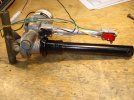
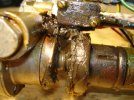
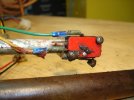
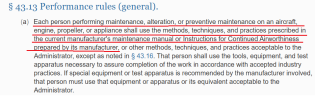
That microswitch might have been one on the flap preselector mechanism, but not likely if the ASI was in MPH. Too old to have the preselector. Most likely it was due to mechanics spritzing the flap jackscrew with oil, or slathering it with grease. The service manuals give all the details about what lube to use and how to apply it, but too many mechanics just ad-lib the maintenance. The oil or grease gets into the flap travel limit microswitches and fouls their contacts so that the system fails.will add that one flight out of KRDG in a rental 172 I had a secondary flight control failure. I was practicing stalls and was configured for slow flight, full flaps. After I recovered from the stall the flaps would not come up. Did knowing how the flap return mechanism of the cessna 172 help me? No. not at all. There was no way I was going to adjust microswitches or check wires for power. Check the fuse. popped? no? cycle the flap level again. Flaps move? no. Stay in the white arc, do 80mph (yes, some 172s had mph on the airspeed gauge) to the field and ask for a straight in due to flap failure.
And yes, it was a bad microswitch.
That’s pretty close to my own perspective, pfarber. I think you nailed it (but I’m usually wrong).Pilots don't need to know anything about the governor counterweights. They do need to know immediate actions and how to run the checklist.
I would offer that SITUATIONAL AWARENESS is more important that systems knowledge. If you lose the prop due to a hub seal failure the oil pressure will drop and there is nothing you can do about it no matter how much you know. Knowing not to fixate on one issue (remember Aviate is the first commandment) and staying calm enough to address new issues, as well as solve the immediate problem of needing to land are vastly more important skills.
There is a generic 'more knowledge is better' answer, but that's not really the question. The question is are PPLs trained to a level to be able to handle an actual emergency? No, they are not. 99% of PPLs may have had little more than a CFI pull the throttle and say 'engine's out'. Of the 8 CFIs I had the displeasure of 'learning' from none of them ever did a lost comms, electrical issue, simulated fire in the cabin, loss of say rudder or elevator jam.
In the governor, they are not counterweights, but flyweights.Pilots don't need to know anything about the governor counterweights.
Totally agree. 75% of a successful flight happens before we slip the surly bonds. Knowing enough about our airplane to identify issues and taking the time to do a thorough preflight are crucial. I just don’t think it’s necessary to know all the stuff that goes on inside the prop governor (one example) in order to determine that it’s secure, not leaking, and connected to the blue knob in the cockpit.I would submit that it’s at least as important to be able to identify a mechanical issue that should prevent flying the airplane as it is to be able to deal with malfunctions in flight. I think the former could prevent a lot of the latter.
Complete agreement. I still have a lot to learn, which is why I’m here. There is a wealth of knowledge and experience to be found on PoA.I would also submit that what a private pilot knows when he takes his checkride is very limited. The term license to learn is real. A pilot must continue learning.
And beyond the preflight, proper systems checks. I’ve known several people over the years who took comfort in the fact that they had a backup vacuum system, but had no clue how to test it or use it. In one case, when I got in the airplane I discovered by actually doing the run up check that the system didn’t work.Totally agree. 75% of a successful flight happens before we slip the surly bonds. Knowing enough about our airplane to identify issues and taking the time to do a thorough preflight are crucial. I just don’t think it’s necessary to know all the stuff that goes on inside the prop governor (one example) in order to determine that it’s secure, not leaking, and connected to the blue knob in the cockpit.
Yes. This is the kind of operational knowledge that pilots really need.And beyond the preflight, proper systems checks. I’ve known several people over the years who took comfort in the fact that they had a backup vacuum system, but had no clue how to test it or use it. In one case, when I got in the airplane I discovered by actually doing the run up check that the system didn’t work.
Another pilot may have had a dual vacuum pump failure, but we also realized he didn’t understand how his airplane indicated a vacuum failure, so it may have been two individual failures at separate times. He also didn’t understand his systems well enough to know that, had he been in IMC at the time, his autopilot would have worked just fine without the AI or DG operating.
Which is roughly the same as my earlier post.Yes. This is the kind of operational knowledge that pilots really need.
Enough to be able to communicate with a mechanic
Enough to know when to call ******** when the mechanic says there’s nothing wrong
Enough to know when the mechanic is misdiagnosing, for example when he says the engine suddenly blew two quarts of oil all over the cowling because while no oil had been added for months, it wasn’t actually checked post flight yesterday (just ran across those emails the other day. And to be completely transparent, I didn’t call anybody a ****ing idiot until the same thing happened a month or two later.)
As I mull-over the prospect of getting my instructor certificate reinstated, I’m confident that I can get a new pilot to this level of knowledge.Enough to be able to communicate with a mechanic
That operational level of knowledge is what allows one to know that the mechanic is misdiagnosing.As I mull-over the prospect of getting my instructor certificate reinstated, I’m confident that I can get a new pilot to this level of knowledge.
Reaching the level of knowledge necessary to know “when the mechanic is misdiagnosing” does not seem like a realistic goal, at least while training new and low-time pilots.
The illustrations involving vacuum systems indicate a knowledge vacuum (if you will) on the part of the pilot, at the operation level of knowledge.
We may have different concepts of what constitutes operational knowledge. There’s no official definition—I use the term in this thread to describe the level of systems knowledge and understanding necessary to competently operate the machine. Aside from that, I appreciate your perspective and your thoughtful and well-informed posts, here and elsewhere.That operational level of knowledge is what allows one to know that the mechanic is misdiagnosing.
In my specific example, I consider it to be operational knowledge that a fluid level will not increase without adding fluid.We may have different concepts of what constitutes operational knowledge. There’s no official definition—I use the term in this thread to describe the level of systems knowledge and understanding necessary to competently operate the machine. Aside from that, I appreciate your perspective and your thoughtful and well-informed posts, here and elsewhere.

Yes, that was my takeaway. Upon initial reading, I momentarily thought you were going to add a clue that the regurgitated oil smelled like Jet A, which would have made for a good systems knowledge example (on some turbine engines, at least). That wasn’t the case, and while I agree that every pilot should understand that an aircraft powerplant is not an oil refinery, that level of understanding lies outside of the scope of my inquiry.In my specific example, I consider it to be operational knowledge that a fluid level will not increase without adding fluid.