You are using an out of date browser. It may not display this or other websites correctly.
You should upgrade or use an alternative browser.
You should upgrade or use an alternative browser.
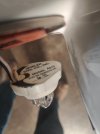
How may I test a strobe light bulb?
- Thread starter FORANE
- Start date


texasclouds
En-Route
- Joined
- Aug 23, 2018
- Messages
- 4,361
- Location
- Bryan, Texas
- Display Name
- Mark
- Home Airfield
- Coulter Airfield CFD
Swap it with the other strobe? If it works in the other side then your problem may be something other than the bulb. Like a bad flash capacitor, or wiring.
Hooking it to a 12V battery directly to the bulb won’t work like a normal light bulb. The strobe mechanism stores up power in a capacitor then flashes it to the bulb.
Hooking it to a 12V battery directly to the bulb won’t work like a normal light bulb. The strobe mechanism stores up power in a capacitor then flashes it to the bulb.
Is it a Whelen system with Molex connectors? If so, you can usually disconnect bulb assy and connect directly to power supply to check wiring to wing tip. Or connect to other location as mentioned. Justbe sure not to touch bulb glass with bare hands or oily rag.Is there a means to test the bulb before just throwing parts at it?
Yes, but I'm afraid of the high voltage doing that. Don't want to get fried ... Will likely buy another bulb and try that.Is it a Whelen system with Molex connectors? If so, you can usually disconnect bulb assy and connect directly to power supply to check wiring to wing tip. Or connect to other location as mentioned. Justbe sure not to touch bulb glass with bare hands or oily rag.

- Joined
- Apr 18, 2013
- Messages
- 5,322
- Location
- The independent worm saloon
- Display Name
- Mantis Toboggan, MD
My usual technique is to power it on and give the mount a good shake. When my vision returns I make a note that it's probably wiring.One of my strobe lights is not illuminating. Is there a means to test the bulb before just throwing parts at it?
In all seriousness, what @Bell206 said.
Nauga,
flashblind

- Joined
- Feb 22, 2005
- Messages
- 5,952
- Location
- New York City
- Display Name
- Skip Miller
- Home Airfield
- HPN
First, make sure the device is getting
12v (or 24v) power to the strobe power supply.
-Skip
12v (or 24v) power to the strobe power supply.
-Skip

- Joined
- Dec 5, 2010
- Messages
- 6,581
- Display Name
- GeorgeC
Wear rubber gloves and sunglasses.Yes, but I'm afraid of the high voltage doing that. Don't want to get fried ... Will likely buy another bulb and try that.
You won't. With power off to the strobes wait 10 minutes then disconnect the Molex connectors. The high voltage comes from a capacitors so waiting the 10 minutes allows them to discharge internally. And to note, I've found more wiring and power supply issues than bulb issues with strobes.Yes, but I'm afraid of the high voltage doing that. Don't want to get fried

- Joined
- Sep 11, 2019
- Messages
- 2,885
- Display Name
- Domenick
Why did you ignore suggestion to swap with the other side?
The bad strobe bulbs I've seen were dark inside. Like some sort of coating inside the tube. From photos, not sure yours is. Compare to the other side, swap, and test. This will test two things at onces--if the bulb is bad or if the power supply is bad. Easy peasy.
The bad strobe bulbs I've seen were dark inside. Like some sort of coating inside the tube. From photos, not sure yours is. Compare to the other side, swap, and test. This will test two things at onces--if the bulb is bad or if the power supply is bad. Easy peasy.
You're right, I should have done that. Not too keen on messing with the working side for one. Probably the bigger reason though is our airport manager has informed me that I may do no maintenance in that community hangar where the plane is currently located. I've been on the list for a T hangar where he allows maintenance but still waiting... In the interim I have a hangar in another state (hundreds of miles away) and try to complete maintenance when I'm there (which is very frequent). If it's something small, better done closer to home, or I want help from a friend whose build 10 RV's, I'll pop over to his airport a short 10 minute hop away.Why did you ignore suggestion to swap with the other side?
The bad strobe bulbs I've seen were dark inside. Like some sort of coating inside the tube. From photos, not sure yours is. Compare to the other side, swap, and test. This will test two things at onces--if the bulb is bad or if the power supply is bad. Easy peasy.

Order this and remove the built-in flash tube. Connect your suspect tube to it and see if it flashes.
12VDC Xenon Strobe Light – Emergency Fire Alarm Flashing Beacon with White Flash – 60 FPM – for Security Panels, Buildings, Hotels, DIY Projects - Amazon.com
12VDC Xenon Strobe Light – Emergency Fire Alarm Flashing Beacon with White Flash – 60 FPM – for Security Panels, Buildings, Hotels, DIY Projects - Amazon.com
www.amazon.com
Lindberg
Final Approach
Do it on the ramp. Will take five minutes to swap the bulbs.You're right, I should have done that. Not too keen on messing with the working side for one. Probably the bigger reason though is our airport manager has informed me that I may do no maintenance in that community hangar where the plane is currently located. I've been on the list for a T hangar where he allows maintenance but still waiting... In the interim I have a hangar in another state (hundreds of miles away) and try to complete maintenance when I'm there (which is very frequent). If it's something small, better done closer to home, or I want help from a friend whose build 10 RV's, I'll pop over to his airport a short 10 minute hop away.

Gary Ward
En-Route
- Joined
- Jan 16, 2020
- Messages
- 3,639
- Location
- Lawrenceburg, Indiana
- Display Name
- Challenger1
- Home Airfield
- I67
Try not to do what I did, buy the bulb first only to find out the power supply was bad.


Let'sgoflying!
Touchdown! Greaser!
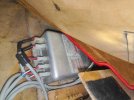
My whelen had a power supply with three identical female ports, each position (S, P, tail) plugged into a specific port.
So you could do some diagnostics at the power supply simply by swapping these connectors, no need to physically remove lamps.
So you could do some diagnostics at the power supply simply by swapping these connectors, no need to physically remove lamps.
I was just thinking this a few minutes ago. Will try tomorrow if I can.My whelen had a power supply with three identical female ports, each position (S, P, tail) plugged into a specific port.
So you could do some diagnostics at the power supply simply by swapping these connectors, no need to physically remove lamps.
I just went to the plane this morning to troubleshoot. I located the Whelen power supply and swapped cables to the wing strobes where they plug into the power supply. The working strobe continued to work and the non-working strobe continued to not work. This tells me it is a problem with either a failed strobe bulb or the wiring to the strobe. Given your observation, it's likely not the bulb.The bad strobe bulbs I've seen were dark inside. Like some sort of coating inside the tube. From photos, not sure yours is.
Now, here's where it gets interesting. I can test the wire from the power supply to the bulb next weekend when I have the plane at my other hangar, but why would the wire have failed? I thought about that for a minute and realized something. This summer some jackleg replaced a failing main gear attach bracket along with a few other parts in the gear well on the same side as the failed strobe. I'm think that I, er I mean the jackleg, disconnected the wire to that strobe in the process. Will look next weekend... This may turn out to be a maintenance induced failure.
Rats. 4 or 2-legged species.why would the wire have failed?


Tools
En-Route
- Joined
- Aug 6, 2020
- Messages
- 2,919
- Display Name
- Tools
Wear rubber gloves and sunglasses.
And clench your teeth, so you don’t bite your tongue.
Tools
Tongue not in cheek
Joking aside, here's a quick primer on how those flash tubes work, it might help you with troubleshooting:
There are three connections on the flash tube - two solid electrodes that go inside the tube, and a third one, external to the tube, in the form of a spiral wire around the tube or a metallized coating.
The power supply applies about 300 volts between the two main electrodes, but that's not enough to actually get the tube to ignite. To do that, a triggering pulse in the 5000 volt range is applied between the trigger (external) electrode and the ground. This ionizes the gas enough to allow the tube to start conducting, allowing the lower main voltage to create the flash.
That's important because any small damage to the trigger wire can allow the high-voltage trigger pulse to leak to ground without striking the tube. Moisture in the insulation or a slight nick somewhere is enough, and because the energy on the trigger wire is relatively low, you might never notice any signs of arcing or burning. And the wire will most likely still show good continuity and no shorts to the ground/shield when measured with a regular multimeter.
It could be an obvious wire break, but in case you can't find one, definitely keep looking at the wiring before going for a new flash tube.
I don't recommend doing that with the naked eye, but you could use a camera to see if the trigger pulse makes it to the bulb. You would see a very faint discharge in the tube when that happens.
Step 1 should still be swapping the working tube from the other side.
The oils create a hot spot on the glass which tends to cause it to shatter when it pulses.I've always heard, "Never touch a xenon bulb with bare hands." I believe it has something to do with skin oil, but why? What magic does skin oil have over xenon bulbs?
Gary Ward
En-Route
- Joined
- Jan 16, 2020
- Messages
- 3,639
- Location
- Lawrenceburg, Indiana
- Display Name
- Challenger1
- Home Airfield
- I67
Same with halogen bulbs.
texasclouds
En-Route
- Joined
- Aug 23, 2018
- Messages
- 4,361
- Location
- Bryan, Texas
- Display Name
- Mark
- Home Airfield
- Coulter Airfield CFD
Before tearing down the plane to look at the wires, I still think you should take the non-working bulb/housing off and connect it on the good side. It looks like you would just need to take off a few screws and a quick connector.
Fair point. I will try that next weekend if there isn't an obvious unplugged or damaged wire in the wheelwell where we replaced the gear leg mounting bracket, overcenter link, etc.Before tearing down the plane to look at the wires, I still think you should take the non-working bulb/housing off and connect it on the good side. It looks like you would just need to take off a few screws and a quick connector.

dtuuri
Final Approach
- Joined
- Apr 21, 2011
- Messages
- 5,819
- Location
- Madison, OH
- Display Name
- dtuuri
- Home Airfield
- Homeless, TBD
Is there a means to test the bulb before just throwing parts at it?
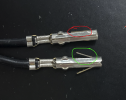
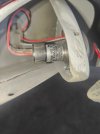
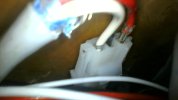
Well, it wasn't the bulb or the power source. I thought it might be related to the work I did replacing main gear leg attach bracket in the wheelwell on the side of the failed strobe, but it wasn't a maintenance induced failure. The wire was bad somewhere between the strobe and the box in the cabin. I used my fiberoptic scope to trace the wire into the wing root and found this:
Let'sgoflying!
Touchdown! Greaser!
Connector pushed out?
Red wire pin pulled out of the molex connector.Connector pushed out?
Someone pulled on the wire instead of the connector? Or the wire vibrated out? If the latter, I'm guessing it wasn't pinned very well to begin with.Well, it wasn't the bulb or the power source. I thought it might be related to the work I did replacing main gear leg attach bracket in the wheelwell on the side of the failed strobe, but it wasn't a maintenance induced failure. The wire was bad somewhere between the strobe and the box in the cabin. I used my fiberoptic scope to trace the wire into the wing root and found this:
View attachment 147446

pfarber
Pattern Altitude
- Joined
- Jun 20, 2021
- Messages
- 1,653
- Display Name
- pfarber
Make sure the pin and the connector are bent/not damaged. You might get away with bending the tabs back a little. These connectors should never just back out... they are positive lock devices.
If you don't feel/hear a positive click then you should replace the damaged one, but both would be preferable.
If you don't feel/hear a positive click then you should replace the damaged one, but both would be preferable.