How many quarts of mineral oil do I need to break in my O-320?

Kiddo's Driver

Pattern Altitude
Joined
Oct 5, 2013
Messages
1,927
Location
Somewhere in the Southeast
Display Name
Jim
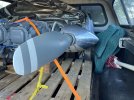
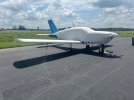
Once I get the blessing from the FSDO, I will be installing an O-320-D1A in my Tampico. (The EASA TCDS shows D1A & D2A. The FAA TCDS only shows the D2A.)
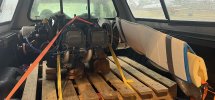
It is a 25-year-old, NEW engine (NOS). Pickled and stored in a warehouse in the Wyoming desert for 25 years, but still new.
1) I have 12 quarts of Aeroshell 100 mineral oil. Will that be enough?​
2) Would you have any opinion on 80 vs 100? It will probably happen in December or later, and I'll be in middle Tennessee.​
I do NOT have a hangar, so I will have to come out early & preheat before I fly.
I'll be moving my Reiff engine heater over to the new engine. 50 watts per cylinder, 50 watts on the oil sump, and 25 watts on the oil cooler.
I might bump the system up to 100 watts per cylinder, 100 watts on the oil sump, and 25 watts on the oil cooler.
I have multi-kWh batteries and a large inverter to run the heaters for hours.
I have a Bruce's cover that goes from just in front of the tail all the way up around the engine. I add silicone-treated gun socks over the prop blades when I heat to slow down the heat loss.
3) Opinions on the heating situation?​
4) Any other ideas/concerns?​
​
Other notes:
New Carb
New mechanical fuel pump
Will overhaul the magnetos
New hoses
New motor mounts
NOS ignition harnesses
NOS plugs
 

Attachments
  • IMG_5220.jpeg
    IMG_5220.jpeg
    1.4 MB · Views: 25
  • IMG_5302.jpeg
    IMG_5302.jpeg
    2.5 MB · Views: 24
  • IMG_4490.jpeg
    IMG_4490.jpeg
    1 MB · Views: 26
Last edited:
With preheating, the 100 oil will be fine in TN winter.
12 qts is enough for now and depending on consumption likely enough for break in.
Realize you will be at high power during break in. If you pick a day that isn't smooth air, you will find that maneuvering speed is a problem at high power in that rough air. If you throttle back to stay within maneuvering speed, your break in may fail. So, pick a smooth air day.
I have to dive to reach maneuvering speed...

It's actually the total use of oil during the break-in that I'm figuring out. When I ordered mineral oil last time, it took six weeks to arrive.
 
I would start putting together a plan for what to do with the leftover bottles of straight mineral oil after you switch to ashless dispersant.
6-8 on initial fill. Does it really stabilize that fast?
I assume you do your changes at 25 hours on break-in. Call it 6 for the fill plus 3 for the 25 hours puts me at 9. If I need to keep going, I'll need another 6.
 
I've always used mineral oil for 50 hours. That's an initial fill, an oil change at 5 hours, an oil change at 20-25 hours, and another one at 50 hours. So you'll need at least 18 quarts, IMO. Remember that aviation oils can be mixed, so on that last oil change if you need to use a couple of quarts of AD oil, no real worries. And I'd use the 100 weight oil for the initial 50 hours.

If you end up with too much 100 W, you can always use a quart or two of it with your AD oil when you make the change. I have almost a case of it I'm working in as I do oil changes.
I have a factory reman O-360 due to be shipped in February of 2027, so any extra oil I end up with can hang around until then.
 
Lots of folks use Phillips XC, an AD oil, from the very start of break-in and seem to do just fine.

With my recently overhauled O360, I started with 7 quarts of Aeroshell 100 and added a quart after the first couple of hours. Did an oil change, 7 quarts, at 5 hours. I added another quart sometime around 10 hours, and then by 20 hours consumption had stabilized and I switched to XC 20-50.

That was 16 quarts of straight Aeroshell mineral oil.

I’m at about 24 hours now. My plan is to do another XC change at 40 to 50 hours and add CamGuard with that change. At the next change after that I’ll start doing oil analysis.
 
That is cool deal, prop and all! Wow Great find!

My factory rebuilt 0-320 H2AD stopped using oil at 6 hours. I feel it was "broke in" at 10 hours or less.
That engine I used aeroshell 15W50 from the beginning.
It used maybe 2 quarts until the oil consumption stabilized.
I flew it hard for 2.5 hours first flight, wide open throttle the last 30 minutes. Used one qt of oil.
Second flight was 2 hours and then 30 mins at WOT. used 3/4 qt of oil.
The third flight was a normal flight and it used almost no oil.
I now have about 850 hours on it.
 
Last edited:
Mine stabilized well before 25 hours.
Mine too. Actually it never burned oil. For the 5hr change, we strained the oil through a coffee filter both to look for particles, and so we could re- use it. We then flew another 10 and changed it. Since the engine had never really burned any oil, and Phillips xc is on the lyco break-in oil list,I just started using it at that time. At 50 hours I went back to using camguard. So total type M was only the initial fill of 10qt.

Iirc the guys in the shop said that they just go with xc from the start. The engines they get are run 2 hours by the shop, and 95% of the time are broken in by the time they get them. Not sure if modern production rings are responsible for minimal break ins or what. It'll be interesting to see what yours does.
 
That is cool deal, prop and all! Wow Great find!
The engine, hub, and spinner work. The blades don't fit my plane, but I have found a set of overhauled blades. The shop will pull the NOS blades off and, hopefully, find a buyer for me on consignment. Then they will overhaul the NOS hub & install the overhauled blades. Assuming I don't find a buyer for the blades before then.

The listing for the blades:
 
Last edited:
Great find!

I just did a new engine break in this summer. 2x oil changes at 12 quarts each - first fill, then at 25 hours. Regular oil after that.

The first hour full power flight is key. For me I could fly gear down and full power and stayed well under my max rough air speed.
 
Great find!

I just did a new engine break in this summer. 2x oil changes at 12 quarts each - first fill, then at 25 hours. Regular oil after that.

The first hour full power flight is key. For me I could fly gear down and full power and stayed well under my max rough air speed.
Yea, Tampicos are part of the TB series.
TB9, Tampico, 160 HP, fixed pitch (99% of them were sold this way), fixed gear.
TB10, Tobago, 180 HP, CS prop, fixed gear.
TB20, Trinidad, 250 HP, CS prop, retract.
TB21, TB20 with a turbo.
All share about 80-90% of components. The best I can do is 115 knots in level flight. Maneuvering speed is 122 knots. Vne is 164 for me.
I will have no issue running the engine hard.
 
Lots of folks use Phillips XC, an AD oil, from the very start of break-in and seem to do just fine.

Iirc the guys in the shop said that they just go with xc from the start.

Yep - when I broke in my new cylinders, I used Phillips X C from the start, per A&P recommendation. Burned oil in first 3 hours, and then rings were set. Running great now. BTW, FWIW Mike Bush is also in the camp of using XC for break in.
 
Yep - when I broke in my new cylinders, I used Phillips X C from the start, per A&P recommendation. Burned oil in first 3 hours, and then rings were set. Running great now. BTW, FWIW Mike Bush is also in the camp of using XC for break in.
If there's a warranty and the provider demands straight mineral oil, then use straight mineral oil.
 
Oil consumption on my new O-360-A4M stabilized after the first 2 hours of flight, running full rich near sea level near full power (2600 RPM). It burned 2 quarts during that flight, and after I refilled it, it took another 15 hours to burn another quart. However, I still continued the break-in procedures until reaching 20 hours just to be sure. So that was a total of about 10 quarts of straight weight mineral oil. 800 hours later it still burns about 1 qt every 15 hours.

I normally use Phillips 20w50 but during breakin I used straight weight mineral oil because that is what Penn Yan recommended in order to maintain their warranty (the best in the business, 3 years or TBO).

Remember during breakin to keep airspeed up with shallow climbs, to prevent the engine from getting too hot. And stay as low altitude as practical, since high DA will prevent the engine from developing sufficient power/pressure for proper breakin. You want high cylinder pressures but you don't want high temperatures.
 
It is a 25-year-old, NEW engine (NOS). Pickled and stored in a warehouse in the Wyoming desert for 25 years, but still new.
Curious - with the acute shortage of engines we had in the Covid era a few years back, how did a brand new engine just sit on the shelf? And why did a brand new engine sit on a shelf for 25 years?
 
Which one? Lycoming, who is the manufacturer of my engine, or Superior, who manufactured my cylinders and camshaft, or Continental, who manufactured my crankshaft, or .....?


The publisher of the engine operators manual. In this case both Superior and Lycoming say to use 100% mineral oil to break in cylinders, so no discrepancy.
 
Last edited:
Been through a couple of breakins (and one new engine) and I've never used much more than the initial fill and a couple of quarts to top off alog the way.
 
I would follow the engine OEM recommendations for engine break-in to include type of oil and quantity.
OEM recommendations don't tell me how many bottles of oil I should have on hand.
If the oil came a few days after I ordered it, it wouldn't be an issue.
Last time I ordered mineral oil, it took 6 weeks to arrive.
 
Curious - with the acute shortage of engines we had in the Covid era a few years back, how did a brand new engine just sit on the shelf? And why did a brand new engine sit on a shelf for 25 years?
This is the story I got from the seller and all the paperwork backs up what he said:
It was purchased by Interstate Aircraft during a design refresh of the Arctic Tern. It was a slow process that ended in tragedy when shelving in the warehouse collapsed & killed the owner. The engine sat idle for a while, and then the widow sold off the assets in 2006. The guy who bought it lived in the town in Wyoming where Arctic Tern was doing the work. He got a screaming deal on it. He intended to put it into an RV6, but never got that far. Health issues forced him to give up on flying, and he put the engine up for sale on Barnstormers. I drove 50+ hours, round-trip, inspected it, and bought it.
That's why it has the weird propeller setup. The hub is for an O-320, but the blades are typically used on much larger engines. The Piper Dakota, specifically the PA-28-236, is their primary aircraft. Somehow, Interstate Aircraft found that combination to be what they wanted for the refresh of the Arctic Tern.

Lycoming O-320-D1A engine
McCauley DC290D1-C/T42 governor
Hartzell HC-C2YL-1BF hub, serial number ending in "B" so no recurring AD
Hartzell F8468A-4R blades
Hartzell A-4302-P spinner assembly
 
Last edited:
OEM recommendations don't tell me how many bottles of oil I should have on hand.
If the oil came a few days after I ordered it, it wouldn't be an issue.
Last time I ordered mineral oil, it took 6 weeks to arrive.
Well first you need to determine who and how that engine was "pickled" 25 years ago to see what OEM recommendations you need to follow. Regardless, most OEM recommendations provide a way to estimate the quantity of oil have on hand. In general, if the engine has been preserved then there usually is a recommendation to change the oil within 25 hors to ensure all the preservation oil is removed. Then depending on the oil change interval during break-in you may have a 10 or 25 hour oil change requirement. And since Lycoming states break-in can last 50 hours or till oil consumption stabilizes you could calculate the max consumption rate to assist how much oil to have handy if you have logistical issues. My rule of thumb was to have 2 cases of mineral oil on hand based on those recommendations.

Because you're not as badass as Mike Bush. For that matter, few are.
Usually when MB would second guess the OEM or even the FAA they would hand his "badass" right back to him.
 
Well first you need to determine who and how that engine was "pickled" 25 years ago to see what OEM recommendations you need to follow. Regardless, most OEM recommendations provide a way to estimate the quantity of oil have on hand. In general, if the engine has been preserved then there usually is a recommendation to change the oil within 25 hors to ensure all the preservation oil is removed. Then depending on the oil change interval during break-in you may have a 10 or 25 hour oil change requirement. And since Lycoming states break-in can last 50 hours or till oil consumption stabilizes you could calculate the max consumption rate to assist how much oil to have handy if you have logistical issues. My rule of thumb was to have 2 cases of mineral oil on hand based on those recommendations.
Pickled by the factory.
Is that a Aeroshell case? 6 quarts
Is that a Phillips case? 12 quarts
I have two cases of Aeroshell.
Probably going to buy one more. Anything I don't use will still be good when the factory overhauled O-360 I ordered ships in February 2027.
 
It's been a while since my engine break-in, but I seem to remember the mechanic changing the oil after the initial flight. Mostly to check the filter to make sure there was nothing there to find, but he wanted to find out right away if there was something. I don't know how many quarts that engine takes normally, so do you have at least the initial flight (that might just be for an hour or so right above the Airport) and then an oil change before you continue the break-in?

Next will be if the rings seal properly right away (part of the break-in). So you may be burning a bit of oil at the start. Is it a problem getting a quart or two if you need it?

Also, pending where in TN, you might want to head for the lowlands on your longer break-in flights. I believe lower altitude is the place to be while breaking in an engine.
 
Pickled by the factory.
You may want to address this first before the break-in. I know of no OEM preservation procedure that can go 25 years without a repetitive inspection usually every 90 days to 6 months. And thats regardless where its been stored. I would depreserve the engine per the applicable guidance then perform an internal check. And only then if things look okay start the break-in process. The old days of dipping complete engines in Cosmoline and them lasting decades are long gone. And a case of oil in my book is 12 quarts.
 
You may want to address this first before the break-in. I know of no OEM preservation procedure that can go 25 years without a repetitive inspection usually every 90 days to 6 months. And thats regardless where its been stored. I would depreserve the engine per the applicable guidance then perform an internal check. And only then if things look okay start the break-in process. The old days of dipping complete engines in Cosmoline and them lasting decades are long gone. And a case of oil in my book is 12 quarts.
Internal check? Scope the cylinder walls, pull a mag and look at the gears as a preliminary look, then look deeper if you see anything you/your mechanic don't like?
 
Internal check?
Provided the engine was initially preserved per an appropriate method, a quick check through the spark plug holes on all cylinders will give an idea on internal condition. If something is found questionable then I would pull a cylinder to check the internals in more detail especially after 25 years.
 
Provided the engine was initially preserved per an appropriate method, a quick check through the spark plug holes on all cylinders will give an idea on internal condition. If something is found questionable then I would pull a cylinder to check the internals in more detail especially after 25 years.
When I received my lycoming factory rebuilt engine there tags on the crate stating that the engine was only preserved for 60 days. And if you move the crankshaft it would need to be preserved again.
It had oil drain out of every hole when I removed the plugs and exhaust covers.

I would definitely pull the mags, valve covers and look at it with a borescope.
baf0fa6a-d432-4eaa-8057-c80342924625.jpg
 
Probably worth proactively replacing the accessory case and sump gaskets before installing it. They're pretty cheap, opening them will give you a good look at the internals, and after 25 years, there's a good shot they're going to leak anyway.
 
Last edited:
Probably worth proactively replacing the accessory case and sump gaskets before installing it. They're pretty cheap, opening them will give you a good look at the internals, and after 25 years, there's a good shot they're going to leak anyway.
I missed these on my list, thanks!

My list:
New oil cooler. Old one is original to the plane & has around 6,000 hours/32 years on it.
New mechanical fuel pump. 2,300 hours/29 years on the current one.
New Carburetor. Need to order. The rebuilt one was installed about 1,000 hours/27 years ago. I'm going to install a new one & keep the core.
? Magnetos. It's complicated. I'll probably start another thread to ask about my options.
? Vacuum pump. Really don't want to sink money in here since the plan it to go to G5s soon.
I have spark plugs coming out of my ears.
New Hydraulic Hoses. Need to order all new hoses.
New SCAT/SCEET Hoses. Need to order.
Keep Starter. I put in a Skytec starter about 200 hours/10 years ago. I plan on using it.
New Alternator. Need to order. I plan on upgrading my alternator to a Plane Power AL24-P70.
Accessory case gasket. Need to order.
Oil sump gasket. Need to order.
 
Back
Top