Hot take: the Dual Mag is actually pretty great

What is the chance that I'd suddenly loose my alternator and the battery would be dead at the same time? And if I did loose the alternator, the engine would still run on the battery for 1/2 hour (?) until I could land
The alternator and battery are only two failure points in the whole system. We also have battery and alternator cables with crimp terminals subject to fatigue, corrosion and loosening. We have the regulator and all its wiring, with more connectors. We have the alternator field (regulator) breaker and output breaker, and alternator switch. Older airplanes used fuses there. We have the master contactor that is subject to internal oxidation, along with three or four connections to it. Battery cables that are exposed to corrosive gases, and acid if the battery is improperly serviced.

The failure of ONE of those things kills the charging system. Some of them kill the whole system. Any engine reliant on only that system dies.

Edit: I forgot the ammeter shunt. That is another failure point that we hear about once in a great while. If it fails, the battery can neither charge nor feed anything but the starter. And even then the starter won't work because the current to fire its contactor comes via the shunt.
 
Last edited:
The question isn't reliability of magneto vs other parts of engine, but magneto vs electronic ignition.
I had included electronic ignition in the comparison to other engine components. While it might seem complete electrical failures are not common, in context to magneto failures, there’s no comparison in the big picture. Even when you look at the SDR data which records aircraft faults found during scheduled mx, electrical system faults are a common issue.

So as mentioned above, given the electrical system has a number of single point failure locations even with a well-maintained system, I think the proven reliability of a magneto should not be discounted. At least that has always been my answer when asked about my experiences with electronic ignition. And a good recent example of that was the DA-62 that lost 5 independent engine electrical power systems, due to 2 separate issues/faults, causing loss of power on both engines and a landing on a Dallas road.
 
My initial thought is that electronic ignition is more reliable than a mechanical system. I remember changing the points, setting the gap, changing distributor caps, setting timing, etc. on our cars growing up. Today's cars with a electronic ignition and a coil on each spark plug are virtually maintenance free
When I restored my 1951 International truck, I put a Ford 300 in it, and replaced the electronic ignition with a points distributor. I wanted everything easily repairable. But the performance with the points was considerably less than with the EI, so I installed the electronics and wrapped up the old distributor in a rag and stuffed it behind the seat. Quick to change back in an emergency.

The points and condenser aren't really less reliable. They just need a lot more maintenance, just like a mag.
 
Last edited:
So. What about replacing the magnet mechanism in the mag with a micro alternator that feeds an electronic ignition. Twin direct engine driven micro alternators, twin electronic ignitions. Best (or worse) of both worlds?

An expensive solution in search of a need.
 
So. What about replacing the magnet mechanism in the mag with a micro alternator that feeds an electronic ignition. Twin direct engine driven micro alternators, twin electronic ignitions. Best (or worse) of both worlds?

An expensive solution in search of a need.
Seems to me that the e-mag is exactly that, needing battery power only for start
The problem with is that the electronics suffer due to the heat of an aircooled engine and its vibration. They've had such problems.
 
I learn something new here everyday
 
I'm not convinced that automotive ignition systems, developed over decades with millions of units in the field, are really comparable to experimental aircraft systems developed in some guy's basement with 100 units made. In principle they should be as reliable as mags, but i don't have enough confidence to rely on them completely.

In 900ish hours, I've had 3 alternator failures. In my experience the electrical system is the weakest system on the aircraft. Once was on short final, but twice i continued to fly for about an hour on battery power. Had my engine been electrically dependent, it would've been an emergency and immediate landing.

So add a second alternator. Okay, good idea. What happens when the voltage regulator fails, spikes the voltage, and either kills everything on the bus or the bus gets disconnected by the crowbar circuit? Okay so now we're talking about two separate busses, batteries, alternators, regulators..... gets complicated, heavy, and expensive compared to a magneto.

The Emag is exactly what you describe.... self powered by a small internal alternator. Seems like a good solution. Unfortunately, they don't have a solution for dual mag engines. Even more unfortunately, they got bought by Hartzell a couple days ago.

I do believe some of the electronic ignitions have an option to use a dedicated backup battery kind of like the garmin g5. So even in the event of a complete power failure, they'll continue to work. That seems like a pretty reasonable solution. The tradeoff of course is more weight, money, maintenance, which starts making the old magneto look attractive again.

Everybody loves to talk about aircraft engines being stuck in the past, but sometimes we're still using this stuff because it's the simplest, cheapest, best solution.
 
I do believe some of the electronic ignitions have an option to use a dedicated backup battery kind of like the garmin g5. So even in the event of a complete power failure, they'll continue to work. That seems like a pretty reasonable solution. The tradeoff of course is more weight, money, maintenance, which starts making the old magneto look attractive again.
Yep. And if you truly want redundancy, you'd better test those backup batteries on an annual basis and prepare to replace them every couple-three years so they perform appropriately if/when the time comes. Sucks to carry around a 5 pound backup battery, extra switches and wiring for all those years only to find out that the 8 amp hour battery is really a 3 amp hour battery when the SHTF.
 
Sometimes bow and arrow works best. (While I fly with a tablet, I still also use an A5 size mini binder with my notes on a knee board and an ink pen. The ink pen and paper - just seems to keep working LOL).
 
Last edited:
In principle they should be as reliable as mags, but i don't have enough confidence to rely on them completely.
Is there a reason you do not want to trade off the C1A6D and get an engine with separate mags?
 
Is there a reason you do not want to trade off the C1A6D and get an engine with separate mags?
1) this one has a heavy crank like a factory io-390
2)it has the front governor Van's specifies for the -14, which really shrinks the pool of candidates
3)it was $6500
 
1) this one has a heavy crank like a factory io-390
2)it has the front governor Van's specifies for the -14, which really shrinks the pool of candidates
3)it was $6500
You may have already said this, but I assume swapping accessory cases is a no-go?
 
You may have already said this, but I assume swapping accessory cases is a no-go?
I'm 99. 9% certain that the bosses on the engine cases for the accessory gears are specific to the dual mag setup. You could bolt a standard accessory case on, but nothing would line up.
 
Okay so now we're talking about two separate busses, batteries, alternators, regulators..... gets complicated, heavy, and expensive compared to a magneto.
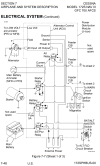
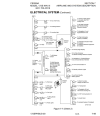
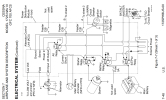
Even for the G1000 Cessnas we have multiple systems. Just for the instrumentation. Engines still use mags. Single alternator, usually, but two batteries (the Corvalis had THREE batteries), six buses in the 172/182/206, a whole boxful of contactors for the airplane, including the alternator. If those airplanes had electronic ignition, it would get worse.

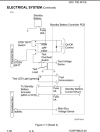
This is the simplified electrical system for a C172SP. Note the six buses on sheet 2 and the power control module (the box) on sheet 1. Standby battery on sheet 3:

1747536897499.png
1747537210183.png

1747537298873.png

And all of that just to prevent a total loss of the instrument electronics. If the alternator and main battery die, the system goes to just the pilot's flight display, with engine instruments displayed along one edge, one comm, one nav, and the transponder. The MFD (copilot's display) is black and the other radios are out of commission, just to reduce the power load on the standby.

Lycoming came out with their iE2 engine series at least 15 years ago. Fully FADEC, full electronic fuel injection and ignition. The engine has two alternators, a controller on the firewall, and an extra battery. But pilots are cheap and it has not taken hold. One European airframe manufacturer is using it.
I do believe some of the electronic ignitions have an option to use a dedicated backup battery kind of like the garmin g5. So even in the event of a complete power failure, they'll continue to work. That seems like a pretty reasonable solution. The tradeoff of course is more weight, money, maintenance, which starts making the old magneto look attractive again.
The tradeoff of more money is the big factor here. Flying is already too expensive.
Everybody loves to talk about aircraft engines being stuck in the past, but sometimes we're still using this stuff because it's the simplest, cheapest, best solution.
Cheapest wins.
 

Attachments

  • 1747536593923.png
    1747536593923.png
    257.7 KB · Views: 6
(While I fly with a tablet, I still also use an A5 size mini binder with my notes on a knee board and an ink pen. The ink pen and paper - just seems to keep working LOL).
A pencil has fewer failure modes than a pen. Just sayin' :)
 
Of course I pack three pens……
 
I just replaced my dual mag with a dual electrical system from Electroair in conjunction with an engine overhaul in my Turbo Lance/TIO-540-S1AD. I didn't have any issues with the dual mag before, but like the benefits of electrical ignition and took advantage of swapping them while the airplane was down. I probably would have gone 50/50 had I had the option, but wasn't concerned about going full electric. My system has the back-up battery (required for certified applications), and I got the bigger capacity battery, so it will run 3-4 hours independently of the aircraft electrical system with full capacity/charge.

The only failure I've had in the airplane (before installing EIS) was a broken alternator wire. I was about 2 hours from my destination and VMC, so I just terminated flight following, turned off the master, and waited until I needed the electrical system again at the destination (tower controlled, ADS-B, etc). With my current EIS set-up, nothing would have changed the situation. Engine would have kept running with the master off. If for some reason, the back-up battery quit earlier (say it was older and had less capacity), I could have still used the aircraft battery, but would then have been in a land as-soon-as-posible situation.

I completely understand all the arguments for and against. I think everyone approaches the value proposition based on their individual priorities (performance vs reliability, etc). I don't think either choice is obviously the best one way or the other. My biggest hang-up was losing the ability to hand-prop the engine, although that's a tougher proposition in the 540 than the two times I had to do it on 360s. I realize that is probably really silly reasoning (just don't leave the master on, idiot), but that's just me.
 
Did you see any engine performance increases with the new system?
 
In one case, I got lucky — the failure didn’t happen until after I had landed and was already rolling off the runway. I had to get it towed to the ramp.
This is exactly what happened to me. On roll out in a 172 with a dual mag. The shared gear between the two mags broke. And no, the FAA doesn’t have data on that case as I’m sure they don’t on most.
 
Did you see any engine performance increases with the new system?
Our RV-8 had one electronic ignition (Light Speed Plasma II) and one Slick mag. Easy starts - almost always on the second blade - and it burned one gallon per hour less than book. When shutting off the mag and running on electronic ignition only during the runup check, there was almost zero RPM change. Airspeed and climb rate were book, so no apparent performance increase.
 
I have dual "electronic" (Capacitive discharge) ignition systems on my ride. I don't worry about a failure of the battery and/or charging system because the ignition is not connected to either.
 
If the gps, radios, efis all quit. I'm not falling out of the sky.

The electro air single dual mag is a complex install and has had issues.
At night? You're not falling out of the sky by you sure aren't getting where you want to go. Even during the day without GPS/Radio/EFIS you're most likely not gonna hit an airport unless you are really familiar with the area.

There is a reason GPS/EFIS all have spare batterys (or at least the option).

It HILARIOUS that people will argue 'electrical issue' when you have redundant electrical systems.... alternator, battery, and more than likely battery back up. Li-Ion batteries are a thing now, you can carry two or three of them for the weight of an old lead acid battery and have next to zero maintenance on them.

See, living in the 2000's has benefits... even if most GA planes are from the 50s-70s
 
If you look into the data, the magnetos are the most reliable component on the engine. And when they fail, 99% of the time it was due to improper mx or upkeep. While there are advantages to electronic ignition, as noted above if all electrical systems are lost, a magneto will still keep you in the flying.
Maybe you have some proof of this? Also it really doesn't matter which part stopped the motor, but simply that the motor has stopped.

Also, why do almost all mags have 500hr inspections? Do you IRAN your engine every 500 hours? No? Do electronic ignitions have 500 hr inspection requirements? No? Wonder why.

Also also aircraft with electrical systems have two redundant sources of power: alternator/genny and a battery. You want a back up? Its already there. IIRC some AC have emergency generators that you can deploy... Mooney is one IIRC. I know airliners have them.... noisy little buggars.

ALso also also self exciting alternators are a thing. Another reason why I will never own a certificated AC. I like living in the future.

I would think that pilots would at least read the POH/AFM and understand the electrical system they are flying behind.
 
Last edited:
At night? You're not falling out of the sky by you sure aren't getting where you want to go. Even during the day without GPS/Radio/EFIS you're most likely not gonna hit an airport unless you are really familiar with the area.
You need to take flying lessons. Even with GPS and NavCom we taught our students to navigate using a map, compass and a watch. It's called ded reckoning, the "ded" short for deductive, not dead. Navigating by landmarks of all sorts, getting a groundspeed by timing between known distances marked on the track on the map, heading by magnetic compass plus the heading indicator, if installed. PPLs had to prove to the examiner that they could do this, and also that they could break off the track and make for an alternate airport on an estimated heading, not measured with a protractor on the map. It's also still a requirement for the test. From the Flight Test Guide:

Ex. 23 Pilot Navigation​

A. Pre-Flight Planning Procedures (Ground Item)​

Aim​

To efficiently plan a VFR cross-country flight and demonstrate practical knowledge by explaining elements related to cross-country flight planning.

Description​

The candidate will plan a VFR cross-country flight, including one intermediate stop, to an assigned destination at least 2 hours cruising range distance in the aeroplane being used for the flight test.

The cross-country flight can be assigned in advance and the candidate can make preliminary preparations such as route selection, paper chart preparation, determination of tracks, distances, selection of possible alternates and initial navigational log entries before the flight test.

Flight planning will be completed based on real-time weather and a loading scenario with all or most passenger seats occupied and a significant baggage load, as specified by the examiner.

Software-generated flight planning is acceptable, but the candidate must be able to explain some of the key elements of flight planning such as estimated time enroute, fuel requirements, contingencies, etc.


There are further requirements for departure, enroute, diversion to alternate, and arrival. The candidate must prove competency in all of them. This is no different than when I learned to fly over 50 years ago, and the requirements are still there because electronics do fail.

Night flight training is done the same way. Visual, map, watch, compass. No fancy stuff. Navigate by lights from towns, cities, highways and so on. Terrain on moonlit nights. Ded reckoning over sparsely settled areas, using a map, the heading, known upper winds, compass, and time to arrive at the destination. Again, electrics fail and you'd better knows how to survive.
Also, why do almost all mags have 500hr inspections? Do you IRAN your engine every 500 hours? No? Do electronic ignitions have 500 hr inspection requirements? No? Wonder why.
Mags need care because electrical stuff fails. You supposedly have an A&P but still haven't learned that. Electronic ignition will fail too if the system providing its power isn't maintained and regularly inspected. And it still depends on sparkplugs that can fail.
Also also aircraft with electrical systems have two redundant sources of power: alternator/genny and a battery.
Those are not redundant to one another. An alternator and its regulator quickly go nuts if the damping effect of the battery is not there. I have demonstrated that to my aircraft systems students. And if the brushes in that alternator aren't inspected and replaced as necessary, you lose that, too. We've been over that before, that aircraft alternators are spinning at much higher RPMs than a car's alternator, and that wears the brushes out much faster.

Airplanes need far more maintenance and care than a car, and no amount of boosting electronic fuel and ignition is going to change that.

 
ALso also also self exciting alternators are a thing.
Yup, and they produce maybe 20 amps and the only regulation is via PWM or resistance to burn off the extra energy as heat. The rotor is a permanent magnet, not a variable electromagnet as in an alternator.
 
If you have an electronic ignition and a traditional mag, isn’t the electronic ignition going to fire its plugs first because it can advance the spark as needed? Hence, the traditional mag isn’t doing much because the fuel is already burning/ burnt.
 
If you have an electronic ignition and a traditional mag, isn’t the electronic ignition going to fire its plugs first because it can advance the spark as needed? Hence, the traditional mag isn’t doing much because the fuel is already burning/ burnt.
The electronic ignition cannot be set to fire before the traditional mag. The certification of the engine stipulates the spark advance, and that's because too much advance can cause detonation and engine damage. The electronic system will find itself firing after the mag some of the time. The benefits of variable timing will only be achieved if both systems are variable.
 
  • Like
Reactions: WDD
The electronic ignition cannot be set to fire before the traditional mag. The certification of the engine stipulates the spark advance, and that's because too much advance can cause detonation and engine damage. The electronic system will find itself firing after the mag some of the time. The benefits of variable timing will only be achieved if both systems are variable.
In the experimental world, it is common to have one EI and one Mag firing at different levels of advance. The EI is typically more advanced at low MP and high(er) RPM, which helps efficiency by lighting off a leaner (slower burning) mixture a little earlier. There are CAFE studies of this approach from 30 years ago which demonstrate the concept. The result on an IO-360 (IIRC) was close to a gallon an hour lower fuel burn for the same power setting in cruise. That said, you need to set the advance map carefully to avoid the problems associated with too-early timing.
 
If you have an electronic ignition and a traditional mag, isn’t the electronic ignition going to fire its plugs first because it can advance the spark as needed? Hence, the traditional mag isn’t doing much because the fuel is already burning/ burnt.
Time. It takes time for the flame front to advance.
To get get the most bang out of your buck you want peak pressure to happen somewhere around 15 degrees after TDC (number from memory - could be off - been a while since I've done this **** for a living).
Aircraft engines typically have large diameter bores and not a lot of charge motion - that results in it taking a (relatively) long time for the flame front to get across the cylinder. Having two plugs starts off two flame fronts and results in a reduction in the burn time so peak pressure happens sooner than with just one. (This is why you get "mag drop" - the peak pressure happens later due to the longer burn time.)
If you fire one plug first, unless the flame front gets past the second plug by the time it fires, the second plug is still contributing. The optimal timing if you are advancing only one plug would be more advanced than if you were advancing both, but I wouldn't expect the traditional mag to be doing nothing and you would still get a "mag drop" on both ignition systems.
 
Corin gave me my first "Dislike" on post #67. 11,690 posts and 6118 likes. Wish I knew why he finds it bad enough to blacklist it.

Oops, post #65.
 
Last edited:
Maybe you have some proof of this?
Sure. The Australian ATSB did a study on recip engine reliability which found properly maintained magnetos had the least failure rate on engines. Plus there are other industry papers on the subject of engine reliability if you look hard enough. The key point of magneto reliability is it is a self-contained unit that requires no external input to operate.

Also, why do almost all mags have 500hr inspections? Do you IRAN your engine every 500 hours? No? Do electronic ignitions have 500 hr inspection requirements? No? Wonder why.
Mags have 500hr inspections for the same reason alternators, landing gear motors, etc. have 500hr inspection requirements: check for wear on the rotating parts. So I guess you don’t check your alternator brushes every 500hrs? You know the same alternator you need to power up your electronic ignition?

Also also aircraft with electrical systems have two redundant sources of power: alternator/genny and a battery. You want a back up?
As stated earlier, you realize there’s more to an electrical system than just the alternator and battery? So what do you think is the most common fault in an aircraft electrical system? I’ll give you a hint: its not the battery or the alternator yet will take out both systems. As to a back up, a magneto needs no back up.

ALso also also self exciting alternators are a thing. Another reason why I will never own a certificated AC. I like living in the future.
Except there's nothing stopping you from living in the future with your certified aircraft either. Just depends how you want to operate.

I would think that pilots would at least read the POH/AFM and understand the electrical system they are flying behind.
I think if they did, the electrical system wouldn’t be the most neglected system on an aircraft. But it is.
 
I think if they did, the electrical system wouldn’t be the most neglected system on an aircraft. But it is.
They should read the Operator's manual relevant to their engine. Free online from the manufacturers. Lots of good stuff in those.
 
Corin gave me my first "Dislike" on post #67. 11,690 posts and 6118 likes. Wish I knew why he finds it bad enough to blacklist it.
If it makes you feel better, I gave it a "like". Fantastic info as always.
 
Did you see any engine performance increases with the new system?
Yes, with caveats. I installed the EIS along with a freshly overhauled engine with new cylinders, so it's hard to tell what was the fresh engine and what is the EIS. But, I feel reasonably confident to say
- Starts are much easier. No difference between hot and cold starts.
- I do seem to get better, cooler climb performance with respect to CHTs. Today, it was 29 deg on ATIS. Climbed to 13,500 at max continuous power at Vy. CHTs never got above 380. Couldn't really do that before and the baffles haven't changed. (edit - this could also be due to a better tuned fuel flow at high power settings. Again, hard to pin it down to one variable)
- Fuel burn is less with respect to a given ROP/LOP benchmark. For example, if you're comparing 50ROP to 50ROP, then I burn less with the EIS than I did with the mags. However, CHTs at that 50 ROP setting are sometimes higher than they were with the mags. More complete fuel burn means more heat (as was explained to me). If you're leaning to keep CHTs below 400 or so, you may not notice the fuel savings.
- I think I'm getting a few more knots at cruise, but this could be the cylinders, too.
- LOP ops can be smoother, but getting there can get tricky. The top of the EGT curve as you lean gets sharp and tempermental. The EIS is so good at igniting the fuel-air mixture, that there is very little onset of roughness before you just lose poser completely, so getting to the backside of the curve can get tricky at certain power settings, altitudes, etc.
- EGTs are generally lower across the board.
 
Mags have 500hr inspections for the same reason alternators, landing gear motors, etc. have 500hr inspection requirements: check for wear on the rotating parts. So I guess you don’t check your alternator brushes every 500hrs? You know the same alternator you need to power up your electronic ignition?
I've had multiple failures of three things:

1) Vacuum pumps
2) Tires
3) Mags.

Can't get rid of tires, but those won't kill me. Got rid of both vac pumps on my bird. Sure would love to ditch the mags... Because not only do they have 500hr inspections, they have 500hr inspections in spite of having a dual, fully redundant system. They're only "reliable" inasmuch as they don't go when the electrical system fails. They do wear out.
 
Sure would love to ditch the mags... Because not only do they have 500hr inspections, they have 500hr inspections in spite of having a dual, fully redundant system. They're only "reliable" inasmuch as they don't go when the electrical system fails.
And I've had a mag fail at just over 200 hours since new. :(
 
At night? You're not falling out of the sky by you sure aren't getting where you want to go. Even during the day without GPS/Radio/EFIS you're most likely not gonna hit an airport unless you are really familiar with the area.
I don't mean this in a negative way, but if you don't think you can get to your destination, night or day in VFR flight, if your electrical system fails then I don't think you should be flying. Exception being if you're flying an aircraft that needs electricity for the engine management system.

Day VFR, unless you're flying into a towered airport and don't have a handheld radio, it shouldn't even be an issue.
 
Back
Top