Ground leaning

I question the need. :stirpot:

My Lycoming operators manual is clear on the matter. If idle mixture is correctly set, there should be no need for additional leaning.

I've been working on and operating these engines for quite a while now. In my opinion, there is no need. I've always suspected that the insistence on aggressive leaning during ground operations stems from the poor condition that many flight school aircraft seem to be in. With good magnetos, decent spark plugs, and a carburetor or fuel servo that is in decent shape and properly set up, I've found no need to lean the mixture for ground operation.

You don't idle in most ground ops. My O360 is usually at 1000 rpm, idle is about 6/700 rpm

True, but for the most part you're still on the idle circuit at that point.
 
I made a mistake the other day on takeoff. I usually aggressively lean on the ground. However I got distracted and left the mixture leaned on the roll. It did not cough but produced a noticeably poor rpm and power. As I lofted in the air, I discovered my mistake and quickly went full rich.

This could have been a serious engine destroying episode however I discovered it quickly and I reasoned that the engine, even at sea level, was significantly leaned that it could not produce enough power/rpm to melt anything, even if it was flying. Certainly it is not something to be repeated.
If the engine was running when you went to take off power, it wasn't leaned for ground running. Not sure of your engine, but my O360 would stall if I went to take off power with ground lean set. It stumbles when I increase power to taxi up a hill.
 
From Lycoming about the IO360: And that's aggressive leaning rather than the guestimate most do.

1745090200101.png

Warm-up at approximately 1000-1200 RPM. Avoid prolonged idling and do not exceed 2200 RPM on the ground.

I trust Lycoming more than I trust you.
What I said does not contradict what Lycoming says. An engine at idle does not get hot enough for the lead scavengers to work.
 
My A&P insist no spark plugs are being fouled because at 900-1000 rpm the fuel is limited because of the mixture setting, and told me I don’t need to lean. I still lean out of habit. I see no harm except the one time I forgot to push the mixture in for take off but that is a drilled in my brain event that will never happen again
 
If the engine was running when you went to take off power, it wasn't leaned for ground running. Not sure of your engine, but my O360 would stall if I went to take off power with ground lean set. It stumbles when I increase power to taxi up a hill.
That is correct that it would cough if aggressively leaned on the ground. Obviously, I wasn’t really leaned to that extent however.
 
My A&P insist no spark plugs are being fouled because at 900-1000 rpm the fuel is limited because of the mixture setting, and told me I don’t need to lean. I still lean out of habit. I see no harm except the one time I forgot to push the mixture in for take off but that is a drilled in my brain event that will never happen again

Never is a long time.
 
I've been working on and operating these engines for quite a while now. In my opinion, there is no need. I've always suspected that the insistence on aggressive leaning during ground operations stems from the poor condition that many flight school aircraft seem to be in. With good magnetos, decent spark plugs, and a carburetor or fuel servo that is in decent shape and properly set up, I've found no need to lean the mixture for ground operation.

Agreed. Further, I think some of the loudest advocates do not understand that the fuel servo or carb has an idle mixture adjustment setting that is separate from the mixture control in the cockpit. The purpose of that setting is to lean the mixture at idle. There is no reason to lean the engine manually on the ground, because it has already been leaned.

Further, you cannot forget to enrich the idle mixture adjustment on takeoff because it is connected to the throttle lever. When you advance the throttle, the idle mixture adjustment enriches automatically. So it is safer than leaning manually on the ground. That's why Lycoming, Bendix, et al. put it there.

I will concede leaning on a long taxi at higher power settings may make sense. But that is based on an understanding of how the idle mixture adjustment works, not a quasi religious belief in "aggressive ground leaning" because enough other people on the Internet repeated it.
 
Last edited:
I think some of the loudest advocates do not understand that the fuel servo or carb has an idle mixture adjustment setting that is separate from the mixture control in the cockpit. The purpose of that setting is to lean the mixture at idle.
Why does the engine stop when the mixture control is pulled all the way?
 
In the days of 80/87 red fuel we never had to lean, unless at a higher altitude. 100 LL, however changed that.
 
Why does the engine stop when the mixture control is pulled all the way?
If you have a point to make, make it. Take that Socratic Method nonsense elsewhere.
Because the idle setting with the mixture at full rich is richer than when you lean. Pull it all the way and fuel flow stops. You can see, feel and hear the difference when you lean on the ground. It's absolutely leaner than with the red knob all the way in.
When I was using flight school planes, where the red knob was basically never touched, I'd have to clear fouled plugs on every other run-up. My own plane, that I lean in all ground ops, I've never had to clear a fouled plug. Sample of 1, but I suspect others have had the same experience.
 
The purpose of that setting is to lean the mixture at idle. There is no reason to lean the engine manually on the ground, because it has already been leaned.

When the engine is idling on the ground, I agree. I am only briefly at idle on the ground, however. My O360 idles around 600rpm, but my POH says to warm the engine at around 1000. I warm my engine, then I taxi at 1000-1200 rpm. I then do a run-up at 2000, and then taxi to the runway. The only time I'm at idle for a few minutes (potentially) is when I'm holding short for takeoff.

Also, keep in mind that most of our engines were designed for lower octane fuel. 100LL has significantly more lead than the old 80 octane avgas.

So, we have a situation with extra lead in the fuel and most of the time on the ground not running on the idle circuit. IMHO, it's best to lean, and to do it aggressively enough that the engine will stumble on the takeoff roll if the mixture isn't enriched.
 
In the days of 80/87 red fuel we never had to lean, unless at a higher altitude. 100 LL, however changed that.
Four times more lead in 100LL.

This article has a very interesting end statement:
"Also interesting to note: When the market switched from 100/130 to the new 100LL fuel, the number of knocking complaints went up significantly."
 
When the engine is idling on the ground, I agree. I am only briefly at idle on the ground, however. My O360 idles around 600rpm, but my POH says to warm the engine at around 1000. I warm my engine, then I taxi at 1000-1200 rpm. I then do a run-up at 2000, and then taxi to the runway. The only time I'm at idle for a few minutes (potentially) is when I'm holding short for takeoff.

Also, keep in mind that most of our engines were designed for lower octane fuel. 100LL has significantly more lead than the old 80 octane avgas.

So, we have a situation with extra lead in the fuel and most of the time on the ground not running on the idle circuit. IMHO, it's best to lean, and to do it aggressively enough that the engine will stumble on the takeoff roll if the mixture isn't enriched.

That is a reasonable opinion based on knowledge of how the engine operates. I think some of the louder proponents of ground leaning think their aircraft is at full rich on the ground unless they manually lean it. You are not one of them.

I don't know enough about how the idle mixture adjustment arm operates to say what the mixture does at 1000-1200 RPM. That would be interesting to learn.
 
Last edited:
When the engine is idling on the ground, I agree. I am only briefly at idle on the ground, however. My O360 idles around 600rpm, but my POH says to warm the engine at around 1000. I warm my engine, then I taxi at 1000-1200 rpm. I then do a run-up at 2000, and then taxi to the runway. The only time I'm at idle for a few minutes (potentially) is when I'm holding short for takeoff.
You mean you are on the ground when taxiing? And the throttle is not at idle?

;)
 
Aaaaand this is why I say ground leaning is a bad idea. Unnecessary and potentially dangerous. What if you had been performing a short field takeoff?
What if you also checked engine parameters early in the takeoff roll, or in the case of a short field takeoff, prior to brake release?
 
Because the idle setting with the mixture at full rich is richer than when you lean. Pull it all the way and fuel flow stops. You can see, feel and hear the difference when you lean on the ground. It's absolutely leaner than with the red knob all the way in.

Sure, but when does that happen? As soon as you start pulling the mixture knob ... or the very last fraction of travel before it stumbles?

The correct answer is the latter. If it happens as soon as you start pulling the knob, your engine is not properly set up.

If your engine is correctly set up according to Lycoming, pulling the cockpit mixture control has no effect at all for the first inch or so. There should be no change in power, sound, or temperature. That is because the mixture set by the idle adjustment is already leaner than your manual setting. Turning the mixture control does not make the mixture any leaner.

If you do it according to the engine operating manual, the idle mixture is already close to peak, within 20-50 RPM. If you turn the mixture control Vernier very slowly, you will see zero change in performance until you get very close to the end. Then you will see a very short rise in RPM over maybe 1/4 turn on the mixture knob, followed by a sudden drop off to rough running.

If you do not see this behavior, then Lycoming says to adjust your idle speed and mixture until you do.

Once set up that way, you are already running lean enough in idle to prevent fouling, according to Lycoming.

Per my comment to Half Fast above, I'm not familiar with how much the idle mixture enriches when the throttle is advanced to 1000-1200 RPM. I concede that may be an area where some adjustment may be prudent. But IMO, the majority of ground fouling issues are due to the idle mixture adjustment being improperly set. Rather than compensate for this with manual adjustment, Pilots should be taught to check the idle mixture adjustment and correct (or have it corrected) if necessary.

 
What if you also checked engine parameters early in the takeoff roll, or in the case of a short field takeoff, prior to brake release?

Then it is only mildly embarrassing, not a safety hazard. But as we have discussed in other threads, nobody ever gets rushed and misses a takeoff checklist item, right? Let's ask Dale Snodgrass, or potentially my friend Bob Stark, former US National Aerobatic Champion and until 2 weeks ago long time owner of a twin Cessna based at Boca Raton.

But why take the risk if it is completely unnecessary and you are just replicating something the engine already does for you?
 
You mean you are on the ground when taxiing? And the throttle is not at idle?

;)

Lycoming and Bendix know what taxiing is, and they are presumably aware that the throttle is not always at idle. And yet they state clearly that if the idle mixture adjustment is correctly set, further leaning on the ground is not necessary.

no wink emojii.PNG
 
But as we have discussed in other threads, nobody ever gets rushed and misses a takeoff checklist item, right?
Learning to use checklists properly is a good way to learn to identify when you’re rushed and need to slow down.

I don’t understand the philosophy that learning to do things right is bad because you might not.
 
The mixture should be leaned to the point that any power setting above what’s needed for taxi will cause the engine to stumble.
And, in fact, if you don't lean that much, you're not doing anything at idle settings. The idle mixture isn't dependent on the mixture control until you get very close to ICO.
 
Lycoming and Bendix know what taxiing is, and they are presumably aware that the throttle is not always at idle. And yet they state clearly that if the idle mixture adjustment is correctly set, further leaning on the ground is not necessary.

View attachment 140186
The problem is the consistency of reports of problems from not leaning for taxi in even moderately high density altitude situations which people who lean for ground ops don't seem to have. Spark plug fouling is common even at flatland airports. A few mentioned the problem of forgetting to enrichen for takeoff; I've seen the opposite - engines quitting altogether for being too rich. Yes, that was Colorado, but if the idle setting so so perfect, altitude shouldn't matter.

So, while I appreciate your commitment to not leaning, I will continue to do so.
 
Agreed. Further, I think some of the loudest advocates do not understand that the fuel servo or carb has an idle mixture adjustment setting that is separate from the mixture control in the cockpit. The purpose of that setting is to lean the mixture at idle. There is no reason to lean the engine manually on the ground, because it has already been leaned.

Further, you cannot forget to enrich the idle mixture adjustment on takeoff because it is connected to the throttle lever. When you advance the throttle, the idle mixture adjustment enriches automatically. So it is safer than leaning manually on the ground. That's why Lycoming, Bendix, et al. put it there.

I will concede leaning on a long taxi at higher power settings may make sense. But that is based on an understanding of how the idle mixture adjustment works, not a quasi religious belief in "aggressive ground leaning" because enough other people on the Internet repeated it

So what is idle on the ground? My plane at full throttle back is 800 rpm. I keep it at 1000. Is that idle?

Edit:I see you have answered this above
 
Like a lot of things in aviation this starts with primary training. My students learn aggressive ground leaning from lesson 1. If the CFI doesn’t do it and understand it, the student won’t either. I see this in flight reviews. Unfortunately ground leaning is not even mentioned in Preflight Procedures Tasks C and D in the private pilot airplane ACS.

One more point on this. I have been flying for 32 years. In that time, I have had at least 15 BFR's and an equal number of aircraft checkouts, plus various misc training. I have flown with at least 30 CFI's. Not one has EVER mentioned ground leaning. And these were not young kids; many of them were pilots with tens of thousands of hours.

I wonder: do you teach your students how to check RPM rise on shutdown to verify correct idle mixture adjustment?
 
Last edited:
Sure, but when does that happen? As soon as you start pulling the mixture knob ... or the very last fraction of travel before it stumbles?
The latter. I had an instructor take a picture of my throttle quadrant during a BFR as he was shocked at how far I had the red lever (Piper) pulled. I'm clearly not convincing you Ed and no biggie. It works for me, no fouling and instant feedback if I don't richen for take off. I usually have my hand on the mixture lever at my towered home airport so I go full rich as soon as I hear "cleared for takeoff".
 
One more point on this. I have been flying for 32 years. In that time, I have had at least 15 BFR's and an equal number of aircraft checkouts, plus various misc training. I have flown with at least 30 CFI's. Not one has EVER mentioned ground leaning. And these were not young kids; many of them were pilots with tens of thousands of hours.

I wonder: do you teach your students how to check RPM rise on shutdown to verify correct idle mixture adjustment?
Ed, your first comment makes my point. To your second comment actually to a couple of the more mechanically inquisitive students I have.

I don’t think not leaning on ground ops really hurts the engine but right or wrong an engine with properly set up idle mixture (carb or FU) has a higher fuel flow than is needed for taxiing. That means plugs are more prone to fouling, oil gets diluted and dirty, and fuel is wasted. I leaned my Mooney and now I lean my 414 and 172. I feel it’s the right thing to teach my students.
 
the playing along answer - do you suggest taxiing with short field TO flaps setting? Because you might miss that.
my serious answer - after a short taxi full rich, I've had plugs foul enough to not run well on one mag. I want all of my spark plugs as happy as possible on takeoff.
If I were running unleaded fuel I might have a different answer.
As far as rapid accelerator input, I don't do that. I learned to fly on an airplane that didn't have an accelerator pump. So my thing is to advance the throttle quickly but not instantly. It only costs me a second or two, and I like hearing the more gradual RPM climb. Probably doesn't do anything to make it easier on the engine, maybe makes it less likely I'm going to be the one to snap the cable.
 
No politics!!! :rofl:
Hey, you're the one who brought up engine leaning. ;)

Oh wait. That's not politics, that's religion. :rofl:

Aaaaand this is why I say ground leaning is a bad idea. Unnecessary and potentially dangerous. What if you had been performing a short field takeoff?
When ground leaning is done correctly, you cannot take off. The engine will quit before you get anywhere near full throttle.
 
I tend to agree with ed on carburetors, at least the common marvel used on o-360s. If you look at a cutaway drawing, you'll see that the mixture knob has no effect on the idle circuit until ico. I had been taught to lean on the ground by my primary instructor, but my cfii pointed me to the diagram and explained that it didn't really matter in the Archer. He also said that it's not true of every airplane, so it's not a terrible habit to get into.

My current plane is a fuel injected lycoming. I have an engine monitor, and I can see that the fuel flow drops, even at idle, when I pull the red knob back. This happens well above ico. I'm not sure how the idle circuit is set up on this system, but I know it has one because my mechanic is very conscientious about adjusting it. Scares the hell out of me when crawls under there with the engine running. This is the same guy who cares for the flight school Archers, so I'm pretty confident their idle mixtures are set correctly set as well.
 
I tend to agree with ed on carburetors, at least the common marvel used on o-360s. If you look at a cutaway drawing, you'll see that the mixture knob has no effect on the idle circuit until ico. I had been taught to lean on the ground by my primary instructor, but my cfii pointed me to the diagram and explained that it didn't really matter in the Archer. He also said that it's not true of every airplane, so it's not a terrible habit to get into.
I've been following along and I'm still a little confused as to why this idle circuit is part of the discussion, unless it's activated at a much higher RPM than my understanding. The only time I'm idling my engine after start-up is during taxi if I get rolling too fast, otherwise it's at 1000 RPM until the 2000 RPM run-up. Is the idle circuit genuinely over-riding the mixture setting at 900-1000 RPM? At what RPM setting does the idle circuit no longer become a factor in an O-360?

I lean sufficiently aggressively that the engine will stumble at about 1800 RPM if I forget to go full-rich for run-up (as is my habit at sea-level to ensure proper setting for take-off). Were I ever to forget the mixture, there's no way my engine would keep running at WoT to allow any kind of take-off roll. Worst case, I'm doing the taxi-back-of-shame with a red face.
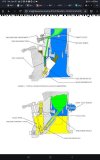
The transition from the idle circuit to the main circuit starts around 1200 rpm. Below that you're running on the idle port with the throttle closed, as well the "off idle port" as you get to 1000ish.

Screenshot_20250426_081016_Chrome.jpg

Notice that the idle system is fed out of the main circuit behind the mixture valve, which is why you can effect it, but the ports are so small that you have to be right on the edge of ico to do so. It takes very little fuel to idle an engine. My 540 burns about 3gph at 1000rpm, less at idle. Compared to 15 in cruise and nearly double that at takeoff.
 
Ah, that makes more sense. If I understand correctly that the idle circuit is active at 1000rpm, then it sounds like only very aggressive leaning (borderline ICO) would make a difference in fuel flow. I'll pay closer attention to my fuel-flow monitor at my next start up. I'm curious to see what effect I can see at 1000 RPM as I lean it out. Thanks!
 
I question the need. :stirpot:

My Lycoming operators manual is clear on the matter. If idle mixture is correctly set, there should be no need for additional leaning.

What's the harm? Well, there is a non-zero chance of forgetting to set mixture back to full rich for takeoff.

Note to people from Colorado: leaning for takeoff at high elevation is a separate issue.
That there is the answer. And it's hinted at here:

1745677609804.png

When Lycoming wrote that, the common fuel for these engines was 80/87, which had 0.5 ml/gallon of TEL. 100LL has 2.0 ml/gallon, and it fouls plugs quickly at idle when running full rich as per the idle mix instructions.

You can't hurt that engine by leaning it for ground ops. The power levels, cylinder pressures and so on are far too low.

Lycoming's idle mixture settings are intended to prevent engine stoppage in the glide at various density altitudes. They're not intended to prevent fouling from four times as much lead as that engine was designed for. Ground leaning to the edge of ICO will prevent takeoff with the mixture lean. That mixture control valve is so far closed that it simply will not pass enough fuel for anything near takeoff power.

The old 100/130 fuel had 4.0 ml/gallon of TEL, or eight times the lead of 80/87. It was a real problem.
 
ports are so small that you have to be right on the edge of ico to do so
I think you hit the nail on the head with this statement. Yes, leaning has an effect on idle mixture, but you have to lean a lot (to the point that the engine starts stumbling) to actually have an effect.
I've seen a lot of fresh pilots that have not been taught how to lean properly. They would pull the mixture knob an inch or two (on ground or in flight) and called it leaned.
 
Back
Top