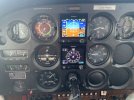
Glass cockpit vs steam gauges

henryinparadise

Pre-Flight
Joined
Oct 27, 2023
Messages
42
Display Name
Henry
Ive been flying 45 yrs. Owned 6 single engine planes small to large. Simple to complex.
I have many hours ifr in benign conditions way before gps existed and with no auto and with no problems at all. All approaches were vor or ils approaches.

I have a friend with an older cessna 210 worth about $100,000 before adding $70,000 of avionics to it. He never flys imc. He's a retired airline pilot.
I know of many other such cases.

Makes no sense to me.

I ask because Im looking to upgrade to a newer RV14 and they all have glass cockpits.
Ive never even used one. Call it my last hurrah.

Your thoughts? I respect and appreciate all responses.
 
You'll get different opinions on that.

I made the transition from steam gauges to glass about four years ago. It took some getting used to. Everything is in a new place and looks a little different, so you have to retrain to look for information. Worse yet, some of the information is configurable (e.g. airport details, weather data, engine data), so you have to learn how to get there.

Having said that, I found it worthwhile. I have useful information available today that didn't exist on my steam gauges, like wind speed and direction and true airspeed, or a flight director. For instrument flying, having an HSI with auto-slew (i.e. the course pointer adjusts automatically) and a directional gyro that does not drift away is fantastic. Being able to bug my decision altitude and then get an alert when I approach and again when I reach minimums is helpful. Yes, it takes time to get familiar with it all, but to me it's worth it. I don't want to go back.

- Martin
 
Won’t all RV14’s have glass no doubt?
Or you building?
 
I'm with Martin. Been on glass for three years. Really enjoy the extra functionality. Even if I never used the extras, I'd probably still prefer it to a six pack at this point. Took like three flights before the next layout was second nature.

So, I'd say go ahead and jump in with both feet on the RV. You'll love it.
 
I learned to fly in 2015 with steam gauges.
About 1/2-3/4 of the way through training the school bought a G1000 172. I flew it about 50-60 hrs including renting it after I received my certificate. Very glad I did.
Then when I had a GPS and 2 G5s installed in 2018 I was already familiar with glass and the transition was no big deal. A 650 and 2 G5 were like a mini G1000 to me.
Love those 2 G5 and my 58K garmin panel in my little ole 172. It was worth the $$.
Good luck to you. Bet you won't have a problem with glass, it's great. IMO
 
Last edited:
I am VFR only. A year of training and 24 years owning the same Warrior, all with steam gauges and no AP. I do use a simple moving map on an iPad. It is not an aviation specific app, but does accept the FAA digital charts and works in a simplistic way. I've flown all over the country and never felt the need for glass. Before I spring for glass, I would replace a mag or mags with SureFly(s), replace the legacy VR with Zeftronics, and replace the 121.5 ELT with a 406 MHz. Basically, I rather spend my coin on reliability than glass.

To be honest, I have lusted over dual AV-30s just to get rid of the vacuum system, but with one as an AI and the other as a DI, it's not much of a change from steam.
 
I’m curious if there are any studies regarding level of safety for 6-pack vs full glass for point to point IFR transportation flying…
 
Adaptation to glass varies. I've been flying about 35 years so, like you, my initial experience was analog. I got my instrument rating with a traditional six-pack, dual VORs, and an ADF. My first glass was with G1000 just about 15 years ago. Since then, I've flown and/or taught in many of the combinations available from Garmin, Aspen and Dynon. I feel equally comfortable with all of them, as well as analog instruments. If I have a specialty as a CFI/CFII its avionics transitions and mastery.

This is my perspective. People adapt at various rates. Those who don't adapt at all fall into two categories. First is those who simply choose not to make the effort. They climb into their first glass, turn it on, get intimidated, and simple walk away. The second group are those who try to train themselves. There are definitely people who can do that, but they are few and far between. The ability to DIY has absolutely nothing to do with native intelligence or even the way you handle other kinds of technology. If anything, what a CFI does is break learning into manageable pieces.

Just as an example, I am a member of a club with two G1000 aircraft. We get new members who have not flown glass before and I typically do the training in three distinct steps.
1. Just getting used to the glass display. With analog, we have familiar dials. Holding altitude is noticing the position the altimeter hands and flying up or down to where it should be pointing. Like a wrist watch with no numbers, we hardly need to read the numbers at all. Not so with an altitude tape. For this stage, I cover the backup analog instruments to force getting used to the display and begin teaching simple strategies like bugging heading and altitude, pretty much always. I'll even bug pattern altitude for touch & goes.​
2. Basic VFR functionality. To #1 it adds things like basic GPS flight planning and we will generally do a short cross country. A bit of autopilot work here as well. When they and I feel comfortable that they won't distract and hurt themselves, they are signed off with a VFR limitation. I tell them to go fly and practice.​
3. Advanced. That's to cover questions they might come across and raise. For the instrument rated pilots, we move to IFR functionality. At this point, it more about the GPS navigator/FMS than about the glass PFD.​
 
I have a 1959 Cessna 182. It has nice paint, nice interior, low-time engine, and steam gauges. Some owner will probably 'upgrade' it someday, but to me it's a huge waste of money. I fly all over the country and have never once thought I needed a glass panel. It would clean up the panel and make it prettier, but no matter what it cost, it would be money I would never recover.

On that note, if I bought a plane that already had glass, I guess this old dog would learn some new tricks!
 
I've been flying glass (G1000) for 19 years. Before that it was steam in a warrior. I didn't find the transition overly difficult, although using training materials and videos helped a ton. There are advantages and disadvantages to both, but overall I find glass provides a lot more information in a tighter, well integrated package. If you're flying IFR, it's much better. If you only fly VFR, it's just more bells and whistles - but having traffic and weather on the PFD or MFD is still very useful. When I built my gyro, I wanted to go with as simple as possible. I still ended up with a G5. Turns out avoiding the vacuum and gyros is way simpler!

One disadvantage - I've never gotten used to using an iPad or other additional device. Everything is already on the screen in front of me.
 
Thank you all for your responses.
Food for thought.

Yes virtually all RV14s would have glass cockpits.

One question for the old school analog old guy-

do these systems wear out or become functionally
obsolete? or anything along those lines?

one of my pet peeves is that we all seem to be getting
lazier and wimpier. if thats a word.
The Tennessee fly girl died cause she couldnt fly by hand!
Rare incident but it happens.
Ive flown manually cross country in ifr and no gps.
No wing leveler. No big deal. Tiring? yes but.

When I was young, cars had no AC, no cruise, no power steering,
most had stick shifts, etc. Somehow we got to where we were going.
 
We put in dual GI-275s a few years ago, but kept the non-vacuum steam gauges until we finally took them out earlier this year. Nice to not have a vacuum system; nice to not worry about gyro drift.

But I do not like the speed tape.
I do not like it in the pattern,
I do not like it in the air.
I do not like it on final,
I do not like it anywhere.

I'm always over-correcting. I wish there was GI-275 analog airspeed indicator.
 
do these systems wear out or become functionally
obsolete? or anything along those lines?
Sure, any tech does. Remember LORAN and VOR/DME based RNAV? Plus there are variation even without obselescence. But like analog, there are commonalities. You can look at almost any PFD from any company and the basic 6-pack emulation is pretty much the same.
 
We put in dual GI-275s a few years ago, but kept the non-vacuum steam gauges until we finally took them out earlier this year. Nice to not have a vacuum system; nice to not worry about gyro drift.

But I do not like the speed tape.
I do not like it in the pattern,
I do not like it in the air.
I do not like it on final,
I do not like it anywhere.

I'm always over-correcting. I wish there was GI-275 analog airspeed indicator.

Why didn't you keep the analog ASI and ALT?
 
We put in dual GI-275s a few years ago, but kept the non-vacuum steam gauges until we finally took them out earlier this year. Nice to not have a vacuum system; nice to not worry about gyro drift.

But I do not like the speed tape.
I do not like it in the pattern,
I do not like it in the air.
I do not like it on final,
I do not like it anywhere.

I'm always over-correcting. I wish there was GI-275 analog airspeed indicator.
Re-learn not to chase instruments. If you do, you ARE going to over-correct. Pitch - power- configuration doesn’t change just because it’s glass.
 
Glass can have advantages. It's not a step down from six pack. BTW, some glass can display information in a six pack format. Flying behind glass does not mean you become a weak pilot with diminishing stick and rudder skills.

Things change. VOR stations are disappearing, ILS approaches are becoming fewer. So yes, we all get to go along with the change to GPS whatnot. Different isn't worse - glass, GPS, ADSB, IMHO makes things better.

So we get to continually train / fly with CFI's to get acquainted with glass, a new airplane, etc. Think of it as an adventure.
 
There's no way I would put any kind of glass in my biplane, it would just be wrong*. I cringe when I see those gorgeous new production WACO biplanes with glass. That said, if I was building a modern plane, it would be glass. If I was restoring a 1950s or later plane for anything other than local flying, I'd probably go with the multifunction displays that go in 3" holes.

*But I do use my phone or a tablet for moving map navigation if I'm going XC.

Just the other day I watched a video about a Cirrus with the latest glass. Not my kind of flying or anything I aspire to own even if I could afford it, but wow! A fascinating look at how the other side lives. I had no idea the systems were that advanced today.
 
Last edited:
Ive been flying 45 yrs. Owned 6 single engine planes small to large. Simple to complex.
I have many hours ifr in benign conditions way before gps existed and with no auto and with no problems at all. All approaches were vor or ils approaches.

I ask because Im looking to upgrade to a newer RV14 and they all have glass cockpits.
Ive never even used one. Call it my last hurrah.

Your thoughts? I respect and appreciate all responses.
If you know what you're doing on steam and you take the time to learn glass properly (see @midlifeflyer's post), you should have a very easy transition if you're reasonably comfortable with technology in general, and it shouldn't be too hard even if you're not a tech-head, it might just take a little time.

FWIW, I learned in /U and /A, joined a flying club where I got familiar with the GNS 430, and when I transitioned to glass it took about 45 minutes because the G1000 worked just like the 430.

IMO, being a good pilot is all about making good decisions. Glass, GPS, ADS-B, etc tends to give you more information, and if you use the extra information correctly and know where to look for it, having the extra information can help you make better decisions.

One question for the old school analog old guy-

do these systems wear out or become functionally
obsolete? or anything along those lines?
They don't wear out the way analog stuff does. You don't have to send your PFD away to get its gyros overhauled (there are none) and you don't have to replace your vacuum pump or filters or any of that other stuff, so it tends to be MUCH lower maintenance.

That said, everything breaks. Luckily, at least with Garmin, they tend to do flat-rate repairs that are at least somewhat reasonably priced.

The main drawback in terms of obsolescence is limited to the certified world, where the glass is part of the type certificate and software updates have to be approved by the aircraft manufacturer, who has zero motive to do so. You won't have this problem in the 14.

one of my pet peeves is that we all seem to be getting
lazier and wimpier. if thats a word.
The Tennessee fly girl died cause she couldnt fly by hand!
Rare incident but it happens.
With glass, it is entirely up to you whether you will let your skills deteriorate to the level the system allows, or whether you will keep your skills up and use the glass to make you even safer. The glass does not make you lazier and wimpier, it just lets those who do allow themselves to get lazy/wimpy to survive longer.

Ive flown manually cross country in ifr and no gps.
No wing leveler. No big deal. Tiring? yes but.

When I was young, cars had no AC, no cruise, no power steering,
most had stick shifts, etc. Somehow we got to where we were going.
Most of the time. Plenty of survivor bias here. We don't really know how many accidents had fatigue as a contributing factor, but it's definitely nonzero.

But I do not like the speed tape.
I do not like it in the pattern,
I do not like it in the air.
I do not like it on final,
I do not like it anywhere.

I'm always over-correcting. I wish there was GI-275 analog airspeed indicator.
IMO, glass cockpit speed tapes are backwards. If the low numbers are on top and the high numbers below, then you could point your nose towards the number you're trying to get to and it'd work. I read somewhere that the very first glass cockpit, which I think was in a Gulfstream around 1984 or so, had the tape this way, and for some reason it was reversed in all subsequent glass cockpits.

Sure, any tech does. Remember LORAN and VOR/DME based RNAV? Plus there are variation even without obselescence. But like analog, there are commonalities. You can look at almost any PFD from any company and the basic 6-pack emulation is pretty much the same.
I think the real question was "Am I going to have to pull this out and replace it every 5 years like all my other gadgets?"

To that, the answer is no. Generally, our computers, tablets, and smartphones become victims of "feature-itis" and as more and more features are loaded into the OS, it gets slower and slower, requiring newer hardware to compensate. In the avionics world, they stop software feature updates fairly quickly. My GTN hasn't had any new features since maybe 2018, and thus it's still just as fast an usable as it was when I had it installed. Since it has very few moving parts (two buttons and two knobs), I expect it will last a looooong time. Same with the GI275, and any other solid-state glass device.

 
Be me.
Sit in $XXX,XXX,XXX airliner (A350)
Pull up OMT
Scramble to pull all the shades because none of the cockpit displays are sunlight readable.

I prefer 6 pack because no matter how bright it is, I can always read the needles.
For GPS I actually prefer the old green screen displays like the KL-89 or -90. Why you need to see a sectional map on a GPS for VFR flight is retarded. When you follow the line its not pilotage. Unless there is a very large magenta line painted on the ground ?
 
Weird. I've not seen glass that isn't sun light readable. Although I Pads' aren't, you can even get Android tablets today with uber sunlight readable / ye gads that's bright even in the sun.

Full disclosure, I've got a traditional six pack, with the AHRS's and HSI being GI 275's. You can call it a hybrid if you want.
 
Last edited:
Be me.
Sit in $XXX,XXX,XXX airliner (A350)
Pull up OMT
Scramble to pull all the shades because none of the cockpit displays are sunlight readable.
Sounds like operator error.
I prefer 6 pack because no matter how bright it is, I can always read the needles.
In a glass cockpit I've never had a problem seeing the displays.

Why you need to see a sectional map on a GPS for VFR flight is retarded.
It's called "situational awareness. Something else you skipped during PP training.

When you follow the line its not pilotage. Unless there is a very large magenta line painted on the ground ?

Again, "situational awareness".
 
Sounds like operator error.

In a glass cockpit I've never had a problem seeing the displays.


It's called "situational awareness. Something else you skipped during PP training.


Again, "situational awareness".
Then you never sat in an A350 on a bright fall morn. I do. 220's screens are not a problem... but most Airbus stuff is problematic in direct sunlight. Boeings not really. I think the angle of the displays and lack of extended glareshield has a lot to do with it.

Staring at a megenta line is SA for you? Sounds right all things considered.
 
Then you never sat in an A350 on a bright fall morn. I do. 220's screens are not a problem... but most Airbus stuff is problematic in direct sunlight. Boeings not really. I think the angle of the displays and lack of extended glareshield has a lot to do with it.

I flew the 319 and the 320. Flew the morning, noon, evening, etc, etc. We had 330's as well. Not sure where the "problematic" stuff you are complaining about comes from.

Staring at a megenta line is SA for you? Sounds right all things considered.

Where did I state "staring" at a magenta line? You obviously don't understand the term situational awareness. Not surprised.
 
Adaptation to glass varies. ... People adapt at various rates. Those who don't adapt at all fall into two categories. First is those who simply choose not to make the effort. They climb into their first glass, turn it on, get intimidated, and simple walk away. The second group are those who try to train themselves. There are definitely people who can do that, but they are few and far between.
I guess I fall into the second group.

I recently installed an Aspen Evolution E5 in my Musketeer. Aspen buttonology was simple and it took me about 3 hours of VFR flying before I was comfortable with the display. I then went up with my buddy and shot 3 VFR practice approaches under the hood to minimums without any difficulties. The Aspen, with auto slew, ground track bug, altitude bug & HSI presentation, definitely makes IFR flying easier. It probably helped that I read through the pilot's guide several times. :)

Hardest thing for me was to get use to the speed and altitude tapes. As others have pointed out, with tapes you fly numbers, not needle position. So, a bit of a mental shift. Also, with tapes you see change more quickly and tend to overreact or chase the numbers. Again, once I recognized this and made the mental shift, I was fine.

Very happy I went to glass.
 
It sounds like you’re set in the RV14, and thus your concerns about glass are not a show-stopper. From what has been said, easy enough transition. And I don’t think that your older age will allow you to become complacent enough in enough time where you’ll get unsafe, lol! You’ll owe us pics…
 
Be me.
Sit in $XXX,XXX,XXX airliner (A350)
Pull up OMT
Scramble to pull all the shades because none of the cockpit displays are sunlight readable.
Sounds like operator error.

In a glass cockpit I've never had a problem seeing the displays.
Same...

I flew the 319 and the 320. Flew the morning, noon, evening, etc, etc. We had 330's as well. Not sure where the "problematic" stuff you are complaining about comes from.
I mean, he said he was sitting in an A350. Didn't say he was in the front. Might be in cattle class looking at his iPad. ;)

Or, maybe just too much of a luddite/curmudgeon to realize that you can adjust the brightness on the screens instead of complaining about it on the Internet.
 
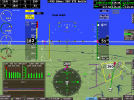
I put glass in my Velocity. It made everything easier and nothing harder. And (at least for the builder) there wasn't much of a price difference. So (once again, for me) it's a no-brainer.

2018 SNAP0025.PNG
 
Same...


I mean, he said he was sitting in an A350. Didn't say he was in the front. Might be in cattle class looking at his iPad. ;)

Or, maybe just too much of a luddite/curmudgeon to realize that you can adjust the brightness on the screens instead of complaining about it on the Internet.

He said he was looking at the cockpit displays , those are usually in the front.

If my display is in direct sunlight, I can put up a shade.
 
One comment I have about glass: there can be too much button pushing. Which is more a comment on the FMS rather than the glass. A co-worker flew us from KBED to KBWI for a day business trip (IFR down and back in a turbo 182 VMC). The routing was airways all the way down and back. It seemed like every 10 minutes ATC had a revised clearance for us - they were being nice by basically cutting out the bends/intersections in the airways. I was in the right seat (I wasn't current and I wasn't approved by the owner to fly his bird), so it was my job to entered the revised route in the glass (G1000 iirc). What a pita.

I liked my steam gauges in my cherokee 140. But that plane was so slow you had to work at getting behind the plane, very easy to stay ahead of that bird, even with the steam gauges.
 
Hardest thing for me was to get use to the speed and altitude tapes. As others have pointed out, with tapes you fly numbers, not needle position
That’s why we bug altitude - so we can fly up and fly down to the marker. Bugging speed is not quite as critical.
 
For upgrading light GA, I think that the hybrid option is really the sweet spot. Like a lot of us here, I grew up on steam gauges, navigating by pilotage, VOR, and NDB.

In my plane, I have GI 275s for the AI, HSI, and EIS. Everything else is a classic steam gauge, which gives me triple redundancy for displays of airspeed and altitude. Vacuum system is history, which also removes a potential failure mode. GNX-375 gives me WAAS capability, but I retained two nav radios for VOR and ILS as back-up.

I find speed and altitude tapes much harder to assess at a glance than a round-dial gauge with respect to trends, although bugging altitudes is helpful. On the other hand, having a moving map and ADSB traffic on my HSI is very useful indeed, and were I to go back to fly in the mountain-west, I would likely invest in the synthetic vision for my AI.

The law of primacy is very strong, and I continue to find myself performing the classic hub-and-spoke scan that was drilled into me during private and instrument back in the day, even though literally everything I need to fly and navigate the plane is on the AI. It's certainly a transition.
 
  • Like
Reactions: WDD
I find speed and altitude tapes much harder to assess at a glance than a round-dial gauge with respect to trends, although bugging altitudes is helpful.
The interesting part is even that comes. I mentioned earlier that I've been flying glass for about 15 years. About 5 years ago, I noticed that I was reacting to the numbers independent of the bug. So basically, it took me 10 years to get used to that :D But since I fly airplanes with multiple types of glass and analog, I suspect owners and those who fly with the same system all the time will adapt faster.
 
One comment I have about glass: there can be too much button pushing. Which is more a comment on the FMS rather than the glass. A co-worker flew us from KBED to KBWI for a day business trip (IFR down and back in a turbo 182 VMC). The routing was airways all the way down and back. It seemed like every 10 minutes ATC had a revised clearance for us - they were being nice by basically cutting out the bends/intersections in the airways. I was in the right seat (I wasn't current and I wasn't approved by the owner to fly his bird), so it was my job to entered the revised route in the glass (G1000 iirc). What a pita.

I liked my steam gauges in my cherokee 140. But that plane was so slow you had to work at getting behind the plane, very easy to stay ahead of that bird, even with the steam gauges.


First ask for a heading to next fix, set heading bug and AP to heading mode, takes the pressure off of trying to quickly update your route.

With more modern technology, you can update the flight plan on your iPad, and then just push it to your panel once you’re satisfied with the new one.
 
One comment I have about glass: there can be too much button pushing. Which is more a comment on the FMS rather than the glass. A co-worker flew us from KBED to KBWI for a day business trip (IFR down and back in a turbo 182 VMC). The routing was airways all the way down and back. It seemed like every 10 minutes ATC had a revised clearance for us - they were being nice by basically cutting out the bends/intersections in the airways. I was in the right seat (I wasn't current and I wasn't approved by the owner to fly his bird), so it was my job to entered the revised route in the glass (G1000 iirc). What a pita.

I liked my steam gauges in my cherokee 140. But that plane was so slow you had to work at getting behind the plane, very easy to stay ahead of that bird, even with the steam gauges.
Yeah, that's the FMS end whether instruments are analog or glass.

But let's drill down. If you're talking about shortcuts on the existing route, "basically cutting out the bends/intersections in the airways," there shouldn't be much button pushing/twisting. There's no programming involved. It's just a matter of pulling up the flight plan, touching or scrolling to the fix they are sending you to and hitting D→ and activating it. If they are giving you a leg to intercept, same thing, except you activate the leg than go direct. Maybe all of a two tap difference. Unless ... the full route wasn't entered to begin with.

If it involves the addition of new waypoints, yeah, you are going to have to program it, no matter what you are using. But that's not much different than entering the route initially and I have trouble seeing how it was easier when you didn't have an FMS. Do you remember what the original and revised route was?
 
You'll get used to it, at it's most basic, it's the same information you have now and in relatively the same place.
look at a pair of g5's, gi275, g3x, etc... the layout of basic flight information is the same as a six pack, use it the same way.
as you get more time, you'll appreciate the extra capabilities. I do tend to still look at the vsi and sometimes the altimeter, the big needles are just faster.
example, my basic IFR scan can now be accomplished in one look, it's all right there, attitude, altitude, heading, course info, pink or blue lines, etc.
 
I have two G5s and loved getting rid of the vacuum pump, so did my mechanic when working on the engine. I kept one OBS on Comm2 and use it as a backup on approaches. Following the large needles is a lot easier to interpret than the small heading and glide slope markers on the G5s. It just takes an instrument scan glance to interpret the OBS vs. the G5, even out of the side of your central vision. But the info on the G5s is well worth it.
 
Back
Top