
You are using an out of date browser. It may not display this or other websites correctly.
You should upgrade or use an alternative browser.
You should upgrade or use an alternative browser.
G100 Air Ambulance Bermuda to Boston Missing off Nantucket
- Thread starter DJTorrente
- Start date

One. Even if the phone is locked. (At least for my phone).How many hands does it take to put a smart phone in flashlight mode?
And my phone is in my pocket, not in a flight bag somewhere in the back of the plane.

Ed Haywood
Final Approach
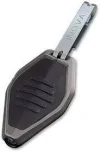
I spent a lot of time in the middle east in camps that were blacked out at night. Got in the habit of always wearing one of these clipped to my shirt collar. I always keep a couple stashed in my cockpit.

oskrypuch
Pre-Flight
- Joined
- May 25, 2009
- Messages
- 75
- Display Name
- oskrypuch
I have a thumb LED light in a swing mount permanently affixed to the center of my forward bulkhead. Always quickly available. And the CR2032 battery does last a long time.
Handy in a non-emergency situation as well, at night, before power up, or after power down.
About $10.
* Orest
Handy in a non-emergency situation as well, at night, before power up, or after power down.
About $10.
* Orest
Takes 3 for me.One. Even if the phone is locked. (At least for my phone).
And my phone is in my pocket, not in a flight bag somewhere in the back of the plane.
 One to put on my reading glasses, another to hold the phone and another to push the wakeup button, swipe right, then swipe down, find the flashlight and tape to activate. Not something I'd want to depend on in an electrical failure. What if you drop the phone?

- Joined
- Jun 11, 2015
- Messages
- 5,613
- Display Name
- Piperonca
- Home Airfield
- M52

FlightmechH3
Line Up and Wait
- Joined
- Dec 30, 2021
- Messages
- 528
- Display Name
- FlightmechH3
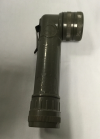
I never liked those. We carried 4 in the helo and 2 with red lenses.I wonder if there is a modern version of the USAF gooseneck flashlight with clip that we carried at night, I think in the left ankle pocket of the flightsuit. View attachment 155470
FlightmechH3
Line Up and Wait
- Joined
- Dec 30, 2021
- Messages
- 528
- Display Name
- FlightmechH3
I had a cool lip light on my mike. Blue light because of NVG's
Albany Tom
Final Approach
- Joined
- Jul 23, 2021
- Messages
- 5,703
- Display Name
- Albany Tom
Just wondering out loud, not trying to be a smarta**, for the theory that he didn't have any electric at all including lights, how did he make the radio call stating that he didn't have instruments?
Not knowing anything about the aircraft except what I've read here - G1000 plus analog backup - I'm wondering if the G1000 went sideways, and he didn't realize what had happened until he tipped over the gyro in the analog artificial horizon. I don't know if that's possible in whatever he had, but I do know that's possible in some, because I was riding with a guy the demonstrated how to do it in a 182 years ago.
Or if there's something common between the systems that could cause all to fail at once. Having trouble guessing what that might be, unless it was partial electrical failure and he somehow lost all the gyros but had the radio.
Do a quick search and you'll find all sorts. Replicas of your light and a lot of LED lights with pivoting heads so you can get any angle from 0 to 90. Many have multi colors as well.I wonder if there is a modern version of the USAF gooseneck flashlight with clip that we carried at night, I think in the left ankle pocket of the flightsuit.
The one I use does not pivot at the top, but it's got a not-to-bright green light at one end that is not too bright for the cockpit. And then the main LED light goes from good light to walk with at night then through 4 steps to mega bright and then to a strobe. And then I also carry a headlamp that has green, red and white. It also has multiple brightness levels. They go in the pocket on the back of the right seat where they can easily be grabbed without any searching around.
GaryM
En-Route
- Joined
- Apr 16, 2020
- Messages
- 3,087
- Location
- Was KMMU, now KCOE
- Display Name
- Gary M
- Home Airfield
- Was KMMU, now KCOE
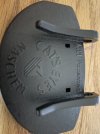
I've had this clipped under the bill of the cap I wear to fly for at least 15 years. Not sure if they still make them, but it sure is handy.
Lithium battery, switch selects between just two settings: off, and red.
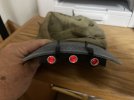
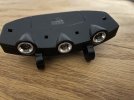
Lithium battery, switch selects between just two settings: off, and red.
- Joined
- Jun 11, 2015
- Messages
- 5,613
- Display Name
- Piperonca
- Home Airfield
- M52
This is my new Halloween hatI've had this clipped under the bill of the cap I wear to fly for at least 15 years. Not sure if they still make them, but it sure is handy.
Lithium battery, switch selects between just two settings: off, and red.
View attachment 155474
View attachment 155475 View attachment 155476

Kenny Phillips
Final Approach
- Joined
- Jul 29, 2018
- Messages
- 6,572
- Display Name
- Kenny Phillips
Well, it may, or may not, and I don't know Canada's rules on that.That thing have “boxes”?
TrueCourse
Cleared for Takeoff
- Joined
- Dec 10, 2019
- Messages
- 1,034
- Display Name
- TrueCourse
Not knowing anything about the aircraft except what I've read here - G1000 plus analog backup - I'm wondering if the G1000 went sideways, and he didn't realize what had happened until he tipped over the gyro in the analog artificial horizon. I don't know if that's possible in whatever he had, but I do know that's possible in some, because I was riding with a guy the demonstrated how to do it in a 182 years ago.
This airplane is equipped with ProLine 4 avionics and the three small analog backups mentioned.

I carry these: https://www.streamlight.com/products/detail/protac-90-x
I wonder if there is a modern version of the USAF gooseneck flashlight with clip that we carried at night, I think in the left ankle pocket of the flightsuit.
Ed Haywood
Final Approach
for the theory that he didn't have any electric at all including lights, how did he make the radio call stating that he didn't have instruments?


- Joined
- Sep 25, 2019
- Messages
- 828
- Location
- Lancaster, Pennsylvania
- Display Name
- Rick A
- Home Airfield
- KLNS
Factory panel post lights on older aircraft (especially older Mooneys) have at best terrible performing white post lights. Some instruments are lighter, others darker, and are often combined with different levels of internally lit white lighting on others....but it's got a not-to-bright green light at one end that is not too bright for the cockpit.
I use a self-designed portable lighting system, mounted on the headliner with Velcro, based on an adjustable intensity green floodIight that provides an awesome green view of the panel. https://www.pilotsofamerica.com/community/threads/daily-pic.54513/post-3658002
Red was great to use years ago, but as my eyes aged some of what needs to be seen while flying with red panel lighting and flashlights appears "fuzzy", and red colored symbols on charts are nearly impossible to notice when illuminated by red.
FWIW, green cockpit lighting is crisp! But it does take a couple of seconds to gain good night vision adaptation after turning it off, or when things go dark. White light takes even longer to recover "see in the dark" vision.

I bought one of these cause battery leakage ruined my old one like yours.I wonder if there is a modern version of the USAF gooseneck flashlight with clip that we carried at night, I think in the left ankle pocket of the flightsuit.

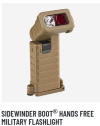
The Lear 35A that went don't here at SEE had boxes.That thing have “boxes”?

hindsight2020
Final Approach
Just wondering out loud, not trying to be a smarta**, for the theory that he didn't have any electric at all including lights, how did he make the radio call stating that he didn't have instruments?
Not knowing anything about the aircraft except what I've read here - G1000 plus analog backup - I'm wondering if the G1000 went sideways, and he didn't realize what had happened until he tipped over the gyro in the analog artificial horizon. I don't know if that's possible in whatever he had, but I do know that's possible in some, because I was riding with a guy the demonstrated how to do it in a 182 years ago.
Or if there's something common between the systems that could cause all to fail at once. Having trouble guessing what that might be, unless it was partial electrical failure and he somehow lost all the gyros but had the radio.
Most jets have their DC buses separated into essential and non-essential buses, and the essential bus further split into multiple primaries (in multi-engine aircraft they tend to be labeled left and right essentials for convenience), on downstream of the hot bus aka master/battery bus, which usually contains the igniter circuits and intercomm.
What that means in practice is that a failure of one of the essential DC buses can also knock out the non-essential (misc avionics) bus if connected to the affected primary bus. The arrangement of instruments, aircraft major moving component switches, and radios is thus arranged between separate DC buses so as to provide redundancy.
In my particular military application that means the TACAN and UHF radio are in a different bus than the VHF nav and comm radios. The main landing gear handle selector in a different DC bus than the flap handle selector. This is so in the case of a partial DC bus failure, you can manage a no-flap landing on UHF comm, or an alternate gear extension on VHF comm, instead of all of it at once with an induced total DC loss failure when you still had a working battery otherwise.
Also remember that a failure of the AC-to-DC rectifying units (multiple in a multi engine aircraft), means your DC buses are isolated from the AC generators, that too would lead to total DC power loss... when the battery runs out. So there's multiple ways to arrive at the same failure mode.
If this old timey re-branded jet is anything like my 1950/60s supersonic coffin, chances are the DC circuit is split in similar ways as I've described. So if they had DC power to transmit on VHF, they had power going to the standby ADI. An ADI will likely never be found on a non-essential DC bus, a secondary radio otoh could. Primary radio, no, that's the same priority placement as an ADI. So having the ability to transmit on one radio supports the notion the backup ADI was powered.

KE5BM
Pre-takeoff checklist
I used to keep a red one on my lifejacket for night ops. Learned that from a Surfman who was one of my early Coxswain instructors.I spent a lot of time in the middle east in camps that were blacked out at night. Got in the habit of always wearing one of these clipped to my shirt collar. I always keep a couple stashed in my cockpit.
View attachment 155471
I keep an Energizer camping/hunting headband light in my flight bag. Dimmable white, dimmable red, green, and - if lost flashing red. Battery lasts forever and is USB chargeable. Just over $16 on Amazon right now. Look up ASIN B08S47QMS1

- Joined
- Jun 13, 2008
- Messages
- 9,173
- Location
- Marietta, GA
- Display Name
- Drake the Outlaw
- Home Airfield
- Cartersville, GA
Link?I spent a lot of time in the middle east in camps that were blacked out at night. Got in the habit of always wearing one of these clipped to my shirt collar. I always keep a couple stashed in my cockpit.
View attachment 155471
KE5BM
Pre-takeoff checklist
Ed Haywood
Final Approach
Link?
I used the Night Ize, like the link KE5BM provided. But those are pricey now that they are rechargeable.
Search Amazon for "microlight" and there are tons of less-overpriced options.

Canadian TSB to be lead investigator on the accident.
FlightmechH3
Line Up and Wait
- Joined
- Dec 30, 2021
- Messages
- 528
- Display Name
- FlightmechH3
I had a cool lip light on my mike. Blue light because of NVG'
bonefishpete
Cleared for Takeoff
- Joined
- Nov 10, 2024
- Messages
- 1,362
- Display Name
- Bonefishpete
So will they spend the money to recover?Canadian TSB to be lead investigator on the accident.
I doubt it.
Why not? Their TSB spent millions recovering and investigating Swiss Air 111 which was not C-reg nor took off from Canada, but it did crash in their territorial waters.So will they spend the money to recover? I doubt it.
bonefishpete
Cleared for Takeoff
- Joined
- Nov 10, 2024
- Messages
- 1,362
- Display Name
- Bonefishpete
Ok we’ll see. Woods Hole is nearby so that would make it a easy recovery.Why not? Their TSB spent millions recovering and investigating Swiss Air 111 which was not C-reg nor took off from Canada, but it did crash in their territorial waters.
Also for other accidents such as: https://en.wikipedia.org/wiki/Arrow_Air_Flight_1285RWhy not? Their TSB spent millions recovering and investigating Swiss Air 111 which was not C-reg nor took off from Canada, but it did crash in their territorial waters.
Someone spent the money to recover a medical mission King Air (N13GZ) in 2022 from 6,500 ft of water in Hawaii. It happens…So will they spend the money to recover?
I doubt it.
TrueCourse
Cleared for Takeoff
- Joined
- Dec 10, 2019
- Messages
- 1,034
- Display Name
- TrueCourse
Maybe because our NTSB has plenty of accidents to investigate. As long as the cause of this is determined and it’s a thorough report I don’t care. There are several possibilities on the cause and what we learn may surprise us. I can say that whatever electrical or avionics issue they had, it couldn’t have come at a worse time.Canadian TSB to be lead investigator on the accident.
Nothing to see. ICAO Annex 13 dictates how accident investigations will be performed for all 190+ members states. If Canada as the State of Registry and lead investigator does not perform those requirements or delegate them to an appropriate entity, they would not be in compliance to their ICAO agreements, which would have a much larger effect than not finishing this investigation properly.Ok we’ll see.
Not really as the responsibility of the investigation is determined by the occurrence location or aircraft registration. If the accident location had been determined to be within the 12-mile territorial limits of the US, then the NTSB would be handling the accident regardless their workload. However, I guarantee the NTSB will be involved just not as the lead investigator per ICAO Annex 13.Maybe because our NTSB has plenty of accidents to investigate.

bbchien
Touchdown! Greaser!
None of this flashlight discussion aids a pilot whose digital diplay had died or has EMP'd out, in IMC. In the old IMC scenario he has....287 seconds.

Flying Keys
Cleared for Takeoff
- Joined
- Jul 2, 2021
- Messages
- 1,027
- Display Name
- Flying Keys
The premise that brought in the flashlight discussion was if they had lost electrical power and were on backup steam gauges with no lights.None of this flashlight discussion aids a pilot whose digital diplay had died or has EMP'd out, in IMC. In the old IMC scenario he has....287 seconds.
There was a transmission about “flying blind” that could be interpreted that way.