G100 Air Ambulance Bermuda to Boston Missing off Nantucket

Some mention of ‘instrument’ problems. Could have been a little weather in the area. Not an easy time to contemplate ditching, 1:30-2:00 A.M. or so.
 
Depending on exactly where it went down, the water could be 350' deep, or a mile-and-a-half. One of those where we may never know the cause, but it's down, for sure.
 
One of our C-130s broke off from a parallel search and is concentrating in one spot several miles directly south of Nantucket. A Coast Guard Fast Response Cutter is on scene and a 47' MLB from Brant Point (Nantucket) is returning at top speed. Water temp down there right now is about 60.
 
Some mention of ‘instrument’ problems. Could have been a little weather in the area. Not an easy time to contemplate ditching, 1:30-2:00 A.M. or so.
We had a cold front go through last night with some unexpected showers. Wind kicked up as well. But I doubt the weather was much of a factor given what their altitude should have been at that point in an approach to Boston.

I'm just guessing here but I suspect they were being vectored to the OOSHN arrival using the FERNZ transition which puts them descending to 11,000. But they were way left of FERNZ. They started the turn toward FERNZ but then they turned to the left. Maybe to be vectored for an ILS intercept, straight-in to the 4s?
 
In an ATC audio clip the subject of declaring an emergency was discussed and they were also cleared direct to Boston, so they may explain a heading change.
 
New York Center had the last recorded rate of descent at 4643 ft/min. I don't know the likelyhood of severe convective activity in that cloud formation, my guess is not highly likely. If there was instrument failure as reported, spatial disorientation is a possibility as it seems to correleate with likely limited visibility and night over water. It can happen to any pilot in any aircraft.
 
Last edited:
Wonder the condition of the patient that required a middle of the night flight.
Certainly Bermuda has competent hospitals.
 
Apparently audio floating around in which the pilot said I’m flying blind ( with no instruments). If true, tough situation to lose your instruments in
 
Apparently audio floating around in which the pilot said I’m flying blind ( with no instruments). If true, tough situation to lose your instruments in
Damn. Wonder if he lost everything, even the backup steam gauges.
 
According to the G100 specs I found on the Internet, it has a two EFIS systems (presumably redundant). It also has two backup attitude indicators, a backup mechanical ASI, and a wet compass to boot. Pretty mysterious how all that could fail, if it did. If the plane lost substantial electrical power and was in icing conditions, perhaps the pitot-static system iced up? With one working attitude indicator the plane could probably still be flyable in IMC, although with difficulty.
 
If he had steam gauges, and no handy lighting, it could be a mess.
If he’s following Canadian rules night flight means having a flash light. Also hard to imagine there isn’t a flash light on that plane anyways.
 
Do you mean a skinny tube designed for the storage of dead batteries?

Seriously, while rules exist for having one… you can’t regulate being ACTUALLY safe or prepared. This “following rules” really means nothing.

If this plane went down for the lack of common sense, the root cause gets REALLY interesting.

You might be surprised how often I see students allow a loss of control for lack off even thinking to look for the standby gyro. Or even trying to fly real partial panel.

All this goes to demonstrate my belief in the root cause being a SEVERE lack of training.

I’m told in the T-28 days a precautionary engine failure profile wasn’t even SCHEDULED, as it was inevitable!

Point is, training being what it is, we’re all proficient with v1 cuts, but not, for example, a total electrical failure. That would be ALL of “us”. Typical outdated faa nonsense while not allowing skilled instructors and evaluators to actually do their job.

But, accident rates are low enough, so why keep optimizing? We talk and think, which is REALLY good, but no ACTUAL useful change will come of it.
 
Last edited:
Glass panels are hard to do realistic partial panel training on, as a surprise event. Six pack steam guage was easy, just suddenly reach over and cover it. That was not completely good, though, sneaky gradual failure was the most likely, and hard to notice before you had done some dumb or dangerous things.

A skilled pilot should be able to fly in instrument conditions with just the turn and bank, assuming properly trimmed before the failure. Unfortunately, the tiny ones that provide the legal presence of one, are hard to see and react to. As previously stated, most flashlights are just tubes with dead batteries, so a major electrical event could result in no visibility of that T&B. Modern lithium batteries hold charge a long time, and are small enough to hold in your mouth. This points the light where your head turns, but makes communication hard. Aviate, navigate , communicate wins.

Even mild turbulence in a totally black world, can be surprisingly disorienting, and totally black is rare in the modern world.
 
You might be surprised how often I see students allow a loss of control for lack off even thinking to look for the standby gyro. Or even trying to fly real partial panel.

Yes, LOC is a lurking monster, and often fatal. Unless the aircraft breaks out of IMC and enough VMC and altitude are available to recover without breaking the airframe.

The trend for training to have a greater focus on autopilot operation, and less time to train for surprise equipment failure(s) that's not considered likely to happen, is definitely a weak spot.

I know very little about training in the Part 121 world, but in GA keeping proficient in hand-flying skills with the goal of preventing the development of a LOC during unusual situations is not typically granted much time to train for it. As confirmed in accident reports.
 
Modern lithium batteries hold charge a long time, and are small enough to hold in your mouth. This points the light where your head turns, but makes communication hard. Aviate, navigate , communicate wins.
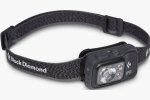
Highly recommend to have something like this in your flight bag:

IMG_9468.jpeg

These come in all sort of variety, from LED strength, color, battery life, battery type (including rechargeable), strap type, etc. Testing it is always in my preflight checklist for night flying.
 
My instrument instructor was a retired PanAm 747 captain. On every taxi for takeoff he required me to test the left brake, point to the turn coordinator, and call out “Left brake, left turn indicator.” Same for the right brake. Finally, point to the compass and call out, “Fluid in the compass.”

The purpose of this exercise was that if I get caught in IMC and lost my vacuum instruments, I could still fly. Why the brakes one at a time? It really makes the TC dance. Plus it’s nice to know that when I did land safely, I can stop.

Thanks, Will “Salty” Salter, you saved me more than once.
 
Last edited:
Steam gauges in a G100?
The accident aircraft is an Astra SPX, with later production re-branded as a G100. Cockpit photos show a 3-pack of backup instruments: airspeed, attitude, and altimeter.

USCG briefing described the debris field area as having a water depth of 80-90 ft.
 
Another suggestion on emergency lighting that is easy enough to adapt for GA pilots who wear full sized popular headsets is this one (or similar design):


Remove the elastic straps, then place a patch of Velcro Hook (the rough surface) onto the inside of the curved plastic headset piece. Stick a corresponding patch of Velcro adhesive backed Loop onto the top of your headset.

This model of headlamp is rechargeable using a USB 5volt panel mounted female USB-C plug, positioned via another piece of Velcro Loop near the panel outlet. The intensity of the light can be preset before it's needed to turn on to lowest wide angle setting in order to retain some night vision adaptation.

It always charging whenever the aircrafts' master switch is on. Quick, easy to locate in the dark, stick onto the headset, and always charged.
 
The accident aircraft is an Astra SPX, with later production re-branded as a G100. Cockpit photos show a 3-pack of backup instruments: airspeed, attitude, and altimeter.

USCG briefing described the debris field area as having a water depth of 80-90 ft.
That is well within the range of divers, so at least we'll likely get the boxes; the depth goes to ~350 not much farther out, the drops to a mile and a half. If there's a "debris field" it likely was a violent ditching.
 
Canadian plane past three miles is this Canada’s responsibility?
 
Canadian plane past three miles is this Canada’s responsibility?
Depends on where the wreckage sits. Per ICAO Annex 13, if it sits within the 12-mile US territorial limit, the NTSB will be the lead investigative group, and the Canadian TSB will be the secondary group. If outside the 12-mile limit, the "State of Registry" via the TSB becomes the lead investigator, and the NTSB is secondary.
 
If he had steam gauges, and no handy lighting, it could be a mess.
Very true. As you fly bigger "more equipped" aircraft, I could see some pilots (who are people) messing up on the simple little backup items. So was his flashlight or headlamp somewhere in his bag where he couldn't find it in the potential dark and confusing situation. Shame the flight went down, but hopefully not for something as simple as a headlamp to be able to see the steam gauges.

ADDED: Okay, I've now scrolled down a bit further and seen all the other comments on headlamps.
 
In this day and age of everyone having a smartphone, we all have a flashlight when we fly.
Yes but a smartphone for some pilots is a little awkward to position in your mouth when you may need both hands...probably depends upon the size of your mouth and the smartphone, and which way you want to point it! (just kidding)
 
Flashlight don’t help if ya don’t know what to do with what you’re looking at…

And startle response can make the most basic reflexes USELESS.

Fact is, I’ve never seen a recurrent type training include this sort of event. Or initial for that matter… and I’ve seen LOTS of them…
 
Yes but a smartphone for some pilots is a little awkward to position in your mouth when you may need both hands...probably depends upon the size of your mouth and the smartphone, and which way you want to point it! (just kidding)
Apple Watch Ultra and several Garmin watches (fenix, others) have very nice one-button flashlights built in. Garmin's version is especially good and comes with a red option. Both are very quick and easy to turn on.
 
In this day and age of everyone having a smartphone, we all have a flashlight when we fly.
Having a flash light and having one readily available are two VERY DIFFERENT things.

No clue what happened on this flight. But assuming you're in IMC at night and something happens and you loose all electronics and lights. And your phone, flashlight and whatever else you have are in the back of the cockpit because you shoved the flight bag out of the way the last time you went to the bathroom. I know... I'm pushing the envelope. But it will be interesting if this plane has a cockpit recorder and we learn something. I don't get why all the electronic flight displays **may** have failed per the radio transmission. But also why couldn't they fly with the steam gauges?

Any convective activity? Any chance the plane was hit with lightning and that's why so much of the electronics died. But then, they did get a radio transmission out...
 
Thread drift.

Flashlights, the old batteries aged slower in the freezer, and that was where I kept mine.
My PP instructor, Ozzie, taught me that the first step in preflight planning was installing new batteries in my 2 D cell flashlight, then get the weather briefing.
After the preflight walk around, the flash light went on the pilots seat while the tie downs were released, and stayed between my legs for all night flying.

2 hours into a flight that started in legal daylight, but now under a thick cloud layer 4,000 feet above me, all the external light vanished, and the view through the windscreen seemed strange. I pulled out that flashlight, lit the screen, and found wet snow sliding slowly up it. There had been no precipitation in the briefing!

I said "Thank you, Ozzie" and called ATC to arrange a lower altitude where the snow was rain.

In more recent years, I had a 2 aa cells, and a short 3 aaa lithium cell trio that had 2 brilliancies white, plus red, green, and blue. Both were in my pockets, as they were inclined to wander on the seat.
 
Back
Top