Flying over water

4RNB

Cleared for Takeoff
PoA Supporter
Joined
May 24, 2016
Messages
1,392
Display Name
4RNB
My plane has been AOG and might get fixed Friday making osh possible. Direct flight would take me over Lakes Erie and I think Michigan. 68 and 52miles over water. My read of the regs is this does not require anything . I suspect a life jacket and altitude would be good. I’ve heard water flights are smoother. Is this true?

What would you do keri-kosh?
 
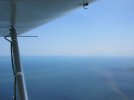
So I’ll start with the second question first. Are over water flights smoother? Since some forms of turbulence (and really all weather) are created by uneven heating of the earth’s surface, the fact that water absorbs heat differently than solid matter does affect your experience some. It isn’t that you won’t ever have any turbulence over water, but especially the ground based thermal turbulence will be greatly reduced.

As to the regs, rather than rehashing everything, I will just refer you to this thread and summarize by saying that for non commercial flights in small aircraft, it’s up to the PIC.
 
So I’ll start with the second question first. Are over water flights smoother?
They can be absolutely amazing. We were doing some formation flying near the NC coast and it was bouncy as anything over the land in the afternoon and smooth as glass over the water. As soon as we transitioned back over the beach it got progressively more bumpy. It really demonstrated the role of differential heating.
 
I’ve flown across Lake Michigan a few times coming and going to Osh when we lived in Northern VA and over the Gulf of Mexico down to the Keys from Tampa. We were never lower than 8K on any of those trips and I never noticed any difference in the ride from trips over land.

We wear CO2 inflatable PFDs that you can get at any Marine store. I’ve disabled the auto inflate trigger so they don’t inflate in the plane. I recommend flying high over the Great Lakes to give you max glide range and pick the narrowest part to cross. YMMV…..
 
Last edited:
I'd be too uncomfortable over water for that amount of time to enjoy it. Especially after being aog.

I'd take the extra 50 minutes of flight time and go around.
 
Are you mad?!? Have you lost your mind?!?
Everyone knows that as soon as you are out of gliding range your engine will start to run rough, your electrical system will start to glitch, your compass will start to spin erratically, fog will develop and you will end up on the bottom of the lake or worse, in Cincinnati.

I've never had a problem over water. But I do carry/wear a flotation device.
 
I have flown across Lake Michigan more than 240 times, most often at 10,000 MSL or higher. The first few times, I heard every valve open and close and every spark plug fire, and I didn't touch anything until I was sure I was within gliding distance from shore. But as time went on, it became routine. I always wore an inflatable PFD and for many years, had a raft on the back seat. My typical route was between Muskegon and Manitowoc.
 
If a direct route takes you over Lake Erie and Michigan, I suspect you better also bone up on your Canada overflight procedures.
 
Are you mad?!? Have you lost your mind?!?
Everyone knows that as soon as you are out of gliding range your engine will start to run rough, your electrical system will start to glitch, your compass will start to spin erratically, fog will develop and you will end up on the bottom of the lake or worse, in Cincinnati.Cleveland.

I've never had a problem over water. But I do carry/wear a flotation device.
FTFY Everybody knows Cincinnati is better than the mistake on the lake.
 
I have done over the lake a bunch of times going to and from Osh. Always had a set of suspenders and went high. The aircraft doesn’t know it’s over water. The locals always say wear a good life jacket so we can find the body ,due to highpothermia. I now fly a 150 and use the shore route around the lake.
 
I'd be too uncomfortable over water for that amount of time to enjoy it. Especially after being aog.

I'd take the extra 50 minutes of flight time and go around.
:yeahthat:

I don't like flying farther from shore than I'm able to swim. (No doubt @Katamarino is laughing now.)
 
After 10 years of flying single engine fixed/rotary in Hawaii. The answer is, so what? (but yea auto rough expected, ignored)
 
My plane has been AOG and might get fixed Friday making osh possible. Direct flight would take me over Lakes Erie and I think Michigan. 68 and 52miles over water. My read of the regs is this does not require anything . I suspect a life jacket and altitude would be good. I’ve heard water flights are smoother. Is this true?
You aren't required to do anything by virtue of the fact that you're over water, at least not for Part 91 recreational flying. Also, regarding your "68 and 52 miles over water", the thing that's important isn't how much time your flight path is over water, what matters is how far the closest point of land gets, and the glide ratio of your plane.

The life jacket just means they'll find your body eventually. With temps as they are now you'll last a while, but the lake is an awfully big place to find a human bobbing up and down in the waves after your plane sinks.

Over water *can be* smoother... Over the shorelines, things are usually getting stirred up.

What would you do keri-kosh?
What are you flying?

Generally speaking, I'd climb out to the northeast of KERI to gain some altitude, then once I could maintain glide back to the US side of Lake Erie I'd turn north towards Long Point on the Canada side. That's basically 22nm across, so you need to be able to glide at least 11nm. In my Mooney at 11.2:1, I would need to be at 6800 feet. In an average GA bird at 9:1, minimum altitude would be 8000, and in ye olde 182 at least 10,100... All assuming you're going straight across to Long Point and won't be more than 11nm from the nearest land.

From there, you can go direct to Big Sable Point just north of KLDM. You'll cross over the southern part of Lake Huron, but no worries as you won't be more than about 5 miles offshore so most reasonable cruising altitudes will give you glide range to shore. If you want to be extra sure, just fly right over Sarnia/Port Huron and you probably won't even add a mile to the trip.

From Big Sable over Lake Michigan to the point just north of Two Rivers (NE of KMTW) is 44nm. This time, the Mooney would need 12,500 feet, the average GA plane 15,500, and the 182 19,600 to remain in glide range to shore.

FWIW, I have crossed without glide range the entire time, but I *always* do it IFR so I'm talking to someone and I'm on their scope, I always go as high as I can (13/14K without O2), and late July would be about the earliest part of the year I'd do it (Lake Michigan is coldest in April and warmest in October). In the Mooney, I have factory O2 and have gone as high as 17,000 which lets me cross a little farther south. I've never crossed down by Milwaukee in a piston single as it's about 70nm across and even the Mooney would need to be at 19,600 at the center of the lake to glide to one side or the other. Even in a pressurized turbine single with a 14:1 glide I always had to ask for 16,000 at LYSTR.

 
I've flown over the Great Lakes and some long stretches over the ocean. You do want to go as high as you can and you do want some life vest, just in case. And I agree with the others to borrow or buy some of the more condensed CO2 vests for comfort. And yes, odds are it will be a little calmer, but it all depends upon what the winds are doing. You can easily get turbulence that is moving with the wind and can be carried out over the water.

And I didn't see it in your original post, but see lots of comments about Canadian overflights. Some of the things go consider now are:
- Must be on an IFR or VFR flight plan. If VFR make sure you get Flight Following on the US side well before the boarder. It will just be a normal handoff when you go into Canada and when you come back to the US side.
- You cannot fly in Canadian Airspace with a Basic Med. Granted, they'll never know unless there is an issue and you have an Off Airport landing and they want to see all your documents.
- 406 MHz ELT is required in Canada. Again, they'd only know if there was an issue and they started checking.
- Have Passports, Radio Station license, etc. just in case you do have to land in Cda.
- Brush up on the Airspace. Class B is above 12,500, their Class C is like our Class B, they have a Class F, etc., etc. So if you're going VFR, know where you can and can't go and what required to enter different Airspace.
- I've seen lots of people say to put "Canada Overflight Only" in the remarks, but no clue if that matters or if they even see it on the Canadian side.
 
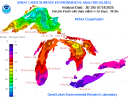
FWIW... Haze over western Lake Erie wasn't bad today. But it does vary.
 

Attachments

  • IMG_1328.JPG
    IMG_1328.JPG
    2 MB · Views: 28
Everyone knows that as soon as you are out of gliding range your engine will start to run rough, your electrical system will start to glitch, your compass will start to spin erratically, fog will develop and you will end up on the bottom of the lake or worse, in Cincinnati.
At least he could stop by Skyline Chili for a 5-way and a cheese coney!
 
I don't like flying farther from shore than I'm able to swim. (No doubt @Katamarino is laughing now.)

Not laughing - your view is perfectly sensible! I certainly recognise that the flying I do comes with added risk.
 
I think overwater comfort is location based. I learned to fly in Massachusetts and thought nothing of heading out to Martha’s Vineyard, Nantucket, Block Island, Long Island. Never noticed an engine stumble, electrical glitch, etc.

Returning to the east coast after 20 years in land-locked Colorado, I found myself much more cautious.

Flying with transient lowlanders when I was teaching in Colorado, I found much the same concerns on mountain flights and suspect if I went back, it would take a while to get over the flatlander butterflies.
 
I think overwater comfort is location based. I learned to fly in Massachusetts and thought nothing of heading out to Martha’s Vineyard, Nantucket, Block Island, Long Island. Never noticed an engine stumble, electrical glitch, etc.
And then there are those of us comnig from NJ and descending over Sandy Hook to cruise over the ocean at 500 ft under the NY Class B.... And you blow a hole in the side of a cylinder. (The departures and arrivals into JFK were not happy with me. :D)

Sure, plenty of glide time to the beach had the engine totally locked up. But had it happened on the way to Nantucket, there's a spot past BID where BID, the coast and MVY are a MAYBE, pending the winds (and if the engine totally quit). And we didn't always wear them, but we had life jackets in reach. We were also always high enough that there was enough glide time to put them on if needed.
 
Are you mad?!? Have you lost your mind?!?
Everyone knows that as soon as you are out of gliding range your engine will start to run rough, your electrical system will start to glitch, your compass will start to spin erratically, fog will develop and you will end up on the bottom of the lake or worse, in Cincinnati.

I've never had a problem over water. But I do carry/wear a flotation device.
I thought that was only in the Bermuda Triangle? (I mean, I do live in central Florida so technically I'm in the Bermuda Triangle...)
 
Are you mad?!? Have you lost your mind?!?
Everyone knows that as soon as you are out of gliding range your engine will start to run rough, your electrical system will start to glitch, your compass will start to spin erratically, fog will develop and you will end up on the bottom of the lake or worse, in Cincinnati.
Engine running rough . . . check.
Electrics glitchy . . . radios out . . . check.
Compass spins erratically . . . check.
Fog develops . . . check.
Descend under IMC . . . the convergence of the Little Miami and Ohio River . . .
Lunken Field . . . new Scouts lined up . . . Aeronca . . . but that was . . . 1937 . . . a temporal anomaly . . .

Gee, it almost writes itself. :)
 
And then there are those of us comnig from NJ and descending over Sandy Hook to cruise over the ocean at 500 ft under the NY Class B....
I did that once, years ago, in a NORDO T-Craft enroute to CT. It was a neat experience, made me nervous as hell, and I never felt the desire to do it again.
 
There was a time when I lived in SW lower Michigan and my wife's parents lived in a Milwaukee suburb. I learned not to file IFR for a direct flight because Chicago would have me descend to 4,000 feet in the middle of the widest part of Lake Michigan to stay below O'Hare traffic.
 
Chosing a flight over water may vary indirectly with age and flying experience.
Earlier in my flying career, flying the Bahamas was fantastic in my Archer, certainly out of glide range. I’ve done, only once, the get down low under the NY Class B( TCA at the time) to jump from New Jersey to fly the Hudson River northbound VFR because of a relatively low overcast. I’ve crossed Lake Ponchartraine northward and southward in New Orleans as high as possible to allow a normal landing consistent with ATC.
I’ve crossed Lake Michigan going westbound to Chicago IFR on a couple occasions. But invariably I cheat by going around the south shore of Lake Michigan trying to stay with flight following after canceling IFR, given the choices, and wondering whether a glide to shore was possible on some points at the low altitudes I was forced to use. I did cheat going west and east over northern Lake Michigan by flying over Beaver Island.

If you can believe it, I try not to do it, but you can’t get someplaces without it. I guess many of us are daredevils. Or maybe I just worry about it more with my age and experience.
 
Last edited:
I was flying a Caravan from Nassau to Crooked Island, typically I would follow the island chain at about 1500'. But one day there were some clouds and rain in the area, I flew the last leg between islands at 200' to stay VFR. I think it was about 60 miles.

I routinely fly over very rugged, remote terrain in Idaho, where there is no place to go if it gets quiet. Its all a state of mind. On my trip to Alaska last year, there was one point flying the trench where it was a very long way to anything resembling an airstrip(90 miles?). With the trees 200' below us, all the lakes covered in rotten ice, 200' below the clouds, the engine shutting off is probably death, maybe a bit stressful, but I'd never go anywhere if I constantly thought about what if?

Push on. That day in the trench I had to turn around twice for weather, and then put in reservation fuel to be able to make it back, reaching Watson Lake was a relief, but continued on to Whitehorse. Took off at 4:30 AM, landed at Whitehorse at 10:00pm. Burger and a beer was delicious.
 
Long ago, I've had hours and hours overwater. But I had FOUR turning.

I had always thought my Mooney was missing at least a set of levers....even at FL 180 on a line from Ludington to Milwuakee.
Since 1998 I've been blessed with double expense- TWO continentals.
I think, at heart, I'm NOT a daredevil.
 
Last edited:
I had always thought my Mooney was missing at least a set of levers....even at FL 180 o a line from Ludington to Milwuakee.
MKE to LDM you've got 28 or maybe 30 miles at the worst from shore. In a Mooney at FL180, you were OK... But just barely. 16,000 would be the minimum for that leg in that airplane.

But yeah, that's not a route I'm gonna fly without a lot of thought and planning at a minimum.
 
I kind of figured the thread was going to take the "to overwater or not to overwater" turn as soon as I saw it, as it always does when this topic comes up. To the OP, as has already been answered, Part 91 you don't really have any legal requirements. Prudence dictates to at least take life jackets, and probably a raft given the temps of those waters, but you don't have to. As to whether you will have smoother air, maybe, maybe not. Statistically you are probably a bit more likely to have smooth air over the Great Lakes than their adjacent land masses, but the weather on a random summer afternoon in the upper Midwest will probably play a bigger role in your ride than 60-70nm of reduced surface friction beneath you.

As to the "to overwater or not to overwater" part, I can never resist throwing in my two cents. I don't consider it a big deal. I fly 50-100 miles out over the Gulf of Mexico in an ASEL all the time. I am also in a low-wing retract, and carry life jackets and a raft. My water is warmer than your water, but your water doesn't have big fish with sharp teeth. I still don't give it much thought. In fact, I prefer it to the times when I am overflying a solid undercast that goes down to 200' AGL for the next 200 miles.
 
I flew from the middle of Wisconsin to Washington DC a decade or so ago. Nice, clear June day. Got flight following, climbed to 9,500 feet and flew nearly straight west to east across the lake. I heard a coast guard helo on frequency, listed into the conversation, figured out where it was, and planned on heading straight toward it if I had any issue.
Completely unremarkable flight. No issues.
I did have two cheap life vests with me. One for me & one for my flight bag.
 
Back
Top