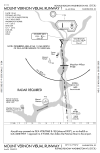
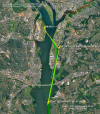
Crash at Reagan National Airport, DC. Helicopter crash into airliner.

You made a statement that this was just "bad luck."
No, I didn't. Please stop putting words in my mouth.
I did say this, though:
These operations have safely coexisted for many years, so the idea that they can't possibly safely coexist is wrong.
"These operations can't safely coexist and this crash was inevitable," (and similar claims) is counterfactual.
 
It is relying on visual separation, in complex situations like this, that needs to be fixed.
Well, one way to fix it would be to teach crews to abide by the approach plate instruction of the past 50 years to "Follow the river to the airport," like this RJ is doing. Then their lights will be where the helicopter crew is looking — over the river — for called traffic. If need be, the Army could paint an old hangar on what used to be Bolling Army Airfield with a "Checkerboard" design to aim at, like the B747s and even the Concorde Crews used in the 70s through the 90s to land at Kai Tak, Hong Kong:


Well, one way to fix it would be to teach crews to abide by the approach plate instruction of the past 50 years to "Follow the river to the airport," like this RJ is doing.
We've been through this multiple times. There is no approach plate for the visual approach that they were flying.
 
We've been through this multiple times. There is no approach plate for the visual approach that they were flying.
It's your opinion the Mt. Vernon doesn't apply; it's mine that it does, else why is the RJ on the video following the river just like we always did many years ago? Even if by today's standard it doesn't, it would be an easy requirement to make. If they could bank at low altitude in a 747 going into Kai Tak, what excuse is there for RJs not to?

In this accident, the crew was cleared for Mt Vernon Visual Runway 1 approach by Potomac Approach, then the tower simply changed the runway. There was no change of the original visual clearance as you contend, at least as far as I know, but I did not listen to the tapes. From the prelim:

"At 2039:10, Potomac Approach cleared the crew of flight 5342, which was inbound to DCA from the south, for the Mount Vernon Visual Runway 1 approach. At 2040:46, the airplane rolled out of a left turn established on the instrument landing system localizer for runway 1, at approximately 4,000 ft pressure altitude, 170 knots (kts), with the landing gear up and flaps extended to 20º.​
​
At 2043:06, the flight 5342 crew made initial contact with DCA tower. At this time, the airplane was about 10.5 nautical miles (nm) from DCA. The tower controller asked if the crew could switch to runway 33. The crew agreed, and the controller subsequently cleared flight 5342 for landing on runway 33. The crew acknowledged and read back the clearance."​

To be pedantic, once the flight was switched to Runway 33 and cleared to land, how does the fact they were originally assigned an approach to Runway 1 apply? Obviously at some point they will have to deviate from the Runway 1 approach. At that point they are now visually maneuvering to land to Runway 33, as in VFR style maneuvering versus being on a charted "visual approach", and are free to position themselves as necessary to land on Runway 33.

I've heard from numerous airline pilots that have done this exact maneuver at DCA, and nothing the RJ crew did was out of the normal for DCA ops visual Runway 1, circle to Runway 33. The only difference this time out of 1,000 times is that a Blackhawk helicopter was in the exact same time and space crossing the final approach when the RJ was. The Blackhawk was assigned visual separation which obviously failed, but the RJ crew was never advised of the presence of the Blackhawk by ATC, and their TCAS alerts were automatically inhibited due to low altitude.
 
To be pedantic, once the flight was switched to Runway 33 and cleared to land, how does the fact they were originally assigned an approach to Runway 1 apply?
The purpose of a CVFP is noise abatement, no? I.e., the clearance is a noise abatement procedure complete with quiet visual course guidance to a particular runway. When the tower asks if you can land on another runway, but doesn't say you can disregard your original (noise abatement) clearance and the original clearance directs you to follow the quiet river to the airport, what on earth kind of thinking says you can now fly your noise maker over noise sensitive areas?
 
NASA was fully aware of the risk and chose to ignore it. Classic case of "It'll probably be fine." I'd like to call it normalization of deviance, but I'm not sure that fits in a bespoke space op.
Normalization of deviance was actually coined as a result of that accident.
 
Last edited:
The purpose of a CVFP is noise abatement, no? I.e., the clearance is a noise abatement procedure complete with quiet visual course guidance to a particular runway. When the tower asks if you can land on another runway, but doesn't say you can disregard your original (noise abatement) clearance and the original clearance directs you to follow the quiet river to the airport, what on earth kind of thinking says you can now fly your noise maker over noise sensitive areas?

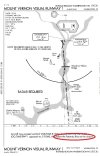
I think you are reading something into the approach plate that isn't there. Where does this state it is a noise abatement procedure? Where does it show "noise sensitive areas" to not overfly? And again, do you really expect airliners to bank it in over the river at 200 feet to circle to land to Runway 33? There is no part of this chart that has anything to do with "Cleared to Land Runway 33", and especially has nothing to do with traffic avoidance of low flying helicopters over the river.

1765906046103.png
 
I think you are reading something into the approach plate that isn't there. Where does this state it is a noise abatement procedure? Where does it show "noise sensitive areas" to not overfly? And again, do you really expect airliners to bank it in over the river at 200 feet to circle to land to Runway 33? There is no part of this chart that has anything to do with "Cleared to Land Runway 33", and especially has nothing to do with traffic avoidance of low flying helicopters over the river.

View attachment 148146
I don't know if DCA ever uses this but the RNAV to 33 puts you at about 490 on a 1.4NM final. Definitely not following the river to the threshold.
 

Attachments

I think you are reading something into the approach plate that isn't there.
Mt vernon CVFP.jpg
Where does this state it is a noise abatement procedure?
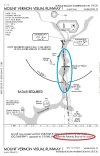
Where does it show "noise sensitive areas" to not overfly?

See the blue circle for how to avoid them:
Mt vernon CVFP.jpg
And again, do you really expect airliners to bank it in over the river at 200 feet to circle to land to Runway 33?

See the above video of the RJ doing it and the video of B747s from all around the world doing it at Kai Tak. I've done the Mt. Vernon approach to runway 33 several times at comparable speeds.
There is no part of this chart that has anything to do with "Cleared to Land Runway 33", and especially has nothing to do with traffic avoidance of low flying helicopters over the river.

Irrelevant, it's a noise abatement procedure that specifies following the river to the airport. Flipping the script, where does it say the tower can modify the procedure to allow flight over noise sensitive areas?
 
Last edited:
I don't know if DCA ever uses this but the RNAV to 33 puts you at about 490 on a 1.4NM final. Definitely not following the river to the threshold.
No, but I bet they don't run that approach on VFR days very often. Then again, since everybody circling from runway one to 33 these days follows a similar route over land, maybe they do and it played a role in this accident.
 
I don't know if DCA ever uses this but the RNAV to 33 puts you at about 490 on a 1.4NM final. Definitely not following the river to the threshold.
We load that approach in the FMS and follow the track/vertical path when doing the Mt. Vernon Visual Runway 1 to transition to runway 33 though you can also do it visually by flying base over the highway, which is pretty easy to pick out. That's how the airlines train the crews to do it.
 
View attachment 148157


See the blue circle for how to avoid them:
View attachment 148158


See the above video of the RJ doing it and the video of B747s from all around the world doing it at Kai Tak. I've done the Mt. Vernon approach to runway 33 several times at comparable speeds.


Irrelevant, it's a noise abatement procedure that specifies following the river to the airport. Flipping the script, where does it say the tower can modify the procedure to allow flight over noise sensitive areas?

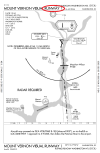
While we are drawing on the chart...

1765921882870.png

This is the visual to Runway 1. At the point they are cleared to land on Runway 33, they are no longer on a visual to Runway 1. There is not a single chart that designates the east bank of the river as noise-sensitive, or no-fly, or anything else EXCEPT for P-56, which is not relevant to this discussion in any fashion. You can watch numerous tracks of other aircraft that are landing Rwy 33, and they overfly the east bank of the river all the time. There is nothing magical about the land across the river.

Are you an airline or jet pilot? Have you ever circled to land Rwy 33 at DCA? I've talked to several pilots that have, and what this crew did is SOP for the carriers that do it. They even train it in the sim. You are creating rules that don't exist in order to shift blame on the flight crew of the RJ, for what purpose I have no idea.
 
They were certainly following the approach path for the RNAV 33, as seen by the superimposed flight track (green) and RNAV 33 approach path (yellow lines/pushpins). That would be because typical SOP at 121 carriers is to load an instrument approach even when performing a visual; there is only one option for 33.

psa5342 track vs rnav33.png
 
While we are drawing on the chart...


This is the visual to Runway 1. At the point they are cleared to land on Runway 33, they are no longer on a visual to Runway 1. There is not a single chart that designates the east bank of the river as noise-sensitive, or no-fly, or anything else EXCEPT for P-56, which is not relevant to this discussion in any fashion. You can watch numerous tracks of other aircraft that are landing Rwy 33, and they overfly the east bank of the river all the time. There is nothing magical about the land across the river.

Are you an airline or jet pilot? Have you ever circled to land Rwy 33 at DCA? I've talked to several pilots that have, and what this crew did is SOP for the carriers that do it. They even train it in the sim. You are creating rules that don't exist in order to shift blame on the flight crew of the RJ, for what purpose I have no idea.
Let me take the last one first:

"You are creating rules that don't exist in order to shift blame on the flight crew of the RJ, for what purpose I have no idea."

I would say the same about you making up your own rules. I don't "blame" the RJ crew — they were taught to do it that way. The purpose for my posting is that I realize, had I been flying or if the RJ crew was flying the same way I was shown to fly the Mount Vernon Visual, everybody would have survived because my landing lights would have lit up the cockpit of the helicopter coming straight toward me.

"Are you an airline or jet pilot? Have you ever circled to land Rwy 33 at DCA? I've talked to several pilots that have, and what this crew did is SOP for the carriers that do it. They even train it in the sim."

To amplify my first post (https://www.pilotsofamerica.com/com...craft-down-in-the-potomac.150219/post-3597766) I was a copilot for Executive Jet Aviation back in the 1970s which has since evolved into Netjets. We were into DCA often. Since then, I've flown for other Lear and Citation operators as well as a short time with United as a second officer on a B727 (I resigned after a four-year furlough because I liked the corporate job I found while furloughed better). Circling to runway 33 was slightly challenging and therefore a bit "fun". In those days sims were used to teach the skills required to land at places like Kai Tak, Hong Kong. In these times they use them to program the FMS.

"There is nothing magical about the land across the river."

The captain checking me out didn't think so. He was ex-AF military and didn't want to get close to an Army Airfield.

"There is not a single chart that designates the east bank of the river as noise-sensitive, or no-fly, or anything else EXCEPT for P-56, which is not relevant to this discussion in any fashion."

There is, and it's called "The Mount Vernon Visual...

"This is the visual to Runway 1. At the point they are cleared to land on Runway 33, they are no longer on a visual to Runway 1."

The naming convention requires a runway number in the title as well as a prominent landmark. The whole purpose of the CVFP is for noise abatement. The instruction to follow the Potomac to the airport is thus for noise abatement. When you answer the tower's question of "Can you accept runway 33?" You answer with the understanding of following the Potomac to runway 33 as much as you meet the landing distance requirements of the airframe.
 
Last edited:
We've been through this multiple times. There is no approach plate for the visual approach that they were flying.
Because there is no formal approach to what they were asked to do. Once they were told to switch runways, the published visual was history.
 
Because there is no formal approach to what they were asked to do. Once they were told to switch runways, the published visual was history.
I doubt if the people who drew up the approach for noise abatement would concur.
 
No, I didn't. Please stop putting words in my mouth.
I did say this, though:

"These operations can't safely coexist and this crash was inevitable," (and similar claims) is counterfactual.

The purpose of a CVFP is noise abatement, no? I.e., the clearance is a noise abatement procedure complete with quiet visual course guidance to a particular runway. When the tower asks if you can land on another runway, but doesn't say you can disregard your original (noise abatement) clearance and the original clearance directs you to follow the quiet river to the airport, what on earth kind of thinking says you can now fly your noise maker over noise sensitive areas?
Well if you want to rehash the argument we can sure oblige you. Please tell us the procedure they were not following.

You may not reference the charted visual to rwy one. The crew was not flying that procedure at the time of the collision.
 
Well if you want to rehash the argument we can sure oblige you. Please tell us the procedure they were not following.

You may not reference the charted visual to rwy one. The crew was not flying that procedure at the time of the collision.
I clearly pointed out his assertion failed on the very next post after this:

"These operations can't safely coexist and this crash was inevitable," (and similar claims) is counterfactual.

By my reply:

You ignore the dozens of documented near misses on the Potomac between those helicopters and scheduled domestic airline flights. The collision that killed 67 innocent people was inevitable given the casual manner in which these supposedly critical operations were conducted.

The repeated near misses between scheduled airline traffic and PAT helicopters combined with the documented careless altitude variations by PAT helicopters over time are proof the "operations can't safely coexist and this crash was inevitable."

The collision and deaths provided a tragic yet neatly tied bow around the argument. Operation of aircraft in such close proximity with the ad hoc execution and complete lack of command oversight by the Army stripped bare any premise that competency and safety protocols were followed.
 
Well if you want to rehash the argument we can sure oblige you. Please tell us the procedure they were not following.

You may not reference the charted visual to rwy one. The crew was not flying that procedure at the time of the collision.
Who do you want to argue with, @Lindberg or me? We are not making the same arguments. If it's me, it's nice that you only allow me one arm and that I must argue with the other tied behind my back. If you are cleared for an ILS/LOC to a runway and accept a request to circle for another you are obliged to abide by limits that are part of the ILS/LOC, i.e., circling minimums and areas. You aren't then on a generic visual. Similar spirit for a CVFP. That said, DCA doesn't have circling minimums for an ILS/LOC runway 1 but has a CVFP. So, if asked to circle off the ILS, it would need to be a generic visual, but not off the CVFP.
 
Last edited:
Just to reiterate, these aren’t routes designed for the Army or even the military for that matter. These are FAA routes that are used to facilitate helicopter operations around the busiest 8 cities in the US. The link I provided a million pages back showed the multiple agencies that operate helicopters around DC. This accident could have very well been a MEDEVAC helicopter with only ONE pilot up front on NVGs and both medcrew in the back with heads down doing patient care. That’s the reality of the inherent risk in flying helos around a major city like DC at night.

Poor route structure, breakdown in proper visual separation procedures, and failure of BOTH crews (primarily UH-60) to see and avoid one another. The ADSB piece is non contributing in my opinion.

Yep. What’s even worse is that on average, every other hour of every day for 1,180 days straight, the FAA minimum separation between aircraft and a helicopter was violated.

FAA designed the route, didn’t verify minimum clearance existed, and then ignored every single warning sign.
 
I re-watched some of the NTSB investigative hearing testimony (day 1, panel 2). There was some relevant testimony to some of the debate occurring here re: Mt. Vernon Visual. For one, the US Army testimony was that, prior to the accident, there was a view that using the helicopter routes in question was generally safe (my words) because of a general assumption that 96% of the flights would be landing on Runway 1. Questioned about whether the pre-flight risk analyses for these helo missions took into account (or addressed) air carrier operations in the vicinity of the runway environment, the answer was no. Questioned about whether there was specific focus during risk analyses regarding potential Runway 33 traffic, the answer was (again, pre-accident), no. One US Army rep testified that the "tribal knowledge" was to hug the far (east) shoreline unless there was a traffic conflict, in which case they were to observe the "rules of the road." Moreover, another US Army rep testified that the procedure (as he understood it) was that if a helicopter was traveling southbound and traffic was landing on Runway 33, the helicopters would be held (at Haines Point), and that if he was proceeding southbound and not given a hold, but heard that traffic was landing on Runway 33, he would have queried tower (because there was a procedural anomaly occurring), or either held at Haines Point of his own volition or turned north at Haines Point on to Route 1 in order to deconflict.

Certainly during this portion of the testimony, there was nothing offered or put forth by anyone on behalf of the US Army that its pilots would have expected Runway 33 traffic to remain over the river -- thus I don't think there is any basis to assert that the CRJ wasn't where the US Army pilots expected it to be due to the helo pilots' expectation/understanding (whether tribal knowledge, visual approach or otherwise) of the airspace or procedures. Per the testimony, the US Army believed most traffic would use Runway 1. The pre-flight risk analyses did not discuss or take into account air carrier operation/traffic risk near the airport, or what to do (or expect) if Runway 33 was in use. And at least one US Army rep testified that if proceeding southbound he had heard that traffic had been cleared to circle to land Runway 33, he should either have been held, elected to hold to deconflict, or turned north to deconflict.

The US Army reps were (in my view) taking an active role in defending their operations. I didn't hear (or recall) any testimony by any of them that a contributing factor was that the CRJ wasn't where the pilots expected it to be that night, or that the CRJ should have been somewhere other than where it actually was.

(I think part of dturi's argument is that if the CRJ remained over the river, it would have been more visible. That may well be true. But I disagree entirely with (a) his view that there was any regulatory or quasi-regulatory requirement for the CRJ to do so once cleared to circle to land Runway 33, and (b) his assumption that the helicopter pilots would have expected the CRJ to be somewhere other than where it was. I think the CRJ's primary focus once cleared for Runway 33 was maneuvering to make a safe, stable-as-possible landing. Since they were in Class B, they would have expected ATC to be providing positive separation. They were never advised of potentially conflicting traffic. That they opted to overfly the east bank of the Potomac to effectuate their landing seems reasonable to me (such overflight is part of the RNAV 33 approach, appears to be done routinely, and looking at the noise abatement chart/notice for DCA, there is no mention of any restriction on such overflight)).
 
FAA designed the route, didn’t verify minimum clearance existed, and then ignored every single warning sign.
The FAA never intended the published helicopter route to provide vertical separation from an airplane landing on runway 33 anymore than they expect to have two airplanes departing simultaneously on intersecting runways.
 
Introducing an inexperienced Army pilot into these conditions was insanity. Just out of flight school and get assigned to this unit?

Big Green is complicit by protecting their turf.

I'm surprised it took this long for 70 people to get killed.
 
Introducing an inexperienced Army pilot into these conditions was insanity. Just out of flight school and get assigned to this unit?

Big Green is complicit by protecting their turf.

I'm surprised it took this long for 70 people to get killed.
I'm not unsympathetic to the US Army's plight here. I do think there was normalization of deviance both in how the US Army flew its missions, and how DCA handled airspace traffic, including the US Army flights. Many people discounted the real/actual risk because a bad event hadn't occurred. This "normalization" happens over and over (not just in flying but in many other real-world situations), and it requires significant diligence to push back against it occurring. I also think there is a fair debate occurring as to ADSB-out (which also played a big role in this accident) -- the US Army's reluctance to use ADSB-out when conducting these missions (i.e., on a going-forward basis) concerns me, because I think it's too easy for the military to just make a blanket conclusion that activating ADSB-out presents a potential military security risk without actually drilling down to make granular decisions about when the overall risk profile (e.g., security of the training mission vs. safety to others in the airspace) is such that safety of airspace is more important than mission security.
 
Last edited:
I think part of dturi's argument is that if the CRJ remained over the river, it would have been more visible.
Not just "more" visible, but unmistakenly visible. Under night goggles with a wind correction angle to the right, the RJ wasn't even in the field of view, and their landing lights were shining across the helicopter's flight path not opposite of it. Since today's generation is flying the same approach mine did in a way that resulted in a midair where mine's would not have, then we should ask, "Was the change needed in the first place?" So, I have.
 
I'm not unsympathetic to the US Army's plight here. I do think there was normalization of deviance both in how the US Army flew its missions, and how DCA handled airspace traffic, including the US Army flights. Many people discounted the real/actual risk because a bad event hadn't occurred. This "normalization" happens over and over (not just in flying but in many other real-world situations), and it requires significant diligence to push back against it occurring. I also think there is a fair debate occurring as to ADSB-out (which also played a big role in this accident) -- the US Army's reluctance to use ADSB-out when conducting these missions (i.e., on a going-forward basis) concerns me, because I think it's too easy for the military to just a blanket conclusion that activating ADSB-out presents a potential military security risk without actually drilling down to make granular decisions about when the overall risk profile (e.g., security of the training mission vs. safety to others in the airspace) is such that safety of airspace is more important than mission security.
Politics dictated the flight path and a continuation of these flights despite many close calls in the past. Yes, it was a NoD with the Swiss cheese holes finally lining up. Now they want to continue these flights. Who actually has a final say in these matters?
 
Not just "more" visible, but unmistakenly visible. Under night goggles with a wind correction angle to the right, the RJ wasn't even in the field of view, and their landing lights were shining across the helicopter's flight path not opposite of it. Since today's generation is flying the same approach mine did in a way that resulted in a midair where mine's would not have, then we should ask, "Was the change needed in the first place?" So, I have.
I just still don't see my way clear to putting any blame on the RJ. I would prefer that pilots landing on Runway 33 take the time to get aligned and stabilized on final, without an arbitrary limitation on the room they have to maneuver. The fact that on final/short-final they may be less visible to potential crossing or conflicting traffic because they are over land for a portion of the approach is, to my mind, a reason to remove/limit/restrict the crossing/conflicting traffic. Is there any other approach procedure at any other airport that has been designed for the purpose of making traffic on final more visible to potentially conflicting traffic?
 
The fact that the two CRJ pilots, having done absolutely nothing wrong that night, got killed for their efforts by a combination of incompetence by another aircrew and bad operational procedures by a third party is at best,unfortunate.

Now, fast forward almost a year, the NTSB, who I used to respect, and a few folks on here on are trying to assign some portion of blame on the CRJ crew?

What a complete travesty.
It quite literally makes me want to puke.

I’m so grateful that I am retired and out of the flying business.
 
I just still don't see my way clear to putting any blame on the RJ.
I'm on record as NOT putting blame on the RJ crew. I have asked why nobody else has, though, in view of the different way I and others have interpreted and flown the very same approach in prior years:


I believe the system is at fault because air crews have been given a different interpretation of essentially the same CVFP that I flew by.

As to "Is there any other approach procedure at any other airport that has been designed for the purpose of making traffic on final more visible to potentially conflicting traffic?" Of course not, that's a strawman. This was a noise abatement procedure which proved to be safe for decades. Then, pilots were told to fly it differently and that led to this crash.
 
Who do you want to argue with, @Lindberg or me? We are not making the same arguments. If it's me, it's nice that you only allow me one arm and that I must argue with the other tied behind my back. If you are cleared for an ILS/LOC to a runway and accept a request to circle for another you are obliged to abide by limits that are part of the ILS/LOC, i.e., circling minimums and areas. You aren't then on a generic visual. Similar spirit for a CVFP. That said, DCA doesn't have circling minimums for an ILS/LOC runway 1 but has a CVFP. So, if asked to circle off the ILS, it would need to be a generic visual, but not off the CVFP.
I’m not combining you with Lindbergh.

To your point. The two situations you present are not at all similar. If executing an instrument approach procedure that has charted minimums for circling to a runway other than the one in the procedure title there are very clear definitions on where you may and may not be based on the category of your aircraft.

For charted visual procedures they only apply to the prescribed runway in the procedure. There is no such thing as a Mt. Vernon visual rwy 1 circle to land 33. That charted procedure only applies to rwy 1. If it did apply to 33 there would be clear instructions on the procedure, both textual and graphic on the prescribed flight path to 33. Last I looked it doesn’t exist.

Answer this for me:

You’re on the Mt. Vernon visual to RWY 1 and the controller asks you to circle to runway 15. Let’s assume you say yes. What are you going to do? Stay over the river??? FFS

The correct answer is deviate from the previous clearance and safely maneuver to land on rwy 15. Which is exactly what the crew did for their landing on rwy 33.

The visual procedure to rwy 1 no longer applied.

While you think I’m making you reply with your arm tied behind your back, I’m actually taking away the fallacy in your argument.
 
There is no such thing as a Mt. Vernon visual rwy 1 circle to land 33. That charted procedure only applies to rwy 1. If it did apply to 33 there would be clear instructions on the procedure, both textual and graphic on the prescribed flight path to 33. Last I looked it doesn’t exist.
Technically, I think what you wrote applies to parallel runways according to Order 8260.61, like the Parkway Visual to JFK.
You’re on the Mt. Vernon visual to RWY 1 and the controller asks you to circle to runway 15. Let’s assume you say yes. What are you going to do? Stay over the river???
The chart is noise abatement to the airport via the Potomac, so I'd follow it until necessary to turn downwind, wouldn't you?
The correct answer is deviate from the previous clearance and safely maneuver to land on rwy 15.
Ok, so you would too.
Which is exactly what the crew did for their landing on rwy 33.
My point is, today it's deemed necessary to fly over terrain where in my experience it wasn't. Everybody today follows the same route, so it isn't just the crew on that RJ, but it's why the helicopter didn't see them. Which doesn't absolve the helicopter of blame, it only explains the accident.
The visual procedure to rwy 1 no longer applied.
Well, the noise still applies no matter what you call it so I'd stay over the river because I can, but I guess nobody seems to care anymore.

While you think I’m making you reply with your arm tied behind your back, I’m actually taking away the fallacy in your argument.
Hey, you made me answer without reference to the charted Mt. Vernon approach, so I used the ILS/LOC/circle to land analogy instead. :)
 
Back
Top