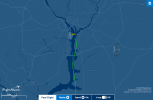
Crash at Reagan National Airport, DC. Helicopter crash into airliner.

If you can't accept that the route to the "airport" is via the Potomac while the chart markings clearly avoid flight over land, then I guess you're right.
The local controller changed their clearance when he said, "change" to runway 33. They flew the Mount Vernon visual rwy 1 until they were at the bridge, then they changed to a visual approach to runway 33 per ATC instructions.

No part 121 jet airline flight would be able to land on 33 if what you believe is true due to stabilized approach criteria. They have to be established on final by 500'.
 
The NY Times had an interesting write up about her on August 1st.

Bottom line: she was not a good pilot
Regardless of her skills or lack thereof, the responsibility for the aircraft belonged to the instructor. Somewhere up thread, someone said they'd have not gotten in trouble in a more forgiving environment; their shortcomings would have been absorbed by the system.

If you think about it, half of Army flight crew are below average. That's just life.
 
The local controller changed their clearance when he said, "change" to runway 33. They flew the Mount Vernon visual rwy 1 until they were at the bridge, then they changed to a visual approach to runway 33 per ATC instructions.

No part 121 jet airline flight would be able to land on 33 if what you believe is true due to stabilized approach criteria. They have to be established on final by 500'.
Trust me, I get it. This brought back some memories, though, when I found it tonight doing a search. But I think I could do better on holding the centerline :):

 
The NY Times had an interesting write up about her on August 1st.

Bottom line: she was not a good pilot
She also wasn’t PIC, right? She certainly wasn’t the one who called the traffic in sight.

Add: if everything was identical - comms and all - except the officer was male and the Warrant was female, I sense you’d be rolling in hot on the Warrant.
 
Last edited:
Trust me, I get it. This brought back some memories, though, when I found it tonight doing a search. But I think I could do better on holding the centerline :):

I loved rolling out of the final turn over the overrun in a T-38, away from base. I might have even loved and come close to doing it in a F100, 72, DC9, 76. But why are you trying to deflect blame to the CRJ crew? Night visual to 33. Would your exemplar video work at night. Yes, I know, I could land from that same approach at night. Should we want all of us to do that?
 
But why are you trying to deflect blame to the CRJ crew?
No, I specifically have stated I don't blame the crews, though I thought somebody would by now. They were set up by a bad system, imo. The Mount Vernon is a follow the river approach. I would expect the copter crew to expect their traffic to be over the water, not coming from over the land east of the river. The video I linked above seems to corroborate my understanding, i.e., I'm not the only one. Had there been a discrete approach for 33, I would expect the copter crew to distinguish the difference in flight path and adjust their scan focus to east of the river. Of course, it would have helped if the tower had instructed the copter to remain well clear of the runway 33 extended centerline for the approaching RJ.
 
If it was that apparent to you and the NY Times, it must have been blazingly obvious to the IP. How could he have left her in control?
Eaves commented to his girlfriend the night before the flight when he found out his assignment was to give Loach a check ride. His comment is that she was not ready. A few pilots thought the same.

There was apparently political pressure to get her to pass a check ride.

Another thing, how did she swing such a desirable unit right out of flight school? Isn't Belvoir a unit where higher-time pilots get assigned for such an important mission? Failing check rides would get anyone else reassigned.

I'm sorry, but the elephant is in the room.
 
I'm sorry, but the elephant is in the room.
It is indeed. But not what you think.

This accident was due to a bad design of the airspace and absolutely poor deconfliction, especially when 33 is being used and especially at night. If the IP didn’t think the Captain was ready for the check ride, that’s on the IP - at least to keep the flight out of that area.

To hang this on the Captain is the political part. She wasn’t PIC (the right-seater is, correct? Even the transcripts refer to her as #2) and wasn’t the one responding to ATC re the traffic that was apparently missed.

“Girlboss”? Nope.
 
Eaves commented to his girlfriend the night before the flight when he found out his assignment was to give Loach a check ride. His comment is that she was not ready. A few pilots thought the same.

There was apparently political pressure to get her to pass a check ride.

Another thing, how did she swing such a desirable unit right out of flight school? Isn't Belvoir a unit where higher-time pilots get assigned for such an important mission? Failing check rides would get anyone else reassigned.

I'm sorry, but the elephant is in the room.
Lobach was a typical Plt Ldr or a staffer at her rank. They have low time, they have obligations outside the cockpit (Presidential Aide) and they aren’t very proficient. I agree with @Piperonca. Probably half are below average. And while I’d say there can be command pressure to get an RLO signed off on PC orders or pass their APART, it has nothing to do with what you’re implying. It’s the same thing in flight school. There are quotas to fill and the Army is bad about pushing people through the system. It’s not political. It’s about filling slots that the Army can barely recruit for. Still doesn’t change the fact that the IP screwed up.

I guarantee you when the Army completes its investigation the wording will be “Accident occurred when the IP failed to take corrective action…” As a section leader at Rucker, one of my IPs (John Bolling) died in an accident during training. He was a civilian, Vietnam Vet and had the most Black Hawk hrs (10,000 +) in the world. His student was doing a roll on landing, came in fast, misaligned and with a high descent rate. Completely chopped the tail off with the rotor blades. John died due to head trauma. John was an outstanding IP but he simply let his student take that maneuver too far. This is the burden that comes with PC in the Army.

How did she get assigned this unit out of flight school? Easy. Here’s a link with a WO1 flying with a CPT from the 12th. It ain’t like this is some elite unit. Even 160th on occasion recruits students out of flight school. Also, while some of us crusty guys would’ve loved to be assigned there, a lot of students out of flight school want to go to units to do “hooah” stuff. You’re not doing that at the 12th. Now, if you want to talk about the logic of pairing a CPT with a WO1 and flying some of the most powerful people in government over densely populated areas in congested airspace? Yeah, thats probably not the best idea.

I understand what you are saying 100%. The past few decades in politics concerning the military, was to get a representative segments of society embedded into it. The Hultgreen incident was an eye opener in my opinion and how the Navy and politicians reacted by blaming the F14A Tomcat instead of admitting she failed many times and was given passes to continue that many others were washed out for much less.

The USCG did send pilots to Sitka and Kodiak just out of Mobile Air Station (which had a flight school for pilots who had to train on Navy Texans prior to that). Alaska is not forgiving for anyone, even experienced helo drivers. So these green Jg's were paired with the pilots with experience and calm demeanors who were not afraid to let things not get out of control.

To be honest, it's the pilots who we called SAR Dogs, who chased glory and medals. They are the ones that made all of us nervous. Eventually, they were put in their places quickly by command.

One new guy who we called "Cupcake", was a very cautious and nervous type that we initially thought would get sent to a "quiet" unit. He eventually turned out great and made O-6 years later. A great leader I heard. The important part is that he was properly mentored by the right people in his path for a sucessful career. A couple of Lt's I flew with in AK made rear Admiral.

Unfortunately this PAT unit sounds like a Swiss Cheese soup sandwich.
 
This brought back some memories
Looks like you're going pretty slow. The airlines flying that would be around 140kias.

500' on speed +or -?
Right. By 500', in VMC, on speed, configured, and established on Final with only small corrections in pitch and roll being required. If you stay over the water, and are at least 500' when rolling out wings level on Final, you're too high to land. Even with the normal ground track you are very close to 500' when you roll wings level.

I would expect the copter crew to expect their traffic to be over the water, not coming from over the land east of the river.
Why? Not a single airliner flies it over the water. Why would they, operating daily in that airspace, expect this airliner to do it any differently than all of the rest?
 
No part 121 jet airline flight would be able to land on 33 if what you believe is true due to stabilized approach criteria. They have to be established on final by 500'.
Here's an RJ following the river that popped up on my YouTube link of last night. Somewhere between the date of this video and today opinions have changed about how to follow the procedure, it seems. Maybe the result of a local meeting between ATC and airline stakeholders?

 
Last edited:
Charted visual approach procedures are allowed to not meet stabilized approach criteria. A example is the Park Visual 31 n LGA.
And there is not a charted visual approach for rwy 33. So the stable criteria applied to the CRJ crew on the final segment of the landing to 33. They were flying a charted visual to rwy 1.

Another example very close to this accident is the river visual rwy 19 into DCA. It doesn’t meet stabile criteria for maneuvering either.
 
See AIM paragraph 5-4-24.h.
From your AIM reference the charted approach is specific to runway 1, not 1 and 33. Thus, once cleared for the visual to 33 the RJ was no longer constrained by the charted visual approach. I agree with others the RJ was correct in meeting their stabilized approach criteria by not staying over the river.

5-4-24. Charted Visual Flight Procedure (CVFP)

a. CVFPs are charted visual approaches established for environmental/noise considerations, and/or when necessary for the safety and efficiency of air traffic operations. The approach charts depict prominent landmarks, courses, and recommended altitudes to specific runways.
 
Another example very close to this accident is the river visual rwy 19 into DCA. It doesn’t meet stabile criteria for maneuvering either.
It has a longer final and smaller turn.

The applicable criteria are:

by 500 feet in visual meteorological conditions...

--The aircraft is on the correct flight path.
--Only small corrections in heading/pitch are needed to maintain that path.
 
Lobach was a typical Plt Ldr or a staffer at her rank. They have low time, they have obligations outside the cockpit (Presidential Aide) and they aren’t very proficient. I agree with @Piperonca. Probably half are below average. And while I’d say there can be command pressure to get an RLO signed off on PC orders or pass their APART, it has nothing to do with what you’re implying. It’s the same thing in flight school. There are quotas to fill and the Army is bad about pushing people through the system. It’s not political. It’s about filling slots that the Army can barely recruit for. Still doesn’t change the fact that the IP screwed up.

I guarantee you when the Army completes its investigation the wording will be “Accident occurred when the IP failed to take corrective action…” As a section leader at Rucker, one of my IPs (John Bolling) died in an accident during training. He was a civilian, Vietnam Vet and had the most Black Hawk hrs (10,000 +) in the world. His student was doing a roll on landing, came in fast, misaligned and with a high descent rate. Completely chopped the tail off with the rotor blades. John died due to head trauma. John was an outstanding IP but he simply let his student take that maneuver too far. This is the burden that comes with PC in the Army.

How did she get assigned this unit out of flight school? Easy. Here’s a link with a WO1 flying with a CPT from the 12th. It ain’t like this is some elite unit. Even 160th on occasion recruits students out of flight school. Also, while some of us crusty guys would’ve loved to be assigned there, a lot of students out of flight school want to go to units to do “hooah” stuff. You’re not doing that at the 12th. Now, if you want to talk about the logic of pairing a CPT with a WO1 and flying some of the most powerful people in government over densely populated areas in congested airspace? Yeah, thats probably not the best idea.

C'mon guys. Please? Not all of us are rotary wing pilots or have been in the Army or military.

Plt Ldr?
RLO?
 
From your AIM reference the charted approach is specific to runway 1, not 1 and 33. Thus, once cleared for the visual to 33 the RJ was no longer constrained by the charted visual approach. I agree with others the RJ was correct in meeting their stabilized approach criteria by not staying over the river.

5-4-24. Charted Visual Flight Procedure (CVFP)

a. CVFPs are charted visual approaches established for environmental/noise considerations, and/or when necessary for the safety and efficiency of air traffic operations. The approach charts depict prominent landmarks, courses, and recommended altitudes to specific runways.
But, again, the chart says follow the river to the "airport". The existence of the approach implies the necessity of a more restrictive path than a generic visual, so what sense does it make to toss that need in the trash can for every plane that lands on 33?
 
C'mon guys. Please? Not all of us are rotary wing pilots or have been in the Army or military.

Plt Ldr?
RLO?
Platoon Leader

Real Live Officer (lieutenant, captain, major, etc) contrasted with Warrant Officer (warrant officer 1, chief warrant officer 2,3,4, and 5). It's a sarcastic appellation used in Army aviation units. "Woogie Bear" for warrant officers might have gone out of style by now. @Velocity173 can correct me on the CW5 rank. At one time there were Master Warrants, but that might have gone away.

In the context of Army Aviation, "APART" refers to the Annual Proficiency and Readiness Test, a proficiency exam that pilots take to demonstrate their ability to perform all required tasks to the standards outlined in the ATM (Aircrew Training Manual). It's a crucial part of maintaining a pilot's flight status and ensuring they are qualified to fly Army aircraft (google).
 
Eaves commented to his girlfriend the night before the flight when he found out his assignment was to give Loach a check ride. His comment is that she was not ready. A few pilots thought the same.

There was apparently political pressure to get her to pass a check ride.

Another thing, how did she swing such a desirable unit right out of flight school? Isn't Belvoir a unit where higher-time pilots get assigned for such an important mission? Failing check rides would get anyone else reassigned.

I'm sorry, but the elephant is in the room.
Wow. You're making it sound like the IP wasn't just negligent, but reckless. It sounds like he knew in advance that girl boss was a danger, and let the flight proceed regardless.
 
Here's an RJ following the river that popped up on my YouTube link of last night. Somewhere between the date of this video and today opinions have changed about how to follow the procedure, it seems. Maybe the result of a local meeting between ATC and airline stakeholders?

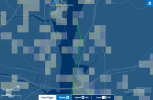
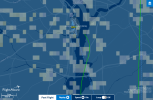
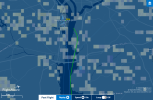
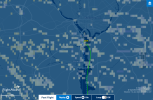
I just looked at the tracks of a bunch of CRJ700's going into DCA prior to January 29th. I could not find a single CRJ700 landing on 33 that stayed over the river.

Screenshot 2025-08-06 at 11-08-50 OH5282 (JIA5282) PSA Airlines Flight Tracking and History 09...png

Screenshot 2025-08-06 at 11-10-24 OH5282 (JIA5282) PSA Airlines Flight Tracking and History 14...png

Screenshot 2025-08-06 at 11-18-34 OH5166 (JIA5166) PSA Airlines Flight Tracking and History 09...png

Screenshot 2025-08-06 at 11-20-08 OH5166 (JIA5166) PSA Airlines Flight Tracking and History 14...png
Screenshot 2025-08-06 at 11-21-10 OH5166 (JIA5166) PSA Airlines Flight Tracking and History 17...png
 
C'mon guys. Please? Not all of us are rotary wing pilots or have been in the Army or military.

Plt Ldr?
RLO?
Platoon Leader. Generally a 2LT or 1LT in charge of around a dozen or so pilots & enlisted soldiers.

Regular Line Officer or what some call “Real Life Officer.” Some refer to them as “commissioned” and CWOs as “warrants” but that’s not entirely correct. CW2 and above are also commissioned officers.

Edit:what @Piperonca wrote above.
 
I just looked at the tracks of a bunch of CRJ700's going into DCA prior to January 29th. I could not find a single CRJ700 landing on 33 that stayed over the river.

"Follow the River" versus "Remain over the River". Is this the crux of this kerfuffle?
 
But, again, the chart says follow the river to the "airport". The existence of the approach implies the necessity of a more restrictive path than a generic visual, so what sense does it make to toss that need in the trash can for every plane that lands on 33?
Yes, follow the river to the airport for Runway 1. The chart and instructions are for a Runway 1 visual approach. I concur with the other poster(s) that once instructed to land on Runway 33, you are no longer on a Runway 1 approach, and that the river is no longer any limitation on your approach path. In addition, I don't recall there being any testimony at the NTSB hearing (or anywhere else) that the US Army pilots were relying on DCA's published approach procedures/instructions when navigating the helicopter routes or as an aid to spotting traffic.
 
It has a longer final and smaller turn.

The applicable criteria are:

by 500 feet in visual meteorological conditions...

--The aircraft is on the correct flight path.
--Only small corrections in heading/pitch are needed to maintain that path.
On which runway? 1 I agree. 19 not so much.
 
I understand what you are saying 100%. The past few decades in politics concerning the military, was to get a representative segments of society embedded into it. The Hultgreen incident was an eye opener in my opinion and how the Navy and politicians reacted by blaming the F14A Tomcat instead of admitting she failed many times and was given passes to continue that many others were washed out for much less.

The USCG did send pilots to Sitka and Kodiak just out of Mobile Air Station (which had a flight school for pilots who had to train on Navy Texans prior to that). Alaska is not forgiving for anyone, even experienced helo drivers. So these green Jg's were paired with the pilots with experience and calm demeanors who were not afraid to let things not get out of control.

To be honest, it's the pilots who we called SAR Dogs, who chased glory and medals. They are the ones that made all of us nervous. Eventually, they were put in their places quickly by command.

One new guy who we called "Cupcake", was a very cautious and nervous type that we initially thought would get sent to a "quiet" unit. He eventually turned out great and made O-6 years later. A great leader I heard. The important part is that he was properly mentored by the right people in his path for a sucessful career. A couple of Lt's I flew with in AK made rear Admiral.

Unfortunately this PAT unit sounds like a Swiss Cheese soup sandwich.
Yeah but the Hultgreen thing isn’t going on today. Back then you’ll read reports of several IPs who said women were being forced down their throats. They were “unicorns” back then and Congress was pushing an agenda to see them mixing it up with the men in combat roles. That was a real thing. No one cares about women in aviation anymore. Despite all these role models still trying to push women into military aviation, it’s old news. The flood gates opened long ago and the pioneers no longer exist. Army Aviation doesn't have a forced diversity problem. They have a “leave no child behind” problem.

And as far as Hultgreen’s competence, that’s debatable. While she had a checkered past, several pilots from the VF-124 RAG (Replacement Air Group) and her squadron (VF-213) stated she was a solid pilot. Now, I actually read her book 20+ years ago and she did have some deficiencies that I’m not sure would classify her as a “rockstar.” But, the military is no different than civilian life in that we all work with strong performers, weak links and everything in between. In Hultgreen’s case, I’d say she was somewhere in between.
 
Last edited:
Not sure if she truly had a history of vertigo but if true, no bueno.

 
But, again, the chart says follow the river to the "airport". The existence of the approach implies the necessity of a more restrictive path than a generic visual, so what sense does it make to toss that need in the trash can for every plane that lands on 33?
 
I've never used NVG's so I don't know if that increases the chance or perception of vertigo, but I've had brief times were the clouds, lighting, crab angle, and other sight pictures, gave me a sensation that I wasn't doing what i was doing. A quick closing of the eyes then a close look of the instruments cleared everything up right away. I could understand that having your peripheral vision restricted could cause vertigo. But it should only be momentary. Kinda like sitting at a stop light and the car next to you backs up a little and you think you are rolling forward.
 
But, again, the chart says follow the river to the "airport". The existence of the approach implies the necessity of a more restrictive path than a generic visual, so what sense does it make to toss that need in the trash can for every plane that lands on 33?

That chart and procedure is for noise abatement. It is Not a traffic avoidance, or obstacle clearance procedure.
 
Not sure if she truly had a history of vertigo but if true, no bueno.

Definite disqualification there. After reading that, and too much else about the young woman, I remain of the opinion she was not suited for aviation service.
 
Answer to NVGs and Vertigo is, no it does not induce nor do NVS system in AH-64s, if anything it reduces the possibility…Vertigo is a no go if true…we’re all trained to recognize it but if a problem it like bee sting allergies and other disqualifying conditions.
 
I've never used NVG's so I don't know if that increases the chance or perception of vertigo, but I've had brief times were the clouds, lighting, crab angle, and other sight pictures, gave me a sensation that I wasn't doing what i was doing. A quick closing of the eyes then a close look of the instruments cleared everything up right away. I could understand that having your peripheral vision restricted could cause vertigo. But it should only be momentary. Kinda like sitting at a stop light and the car next to you backs up a little and you think you are rolling forward.
Well there’s visual and vestibular illusions that can occur under NVGs. That’s rare but it does happen. Saying one is “dizzy” while wearing NVGs in those conditions isn’t a red flag. But the NTSB person specifically mentioned vertigo, as in “vestibular abnormality.” That wouldn’t be normal.
 
Well all I can tell is that when I was in, none of the guys I knew cared about serving with women. At least I never heard anyone openly expressing an opinion against it. I never witnessed any machoism with guys wanting to keep the “men’s flying club” intact. That was a real thing in the early 90s when they integrated women into fighters. That’s essentially non existent today. Of course there are guys that talk trash about certain women that have no business flying but they do the same for the men as well. Every unit has the rumor mill and a pecking order and sex has nothing to do with it.
 
Back
Top