There was no crew to begin with. The person in the right seat was correctly referred to in the preliminary as a passenger, which is all he was qualified to be. Absolutely astounding that anyone would put their family in this situation, either the PIC or Biffle himself, who clearly knew enough about what was going on. Absolutely astoundingly me.CRM was nonexistent. The right seat passenger was deferential to his dad and was out of his league. The lack of professionalism all around got everyone killed.
Was a checklist even run?

You are using an out of date browser. It may not display this or other websites correctly.
You should upgrade or use an alternative browser.
You should upgrade or use an alternative browser.
Citation 550 down at SVH
- Thread starter Todd82
- Start date
In what scenario would one not have been required? If the PIC was single pilot qualified they surely would have said so in the report. And required or not, they wound up with a 175-hr PPL flying a (malfunctioning) Citation in the clouds. !!!!!We still don’t know for sure that an SIC was required.
This was a sheetshow from start to finish.
MauleSkinner
Touchdown! Greaser!
I didn’t see anything about his training in the report. It appears to me to be a high speed pass that isn’t intended to address all of the facts.In what scenario would one not have been required? If the PIC was single pilot qualified they surely would have said so in the report.
Agreed. But it was a PIC-driven sheetshow, and short of getting out of the airplane or standing on the brakes, there often isn’t a lot an SIC can do to change that.This was a sheetshow from start to finish.
The thing to me is there are about a dozen red flags. None of which caused anyone to think twice about anything.update: after watching hoover's video he stated there was a weather report that came out shortly after the one they got that reported significantly lower cloud levels, low enough to me to indicate they absolutely should have gotten clearance on the ground. however, I still don't think it was a major contributing factor, but still a link.

FlightmechH3
Line Up and Wait
- Joined
- Dec 30, 2021
- Messages
- 528
- Display Name
- FlightmechH3
OK. Basically no one was SP rated on that aircraft that day. And all three knew they were in violation and didn't do the right thing before the battery switch was turn on while sitting there.
I have a feeling that this is quite normal in GA and some here are probably guilty of flaunting the rules.
This high-time pilot was treating the Cessna like a minivan, just hop in and go, taking his kid along since Biffle wasn't paying for a SIC, with the aircraft sending warning signs that something is wrong. Along with the pressure by Biffle to get to his get-away destination cheaply and fast.
The reaction to the electrical issues is disturbing. Why rush to land? Fly out straight and figure it out and plan on where to land safely. Is it because they were technically flying illegally and wanted to keep it somewhat quiet by landing back in extremely low visibility? I think I answered my questions.
This is an extremely underrated factor in my mind. Literally the only good idea anyone had from the time the door closed until the time the plane hit the approach lights was Biffle suggesting to just climb.Is it because they were technically flying illegally and wanted to keep it somewhat quiet by landing back in extremely low visibility?
I even wonder whose decision it was to turn back. It was a passenger at the controls when they did. Was the 175-hr PPL the one who decided on his own that he didn’t feel like flying a malfunctioning twin jet into the clouds and stopped climbing and hung a Louis?
FlightmechH3
Line Up and Wait
- Joined
- Dec 30, 2021
- Messages
- 528
- Display Name
- FlightmechH3
Dad probably took back over after they figured out the self-inducted electrical failures (from not using a checklist) before final.This is an extremely underrated factor in my mind. Literally the only good idea anyone had from the time the door closed until the time the plane hit the approach lights was Biffle suggesting to just climb.
I even wonder whose decision it was to turn back. It was a passenger at the controls when they did. Was the 175-hr PPL the one who decided on his own that he didn’t feel like flying a malfunctioning twin jet into the clouds and stopped climbing and hung a Louis?
I've had in-flight emergencies in the H3's and never ONCE, did the pilots overreact to any of them. Once in AK, we lost our weather radar in zero vis at night in the SE panhandle channel islands. Since it was painting the mountains on both sides of us, collective was pulled to get to a safe altitude and stay away from any hard clouds. We just did our normal chit chat while flying back to Sitka above the cloud cover. Kinda uneventful.

Daleandee
Final Approach
- Joined
- Mar 4, 2020
- Messages
- 8,354
- Display Name
- Dale Andee
Why rush to land? Fly out straight and figure it out and plan on where to land safely. Is it because they were technically flying illegally and wanted to keep it somewhat quiet by landing back in extremely low visibility? I think I answered my questions.
As a lowly Sport Pilot I do wonder about the thought process. I recall the wise words of @Ed Haywood when he so eloquently said:
"Stay aloft. Declare emergency. Troubleshoot. Make a plan. Don't be in a hurry to crash." (Emphasis mine)
This was from an earlier thread about another crash
If anything this accident proves being a sport pilot doesn’t make you “lowly” by definition next to a 17.000-hour airline captain. My first instructor always quoted Barry Schiff: “Put all the odds in your favor.”As a lowly Sport Pilot I do wonder about the thought process. I recall the wise words of @Ed Haywood when he so eloquently said:
"Stay aloft. Declare emergency. Troubleshoot. Make a plan. Don't be in a hurry to crash." (Emphasis mine)
This was from an earlier thread about another crash
I've found anyone who starts a flight illegal doesn't give a rats azz whether they are illegal at the end of the flight. Same goes for people who believe in hangar fairies or $200 annual inspections. It simply doesn't matter to them.Is it because they were technically flying illegally and wanted to keep it somewhat quiet by landing back in extremely low visibility? I think I answered my questions.

Yep, especially since emergencies that don't end up with loss of life or bent metal rarely lead to any attention from the FAA.I've found anyone who starts a flight illegal doesn't give a rats azz whether they are illegal at the end of the flight. Same goes for people who believe in hangar fairies or $200 annual inspections. It simply doesn't matter to them.

whitepines
Pre-Flight
- Joined
- Aug 21, 2020
- Messages
- 79
- Display Name
- whitepines
Yep, especially since emergencies that don't end up with loss of life or bent metal rarely lead to any attention from the FAA.
For what it's worth, both times I've declared for a complete loss of one engine I've been contacted by the FSDO and asked for paperwork, despite a normal OEI landing with a tow off the runway both times. Since the flights were legal and the aircraft was promptly repaired by a certified A&P this was no big deal -- a friendly phone chat, send over some MX log entries, case closed, but I can see where someone knowingly running an illegal flight knows this is going to lead to certificate action.
Still, man up, own your mistakes, know you are grounded, but also know that you and your passengers are still *alive*. Your cert isn't worth dying for.

Kenny Phillips
Final Approach
- Joined
- Jul 29, 2018
- Messages
- 6,572
- Display Name
- Kenny Phillips
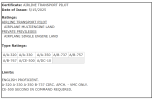
His ticket says so, at least.We still don’t know for sure that an SIC was required.

James_Dean
Pattern Altitude
His ticket says so, at least.
View attachment 149499
This does not indicate he did not have an SPE. I know pilots who fly a 560 with an SPE, but have not taken the checkride in a 501 or 551 and thus have to have a SIC Required on their ticket. This is a rather convoluted process that has many different derivative possible "truths". With the PIC's qualifications I still maintain that I believe that he had an SPE and was a legal. I could certainly be wrong, but with his time it is relatively trivial to add the SPE and you'd have no good reason not to.
Last edited:
James_Dean
Pattern Altitude
Stolen from another forum -
The SPE and the “SIC Required” are two separate things.
The SPE is an exemption that says you can fly a 2 crew Citation single pilot. It applies only to 500, 550, S550, 560.
The “SIC Required” means you have not yet demonstrated flying a single pilot capable Citation just by yourself. It applies only to 501, 551.
The full matrix of what you can fly depending on your status:
CE-500: 500, 501, 550, 551, S550, 560 as crew, 501, 551 as single pilot. This is the base case that I would return to if I let my SPE lapse.
CE-500 + “SIC Required”: 500, 501, 550, 551, S550, 560 as crew, nothing single pilot. This was my case after my initial crew type rating but before I did the SPE.
CE-500 + SPE: 500, 501, 550, 551, S550, 560 as crew or single pilot. This is the most flexible case, and my current status.
CE-500 + SPE + “SIC Required”: 500, 501, 550, 551, S550, 560 as crew, 500, 550, S550, 560 single pilot. This was my intermediate case after SPE but before I got “SIC Required” removed.
Thing is, on this flight there were several things there no good reason not to have done, and they didn’t do any of them.I could certainly be wrong, but with his time it is relatively trivial to add the SPE and you'd have no good reason not to.
MauleSkinner
Touchdown! Greaser!
Which still doesn’t indicate for sure that he needed one.His ticket says so, at least.

hindsight2020
Final Approach
*chuckles* I wouldn't go extrapolating edicts about the "prudence writ large" of single pilot flight on the basis of retired vegetarians burning steaks, if you catch my drift. Horses for courses chat. The fact that to a canary a cat is a monster shouldn't be the eagle's burden.


midwestpa24
Final Approach
Reminds me of the "Lost in Translation" scene in Oceans 12.*carefully dials the cipher into his hindsight2020 decoder ring*
- Joined
- May 15, 2020
- Messages
- 7,765
- Display Name
- Ernie
- Home Airfield
- C81
When you write that book, I'll chip in for an editor*chuckles* I wouldn't go extrapolating edicts about the "prudence writ large" of single pilot flight on the basis of retired vegetarians burning steaks, if you catch my drift. Horses for courses chat. The fact that to a canary a cat is a monster shouldn't be the eagle's burden.
I think the outcome of the flight settled that question.Which still doesn’t indicate for sure that he needed one.
MauleSkinner
Touchdown! Greaser!
No, the outcome settled the suitability of the PIC regardless of SIC requirement.I think the outcome of the flight settled that question.

Ed Haywood
Final Approach
Same goes for people who believe in hangar fairies
Except for refilling compasses. The hangar fairy really does that.
Ed Haywood
Final Approach
If you turned final where they did and noticed that you're only 275' AGL, you'd think you add a decent amount of power and at least attempt to level the plane.
As a piston-only guy, I am under the general impression that jets take time to spool up when power is added, and that lag has caused some number of low-on- approach accidents. Is that a thing?

3393RP
En-Route
- Joined
- Oct 8, 2012
- Messages
- 4,720
- Display Name
- 3393RP
As a lowly Sport Pilot I do wonder about the thought process. I recall the wise words of @Ed Haywood when he so eloquently said:
"Stay aloft. Declare emergency. Troubleshoot. Make a plan. Don't be in a hurry to crash." (Emphasis mine)
This was from an earlier thread about another crash
It killed Yankees catcher Thurman Munson in 1979. He made the same error, in the same aircraft.As a piston-only guy, I am under the general impression that jets take time to spool up when power is added, and that lag has caused some number of low-on- approach accidents. Is that a thing?
MauleSkinner
Touchdown! Greaser!
It’s adequate to make a go around from idle below 50 feet on a normal approach. You’ve got to screw up pretty bad for spool up time to be too slow in a Citation.As a piston-only guy, I am under the general impression that jets take time to spool up when power is added, and that lag has caused some number of low-on- approach accidents. Is that a thing?
Lindberg
Final Approach
I don't want to read the whole thing again, but doesn't the prelim say the thrust levers were forward? Too late?To me this is really the thing I don't understand, maybe from ignorance. If you turned final where they did and noticed that you're only 275' AGL, you'd think you add a decent amount of power and at least attempt to level the plane.

Sure, which is exactly what I said as well. Not sure what the purpose for your comment is.Cool thing about airplanes is you can level off, pull the thrust back, and get stuff done that needs to be done. Even in Citations.
MauleSkinner
Touchdown! Greaser!
I was disagreeing with your comment that “you” wouldn’t want to takeoff VFR below a 4000 ft ceiling to pick up an IFR clearance.Sure, which is exactly what I said as well. Not sure what the purpose for your comment is.

dtuuri
Final Approach
- Joined
- Apr 21, 2011
- Messages
- 5,819
- Location
- Madison, OH
- Display Name
- dtuuri
- Home Airfield
- Homeless, TBD
Thanks. My notes indicate that "ignition" is enabled through the start button and throttle switch from the hot battery bus during engine start (as opposed to the normal main extension bus). Doesn't include the start relay too, I guess.You have to have #1 running with the gen on or the LH 225 Current Limiter to get power to the LH Bus.

flyingcheesehead
Taxi to Parking
- Joined
- Feb 23, 2005
- Messages
- 28,184
- Location
- UQACY, WI
- Display Name
- iMooniac
- Home Airfield
- KUES/KMKE
It was the retired airline guys who drove me nuts.Training at the Part 142's out there for a 61 type rating is a "cooperate-graduate" type program. Sometimes you get lucky and get some really dedicated instructors who really enjoy teaching and other times you get some guy that has bombed out of every other job and is there for the paycheck. But they are a customer driven industry and want returning business. Start increasing the standards and making it more difficult and customers go elsewhere (if the competitor has a sim for the same type).
FWIW, a pre-departure brief is a good thing to do even if you're single pilot. Talking yourself through both what you expect to do, and what you plan to do in an emergency, makes it far more likely that you'll execute successfully whether it's a normal departure or an emergency.No checklist use, no pre-departure brief
4? Pilot, son, Biffle, ???7 people in the plane, 4 of them pilot rated.
I wouldn't assume that. The issued date gets changed for anything - I requested a replacement certificate because mine was 17 years old and the majority of the letters were no longer readable (or even present), and that was enough to change the date. I think whenever they send you a card for any reason the date gets updated.Good question. I was assuming he was issued the CE500 type on 5/15/2025 based upon the FAA database.
I don't think so - Just gotta take the checkride without a right seater. It's removal of the SOE limitation that requires time in type.Which now makes me wonder about the SPE…isn’t there a time in type requirement to get the SPE?
§ 61.43 Practical tests: General procedures.
(b) The pilot flight crew complement required during the practical test is based on one of the following requirements that applies to the aircraft being used on the practical test:
(3) If the FAA Flight Standardization Board report, FAA-approved aircraft flight manual, or aircraft type certification data sheet allows the pilot flight crew complement to be either a single pilot, or a pilot and a copilot, then the applicant may demonstrate single pilot proficiency or have a copilot on the practical test. If the applicant performs the practical test with a copilot, the limitation of “Second in Command Required” will be placed on the applicant's pilot certificate. The limitation may be removed if the applicant passes the practical test by demonstrating single-pilot proficiency in the aircraft in which single-pilot privileges are sought.
A properly trained SIC would have a) known something was really not right earlier, and b) been able to competently fly the plane, or deal with the emergency while letting the other guy fly the plane.Agreed. But it was a PIC-driven sheetshow, and short of getting out of the airplane or standing on the brakes, there often isn’t a lot an SIC can do to change that.
MauleSkinner
Touchdown! Greaser!
That’s for a single pilot type in a 501 or 551, not a SPE that allows flying two-pilot Citations single pilot.I don't think so - Just gotta take the checkride without a right seater. It's removal of the SOE limitation that requires time in type.
§ 61.43 Practical tests: General procedures.(b) The pilot flight crew complement required during the practical test is based on one of the following requirements that applies to the aircraft being used on the practical test3) If the FAA Flight Standardization Board report, FAA-approved aircraft flight manual, or aircraft type certification data sheet allows the pilot flight crew complement to be either a single pilot, or a pilot and a copilot, then the applicant may demonstrate single pilot proficiency or have a copilot on the practical test. If the applicant performs the practical test with a copilot, the limitation of “Second in Command Required” will be placed on the applicant's pilot certificate. The limitation may be removed if the applicant passes the practical test by demonstrating single-pilot proficiency in the aircraft in which single-pilot privileges are sought.
Seems like they both knew something was wrong with the T/R indications and the engine instruments prior to liftoff. Proper SIC training doesn’t include 91.13. The PIC chose to fly a broken airplane illegally. Short of standing on the brakes or getting out of the airplane, a “properly trained” SIC isn’t going to change that.A properly trained SIC would have a) known something was really not right earlier, and b) been able to competently fly the plane, or deal with the emergency while letting the other guy fly the plane.
I'm going to comment on something entirely outside the details of the crash, but still likely relevant. I have to go back to ages ago, when I was studying psychology and recall the section on something called 'successive reinforcement'. One can just google it, but how this becomes an axiom of that profile is this:
First flights with the new plane... Everything is double checked, every i is dotted, and every t is crossed. We have a successful flight. Next 10 flights, everything becomes normal, everything is foolproof, all flights successful. Then, over time - one little, inconsequential item, maybe a T/R didn't work, and the flight went just fine. Maybe the anti-skid showed a fault, and the flight went fine. Next, we have a perfectly good single pilot type plane, and we have a single pilot with mega-hours. Several flights, everything goes fine, safe flights. We begin to stretch the rules, only slightly at first, then things start to pile up. Electric problem, single pilot problem, weather problem, ATC problem. We've been cheating the rules a little bit here, a little bit there, and successively gotten away with it.
The books on successive reinforcement are usually discussing a positive swing of reinforcing a positive trait or theme, or action(s). In this case what I see is an operation that has gotten ragged over time, and over successful flights until the holes in the swiss cheese began to line up right. Which leads to the inevitable 'what if' possible breaks in the chain. I doubt the NTSB will have anyone on staff with this kind of background in psychology, but it might help in cases like this.

mark.staggs
Pre-takeoff checklist
Yeah, they were. I don't want to read the whole thing again, either, but I believe airspeed also increased shortly before the recordings stopped. I take this to mean they *did* realize at some point too late that they were in a bad spot.I don't want to read the whole thing again, but doesn't the prelim say the thrust levers were forward? Too late?
- Joined
- May 15, 2020
- Messages
- 7,765
- Display Name
- Ernie
- Home Airfield
- C81
Normalization of deviance. Was the first thing I thought when I heard the TR light... It's fine. It's been like that.I'm going to comment on something entirely outside the details of the crash, but still likely relevant. I have to go back to ages ago, when I was studying psychology and recall the section on something called 'successive reinforcement'. One can just google it, but how this becomes an axiom of that profile is this:
First flights with the new plane... Everything is double checked, every i is dotted, and every t is crossed. We have a successful flight. Next 10 flights, everything becomes normal, everything is foolproof, all flights successful. Then, over time - one little, inconsequential item, maybe a T/R didn't work, and the flight went just fine. Maybe the anti-skid showed a fault, and the flight went fine. Next, we have a perfectly good single pilot type plane, and we have a single pilot with mega-hours. Several flights, everything goes fine, safe flights. We begin to stretch the rules, only slightly at first, then things start to pile up. Electric problem, single pilot problem, weather problem, ATC problem. We've been cheating the rules a little bit here, a little bit there, and successively gotten away with it.
The books on successive reinforcement are usually discussing a positive swing of reinforcing a positive trait or theme, or action(s). In this case what I see is an operation that has gotten ragged over time, and over successful flights until the holes in the swiss cheese began to line up right. Which leads to the inevitable 'what if' possible breaks in the chain. I doubt the NTSB will have anyone on staff with this kind of background in psychology, but it might help in cases like this.
NTSB has a human performance division that the psychology of things like this would fit into

KE5BM
Pre-takeoff checklist
I was thinking "normalization of deviance." Causal factor in the Challenger disaster. Causal factor in the death of more than a few Coast Guardsmen in the last 20 years (even though the Coast Guard doesn't seem to believe this concept exists).I'm going to comment on something entirely outside the details of the crash, but still likely relevant. I have to go back to ages ago, when I was studying psychology and recall the section on something called 'successive reinforcement'.
I'm going to do some reading on "successive reinforcement."
Edit: RacerX beat me by a couple minutes.
MauleSkinner
Touchdown! Greaser!
What’s interesting to me is that it appears, based on his other type ratings, that he spent the majority of his career in the 121 environment, where this airplane never would have left the gate.Normalization of deviance. Was the first thing I thought when I heard the TR light... It's fine. It's been like that.
It seems that the 121 environment protected him and his passengers from himself, but he never developed the decision making skills to do it on his own.
- Joined
- May 15, 2020
- Messages
- 7,765
- Display Name
- Ernie
- Home Airfield
- C81
With the owner/operator literally standing over your shoulder I can see how one can lose that backbone to say no. 121 you tell dispatch to get you another plane. Not so here.What’s interesting to me is that it appears, based on his other type ratings, that he spent the majority of his career in the 121 environment, and this airplane never would have left the gate.
It seems that the 121 environment protected him and his passengers from himself, but he never developed the decision making skills to do it on his own.
MauleSkinner
Touchdown! Greaser!
It’s definitely an acquired skill.With the owner/operator literally standing over your shoulder I can see how one can lose that backbone to say no.
Based on interaction with numerous 121 retirees over the years, I’d also suggest that there’s a percentage who believe that most of what I’m referring to as the “121 environment” is company policy driven and not regulatory. So it’s entirely possible that the attitude was “this is a Part 91 airplane. We don’t have to have everything either working or MEL’d like we did at the airlines.”