Citation 550 down at SVH

I'm not that, but it sounds like they "fixed" whatever the problem was, and the jet was more or less functional by the time they were on final. Not set up for anything but a seat-of-pants visual approach in MVFR conditions though, with adrenaline coursing through everyone.

Could the electrical issues have been caused by failing to flip some switch? The symptoms sound like a battery running down or an unpowered bus.
The problem is the left seat occupant was basically flying single pilot (right seat passenger not qualified for the aircraft), while handling multiple emergencies (at minimum, the electrical system, but also loss or degredation of flight instruments), in marginal weather. It really smells like task saturation stemming from very poor ADM, and if I'm reading between the lines the gear (or at least confirmation it was actually down / the non-normal checklist for emergency extension) may have been forgotten entirely.

If they'd just picked up their clearance first more margin would have been baked in -- things would have been less busy, the controller would have set them up for an approach, and maybe the helmet fire would have self-extinguished before landing just from that added delay. Or, if the abnormal engine indications would have lead to a low speed abort. Sadly, none of that happened.

My guess was they took off without one or both generators engaged, or a generator failed. I don't know enough about the Citation electrical system to comment further. In any case, it sounds like the redundant systems operated as intended, and a qualified SIC would have been able to take over and land the plane even if the captain's nstruments remained failed. The fact that a passenger from the cabin had to mention the "alternator" isn't exactly encouraging.
 
As does the CE-680.

Yeah, I did a little research since my last post, my bad. :) it looks like some jets use alternators as sort of backup power to the starter generators, which means something like the CE-680 has at least four power sources beyond just battery (not sure if the APU has another generator/alternator/pair of generator and alternator attached as well). Still a little odd to me to hear an alternator call, since I'd expect the generator to have literally just been used to start the engine, so should be functional?
 
Yeah, I did a little research since my last post, my bad. :) it looks like some jets use alternators as sort of backup power to the starter generators, which means something like the CE-680 has at least four power sources beyond just battery (not sure if the APU has another generator/alternator/pair of generator and alternator attached as well). Still a little odd to me to hear an alternator call, since I'd expect the generator to have literally just been used to start the engine, so should be functional?

The alternators on the CE680 are for power to the windshield heat. The APU has a starter/generator that can be run inflight. Each engine has a starter/generator.
 
The alternators on the CE680 are for power to the windshield heat. The APU has a starter/generator that can be run inflight. Each engine has a starter/generator.
Aha, that makes a lot more sense. Three primary power sources and two special purpose ones.

If I ever move up into the turbojet world I'm one of the odd ones that would be looking forward to the systems part of the type rating. It's always been fascinating to me how all of the redundancy is provided, and the associated skill of managing all of those systems even in a degraded condition.
 
Sounds like the rear seat passenger was the most competent guy on board.
 
And seriously, "alternator"? On a jet? I have 0 turbojet time and even *I* know there's no such thing.
Not true, as I see you've found.

Huh. How do they start then? Separate air starter?
Nope, DC electric starter-generators.

The alternators on the CE680 are for power to the windshield heat. The APU has a starter/generator that can be run inflight. Each engine has a starter/generator.
Sounds exactly like the Hawker... At least, the main parts of the Hawker electrical system.

However, the Hawker is British, so the electrical system comes from the same people that brought you Lucas Electrics. There's two alternators, two or three (APU) starter-generators, five or six batteries, two or three inverters... Loads of fun.

If I ever move up into the turbojet world I'm one of the odd ones that would be looking forward to the systems part of the type rating. It's always been fascinating to me how all of the redundancy is provided, and the associated skill of managing all of those systems even in a degraded condition.
Hopefully you get an instructor as good as the one I just had. He's not only a pilot, he's an A&P who works on Hawkers as well, so every time someone asked a question, he not only had the answer, he would describe the system in greater detail, tell us all the ways he's seen pilots screw it up, and show us pictures of it all taken apart (and/or broken!). It was great!
 
Not true, as I see you've found.

Yeah, I spoke out of turn there. I guess I was so shocked by the private pilot level mistakes on display that I didn't check my own assumptions about equipment I've never flown before posting something stupid... :mad2:

Hopefully you get an instructor as good as the one I just had. He's not only a pilot, he's an A&P who works on Hawkers as well, so every time someone asked a question, he not only had the answer, he would describe the system in greater detail, tell us all the ways he's seen pilots screw it up, and show us pictures of it all taken apart (and/or broken!). It was great!

Indeed! Those are my favorite instructors as well, and quite rare. I've stayed with the A&P and paid attention when issues crop up, specifically so that I can get more knowledge on how the engines and systems work. It's paid off a few times in the air, including having a pretty good idea of *why* an engine has failed vs. just guessing via the checklist -- of course I ran the checklist anyway, but when it didn't start back up it wasn't exactly a surprise...
 
Wow. :(

1. Could've picked up IFR on the ground, but didn't. Legal, but maybe not smart. Then likely ended up in the soup up at 4500' and proved it wasn't smart.
2. PIC was required to have a qualified SIC, if I'm understanding that correctly, but didn't.
3. An electric issues that may have foreshadowed themselves on the ground.

I'm unqualified and don't understand what the mechanical/electric issues were based on the prelim report, but what a **** show. They certainly didn't take their responsibilities as seriously as they should've.
 
The TR light issue would give me great pause and very likely a no-go. Also, if the gens were offline they would've had caution lights illuminated on the panel which is a scan item prior to taking the runway and, for me, I give them a scan again 30 - 40 kts on the roll after power is set. I would also assume they had some de-ice/anti-ice equipment on which would be a big amp draw for those batteries - especially after the initial failed start they would likely be struggling to provide adequate voltage. The amps on both gens and a check that they're properly paralleling are on my 441 checklist. I have no way to verify this, but fully fueled with the passenger load would lead me to contemplate that they were over max landing weight for a 550. The SPE/Crew issue is certainly a legal issue, but I do not believe was material to the outcome in the sense that these things are operated safely single pilot all the time and the typed pilot would've had equivalent training.

Edit - I'm baffled they didn't get their IFR clearance on the ground.
 
I wonder what the nature of the start failure was?

The thrust reverser indicator one is also "interesting." I don't know what the MMEL for the C550 says, but our MEL requires the TRs to be disabled and pinned in the stowed position before further flight if the TR indicators aren't working.
 
Despite the total soup sandwich of this pilot and Zero Time Jr, why did they rush getting back on the ground? My God, turning the controls over to this kid during an emergency?

The warning signs were there while still on the ground. Park the damn thing and get it fixed.

This is another example of get-there-itis
 
The SPE/Crew issue is certainly a legal issue, but I do not believe was material to the outcome in the sense that these things are operated safely single pilot all the time and the typed pilot would've had equivalent training.

My argument would be that while the PIC absolutely should have been able to handle the flight single-pilot, for whatever reason that was evidently not the case on this particular flight. The absence of a qualified SIC may have been the last hole in the swiss cheese, depending on whether he was trained "enough" and taking appropriate actions or just letting the PIC flounder (or worse, getting in the way). An electrical failure (without ensuing fire) on a multi-engine aircraft should not, by itself, ever lead directly to a crash.
 
I wonder what the nature of the start failure was?

The thrust reverser indicator one is also "interesting." I don't know what the MMEL for the C550 says, but our MEL requires the TRs to be disabled and pinned in the stowed position before further flight if the TR indicators aren't working.
I'm also perplexed on the start.

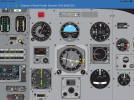
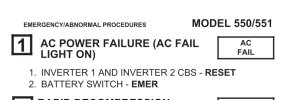
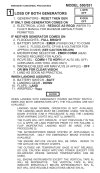
Screenshot 2026-01-30 160829.png
 
My argument would be that while the PIC absolutely should have been able to handle the flight single-pilot, for whatever reason that was evidently not the case on this particular flight. The absence of a qualified SIC may have been the last hole in the swiss cheese, depending on whether he was trained "enough" and taking appropriate actions or just letting the PIC flounder (or worse, getting in the way). An electrical failure (without ensuing fire) on a multi-engine aircraft should not, by itself, ever lead directly to a crash.

There is the 551 that are essentially identical to the 550. It is just a quirk of certification that the SPE is required for that airframe. You also have the CJ series that was certified SP out of the gate all the way up to the CJ4+ at 17,000 lbs and 450kts. I fly a 10,240 lb twin turboprop 441 that is just a complex as the 550 single pilot, and in some ways more complex. Are we arguing against single pilot operations for aircraft over some level of complexity?
 
I fly a 10,240 lb twin turboprop 441 that is just a complex as the 550 single pilot, and in some ways more complex.

I actually have a bit of dual time on that exact model, I know what you're talking about. While not a turboprop, I do fly the 414 single pilot in inclement weather, and part of keeping that safe is making sure to stack the deck in my favor before I even leave the ground.

Are we arguing against single pilot operations for aircraft over some level of complexity?

No, not at all. All I'm saying here is that the regulations in this particular case had (by chance) offered one last slice of swiss cheese not normally required, and because they weren't followed the last hole in said swiss cheese lined up. I guess in NTSB-speak I'd say the SIC issue would be a contributing factor; the primary factors would be the PIC's decision making, piloting ability, and whatever went wrong with the electrical system in the first place. I'm all for single pilot operations where safe, but at the same time being single pilot and skipping steps / rushing things is more of a problem than dual pilot, since the dual pilot scenario offers more chances for those mistakes to be caught and just more mental bandwidth overall (assuming good CRM) to handle a deteriorating situation.

 
I actually have a bit of dual time on that exact model, I know what you're talking about. While not a turboprop, I do fly the 414 single pilot in inclement weather, and part of keeping that safe is making sure to stack the deck in my favor before I even leave the ground.


No, not at all. All I'm saying here is that the regulations in this particular case had (by chance) offered one last slice of swiss cheese not normally required, and because they weren't followed the last hole in said swiss cheese lined up. I guess in NTSB-speak I'd say the SIC issue would be a contributing factor; the primary factors would be the PIC's decision making, piloting ability, and whatever went wrong with the electrical system in the first place. I'm all for single pilot operations where safe, but at the same time being single pilot and skipping steps / rushing things is more of a problem than dual pilot, since the dual pilot scenario offers more chances for those mistakes to be caught and just more mental bandwidth overall (assuming good CRM) to handle a deteriorating situation.

Don't disagree. I'm just offering the contention that this pilot should've been more than capable to make this a safe flight and handle it single pilot. I really hope this incident doesn't cause the FAA to make negative changes to the SPE option. This feels like departure pressure and if they'd have taken 10 more minutes to slow the departure down and another 10 minutes to get their clearance on the ground this accident would've not happened.
 
You can raise ZTL on that frequency from the ground (at least it works fine in my Navion). I don't know why they didn't want to get it before takeoff.
 
You can raise ZTL on that frequency from the ground (at least it works fine in my Navion). I don't know why they didn't want to get it before takeoff.
Yeah, particularly when, as the NTSB describes him, right-seat passenger could've done that while the PIC was taxiing. That isn't a short taxi from that south ramp all the way to the approach end of 10.
 
Don't disagree. I'm just offering the contention that this pilot should've been more than capable to make this a safe flight and handle it single pilot. I really hope this incident doesn't cause the FAA to make negative changes to the SPE option. This feels like departure pressure and if they'd have taken 10 more minutes to slow the departure down and another 10 minutes to get their clearance on the ground this accident would've not happened.
100% agreed. I don't want to see single pilot options limited either, and to me this accident doesn't warrant reevaluation of any of those options. The PIC apparently made a chain of serious errors and there is no guarantee that even a qualified SIC would have helped if the SIC proficiency was as bad as the PIC was; sometimes you just get two eight balls on the flight deck and there's really nothing that can be done regulation-wise to fix that.

On departure pressure, just the other day I was flying with someone that wanted to pick up clearance in the air for speed. I was PIC, and I stopped the airplane at the hold short and tried to raise departure on the radio. When that didn't work, I pulled out my cell phone and made a couple of calls to get clearance, while the other pilot and the passenger were waiting. Why? Because I wanted to start and end that flight with all of the assistance ATC could offer if anything went wrong, and saving a few minutes simply wasn't worth it. No one cared; I wonder how much departure pressure is pilot-induced vs. actually externally imposed.
 
Last edited:
Wow...this to me makes it even more unfortunate. The kid in the right seat has roughly the same amount of PIC time as I do which ain't much. I sure as hell wouldn't want to put my hands on the yoke with passengers on board. Greg would have been better off in the right seat. Someone above mentioned that he should have kept quiet during sterile cockpit but he was the only one who noticed the charging system wasn't operating. The man was a helicopter pilot and race car driver...I think we can forgive the nomenclature goof.

Man, this one really makes me mad now. I take back the positive assumption I made of the PIC earlier in this thread.
 
So... if I'm reading the prelim right, they took off with at least one generator off (if not both) and drained batteries to the point that equipmend dropped offline, before Biffle pointed it out?

There must've been warning signs before this flight that were ignored. Did they smash it into the lights just because they were semi-IMC and rushed the landing out of panic?
 
Aha, that makes a lot more sense. Three primary power sources and two special purpose ones.

If I ever move up into the turbojet world I'm one of the odd ones that would be looking forward to the systems part of the type rating. It's always been fascinating to me how all of the redundancy is provided, and the associated skill of managing all of those systems even in a degraded condition.
Do they do that anymore? Circa 50s thru 70s you had to know how to build the airplane. Circa 80s thru 90s you had to know how to read the procedure and why the steps were taken. Since then I think you only needed to know how to read.
 
Just read the preliminary, and I cannot believe they let a SEL private pilot sit right seat, absurd. Not getting the clearance on ground was definitely a factor as well.

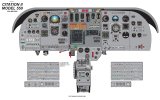
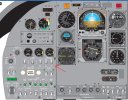
I will post some panel pics for y’all to see.

The left side gyros run off AC inverters from the main DC power system, as does the autopilot. On his exact plane, if one inverter failed then you had to manually select the other. I remember having inverter / adi issues with this plane when I flew it years ago.

The left side altimeter also required electricity. There is a third altimeter (traditional pitot static) that could have been referenced . As well as a peanut gyro (attitude only) that ran off its own backup batter (poorly from my experience with this exact plane).
 
You can raise ZTL on that frequency from the ground (at least it works fine in my Navion). I don't know why they didn't want to get it before takeoff.
If the generators were offline, then the radio was probably not transmitting at full power after 2 or 3 engine starts on the battery.
 
Poster pics of the panel. The Co-Pilot attitude indicator is air driven, but I remember it sometimes was slow to erect. A Venturi device created the air/vacuum to run it. Losing the electrical in this plane would definitely be a factor in regards to the flight instruments, especially while trying to figure out a new scan and what to trust. Old, wore out instruments will only add to the difficulty.

IMG_4215.jpegIMG_4216.jpegIMG_4217.png
 
I wonder what the nature of the start failure was?

The thrust reverser indicator one is also "interesting." I don't know what the MMEL for the C550 says, but our MEL requires the TRs to be disabled and pinned in the stowed position before further flight if the TR indicators aren't working.
I haven’t looked, but I can pretty much guarantee it says the same thing yours does…and the engine instruments need to be working as well.
 
I haven’t looked, but I can pretty much guarantee it says the same thing yours does…and the engine instruments need to be working as well.

My guess is the light was finicky and the pilots were frequently blowing it off vs paying to get it serviced. That’s an old plane.
 
The two generator switches are three position…GEN(On)-off-reset. We turned them to the off position when using a GPU to start, and also moved them off momentarily to test the generators individually after start. Otherwise always should be in GEN. Sounds like they may have taken off with the generators in the off position. That generator test was a PIC flow that the untrained SIC would have no idea what is going on.
 
Last edited:
My guess is the light was finicky and the pilots were frequently blowing it off vs paying to get it serviced. That’s an old plane.
I have no doubt these were old issues. Doesn’t sound like there was much more conversation than “they don’t work, we’re going flying.”

Having gotten myself fired at least once over issues like that, I don’t have a lot of sympathy for people who don’t fix stuff.

Oddly enough, I’m still not convinced he didn’t have a SPE. They only noted his certificate here, not his training/checking history. It still wouldn’t surprise me if he didn’t have one, but I’m just not ready to say it’s a done deal.
 
Last edited:
Don't disagree. I'm just offering the contention that this pilot should've been more than capable to make this a safe flight and handle it single pilot. I really hope this incident doesn't cause the FAA to make negative changes to the SPE option. This feels like departure pressure and if they'd have taken 10 more minutes to slow the departure down and another 10 minutes to get their clearance on the ground this accident would've not happened.
I agree, hope not either.

I suspect the issue here is complacency as well, meaning the use of a checklist would have identified these things. I don’t know if one was used or not, but I’m lead to believe they probably didn’t, seeing some of the things listed in the report. If nothing more, the right seater should have pulled the QRH and started running flows.

I agree with your post above as well, that verbally announcing the annunciator panel is dark prior to applying takeoff thrust, is a standard callout. Given the experience of the PIC, he should have been able to work through these issues, especially once things were resolved and not find himself on the backside of the curve during short final. That I just can’t figure out.
 
To the folks that fly these things.... I've read the report and I don't understand what happened in the last minute or two. From the report, he was about 275' AGL when they reported seeing the runway, and from what I can read of the 3 data points they were in a descent, maybe 250-500 or so fpm. That's kinda suggesting to me that visibility was either way worse than the 5 miles/1200 broken reported, or that they were just low and didn't know where they were. But either way, does it look like they were trying to land and just were coming in way too low visually, or they were trying to go around and didn't get things configured correctly fast enough, or something else?

Asking because I know that unlike a PA-28, you can't just level off at 300', fly happily along level for a mile, then decide to land...but I don't know what the capabilities and parameters are in a Citation if you found yourself way low for where you should be on a visual approach.
 
Back
Top