Calling Tower for Departure

I just say holding short runway x at taxi way x. I don’t say ready for takeoff, otherwise why else would I be there. Now if it was something out off the ordinary I would say what I need. Kind of ,Ike when they call in specifically for full stop landing bs just saying landing.
Because I've seen people do their runup while holding short. I've also had tower ask if it's full stop. So I let them know it's full stop. Because maybe you are landing, but are you also going to be doing a taxi back and take back off, pattern work. Call in and let them know. Full stop means you are landing and shutting down. Landing doesn't mean that. They may have to coordinate with ground to get you back in lane if you're coming in to something besides parking.
 
XX is a large runway. Bigger than X. Even bigger than L, M, or S.
Runway L would be runway 50, M would be 1000. You may see these runway numbers in the movies. :D
 
In all seriousness, to the OP's question...

1) If you're getting clearance at a towered field talk to Ground frequency (or what's listed for clearance delivery), even if it's the same guy on tower frequency. It helps them manage communications.
2) "Good morning McCullum Ground, Cessna Skylane 1234, Looking for Clearance please".

After getting, repeating back, getting confirmation you have it correct.....

1) McCullum Ground, Skylane 1234, North Ramp, Ready to Taxi, Alpha (or whatever current weather is).
2) When get taxi clearance, repeat back "Skylane 1234, Taxi to 27 on Alpha"

Do your run up in the run up area. When at the hold short line, switch to Tower. Our tower likes to hear "McCullum Tower, Skylane 1234, holding short runway 27 November 1"

I used to say (like everyone else) ".....ready for departure" or "......... holding short for departure" but that one tower guy just didn't like those words. He only wanted "Holding Short". HINT: You might be right, but if you can adjust your wording to still be legal and accurate and make the guy in the tower feel a little better, just do it.
 
  • Like
Reactions: DCR
Because I've seen people do their runup while holding short. I've also had tower ask if it's full stop. So I let them know it's full stop. Because maybe you are landing, but are you also going to be doing a taxi back and take back off, pattern work. Call in and let them know. Full stop means you are landing and shutting down. Landing doesn't mean that. They may have to coordinate with ground to get you back in lane if you're coming in to something besides parking.

Often, when I'm on short final for touch-n-go and can't remember if I got cleared yet (gasp), I'll ask tower:

"Hey tower, confirm N123 cleared to land"

They will come back and say:

"you are cleared for touch-n-go, do you need clearance to land?"

I interpreted this as "cleared to land" = "full stop, taxi back" <--- [EDIT: I Meant to say "full stop" only, NOT "taxi back"] ... at least to my local controllers. This might have even happened when I was "cleared for the option", I'll keep an ear out... I now try to only say "cleared to land" if I'm gonna taxi back.
 
Last edited:
I hear they exist but, so far, I have never been to a Class D airport where Clearance Delivery was required for a VFR departure. At a Class C, sure, but not a Delta.
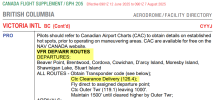
It's more common in Canada, for example at Victoria CYYJ.
 
Often, when I'm on short final for touch-n-go and can't remember if I got cleared yet (gasp), I'll ask tower:

"Hey tower, confirm N123 cleared to land"

They will come back and say:

"you are cleared for touch-n-go, do you need clearance to land?"

I interpreted this as "cleared to land" = "full stop, taxi back"... at least to my local controllers. This might have even happened when I was "cleared for the option", I'll keep an ear out... I now try to only say "cleared to land" if I'm gonna taxi back.
There are generally 3 things you might hear/say:

Cleared for the option:
This can be a low approach - no touching of the wheels to the runway.
Touch and go.
Stop and go. Yeah, full stop on the runway, and then a take off. (think night currency for why)

Cleared to land:
Yeah, you're landing, and exiting the runway. However, you may not ultimately be leaving movement area (taxi-back).

Full stop:
I am leaving the movement area and probably shutting off the engine. Also, you'll probably be getting a new squawk code if you do depart later so they can tell TRACON to drop you from their strip.

Oh I'm a numbskull - I never do actual "taxi-backs" so when I said "taxi-back" in my last post I meant "taxi back to my ramp"... AKA "full stop".
 
It's more common in Canada, for example at Victoria CYYJ.
I don't doubt that rules and standard procedures might be different in another country. For example, unlike the US, VFR entry into Canada Class C requires a "clearance," not merely two-way communications.

But I'm curious about your CYYJ example. It's a Charlie (beneath a Bravo) and the CFS says that VFR departures are to call Clearance Delivery.

1750950726654.png
 
I mean from what I've seen, some places the cd and ground freq's are the same, with the same peeps working them, so why even have them? at a somewhat sleepy class d or even moderately busy one, I don't see the need to have 3 freq's, but maybe @Timbeck2 or others can chime in.

Maybe in the past the airport was not so sleepy, so needed them. Or has busy periods.

One night flight I talked to an Approach, who was also Departure, Tower, Ground, and CD.
 
One night flight I talked to an Approach, who was also Departure, Tower, Ground, and CD.
We once had an Angel Flight wing evening meeting at a Class C airport. When leaving, it was late enough that there was one controller who was doing all those jobs, but they did not put one of those "all tower services are on [freq.]" which towered airports sometimes do things are quiet at night. In this case, with some of the group not being all that familiar with Class C departures, the poor controller suddenly had a dozen airplanes calling for departure instructions on both CD and Ground at the same time.
 
But I'm curious about your CYYJ example. It's a Charlie (beneath a Bravo) and the CFS says that VFR departures are to call Clearance Delivery.
That was my point: it's one of the few airports I've encountered where VFR departures contact clearance delivery before contacting ground. Apparently it's normal for Class C, so I guess I don't take off or land in Class C much.
 
That said, there are still towered airports without a dedicated CD frequency, just as there are still towered airports with no ATIS.
Yes, a lot of Towered Airports do not have Clearance Delivery. But what Towered Airports do not have an ATIS?????

Or are you referring to a Digital ATIS or AWOS, ASOS, etc. for after the Twr is closed?
 
That was my point: it's one of the few airports I've encountered where VFR departures contact clearance delivery before contacting ground. Apparently it's normal for Class C, so I guess I don't take off or land in Class C much.
Gotcha. Yes, even in the US, the most common "normal" at Class C is calling CD.
But what Towered Airports do not have an ATIS?????
There's one not too far from me. Check KVUJ in North Carolina.
 
I interpreted this as "cleared to land" = "full stop, taxi back"... at least to my local controllers. This might have even happened when I was "cleared for the option", I'll keep an ear out... I now try to only say "cleared to land" if I'm gonna taxi back.
No.... If you're Cleared Touch & Go, that is what you do or you ask for something else. The Controller is coordinating other planes in the pattern based on what they cleared you for. So I might be on a pretty tight final behind you because the Controller expects you to touch down on the Rwy and then immediately depart. If you do anything else you may toss a wrench in their plan and they will not be happy with you for not doing what you were cleared for.

Typical Tower Clearances are:
Land: Land, slow down, use the next available exit (unless you've requested something different BEFORE landing)
Touch & Go: Touch down on the Rwy, do not stop, takeoff
Stop & Go: Touch down, stop MOMENTARILY and then depart (let them know if you're going to need a couple of minutes)
Taxi Back: If you're going to need more time than a Stop & Go, just let them know you'll be landing and then taxiing back for another departure (They can let the Ground Controller know)
Option: You're Cleared for any and all of the above.
 
  • Like
Reactions: DCR
There's one not too far from me. Check KVUJ in North Carolina.
I see they have AWOS-3. Do they add comments like what Runway or Approach is in use like a typical ATIS?

If so then it's kind of a blind of a Digital and Recorded ATIS.
 
I see they have AWOS-3. Do they add comments like what Runway or Approach is in use like a typical ATIS?

If so then it's kind of a blind of a Digital and Recorded ATIS.
Nope. Just a standard AWOS broadcast. Weather, wind, altimeter setting.

My favorite Shakespeare quote is, "there are more things in heaven and earth..."
 
Last edited:
That was my point: it's one of the few airports I've encountered where VFR departures contact clearance delivery before contacting ground. Apparently it's normal for Class C, so I guess I don't take off or land in Class C much.
For class C (and B I suppose) : I think of it as what you do as if you were on IFR. You first have to introduce yourself /talk to /get clearance. Then when you have your number (squawk code), talk to ground before moving on the ground, then talk to tower in the sky before getting on the runway to go into the sky. Kind of corny, but it's a good system as a double check on who to talk to when.

Or, just always fly X Country IFR and it will be what you always do anyway.
 
For class C (and B I suppose)
The most significant VFR difference between C and B is based on the regulatory difference. 2-way comm for C; 2-way comm and a clearance for B. That means you are likely to hear "cleared into the Class Bravo" when receiving your departure instructions, even though sitting on the ground in the middle of the Bravo primary is the most obvious implicit Bravo clearance one can imagine.
 
  • Like
Reactions: WDD
Yes, a lot of Towered Airports do not have Clearance Delivery. But what Towered Airports do not have an ATIS?????

Or are you referring to a Digital ATIS or AWOS, ASOS, etc. for after the Twr is closed?
My airport, and the airport I flew into recently, don’t have ATIS.

KIXD and KOUN
 
Holy crap, now there’s algebra involved. You can land once you solve for X
If you use the quadratic equation, do you get to pick either of the two solutions/runways?
 
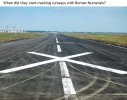
The story goes is that the FAA harassed Rucker Tibbs about not having runway numbers at W90. He added them with roman numerals. No, it wasn't runway 10.
 
The story goes is that the FAA harassed Rucker Tibbs about not having runway numbers at W90. He added them with roman numerals. No, it wasn't runway 10.
Braille? (You know, to be inclusive.)
 
  • Haha
Reactions: WDD
Which Class Cs? (outside of covid when things were just weird)

Every C I have been to, it's always been CD ==> Ground ==> Tower ==> Departure
I can't recall a C I've been to that's been otherwise during normal hours.

I learned to fly at Oakland, KOAK, a busy Class C, and you always contacted Ground directly for your VFR departure clearance, bypassing CD (which was typically busy with Southwest jets getting IFR clearances to elsewhere). For quite a while as a student, I sort of assumed that was the default, until I started experiencing the rest of the world…
 
I learned to fly at Oakland, KOAK, a busy Class C, and you always contacted Ground directly for your VFR departure clearance, bypassing CD (which was typically busy with Southwest jets getting IFR clearances to elsewhere). For quite a while as a student, I sort of assumed that was the default, until I started experiencing the rest of the world…
I've heard that before, although maybe not about OAK. It's interesting in that one might expect that we call CD at most Class Cs because they are busier. In this case it might be the opposite - let's dedicate our Clearance Delivery to delivery of IFR clearances only. With CPDLC and PDC available to the airplanes and some light GA, I wonder whether that metric has changed. How long ago did you train there and have you been a VFR departure there recently?
 
I've heard that before, although maybe not about OAK. It's interesting in that one might expect that we call CD at most Class Cs because they are busier. In this case it might be the opposite - let's dedicate our Clearance Delivery to delivery of IFR clearances only. With CPDLC and PDC available to the airplanes and some light GA, I wonder whether that metric has changed. How long ago did you train there and have you been a VFR departure there recently?
Yeah, it's probably been a decade at least since I've departed KOAK, VFR or IFR. Back when I flew IFR regularly out of Oakland, CD during the evening SWA push (it's one of their main hubs) could be a total zoo with the controller giving out clearances in batches then calling individual aircraft for their readbacks a minute or two later (it felt like a poetry slam). I could never imagine the average VFR clearance-seeker getting a word in edgewise…
 
For quite a while as a student, I sort of assumed that was the default, until I started experiencing the rest of the world…
That happens to all students. They assume that the way their CFI, their flight school, their airport, etc. does things is the way that everyone does things. And that it's the correct way to do things.

I frequently post in threads, such as this, trying to redirect pilots to the source documents to see what really is required, and what really is recommended.

As far as who to call at a large(r) airport for a VFR departure. Start with the regulations in the AIM then check for NOTAMS, chart supplement notes, and the ATIS to see if there is anything that the airport's control facilities (Tower and TRACON) want done differently from the AIM recommendations.

If they want something different then they need to tell pilots what they want different. Pilots fly to a lot of different airports, and even a lot of different countries. We aren't mind readers and they shouldn't expect us to be.
What do the regulations or the AIM say about whom to make the initial call up to while on the ground at a Class C primary airport?
 
  • Like
Reactions: DCR
The story goes is that the FAA harassed Rucker Tibbs about not having runway numbers at W90. He added them with roman numerals. No, it wasn't runway 10.
Wow, I haven’t heard his name in many years, though I do think back every time I get the bill for an annual lol
 
What do the regulations or the AIM say about whom to make the initial call up to while on the ground at a Class C primary airport?
Well, I'd hope you'd reference them to see, but the regulations tell you what you need to have an ATC clearance to do and the AIM describes recommended procedures for how and when to contact them.

My point is that, beyond the CFRs and AIM, anything specific that the facility wants a pilot to do must be communicated to the point through NOTAMS, chart supplements, or ATIS. Lacking that, do what the CFRs and AIM say and if the controller doesn't like it then it is the controller's problem, not the pilots. We can't be expected to know any local procedures unless the local procedures are published through established channels.
 
Well, I'd hope you'd reference them to see, but the regulations tell you what you need to have an ATC clearance to do and the AIM describes recommended procedures for how and when to contact them.
Why would you hope I'd reference them? You're the one who said they were there. But OK, if you insist, I'll reference the FAR and AIM sections that say whom to make the initial call up to while on the ground at a Class C primary airport.

Here you go:
" ...................................................."

Yep, that's it. The FAR doesn't even mention "ground" or "clearance delivery." "The closest is AIM 3-2-4-.c.4.d which says that at "A primary or satellite airport with an operating control tower. Two-way radio communications must be established and maintained with the control tower, and thereafter as instructed by ATC while operating in Class C airspace.."
 
Last edited:
Yep, that's it. The closest is AIM 3-2-4-.c.4.d which says that at "A primary or satellite airport with an operating control tower. Two-way radio communications must be established and maintained with the control tower, and thereafter as instructed by ATC while operating in Class C airspace.."
That's it. Beyond that, ATC must communicate any specific procedures they want pilots to do. Often, that's on ATIS with a note such as All aircraft contact clearance delivery prior to taxi.

I am trying to dispel the myth that pilots need to know local procedures for individual airports.
 
That's it. Beyond that, ATC must communicate any specific procedures they want pilots to do. Often, that's on ATIS with a note such as All aircraft contact clearance delivery prior to taxi.

I am trying to dispel the myth that pilots need to know local procedures for individual airports.
My point is that regs and AIM you do not tell you which Tower position to call. And I don't know of a towered facility anywhere that has an ATIS broadcast telling a pilot to call the Ground position for taxi instructions.

Special local procedures do typically get placed on the ATIS. But common procedures do not, even if they are not mentioned in the AIM or FARs.

Like what we are discussing in the thread. So far anyway, I have not been to a Class D which said "Contact ground before taxi" in an ATIS broadcast. Nor would I want it to. For a Charlie, I have not heard one say to contact CD or Ground. Those contacts are something we are taught to do because it's he way it's typically done.

Calling CD or Ground? I'm more interested in reality that myth busting. Hopefully, we're savvy enough not to call the Tower. But we're sitting n the ground, so it really doesn't matter. What's the worst case scenario if I call "the wrong" one? The position tells me to call the other and I've learned something for next time.

So, you can tell new pilots to just call the Tower and forget about Ground or CD. I'll continue to teach that certain procedures are common, but not all facilities are exactly the same. Pay attention to NOTAMs and ATIS for special procedures but understand that not every minor variation will me mentioned there and that it's no big deal to be wrong about those.

 
That's it. Beyond that, ATC must communicate any specific procedures they want pilots to do. Often, that's on ATIS with a note such as All aircraft contact clearance delivery prior to taxi.

I am trying to dispel the myth that pilots need to know local procedures for individual airports.

My point is that regs and AIM you do not tell you which Tower position to call. And I don't know of a towered facility anywhere that has an ATIS broadcast telling a pilot to call the Ground position for taxi instructions.

Special local procedures do typically get placed on the ATIS. But common procedures do not, even if they are not mentioned in the AIM or FARs.

Like what we are discussing in the thread. So far anyway, I have not been to a Class D which said "Contact ground before taxi" in an ATIS broadcast. Nor would I want it to. For a Charlie, I have not heard one say to contact CD or Ground. Those contacts are something we are taught to do because it's he way it's typically done.

Calling CD or Ground? I'm more interested in reality that myth busting. Hopefully, we're savvy enough not to call the Tower. But we're sitting n the ground, so it really doesn't matter. What's the worst case scenario if I call "the wrong" one? The position tells me to call the other and I've learned something for next time.

So, you can tell new pilots to just call the Tower and forget about Ground or CD. I'll continue to teach that certain procedures are common, but not all facilities are exactly the same. Pay attention to NOTAMs and ATIS for special procedures but understand that not every minor variation will me mentioned there and that it's no big deal to be wrong about those.

It appears that the answer to the question I'm about to ask is "it depends", but, from your experience, would you say the common practice is to contact Ground first at a Delta and CD first at a Charlie?

Just asking for your own personal observations if you have any. I've only been to one towered airport.
 
It appears that the answer to the question I'm about to ask is "it depends", but, from your experience, would you say the common practice is to contact Ground first at a Delta and CD first at a Charlie?
Yes. Ground at D and CD at C seems to be the most prevalent for initial VFR call up. Others have come across exceptions but in the past 35 years, I haven't been to one of them.
 
  • Like
Reactions: DCR
Yes. Ground at D and CD at C seems to be the most prevalent for initial VFR call up. Others have come across exceptions but in the past 35 years, I haven't been to one of them.

Appreciate that! Ok, since you said for "VFR", I have one follow up question: Does this observation apply to calling for flight following at a D too? Or would you call CD for FF at a D?

(at my local we call Ground for FF but like I said I've never been anywhere else so I don't know if it's the norm).
 
Back
Top