Any Traffic in the Area, Please Follow the AIM


Again, survival over safety, safety over compliance. What is correct is compliance, what is right is usually toward survival.

You might want to review page six of that. Especially recognizing the part that there is fact and there is “fact.” Facts here were not facts but decrees of an administrative judge. Further, the appellate is blindingly refusing to consider newly presented information meaning they’re unwilling to consider what is right.

While POAT looks rather flat, and likely didn’t have much by way of other traffic for concern (though a cold side downwind to cold side base is actually safer for traffic in the hot side pattern — you’re much easier to see), even the extra extend over midfield to enter far side downwind so as to go left adds an extra turn and time in pattern adding risk. Were it to be the extended to forty-five, especially in a jet, it would be just plain stupid. Could you widen out so as to “not be in the pattern,” sure, though what’s the visibility? Doing such also can add risk. A left turn to cold side right downwind really is not only the quickest, it is the simplest and safest way you can do it.

It’ll take me a moment to type, and comment character limits, I’m gonna give a KLCI story in a bit. Have a look to the 26 pattern. Look at the airfield and surrounding topography. Note all approaches restrict any circling to the north, seems reasonable.

Also see where https://www.pilotsofamerica.com/com...wsuits-recently-filed-against-the-faa.155120/ goes.
 
The problem here isn’t a right hand pattern, it was inadequately assessing interval and messing up the turning timing. Such happens from the same side too.

Oh, and if all you can find is a case from the nineties, you don’t have the numbers to support the existence of a problem.


People want clear cut rule here. Problem is,

The "interfere" language in the AC comes from a pair of enforcement actions against Alaska Airlines pilots back in the early 1990s. In both cases, the pilot was accused of making right turns in the left hand pattern. In both cases, the pilot, among other things, argued that their right turn to final was 4 NM away and therefore outside the pattern. The defense didn't work. The NTSB admitted there was "some ambiguity in the abstract" about the metes and bounds of the pattern but that' even if it were not a pattern direction violation:

... aircraft making valid straight-in approaches at uncontrolled airports would, nevertheless, be deemed in violation of FAR section 91.89(a) if they interfered with other aircraft operating in the standard left-hand pattern. Here, respondent's aircraft in fact interfered with another aircraft in that pattern, which was on final approach to Ralph Wien Airport.11 Consequently, even if respondent's approach could have been considered a straight-in approach, the Board would be compelled to find a section 91.89(a) violation in this case. FAA v Rivard (NTSB, 1991) [91.89 was the traffic pattern rule before a Part 91 recodification.]​

People took all sorts of lessons from the case. Those looking for absolute certainty came out with 5 miles being the definition of being "in" or "outside" the pattern. The takeaway of others, comfortable with the reality, was the the metes and bounds of the traffic pattern depends on the aircraft operating in it.

Edit: Just saw @Lindberg's reference to Boardman, which mentions Rivard.
 
I’m really surprised at how many of you want to be told what to do.
Don't think anyone is wanting "to be told what to do". More like having a consistent set of rules that everyone follows so we all know what to expect. That doesn't absolve anyone from see and avoid, not being a jerk or doing something non-standard when there's a clear choice between that and safety. What is does mean is not having everyone roll their own in every pattern all over the US.
 
Several people have been referencing AC 90-66C earlier in the thread. Section 9.11.1 includes the following: "Pilots choosing to execute a straight-in approach do not have a
particular priority over other aircraft in the traffic pattern and must comply with the provisions of § 91.113(g)."

That sentence is self-contradictory, because 91.113(g) says that traffic on final has the right-of-way.
In the bit you quoted above, it says, "straight-in approach", not "final approach"... which means that aircraft on a long approach, even on the runway centerline, are not yet "in the pattern" and thus must give way to those that are.

We tend to say things like "10 mile final", but at an uncontrolled airport there is no such thing. It's a 10 mile approach, which turns into a final when you reach the pattern, around the normal base leg location.
 
… having a consistent set of rules that everyone follows so we all know what to expect. That doesn't absolve anyone from… doing something non-standard when there's a clear choice between that and safety.

The choice is not between non-standard and safety, the choice is between adhering to the standard or being safe. The choice is unsafe compliance vs safe non-standard non-compliant. This is the problem. We’re not talking about the usual cases in which the standard is the safe thing, we’re talking about the cases when the standard conflicts with safety.

What is does mean is not having everyone roll their own in every pattern all over the US.

It isn’t about the persons having their own patterns, it is about having patterns fit to circumstances. There is a problem with circumstances as you cannot know them in advance hence cannot write specific clear rules to them.
 
Facts here were not facts but decrees of an administrative judge.
In this context, "facts" are whatever the fact-finder in a legal proceeding decides they are after listening to testimony and reviewing exhibits. In a criminal case, by a judge or jury beyond a reasonable doubt. In a civil case, by a judge or jury by a preponderance of the evidence, i.e., more likely than not. In an Administrative hearing, also by a preponderance of the evidence. In both those civil and administrative cases, there are special cases where a stature provides a "clear and convincing" standard.

If you want to call all of those "decrees," I guess that's your word for it.
 
The difficulty is defining "cut off". If someone calls a ten-mile straight in while I'm abeam the numbers, am I "cutting him off" if I turn base and land? If I'm sitting with my engine shut off by the time he finally touches down?

The rules say that aircraft on final have the right of way, and too many folks assume that if they use the magic word ("Final") everyone has to get out of their way.

Me, I'm an originalist.

When that rule was formalized, most planes didn't have radios. Thus speaketh the magic word over the idiot box doesn't count.

Ron Wanttaja
Had a gentleman yell at me in a 150 when I launched as he was ABOUT to turn base to 1 mile final in a 150. I thought he was talking to someone else at first. Buddy, ill be at tpa before your wheels are on the ground

Also had a guy in a 172 announce "23 miles north of the field inbound for 27". I thought I misheard until he called 15 miles north.
 
ROW rules help us anticipate what the other guy is going to do, and act in ways that the other guy can anticipate. The result is lower risk of a midair collision.
- Captain Obvious.

Until that same ROW puts you into a CFIT hazard or puts you looking cross cockpit to detect traffic or puts you belly up to where traffic typically is or if high wing wing up to it…

The rules cannot account for context and that is why they become their own hazard.

Why would you want the FAA making your decisions rather than using your own ADM?
 
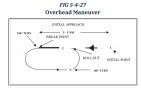
the outside upwind leg isn’t displaced anywhere near downwind spacing. A “teardrop” to the forty-five done too close, however, could though this too doesn’t make sense as the downwind from such would be too tight. Perhaps someone who doesn’t know what the initial is and where it is essentially S-turning with their “overhead” leg being the middle of the S? But this doesn’t make sense either as their turn radius would either displace them outside the downwind or well inside the runway in the break leg. An actual overhead entry with a break is merely an outside upwind to crosswind with the turn being energy dissipating. Generally that turn is a 180 turn as opposed to a square leg, but it is still merely an upwind to crosswind to downwind. Nothing fancy. And such isolates traffic forward hemisphere from the initial with such shifting toward forward quarter as one closes with the airfield. Yes, you may have someone aft of this to whom you are working your interval spacing, but at that point you’re tracking them as opposed to searching and detecting. The overhead does not conflict with a normal pattern as it is outside of such. The break is a crosswind and a crosswind is a normal part of a pattern.
This has been eating at me for a few days. What is the "outside upwind"? The term to my knowledge doesn't appear anywhere. Until last year it was just "upwind". Just because the AIM says we should be aware of overheads doesnt mean its common enough to know how its performed. In fact I took there phrasing to mean "People are gonna do weird ****, and you should be aware of it" because the AIM isnt regulatory. Even your description doesnt match the depiction the AIM providesIMG_4921.jpegIMG_4922.jpeg

"Overhead maneuver patterns are developed at airports where aircraft have an operational need to conduct the maneuver." I dont think were going to see that at many airports. Unless someone goes rogue and wants to play top gun

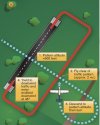
The problem with a teardrop is nobody performs them correctly. People want to overfly and make a descending turn direct to downwind. Fly past 2miles. Descend. THEN turn.IMG_4923.jpeg
 
an outside upwind to crosswind entry and they’ll readily get it
ROTFL. You're a decent comedian to say that with a straight face.

Sitting on the ground relaxing and reading that I have no idea WTF you're talking about, and I'm not a student.
 
The problem with a teardrop is nobody performs them correctly.

I hear this repeated all the time. But I've never seen incorrect performance in the wild, and never seen anyone advocate it on the interwebs. At this point I am skeptical that incorrect performance is more than a rare event.
 
I hear this repeated all the time. But I've never seen incorrect performance in the wild, and never seen anyone advocate it on the interwebs. At this point I am skeptical that incorrect performance is more than a rare event.
I was following a cfi with a student do it last week after picking the plane up after geting a surefly.

My own cfi asked "where are we going"? when I did it properly. I had to show him the phak illustration.
 
@M20K @Roger Wilco @midlifeflyer @Palmpilot @Ed Haywood

RE visual approach into non-towered field from the cold side: Well, then, I guess I’ll just minimize more zip lip calling ten east northeast, five east, and three mile final (which also intercepts a jet/twin base if you go by three hundred feet per mile). Better, I won’t have switched yet and only make the three mile final call.
You name-dropped me, but you didn't answer my question: You were cleared for a visual approach to an uncontrolled airport. In 100 words or less, what did Boston Approach have to do with it? Did you actually fly a right pattern, or approach from the east and then maneuver to join the established left pattern?
You don’t want clear cut rules here.
YOU may not want clear-cut rules, but those of us with a measure of sanity, a bit of insight into human behavior, and some real-world experience trying to share the sky with other pilots certainly do.
The issue is when someone feels they must defend some sense of perceived “owned” position. ...sense of entitlement.
On this point I agree. From my perspective, a major factor in the perception of ownership and the sense of entitlement that pilots assume is related to the term right-of-way itself. People seem to fixate on the word right as if it means we are granted an inalienable, god-given, Constitutionally-guaranteed right. It is not such a right, and we have failed to train ourselves accordingly. "I'll yield the right-of-way to you when you pry the stick from my cold, dead hands" does not illuminate the path to righteousness, in the traffic pattern.

Aviation right-of-way rules are based on the maritime rules that long preceded them. Maritime right-of-way rules were developed to create, among sailors, a universal, mutual understanding and agreement regarding how vessels should maneuver to avoid collision. The real key is mutual understanding, not right. It worked, reducing the number of collisions and lost vessels to such a degree that maritime right-of-way rules became an international standard. The same concept and principle applies to aircraft.
 
Last edited:
Until that same ROW puts you into a CFIT hazard or puts you looking cross cockpit to detect traffic or puts you belly up to where traffic typically is or if high wing wing up to it…

The rules cannot account for context and that is why they become their own hazard.

Why would you want the FAA making your decisions rather than using your own ADM?
I don't think any of that is even close to what Ed said. "Anticipate" does not even remotely suggest blind adherence in the face of reality.
 
@M20K @Roger Wilco @midlifeflyer @Palmpilot @Ed Haywood

RE visual approach into non-towered field from the cold side: Well, then, I guess I’ll just minimize more zip lip calling ten east northeast, five east, and three mile final (which also intercepts a jet/twin base if you go by three hundred feet per mile). Better, I won’t have switched yet and only make the three mile final call.


Almost like


resolves this.


You don’t want clear cut rules here. There is too much varying context to be able to create such while making pilots overly restrained will force them into doing bad things given unique circumstances of their situation.

Now, go back to that overhead entry. Realize how easy it is for someone on final to side step slightly outside and turn it into an outside upwind to crosswind? Similarly, how easy is it for someone to extend downwind? It’s simple enough for someone on base to level off and float to the outside for upwind to cross. Depending on seating, and cross cockpit scanning, they could even do an inside upwind if needed. Real-time deconfliction isn’t hard. The issue is when someone feels they must defend some sense of perceived “owned” position. Such is not a problem rules will resolve though rules can make it worse by helping to create sense of entitlement.

Going back to the Watsonville example, both pilots were communicating their positions and intentions. That wasn't sufficient to prevent both pilots from coming to a violent end. It's possible that the pilot on base didn't realize how fast the pilot on final was going. It's also possible that the pilot on base thought that he had the right-of-way, as was opined earlier in the thread.
 
Several people have been referencing AC 90-66C earlier in the thread. Section 9.11.1 includes the following: "Pilots choosing to execute a straight-in approach do not have a
particular priority over other aircraft in the traffic pattern and must comply with the provisions of § 91.113(g)."

That sentence is self-contradictory, because 91.113(g) says that traffic on final has the right-of-way.
AC 90-66C goes on to describe the "Final" they are talking about as from where you would turn from Base to Final. So calling a 5 or 10 mile "Final" would be inaccurate.

But more to 91.113... It also specifically says "...When two or more aircraft are approaching an airport for the purpose of landing, the aircraft at the lower altitude has the right-of-way, but it shall not take advantage of this rule to cut in front of another which is on final approach to land or to overtake that aircraft..."

So on this Straight In, are you **below** Pattern Altitude to be lower than the other aircraft. And if you are, did you do it to "take advantage" of the other aircrafts position?

And then let's not forget 91.13... I could easily see the FAA coming after you if there was a plane in the pattern and you bolted straight in.
 
Last edited:
Going back to the Watsonville example, both pilots were communicating their positions and intentions. That wasn't sufficient to prevent both pilots from coming to a violent end. It's possible that the pilot on base didn't realize how fast the pilot on final was going. It's also possible that the pilot on base thought that he had the right-of-way, as was opined earlier in the thread.
My home base is similar to Watsonville in terms of aircraft mix and number of operations. One thing I have begun to hear from jet operators on straight in approaches is reporting time "10-mile final, 2 minutes out." Among all the nonsensical radio calls we've been talking about, this stands out to me as somehting useful.
 
In the bit you quoted above, it says, "straight-in approach", not "final approach"... which means that aircraft on a long approach, even on the runway centerline, are not yet "in the pattern" and thus must give way to those that are.

We tend to say things like "10 mile final", but at an uncontrolled airport there is no such thing. It's a 10 mile approach, which turns into a final when you reach the pattern, around the normal base leg location.

I think we can agree that reporting on final does not confer right-of-way. Being on final does. Regarding where "final" is considered to begin, it seems obvious to me that a straight-in aircraft is on final by the time it gets close enough for there to be a conflict with an aircraft on base.
 
One thing I have begun to hear from jet operators on straight in approaches is reporting time "10-mile final, 2 minutes out."
Coming down final at 300 knots sounds more like a strafing run than a landing approach!
 
My home base is similar to Watsonville in terms of aircraft mix and number of operations. One thing I have begun to hear from jet operators on straight in approaches is reporting time "10-mile final, 2 minutes out." Among all the nonsensical radio calls we've been talking about, this stands out to me as somehting useful.

I love that!
 
I was following a cfi with a student do it last week after picking the plane up after geting a surefly.

My own cfi asked "where are we going"? when I did it properly. I had to show him the phak illustration.

Ah OK, that is surprising. It seems like a pretty simple concept. Fly over the pattern. Descend. Turn back to 45.
 
AC 90-66C goes on to describe the "Final" they are talking about as from where you would turn from Base to Final. So calling a 5 or 10 mile "Final" would be inaccurate.

Can you give a section number for that?

But more to 91.113... It also specifically says "...When two or more aircraft are approaching an airport for the purpose of landing, the aircraft at the lower altitude has the right-of-way, but it shall not take advantage of this rule to cut in front of another which is on final approach to land or to overtake that aircraft..."

So on this Straight In, are you **below** Pattern Altitude to be lower than the other aircraft. And if you are, did you do it to "take advantage" of the other aircrafts position?

If the distance between the aircraft is such that the traffic on final is not forced to take evasive action, then the "remain well clear" requirement of 91.113 would appear to be satisfied, so my personal non-authoritative opinion is that the "cut in front of" prohibition would not come into play in that circumstance.

And then let's not forget 91.13... I could easily see the FAA coming after you if there was a plane in the pattern and you bolted straight in.

Do you consider all straight-ins to be bolting in?

The plane on the straight-in at Watsonville was not violating the speed limit, but it was nevertheless going ridiculously fast for the situation, so I can see how a careless or reckless charge could stick if the pilot had survived. I wouldn't want to see that applied to all straight-ins.
 
Can you give a section number for that?

Appendix A: “ Final approach. A flight path in the direction of landing along the extended runway centerline from the base leg to the runway.”

The plane on the straight-in at Watsonville was not violating the speed limit, but it was nevertheless going ridiculously fast for the situation, so I can see how a careless or reckless charge could stick if the pilot had survived. I wouldn't want to see that applied to all straight-ins.

The Watsonville case was so egregious with the racing in that it should not be considered of the same category. He was in no position to be making a landing. Almost like he blanked out and let it run. That instance really should not be used as ammo against straight in. It just doesn’t fit.
 
I don’t see the contradiction.

91.113(g) says "Aircraft, while on final approach to land or while landing, have the right-of-way over other aircraft in flight or operating on the surface, except that they shall not take advantage of this rule to force an aircraft off the runway surface which has already landed and is attempting to make way for an aircraft on final approach. When two or more aircraft are approaching an airport for the purpose of landing, the aircraft at the lower altitude has the right-of-way, but it shall not take advantage of this rule to cut in front of another which is on final approach to land or to overtake that aircraft."

Section 9.11.1 of the advisory circle says "Pilots choosing to execute a straight-in approach do not have a particular priority over other aircraft in the traffic pattern..."

How is that not contradictory? Is right-of-way not a "particular priority"?
 
Can you give a section number for that?
I had posted this earlier...
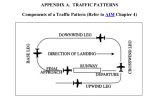
APPENDIX A. TRAFFIC PATTERNS
5. Final approach. A flight path in the direction of landing along the extended runway centerline from the base leg to the runway.

If the distance between the aircraft is such that the traffic on final is not forced to take evasive action, then the "remain well clear" requirement of 91.113 would appear to be satisfied, so my personal non-authoritative opinion is that the "cut in front of" prohibition would not come into play in that circumstance.
Totally agree. If you arrive after the plane in the pattern has landed and is off the Rwy, no problem. Same if they are way down in the DW and you come in and land and get off the Rwy before they're on short final, again, no problem.

It's the people that come blasting in, luckily not too many of them, that are on and IFR Approach so get out of my way!!! Or are just oblivious to the pattern or believe they don't need to fly it. They can come from any direction at any time and land.

Do you consider all straight-ins to be bolting in?
Not at all, I do them all the time. But as I mentioned above (and I thought numerous times before), If you don't affect anyone in the pattern in ANY WAY AT ALL, go for it. And a lot of times if you say you're setting up for a Straight In if it works with the pattern, often someone will say, "no problem, I'll extend a little." I'll do that too.
 
Appendix A: “ Final approach. A flight path in the direction of landing along the extended runway centerline from the base leg to the runway.”

Thank you.

Right-of-way is spelled out in the regulations, specifically in 91.113, not in this advisory circular. There are several different definitions of "final" and "final approach" in various FAA publications. It seems arbitrary to say that this definition is the applicable one and not any of the others.
 
My own cfi asked "where are we going"? when I did it properly. I had to show him the phak illustration.
I wish they would redo the illustration. They talk about going out away from the airport and then coming back, but the drawing looks like you just go past the DW and then start turn back into the DW. It doesn't really show you doing the turn to arrive at the normal entry point for the 45 degree entry to the pattern.
 
"Overhead maneuver patterns are developed at airports where aircraft have an operational need to conduct the maneuver." I dont think were going to see that at many airports.

What if I want to stay within the protective sphere of anti-aircraft fire at my aerodrome?
 
My home base is similar to Watsonville in terms of aircraft mix and number of operations. One thing I have begun to hear from jet operators on straight in approaches is reporting time "10-mile final, 2 minutes out." Among all the nonsensical radio calls we've been talking about, this stands out to me as somehting useful.

I've heard those calls too. But most of the corporate jets I see are not that much faster than a Skylane on final, may be 50% faster - 100 knots instead of 75 knots.... Their cruise speed, however, is different.

But 10 miles in 2 minutes is impressive. That's a 300 knots final approach. How long is the runway?
 
The Watsonville case was so egregious with the racing in that it should not be considered of the same category. He was in no position to be making a landing. Almost like he blanked out and let it run.
Or was going to give that meddling kid a fright. And lost track of where the other airplane was.

Ron Wanttaja
 
Or was going to give that meddling kid a fright....

Ron Wanttaja

If that was his motivation, I'm searching for a word to convey how messed up that would have been. Depraved, maybe? Certainly reckless.
 
If that was his motivation, I'm searching for a word to convey how messed up that would have been. Depraved, maybe? Certainly reckless.
Think "Road Rage", but in an airplane. No reason it couldn't happen. Same sort of personality.

The problem is, it's the only explanation that fits the facts. Conflict regarding who had the right-of-way, the twin driver came barrelling at low altitude at a much higher speed than needed for a normal approach.

Ever been "bumped"? I have. Really sounds like this might have been what was planned.

Ron Wanttaja
 
Ah OK, that is surprising. It seems like a pretty simple concept. Fly over the pattern. Descend. Turn back to 45.
I think the problem is that we came up with a name for it so people think its one continuous maneuver. So they overfly and make a descending right turn straight to downwind all in one maneuver.
 
Last edited:
Back
Top