wow! I don't even know what to respond to that. I feel anything I say would be useless.More information is not useful information.

You are using an out of date browser. It may not display this or other websites correctly.
You should upgrade or use an alternative browser.
You should upgrade or use an alternative browser.
Air India 787 Crashes in Western India
- Thread starter kayoh190
- Start date

A1Topgun
Cleared for Takeoff
PF: Why did you do that?
PM: I don't want to die alone!
PM: I don't want to die alone!
AKiss20
Line Up and Wait
Atlas air 2019 and the Ethiopian and Lion Air MAX crashes, among others, per the NTSB. I’m gonna believe them, you know the people who actually do the work, over some guy on the internet.Which 121 accidents remain unsolved which a camera would have solved?
More information is not useful information. Perhaps you're being unintentionally obtuse.

NTSB again calls for cockpit video recorders
The US National Transportation Safety Board’s (NTSB) long-running quest to have video cameras installed in aircraft cockpits continues, with the agency again recommending that regulators require the recorders.
I don’t buy the pilot privacy argument. While I’m a very large advocate of worker rights, in no other workplace do you generally have the expectation of privacy as an employee, outside of obvious areas like the bathroom. Companies monitor computer assets heavily, record office and shop spaces on security cameras, sometimes search bags and use metal detectors for people coming in and out. Why is a pilot in a cockpit at work any different?
Not to mention there can be legal protections put in place for such footage. You don’t have airlines pulling CVR tapes routinely looking for people bad mouthing the C suite now do we?
Last edited:
Lindberg
Final Approach
Yeah but who are you going to believe, the NTSB or the unions?Atlas air 2019 and the Ethiopian and Lion Air MAX crashes, among others, per the NTSB. I’m gonna believe them, you know the people who actually do the work, over some guy on the internet.
NTSB again calls for cockpit video recorders
The US National Transportation Safety Board’s (NTSB) long-running quest to have video cameras installed in aircraft cockpits continues, with the agency again recommending that regulators require the recorders.www.flightglobal.com

ALPA opposes cockpit video recorders despite continued NTSB push -
ALPA opposes the installation of cockpit video recorders in commercial aircraft, despite the NTSB's continued push for such tech.
AKiss20
Line Up and Wait
In this case, the NTSB.Yeah but who are you going to believe, the NTSB or the unions?
ALPA opposes cockpit video recorders despite continued NTSB push -
ALPA opposes the installation of cockpit video recorders in commercial aircraft, despite the NTSB's continued push for such tech.runwaygirlnetwork.com

dmspilot
Final Approach
- Joined
- Oct 20, 2006
- Messages
- 6,774
- Display Name
- DISPLAY NAME
They are unsolved? Are you sure?Atlas air 2019 and the Ethiopian and Lion Air MAX crashes, among others, per the NTSB.
AKiss20
Line Up and Wait
No. You said video information is not useful information. The NTSB explicitly says video information would be useful. I’m done engaging with someone who can only think on a binary.They are unsolved? Are you sure?

- Joined
- Jun 13, 2008
- Messages
- 9,173
- Location
- Marietta, GA
- Display Name
- Drake the Outlaw
- Home Airfield
- Cartersville, GA
no, but it can definitely help prevent next one
We're down to the apparent fact that a pilot moved the switches intentionally. A camera won't tell us why or help prevent the next one.

Ed Haywood
Final Approach
Might tell us who.We're down to the apparent fact that a pilot moved the switches intentionally. A camera won't tell us why or help prevent the next one.

- Joined
- Apr 18, 2013
- Messages
- 5,324
- Location
- The independent worm saloon
- Display Name
- Mantis Toboggan, MD
Y'know, there are people (plural) contributing to this thread that do or have done "the work." They don't all agree. Believe it or not....I’m gonna believe them, you know the people who actually do the work, over some guy on the internet.
Nauga,
SGOTI
Last edited:
- Joined
- Jun 13, 2008
- Messages
- 9,173
- Location
- Marietta, GA
- Display Name
- Drake the Outlaw
- Home Airfield
- Cartersville, GA
No doubt. And that would be a good thing to know. But I don't think it'll help prevent the next physical mistake or suicide/mass murder via airplane.Might tell us who.
Ed Haywood
Final Approach
Y'know, there are people (plural) contributing to this thread that do or have done "the work." They don't all agree.
Nauga,
and the roster
The official position of the NTSB carries more weight than SGOTI.

- Joined
- May 29, 2014
- Messages
- 4,754
- Display Name
- Kayoh@190
It's useful information for the NTSB, but I don't see how it makes anything safer. I personally wouldn't care as long as they treat it like the CVR, but as always in this industry, who is gonna pay for it? Money is ultimately the reason these things don't happen. I still can't get reliable wifi on my flight deck after a decade after it was installed, and I fly a long range airplane. Inflight weather would help me tremendously, but I'm still flying around with nothing more than a snapshot of what the weather was doing 15 hours ago. Why? Because a repeater costs 3M per airframe.
No doubt. And that would be a good thing to know. But I don't think it'll help prevent the next physical mistake or suicide/mass murder via airplane.
I haven't read the entire report but the time difference between switch activations could be a good indicator. It's my experience that pilots select the switch closest to their seat first then move to the second switch. Thus, if #1 was shut down first=Captain, if #2 was first=F/O.Might tell us who.

billsgs126
Line Up and Wait
Experts disagree? Say it isn't so Joe!Y'know, there are people (plural) contributing to this thread that do or have done "the work." They don't all agree. Believe it or not.
Nauga,
SGOTI

Ed Haywood
Final Approach
Let's unpack that a bit.No doubt. And that would be a good thing to know. But I don't think it'll help prevent the next physical mistake or suicide/mass murder via airplane.
Right now we do not know for sure if it was a mistake or deliberate. Knowing which has important implications for preventing a repeat occurrence. In the absence of further evidence, that will be an informed guess.
Let's say it was deliberate. Knowing who did it would be the starting point in a forensic investigation, which might uncover psychological indicators that were missed, leading to safety policy improvements.
Hypothetically, let's say the FO had been struggling with mental health but had not sought treatment due to job implications. Or say he had a history of taking a medication with a track record of causing mental health issues, like Accutane.
Knowing conclusively who did it would cut the forensic investigation in half, increasing the odds of uncovering useful information on why he did it. That might help catch the next one.
Just my opinion as SGOTI.

SRSLY? Wow, I am surprised by this.Inflight weather would help me tremendously, but I'm still flying around with nothing more than a snapshot of what the weather was doing 15 hours ago. Why? Because a repeater costs 3M per airframe.
Warmi
Cleared for Takeoff
Probably because it needs to be certified and so on …. I cannot imagine an electronic component ( which ultimately is not aviation specific as none of them are ) can cost that much money …SRSLY? Wow, I am surprised by this.
Albany Tom
Final Approach
- Joined
- Jul 23, 2021
- Messages
- 5,703
- Display Name
- Albany Tom
I don't think it implies that he saw the other guy turn them off. I obviously don't know, but think it could've gone like this: One pilot realizes he's loosing power, either by feel or gauge. He does a quick flow to see what might be wrong, and see that the switches are on cutoff. He knows HE didn't do that, and there's nobody else up front and those switches had to be up to get up in the air, they didn't switch on their own, so he knows the other pilot did it. After switching them back on, he doesn't have anything else to do but hope for a miracle and ask the other guy why he did that.Not to mention the explicit question “ why did you do it ?” … obviously, the other guy saw him turn it off.
To me that seems more likely than him seeing it, but that's based on the location of the switches.
Another option is that the pilot who made the comment was the one that turned them off, and made the comment either because he really didn't think he did it, or because he realized he did it but wanted to blame someone else. I'm just bringing this up to point out that one of them stating something doesn't necessarily mean it's what happened. That may be unusual, but this whole thing is unusual.
AKiss20
Line Up and Wait
You know what might clarify who moved the switches? A video. Just saying.

FlightmechH3
Line Up and Wait
- Joined
- Dec 30, 2021
- Messages
- 528
- Display Name
- FlightmechH3
Deliberate act. Someone in that cockpit flipped the fuel cutoff switches.
This appears to be a murder/suicide.
This appears to be a murder/suicide.
Yeah, this is not looking good guys, this might be another MAX type flaw, but this time with the fuel control. There's a interesting point brought up by few indian pilots on this video at 14:00.I don't think it implies that he saw the other guy turn them off. I obviously don't know, but think it could've gone like this: One pilot realizes he's loosing power, either by feel or gauge. He does a quick flow to see what might be wrong, and see that the switches are on cutoff. He knows HE didn't do that, and there's nobody else up front and those switches had to be up to get up in the air, they didn't switch on their own, so he knows the other pilot did it. After switching them back on, he doesn't have anything else to do but hope for a miracle and ask the other guy why he did that.
To me that seems more likely than him seeing it, but that's based on the location of the switches.
Another option is that the pilot who made the comment was the one that turned them off, and made the comment either because he really didn't think he did it, or because he realized he did it but wanted to blame someone else. I'm just bringing this up to point out that one of them stating something doesn't necessarily mean it's what happened. That may be unusual, but this whole thing is unusual.
The point is that the gear didn't go up even though many seconds passed between lift off and the cut-off, so that means there was something wrong.
btw, what happened with that 787 engine shutdown incident years agon in Japan?

deyoung
Line Up and Wait
Explain?Unions
35 AoA
Pattern Altitude
Yeah, this is not looking good guys, this might be another MAX type flaw, but this time with the fuel control. There's a interesting point brought up by few indian pilots on this video at 14:00.
The point is that the gear didn't go up even though many seconds passed between lift off and the cut-off, so that means there was something wrong.
btw, what happened with that 787 engine shutdown incident years agon in Japan?
This is the conclusion you have drawn from the AAIB prelim report?

Hengelo
Cleared for Takeoff
- Joined
- Aug 31, 2021
- Messages
- 1,228
- Display Name
- Hengelo
Is there evidence to suggest this was intentional? Juan Brown seemed to imply a bumpy ride with a hand guarding the throttle could inadvertently hit those switches - if the locking mechanism was janky.
"Engine 1 and Engine 2 fuel cutoff switches transitioned from RUN to CUTOFF position one after another with a time gap of 01 sec"
I'm curious: if the locking mechanism is functioning properly does that time gap between E1 & E2 sound correct for manually throwing both? Sounds a bit fast to me, but I've never touched one.
Warmi
Cleared for Takeoff
Really ?Yeah, this is not looking good guys, this might be another MAX type flaw, but this time with the fuel control. There's a interesting point brought up by few indian pilots on this video at 14:00.
The point is that the gear didn't go up even though many seconds passed between lift off and the cut-off, so that means there was something wrong.
btw, what happened with that 787 engine shutdown incident years agon in Japan?

Kenny Phillips
Final Approach
- Joined
- Jul 29, 2018
- Messages
- 6,572
- Display Name
- Kenny Phillips
I can think of one immediately. Can you not?Which 121 accidents remain unsolved which a camera would have solved?
More information is not useful information. Perhaps you're being unintentionally obtuse.I

jordane93
Touchdown! Greaser!
You can’t inadvertently hit the fuel cutoff switches. Not sure what that guy is talking aboutIs there evidence to suggest this was intentional? Juan Brown seemed to imply a bumpy ride with a hand guarding the throttle could inadvertently hit those switches - if the locking mechanism was janky.
"Engine 1 and Engine 2 fuel cutoff switches transitioned from RUN to CUTOFF position one after another with a time gap of 01 sec"
I'm curious: if the locking mechanism is functioning properly does that time gap between E1 & E2 sound correct for manually throwing both? Sounds a bit fast to me, but I've never touched one.
bonefishpete
Cleared for Takeoff
- Joined
- Nov 10, 2024
- Messages
- 1,362
- Display Name
- Bonefishpete
You can’t inadvertently hit the fuel cutoff switches. Not sure what that guy is talking about
Juan is getting gun shy from calling out things that seem obvious. He had to retract previous statements made on another accident by threat of lawsuits.

Nikhiln25
Pre-takeoff checklist
- Joined
- Jan 16, 2024
- Messages
- 307
- Display Name
- nikhiln25
Is there evidence to suggest this was intentional? Juan Brown seemed to imply a bumpy ride with a hand guarding the throttle could inadvertently hit those switches - if the locking mechanism was janky.
"Engine 1 and Engine 2 fuel cutoff switches transitioned from RUN to CUTOFF position one after another with a time gap of 01 sec"
I'm curious: if the locking mechanism is functioning properly does that time gap between E1 & E2 sound correct for manually throwing both? Sounds a bit fast to me, but I've never touched one.
Juan just got a letter from a lawyer for stating obvious things in his video. I think he will refrain from pointing in one direction on another. He said we will have to see which one it is

Sluggo63
Pattern Altitude
- Joined
- Oct 9, 2013
- Messages
- 1,986
- Display Name
- Sluggo63
- Home Airfield
- KDVT
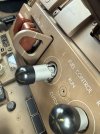
Here’s a close up (best I could do) of the switches in question. You can see there’s a significant lip that the switch has to be pulled out to clear. Maybe 1/8-3/16”. And the spring tension is relatively high pulling the switch. I’d say it’s pretty difficult, if not near impossible to activate the switches inadvertently. 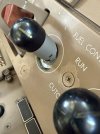
- Joined
- May 29, 2014
- Messages
- 4,754
- Display Name
- Kayoh@190
I'm curious: if the locking mechanism is functioning properly does that time gap between E1 & E2 sound correct for manually throwing both? Sounds a bit fast to me, but I've never touched one.
Sounds about right when I shut down the engines. Maybe a little faster if doing a dual engine flameout in the sim, but in that case they'll go right back on.
MauleSkinner
Touchdown! Greaser!
Sounds a bit slow for accidental switching of both to me.I'm curious: if the locking mechanism is functioning properly does that time gap between E1 & E2 sound correct for manually throwing both? Sounds a bit fast to me, but I've never touched one.

Sam D
Pattern Altitude
- Joined
- Feb 27, 2006
- Messages
- 1,605
- Location
- Petaluma, CA
- Display Name
- Sam D
- Home Airfield
- Petaluma (o69)
Maybe this has been mentioned before - are these emergency switches or are they used as part of normal operations?Here’s a close up (best I could do) of the switches in question. You can see there’s a significant lip that the switch has to be pulled out to clear. Maybe 1/8-3/16”. And the spring tension is relatively high pulling the switch. I’d say it’s pretty difficult, if not near impossible to activate the switches inadvertently. View attachment 142822
View attachment 142823

dtuuri
Final Approach
- Joined
- Apr 21, 2011
- Messages
- 5,819
- Location
- Madison, OH
- Display Name
- dtuuri
- Home Airfield
- Homeless, TBD
See those guarded Stab switches to the left of the Fuel cutoff switches? There was a "STAB POS XDCR" (Stabilizer Position Transducer) warning light that was squawked by the previous crew on the last flight leg. All these are on the same panel, it looks like. I wonder if mechanics had the panel removed to troubleshoot the stab problem.

Matthew
Touchdown! Greaser!
There are 2 detents on each lever. If bumping them accidentally were enough to go to cutoff, then wouldn’t all four of those points show signs of damage or wear?Here’s a close up (best I could do) of the switches in question. You can see there’s a significant lip that the switch has to be pulled out to clear. Maybe 1/8-3/16”. And the spring tension is relatively high pulling the switch. I’d say it’s pretty difficult, if not near impossible to activate the switches inadvertently. View attachment 142822
View attachment 142823
I haven’t looked at the pics in the report closely enough to see what they show.
Edit: the picture I saw wasn’t clear enough.
Sluggo63
Pattern Altitude
- Joined
- Oct 9, 2013
- Messages
- 1,986
- Display Name
- Sluggo63
- Home Airfield
- KDVT
In normal operation they are used to start the engines and then they are used to shut down the engines at the end of the flight.Maybe this has been mentioned before - are these emergency switches or are they used as part of normal operations?

- Joined
- Sep 25, 2019
- Messages
- 829
- Location
- Lancaster, Pennsylvania
- Display Name
- Rick A
- Home Airfield
- KLNS
Interesting turn of of information in the preliminary. Suicides by mentally deranged people who want to take innocent groups of people along with them for a ride in the afterlife are (fortunately) not common, but do happen. Seems a large percentage of mass shootings of innocents (followed by a ritualist suicide of the perpetrator) allegedly have psychotropic meds as a common denominator. Background information on the personal lives of the pilots may be revealing (or not).

Just watched Juan's video. Thought he did a nice job of laying out the timeline. Interesting about the SAIB for the locking mechanism on those switches that was ignored. Considering the mx issues with the rest of the plane, could be those switches were worn out and just got accidentally bumped off.