Air India 787 Crashes in Western India

I have a tangential question: How likely is a foreign country to send its post-crash black boxes to the US for examination? I am specifically asking about the ratio of all foreign crashes against those crashes which resulted in American investigation.
If there is any difficulty in retrieving information, the boxes seem to come to the manufacturer, with a rep from the airline or aviation authority attending.
 
How likely is a foreign country to send its post-crash black boxes to the US for examination?
Very likely. The NTSB and France’s Bureau of Enquiry and Analysis (BEA) provide the top expertise. I was once told one reason was the US and France are the leading producers of CVRFDRs and both countries have specialized labs just for performing the work.
 
Because it doesn't really fit the facts.

What facts are those? The only facts I know are that the aircraft flew past a camera with the RAT deployed and no discernable sound from the engines, and the Captain's mayday call said there was no engine thrust.

Are all those facts consistent with someone intentionally crashing r the plane.

No. And that's not what I said above
So you answered your own question.
 
The reports now are that the AAIB (India's version of the NTSB) hasn't decided where they are going to send the boxes, though due to fire damage experts seem to think sending them to the US is likely.
 
The reports now are that the AAIB (India's version of the NTSB) hasn't decided where they are going to send the boxes, though due to fire damage experts seem to think sending them to the US is likely.
They should just hang on to them for a couple years. People will forget.

A Royal Bahamas Defense pilot stole or borrowed a Westwind jet out of Treasure Cay. He ran it off runway on take off and burned up. Bahamas version of ntsb investigation found pilot was not type rated in said jet. Case closed no further investigation. Keeping it simple.
 
This would never happened to an airplane without computers. I’m waiting to hear how the software killed a bunch of people.
How can you say that when we don't know what caused the crash?

It may have been an automation failure. It could also have been automation mismanagement, accidental disengagement of automation, or a hundred other things. What we do know is that, while the automation isn't perfect, the implementation of automation has significantly increased the safety of airline travel. If today's airplanes were still designed and operated like 727s, we'd have far more crashes than we do today.
I specifically said it’s just a feeling. Which last time I checked was not even remotely close to a statement of fact.

It’s just my gut feeling. And sharing it was actually pretty easy. All I had to do was type it out and hit the post button. So the “how can I say that” question is pretty easy to answer.

Edit to add:

/S
 
Last edited:
Checking back in to see if any report on FDR or CVR yet.
(did not want to review 410 posts and saw nothing in the news)
seems like a bit longer than usual to me.
 
Checking back in to see if any report on FDR or CVR yet.
(did not want to review 410 posts and saw nothing in the news)
seems like a bit longer than usual to me.
Go back one page. tldr? Fire damage , might ship to USA for analysis.
 
. What we do know is that, while the automation isn't perfect, the implementation of automation has significantly increased the safety of airline travel.
We don’t know this.

There have been a LOT of changes to both airplane design and operational practices in addition to automation implementation. You can’t separate the improved cockpit ergonomics, general engineering practice and training regimens from the automation changes. It’s a multi-variant problem without enough output data to break apart the causal factors.

Remember that something as simple as a burned-out landing gear annunciator took down Eastern 401. The bulbs are now LEDs, crews are trained to avoid dual fixation, and every pilot knows this story. How much safer are we as a result of those lessons that have nothing to do with automation?

In contrast, would the 737 Max losses have occurred without the MCAS automation implementation?
 
We don’t know this.
FWIW: If you dig deep enough, you'll find automation and computerization of the industry and aircraft is directly proportional to the increase in safety from the production side to the operational side. And there are mountains of info on that fact. Inversely, what has happened is that with this trend there has been an erosion of the manual skill levels which has been recognized by the FAA, EASA, and ICAO. And from a personal view, I've been around the industry long enough to see this change.
 
FWIW: If you dig deep enough, you'll find automation and computerization of the industry and aircraft is directly proportional to the increase in safety from the production side to the operational side. And there are mountains of info on that fact. Inversely, what has happened is that with this trend there has been an erosion of the manual skill levels which has been recognized by the FAA, EASA, and ICAO. And from a personal view, I've been around the industry long enough to see this change.
Correlation =/= Casuation.
 
Define automation.

Is AP automation? Has it harmed more humans than it has helped? If so, why are we stupid enough to keep using it?

Again, while automation is not perfect, and it has been a cause of some accidents, it has saved more lives than not. And just not in aviation, but various other industries as well.

And many of us know that correlation does not necessarily mean causation.
 
...the implementation of automation has significantly increased the safety of airline travel. If today's airplanes were still designed and operated like 727s, we'd have far more crashes than we do today.
But wouldn't you rather have the chance to keep the engines running on takeoff despite the projected better industry-wide accident rate if the engineers make the call instead of you?
 
We don’t know this.

There have been a LOT of changes to both airplane design and operational practices in addition to automation implementation. You can’t separate the improved cockpit ergonomics, general engineering practice and training regimens from the automation changes. It’s a multi-variant problem without enough output data to break apart the causal factors.

Remember that something as simple as a burned-out landing gear annunciator took down Eastern 401. The bulbs are now LEDs, crews are trained to avoid dual fixation, and every pilot knows this story. How much safer are we as a result of those lessons that have nothing to do with automation?

In contrast, would the 737 Max losses have occurred without the MCAS automation implementation?

No, clearly it is not the LEDs( however useful these are ) , it is the computers in every form and fashion.
 
The bulbs are now LEDs
They are? I've never flown an airplane with other than incandescent bulbs on the instrument panel annunciators. J32, CRJ, DC8, DC9, 737, 757, & 767.

In contrast, would the 737 Max losses have occurred without the MCAS automation implementation?
MCAS did not make the airplanes unflyable. I was trained in runaway stabilizer events in the CRJ, DC8, DC9, 737, 757, & 767 all before the first MAX flew. The procedure should be familiar to every pilot flying an airplane with powered trim. I've flown the unscheduled MCAS activation three separate times in the MAX simulator and several more runaway stabilizer events in NG simulators since initial training. All you have to do is keep flying, and trimming, the airplane. Doing the runaway stabilizer procedures will stop the MCAS activations but you can fly the airplane indefinitely without doing it, as long as you keep trimming out its inputs. The 737 Speed Trim System trims the stabilizer, in the opposite direction that we want, every single time we accelerate or decelerate while hand flying. It happens so often, you don't even think about it.

But wouldn't you rather have the chance to keep the engines running on takeoff despite the projected better industry-wide accident rate if the engineers make the call instead of you?
Facts not in evidence. We don't know that the automation shut down the engines. I do know of mechanical failures that have shutdown engines or taking the engine to max thrust when it wasn't supposed to. The question should be which system is less likely to do either of those things. Expecting one system to be infallible is not realistic. We need to know which is safer.
 
Facts not in evidence. We don't know that the automation shut down the engines.
I was thinking in terms of design philosophy not the specific cause of this crash. Let me posit that the philosophy ought to be to not task automation with a task a captain wouldn't want the copilot to perform without the captain's knowledge.
 
This is eerie. Guy takes a video during the previous leg and gets off the plane before the crash. Even the background sounds are spooky. (sorry if previously posted).

One wonders if maintenance got involved after landing to try to fix the AC and passenger entertainment consoles or lighting. Further wondering how the FADEC would respond if the ground test enable switch were accidentally left in the "enable" position during takeoff. :dunno:
 
Are we into a CYA phase? I was just comparing timelines to the ‘MAX’ accidents. The 2nd Max accident was March 10th 2019. On the 11th, China grounded Max flights, the FAA did the same in the USA in the 13th. Without delving into the MCAS details, I think most will agree the design was in need of a rework.

Yes, there was the Ethiopian accident months prior to build off, but in a very few days details were evident. I understand the ‘wait for the investigation’ way of thinking, though the void allows room for wild speculation.

I don’t see any bulletins being sent to Boeing, no mention of ‘contaminated fuel’ sent to other operators at the airport. No cautions to other 787 operators about insidious failures that can sneak up on a crew.

I thought maybe they’d leak out a tidbit when most of the media was talking about the bunker busters the other day. Just a few morning musings, also not taking any position on what the cause was for the accident.
 
I thought maybe they’d leak out a tidbit when most of the media was talking about the bunker busters the other day.
Perhaps they did.
Indian Authorities Order Air India To Terminate 3 Employees Over Safety Lapses Days After Tragic Crash
The cited source isn't the best, and the terminations may have little to do with the crash. The crash caused a spotlight to be shined on Air India and the Directorate General of Civil Aviation (DGCA) found numerous issues.
 
Correlation =/= Casuation.
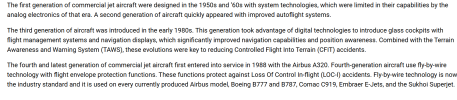
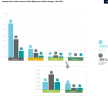
You’ll find aviation safety is one of the most studied, researched, and investigated issues around. Every accident is reviewed for correlation and causation at many different levels, which in most cases is actually required by law. So, as I mentioned, there are decades of data that will show how technology advancements have increased safety and, in some cases, it was the accident that led to that advancement. Below is one overview example.

1750681607735.png
1750681723016.png
1750681929397.png
 
I don’t see any bulletins being sent to Boeing, no mention of ‘contaminated fuel’ sent to other operators at the airport. No cautions to other 787 operators about insidious failures that can sneak up on a crew.
That likely means it's not a problem with type design, fuel, etc and was a one-off thing not likely to affect other types or airlines.
 
This is eerie. Guy takes a video during the previous leg and gets off the plane before the crash. Even the background sounds are spooky. (sorry if previously posted).

One wonders if maintenance got involved after landing to try to fix the AC and passenger entertainment consoles or lighting. Further wondering how the FADEC would respond if the ground test enable switch were accidentally left in the "enable" position during takeoff. :dunno:
Very interesting.
Documented electrical problems immediately prior to the incident would certainly be relevant. Wonder if any dash-8 pilots can see a possible correlation.
 
This is eerie. Guy takes a video during the previous leg and gets off the plane before the crash. Even the background sounds are spooky. (sorry if previously posted).

One wonders if maintenance got involved after landing to try to fix the AC and passenger entertainment consoles or lighting. Further wondering how the FADEC would respond if the ground test enable switch were accidentally left in the "enable" position during takeoff. :dunno:
Hopefully the IFE isn't connected to the flight controls.

1750775528445.png
 
I'm getting wild AI spam on facebook feeds proclaiming every cause imaginable from every source. No wonder the public is ignorant when misinformation is blasted at them. Patience.
 
Back
Top