A & P Second Career

gregjay

Pre-Flight
Joined
Jun 2, 2021
Messages
68
Location
Somewhere between Kansas and Oz
Display Name
gregjay
Has anyone gone and become an A & P after retiring from their first Career? Don’t need a job that pays all the bills. Seems like A & Ps will always be in demand to work on GA aircraft. Seems like it might be a silly idea at 62. If anyone has done this, how did you go about it?
 
Setting up to do it when I retire. Not a lot of guys that do fabric or wood anymore. Those that do, are stacked with all the work they can stand. Do good work at a fair price and deliver when promused and you should have all the work you want.
 
I've thought about getting a&p certification just so I could do my own condition inspections on my own aircraft. It seems increasingly more challenging to find the required licensed individuals. Sure would be nice to have a pathway for a limited certification to inspect your own aircraft.

I have read some reports of community colleges with an a&p program and free tuition for seniors. That would make it pretty attractive if one is available near your location.
 
I'm making moves in that direction, but it's a long way off. I intend to do the experience route, logging hours working on my own airplane and building an experimental (or two). Then go to a test prep school. I've got about 600 hours of the 4800.... If i was fully retired, I'd definitely go to a full time school and just get it knocked out.

There's a guy on my field who flies a little for a couple people, and works on airplanes here and there, but is mostly retired. Just doing it because he wants to. That's where I'd like to be. He started out as an a&p though.
 
Yes, I've thought about it a lot.

There have been numerous frustrations dealing with planes and getting work done, that is what precipitated my looking into it. The nearest program is an hour away at a community college. I applied, got accepted, started building a tool chest. The program would be two years long, include summers, generally a 7-3 schedule, a bit better in the summer. I heard in my area that GA shops would hire them for about $24/hr but had a tough time getting or keeping help as they could get jobs at larger places for much more, maybe double, and not need to buy their own tools. The instructors seemed easy to talk to and I am sure it would have been enjoyable.

Several things happened that had me change my mind though. Principle among those was buying an experimental which potentially opens up the number of people to do the "inspection" coupled with being allowed to do the work. There are still some frustrations though, building my own experimental and getting the repairman's certificate is in the works. Going this route seems much more fulfilling than going the school route. Building permit for the shop expected this week.
 
Last edited:
I'm making moves in that direction, but it's a long way off. I intend to do the experience route, logging hours working on my own airplane and building an experimental (or two). Then go to a test prep school. I've got about 600 hours of the 4800.... If i was fully retired, I'd definitely go to a full time school and just get it knocked out.

There's a guy on my field who flies a little for a couple people, and works on airplanes here and there, but is mostly retired. Just doing it because he wants to. That's where I'd like to be. He started out as an a&p though.
Sounds like you need a couple more engines to overhaul to get those hours
 
Last edited:
Has anyone gone and become an A & P after retiring from their first Career? Don’t need a job that pays all the bills. Seems like A & Ps will always be in demand to work on GA aircraft. Seems like it might be a silly idea at 62. If anyone has done this, how did you go about it?
No I haven't done it.
I have been down this road when I was 62, 3 years ago.
I enrolled in a community college for a semester that is at our airport.
It is a 2 year program if you do it full time.
I went at night after work. In that case it would take 3.5 years doing it at night.
I did not have the patience to waste that much time. Because there was a lot of wasted time. I am too old to do that. I rather be flying or working on my own plane or my friend's plane. I have 2 AP/IA that I work under. So I really don't need a A&P cert.
It was supposed to be 4-5 hours a night and many times there was only an hour worth of class and some days they would just let you leave early. Why did I drive out here for an hour worth of school? They took so many breaks to use up the time. Some of it was for 21 year old's. That us older people learned long ago.
I spent 2500 bucks for that semester. I did not buy any tools because at 62 with 3 shops I have plenty of tools. I didn't get to the point of bringing in tools although they wanted to sell me lot's of Snap On tools at a discount. That would have been nice.
I met a guy a couple years younger than I that stuck it out for almost 4 years at night and got both his A&P. I talked with him a year or 2 later and he said he is still working his original job because the best A&P job he could find paid 42K a year and he said he was making way more than that at his reg job. He wanted to rebuild a 150 he told me, so far he hasn't.
I have many hours working on planes with a pretty thick AMT log filled out since 2017. With 2 IA willing to sign off my work I'd rather be flying than sitting in a class room at night after work wasting serious amount of time. I don't know how many more years that I can fly, so I want fly as much as possible now.
 
Last edited:
You don't need a ticket to work in a shop. So, work in a shop for a few years under supervision of other A&Ps....log it. Then go to Baker's and get the tests passed.....and the tickets. It ain't easy....it's lots of work to pass three written tests and practicals. I'm glad I did this before going to college. I'm not sure if I'd have the energy or patience to do it now.
 
Has anyone gone and become an A & P after retiring from their first Career?
Definitely an option. In the past helped a number of people get an A&P later in life to include a couple well into their 50s. However, its the context you see yourself using an A&P that may limit what you could do or want to do with your A&P certificate. Perhaps review the multitude of FAA guidance documents to establish a basic understanding of the A&P process and requirements? In addition there have been a few threads on PoA that address this same question you might find interesting.

I intend to do the experience route, logging hours working on my own airplane and building an experimental (or two).
While at one point the time spent building an E/AB was not applicable toward an A&P that has all changed with a revision to Order 8900.1 last year. That revision also expands the guidance for experience based A&P applicants and would highly recommended you review those changes. And once you do that I would make an appointment to discuss with a local FSDO ASI on how your experience recording fits in now.

There are still some frustrations though, building my own experimental and getting the repairman's certificate is in the works.
Maybe in the interim look into getting a LSR-M certificate and work on local LSAs to move things forward? Most your LSRM time will go toward your A&P experience so you lose nothing except the cost/time of getting the LSRM.
 
One angle worth considering -- once you've wrapped up that first career and now have the assets to pursue something like A&P... you'll be signing little log entries of liability with your name. Insurance is damn expensive for A&P. My last quote was $13,000/yr for up to 100K in billed work.

My aircraft insurance broker found some way to insure me for work on my own plane -- still not 100% sure how that works, but I'm keeping the emails so I can lean on her E&O coverage.
 
My aircraft insurance broker found some way to insure me for work on my own plane -- still not 100% sure how that works, but I'm keeping the emails so I can lean on her E&O coverage.
Check how your policy is written. All my owner-assist customers were covered by their existing aircraft liability when performing preventive mx and other forms of mx under my supervision. It definitely can be a gray area in some cases but it didn't seem to be a problem back then. Since you would be the named holder for both the aircraft policy and any mx provider policy I think it would be doubtful for you to sue yourself?? Now if you had partners in the aircraft, then it may create some sort of standing in a legal sense depending how your partnership was written up.
 
Check how your policy is written. All my owner-assist customers were covered by their existing aircraft liability when performing preventive mx and other forms of mx under my supervision. It definitely can be a gray area in some cases but it didn't seem to be a problem back then. Since you would be the named holder for both the aircraft policy and any mx provider policy I think it would be doubtful for you to sue yourself?? Now if you had partners in the aircraft, then it may create some sort of standing in a legal sense depending how your partnership was written up.

Definitely partners would be an issue. She explained it that as long as I did approved, legal mx, I was covered for liability arising from that -- so I think if I sell the plane, and later someone flies into the busload of orphans, and they want to name me in a suit for that work (that I did while covered), they'd have a duty to defend me.

Definite gray area and not where I like to live, but it is at least a small fig leaf over my liability. :) I'm careful not to do heavy mx that might earn me an invitation to trial. :D
 
Definite gray area and not where I like to live, but it is at least a small fig leaf over my liability.
But how would that be different for an owner who performs all the preventive mx he can legally sign off then sells the aircraft? He would follow the same Part 43 guidance you do under your A&P where he could legally refurbish the entire aircraft inside and out under his PPC and would be liable for it until it was refurbished again. Your A&P simply allows for a larger range of task to perform. And just for context, I'm still technically liable for all my past mx and I seriously doubt my previous policy providers would be liable since I'm not a current policy holder. Regardless, just trying to see what you see especially from an owner standpoint with preventive mx.
 
But how would that be different for an owner who performs all the preventive mx he can legally sign off then sells the aircraft? He would follow the same Part 43 guidance you do under your A&P where he could legally refurbish the entire aircraft inside and out under his PPC and would be liable for it until it was refurbished again. Your A&P simply allows for a larger range of task to perform. And just for context, I'm still technically liable for all my past mx and I seriously doubt my previous policy providers would be liable since I'm not a current policy holder. Regardless, just trying to see what you see especially from an owner standpoint with preventive mx.

I think it's the same, and to your note, you're restrained by your certificates to meet their definition of "legal maintenance" -- but the owner policy will allegedly cover you as long as you act within those limits -- so preventative mx for an owner, full scope for me as an IA, but I would think zero coverage for an owner who did A&P things without those certs. :) That owner would of course need to log their illegal deeds to be discovered, to be sued. Invoking the "Squawk Fairy" and not being discovered is probably stronger coverage than whatever my owner policy provides ($1mm).

Owner policies do have a duty to defend for acts committed during the policy coverage period, so I think that's a LOT stickier for mx work than pilot misdeeds -- I don't think they've considered the position very well by including it in the liability coverage, honestly. Still, as long as they're mortally afraid of being found acting in bad faith, I expect they'd brass up if I got sued for the motor I hung 3 years ago :) Then they'd add new language excluding maintenance actions after they paid out a million.

What I think happened in my case is my broker asked a clarifying question of my underwriters (STARR) which created sort of an override/exemption and paper trail of their acceptance/acquiescence. The policy language itself is somewhat fuzzy. These are the important parts:

IANAL but it appears to me that liability (for the insured) is covered for anything caused by the maintenance on the airplane, irrespective of who turned the wrench.
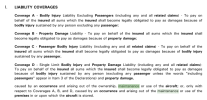
1742490257358.png

There is an even murkier situation where they will cover liability up to 1 year after the sale of the plane -- so not as infinite as I had remembered --
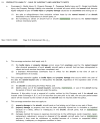
1742490417353.png

Two important notes on the above -- D2 is a bit nasty as they're calling out that they will not cover situations where the maintenance was found inadequate. (and I'd argue that's the hottest seat for one doing their own maintenance -- an onward claim that it was deficient)

A2 means no intent for profit -- so this gets a little hinky with an LLC owned aircraft like mine -- I can't charge my LLC for my A&P time as it would imply a profit motive and negate whatever coverage is here.


It is D2 above that itches my brain, though, and why I asked my broker to clarify. Her email (right or wrong) interpreted the policy to mean they would defend me against such an allegation, but not in the case of gross negligence like a pencil whip/fraudulent mx. If she got it wrong, her own broker Errors & Omissions policy will be summoned to cover her misinterpretation and pay my legal bills :)

Woof though. It's not a straightforward situation and needs some mental gymnastics. Best to ask the broker to lay out the cases where it does and does not work and rely on their interpretation/carrier answers (and ultimately E&O -- don't let them hand-wave away answers, pin them down in writing/email). Not all carriers have the language above.

$0.02 :)

 
Last edited:
I'm a few years from retirement, but I looked into doing something similar to what you are thinking. There's a vocational school near me that offers an A&P program, but their main thrust is geared solely towards those fresh out of high school. There's a weekend and evening program as well, but it would take years to complete. The worst part is, there are so many required classes that would be so easy to test out of and skip, but that's not an option. I'll be damned if I'm going to waste my time and money taking multiple classes that I could probably teach. While there are some classes i could probably benefit from, it appears that more than half would be a total waste of my time. If I can pass the test, why do I need to log hours in classes that will teach me nothing I don't already know? The experience path to an A&P is another option, but what would be ideal is a school that would use some sort of placement test and then let you take only the classes you still might need to take in order to be able to pass the test. Unfortunately, there's no such path available for people like me.
 
Kevin: Many schools will let you bypass classes that you can document experience in the subject. Where I'm headed to school, they wanted a bunch of documentation so that I could bypass a lot of the basic classes. Unfortunately, with my work, there is no way to document what I've been doing without a bunch of back and forth between me, my supervision, company lawyers and DoD. It would take less time to simply take the classes and that's what I told the admin people at the school.
 
Has anyone gone and become an A & P after retiring from their first Career? Don’t need a job that pays all the bills. Seems like A & Ps will always be in demand to work on GA aircraft. Seems like it might be a silly idea at 62. If anyone has done this, how did you go about it?
I retired 10 years ago at age 58. I started working as an aeronautical engineering consultant. Made a lot of good money and continue to this day. I look back and wish I had at the 5 year point quit the consulting gig and gotten my AnP. I’d say do it and do it through a tech school in the 2 years required versus journeyman building up the 2000 hrs of experience under a licensed AnP. Of course all that good consultant money now go to those good AnPs who maintain my plane, so probably a wash, but I was able to keep flying versus sitting in class! YMMV. :thumbsup:
 
Last edited:
(and I'd argue that's the hottest seat for one doing their own maintenance -- an onward claim that it was deficient)
In my experience, if there is legal action you would be listed first as owner and then possibly as the mechanic if listed as all. The owner is ultimately responsible for the airworthiness of the aircraft from a regulatory side and as the person with overall responsibility for the "standard of care" for their passengers. Now if we drill things down into the weeds, we start to look at the mx providers role. But since you are also the owner your still stuck especially if the mx provider carries no insurance like some do. You definitely have taken this a lot further down the rabbit hole than I have. But based on my time working in certain circles, your main liability is as owner and not as the mechanic. At least thats my .02. :)

So...you're still liable after it's gone thru several annuals?
Yes. But that doesn't mean the IA couldn't get dragged into it as well. Plenty of examples out there on both the regulatory and tort side. Part 43 is a performance standard that doesn't go away unless someone performs the identical maintenance AND signs it off. Unfortunately GARA only protected OEMs and not the mx providers.

If I can pass the test, why do I need to log hours in classes that will teach me nothing I don't already know?
Simply because the Part 65 requirements for an A&P are governed by the ICAO agreement (Chicago Convention) under Annex 1. And for context, the US has the easiest mechanic certification system of all other ICAO members. That said, there was a major rewrite of Part 147 several years ago that started a shift from the existing prescriptive rules to a more performance-based structure.

In addition, there was a shift to move these mechanic training requirements to a more familiar “educational” type system found with universities and colleges. Its my understanding these changes would address distance-learning opportunities and previous experience credits applied toward Part 65 certification. However, I do not know the current status of these changes. There are several guidance docs that discuss this, so perhaps find those docs and inquire with your local A&P school on their status?
 
Something I also wanted to do, it’s a huge time investment and I have other goals at the moment. Maybe one day.
 
I'm a few years from retirement, but I looked into doing something similar to what you are thinking. There's a vocational school near me that offers an A&P program, but their main thrust is geared solely towards those fresh out of high school. There's a weekend and evening program as well, but it would take years to complete. The worst part is, there are so many required classes that would be so easy to test out of and skip, but that's not an option. I'll be damned if I'm going to waste my time and money taking multiple classes that I could probably teach. While there are some classes i could probably benefit from, it appears that more than half would be a total waste of my time. If I can pass the test, why do I need to log hours in classes that will teach me nothing I don't already know? The experience path to an A&P is another option, but what would be ideal is a school that would use some sort of placement test and then let you take only the classes you still might need to take in order to be able to pass the test. Unfortunately, there's no such path available for people like me.

In my area (NC) similar exists, but just for the degree.
Requirements to test and gain licensure are AP class specific.
 
One angle worth considering -- once you've wrapped up that first career and now have the assets to pursue something like A&P... you'll be signing little log entries of liability with your name. Insurance is damn expensive for A&P. My last quote was $13,000/yr for up to 100K in billed work.

My aircraft insurance broker found some way to insure me for work on my own plane -- still not 100% sure how that works, but I'm keeping the emails so I can lean on her E&O coverage.
If one is working at an established shop, does the shop carry the insurance? That’s a big number.
 
If one is working at an established shop, does the shop carry the insurance? That’s a big number.

I would hope so -- when I owned a shop, yes. The % also goes down as the billing volume goes up so just like flight school insurance, they're encouraging you to "make it up in volume" :)
 
I quit working on airplanes. Get the A&P, you will never regret it. I quit working on airplanes a few years ago. The lability was more than I could stand. When I had nothing, there was nothing to get. So making some money doing what I wanted to do anyway was fine. As my career path widened, it became just a sideline that I enjoyed. But other sideline opportunities paid a lot more. With a lot less risk. So the airplane side lines, got, well sidelined. So as retirement loomed, I found that I couldn't take the risk anymore. At my age I can no longer risk my life savings working on somebodies airplane for fun. Or teaching for that matter. It's the savings nest egg that must see us through our old age. I can't risk it. I would love to do a bit of instructing/mentoring. I would love to wrench on a few interesting airplanes, but, sorry. I just can't risk it.
 
one of few local A&Ps quit to work at local car dealership for more $ than aero shop he was at ...says he can make up to $70/hr there. as the trades job market continues to b squeezed and car shops are charging over $200-300/hr labor rates, the A&P jobs paying $30-40 will have a problem keeping A&Ps.....at least for piston planes. Many are also inticed by the modern automotive world's computer diagnosis and modern equipment.
 
point being, I think it will be opportunity for a good part time gig as the demand for A&Ps will increase as shops will likely continue to contract as owners retire out.
 
does the shop carry the insurance?
In most cases, yes. You could also look to contracting to a shop which you usually fall under their insurance coverage as well. However, someone straight out of school with limited experience may have limited opportunities. Perhaps check out your options now and talk with various shop owners on what you want to do. In some locations an extra certified person can be a welcomed relief while you build experience.
 
Has anyone gone and become an A & P after retiring from their first Career? Don’t need a job that pays all the bills. Seems like A & Ps will always be in demand to work on GA aircraft. Seems like it might be a silly idea at 62. If anyone has done this, how did you go about it?
Issue 1 is getting into a school. Most are full with a wait list.
Issue 2 is it’s a 2 year project.
Issue 3 is your age.

Do I know people who have done this? Yes, several. But, it’s a lot of effort for a 10 year career.

As an alternative, go get a job as a parts person in an FBO or work as an apprentice program to get the experience.
 
There’s a difference between getting an A&P license and having the experience of working on airplanes. It takes a while to know what to look for and how to correct it and only experience will teach you that. My first job as an A&P in 1985 was working in GA. I thought I knew airplanes but actually working on them showed me I had a lot to learn. Much like getting your PPL, it’s just a ticket to learning.
A retiree getting an A&P should realize that nothing can replace experience but experience itself.
It’s been 40 years since I worked in GA (I retired from McDonnell/Boeing) but wouldn’t consider working on my own or someone else’s airplane until I worked in a shop enough to know what I was doing. Just a heads up on keeping you (hopefully) safe.
 
As an alternative, go get a job as a parts person in an FBO or work as an apprentice program to get the experience.
Going the experience route and you have to document 6000 hours performing the work. Going to school is only about 3000 hours.
 
Last edited:
In my 30’s I took advantage of the opportunity to apprentice for the ratings. It was awesome. Can’t imagine doing all that work after retirement.
 
Going the experience route and you have to document 6000 hours performing the work. Going to school is only about 3000 hours.

Has this changed? I did experiential route and needed 2,400 hours for both A and P side, as well as 80% topic coverage in FAR 147 apdx C
 
Has this changed? I did experiential route and needed 2,400 hours for both A and P side, as well as 80% topic coverage in FAR 147 apdx C
The stated requirement is 30 months of work experience, actually performing the work, not observing. That would be 4800 hours of actual work. In reality, you would be closer to 6000 hours of shop time to get it, as you won't really be turning wrenches 8 hours a day, 5 days a week for those 30 months. Chasing parts, setting up for the job, waiting on inspection, doing the documentation and everything else that goes on in a shop, cuts the actual work hours down every day some.
 
Cape Cod Community College located at KPYM. Free tuition if you don’t have a degree. FAA testing done on premises. I’m a part time instructor there. We had a guy graduate and pass his FAA tests at age 66, many others in their 40’s, 50’s and a few in their 60’s. Many are interns/apprentices at local shops and airlines. Good deal.
 
Eric: How long is the waiting list to get in there? Locally, it's running about 18 months for the school nearest me. Right now, I might be able to start the fall of 2026, but that's going to heavily depend on whether I retire in April of 2026 or continue working for a while longer.
 
We have open enrollment- no waitlist right now. We have just doubled our shop hangars. We are typically running 75-100 student starts per semester. Contact CCCC and schedule your if you’re interested.
 
You guys are doing good if you have no waiting right now. Too far away for me, as I'm in the DFW area and still work full time. Retirement is coming in either April of 2026 or Christmas of 2027. MY local school had almost 250 at the info session I was in, split between the A&P group and the flight school group. The school where I got my technical degree, has about a 30 month wait list to get into either the A&P or the Flight school groups.
 
The stated requirement is 30 months of work experience, actually performing the work, not observing. That would be 4800 hours of actual work. In reality, you would be closer to 6000 hours of shop time to get it, as you won't really be turning wrenches 8 hours a day, 5 days a week for those 30 months. Chasing parts, setting up for the job, waiting on inspection, doing the documentation and everything else that goes on in a shop, cuts the actual work hours down every day some.

Oh that is ringing a bell, maybe my memory is faulty and I had to show 2400 each side for A and P legs. I remember getting into a snit with Portland FSDO over their interpretation of the 30 months x 4 weeks x 40 hours or something I had not accurately documented (but in the end was able to)
 
Back
Top