What qualifications must a CFI have to train me to fly "my" Cessna T182T

Subsonicflight

Filing Flight Plan
Joined
Feb 18, 2026
Messages
27
Display Name
Stanton
After much shopping, studying, and research, I'm on contract to buy an '06 Cessna T182T. I'm actively reading the pilot/owners manual, but not certain whether my Insurance company may want me to have type-specific training.

Q: Can any CFI with experience in say a standard normally aspirated, steam gauge 182 teach me to fly a G-1000 equipped Turbo 182 to get the required 10 hrs for Insurance?

If I must find a CFI with that specific (T182T) type experience, any CFI recommendations/schools are much appreciated. I'm in Central (Space Coast) FL, the plane is awaiting my prebuy scheduled 10 days from now, in Indiana.
 
This is the question you want to ask your insurance provider. As far as the FAA is concerned yes, any CFI rated to operate the aircraft can teach you in it. Insurance is more restrictive than the FAA in these cases so you'll want to start there. If your insurance just says "a cfi" Id clarify of they want the CFI to have specific experience.
 
As Brian said, all that is legally required to teach in a turbo 182 is a High Performance Endorsement. You would have to discuss specifics with your insurance broker, as they may require the CFI to have experience in turbocharged piston. As for avionics, finding a CFI willing to teach in a G1000 shouldn't be an issue.

Craig
CFI/CFII/MEI/AGI/IGI
 
This is the question you want to ask your insurance provider. As far as the FAA is concerned yes, any CFI rated to operate the aircraft can teach you in it. Insurance is more restrictive than the FAA in these cases so you'll want to start there. If your insurance just says "a cfi" Id clarify of they want the CFI to have specific experience.
That's not true in singles. As long as someone else is pilot in command, any instructor rated airplane single engine can teach in any single. Multiengine you mave stricter requirements.
 
Check with your insurance company to see if they have requirements. But do you want to get transition training from someone that can legally teach in the plane, but does not know much about it???

Spend the time and find someone that has a lot of time in a 182. And one that knows about the Turbo will even be better. They'll be able to give you more tips about flying at higher altitudes and power management.
 
I've taught in one for about 25 hours a while back and flew one last week, too. That's really not that much, but I can say I've done it.

Yes, other instructors can legally teach you to fly it, but... the big thing you need to ask yourself, is whether or not you should want them to teach you things that they have barely learned themselves. You've got a fairly fast, nose-heavy plane, that also has the turbo, which a lot of CFI's that will be eager to jump in your plane with you might know about 5% more than you already know from researching the plane you want to buy.

I'd ask around, look for someone with the experience to meet the insurance requirements, but more importantly, a good working knowledge of the G1000 system, the engine that you have, and can actually give you value even if they're a little more expensive. If you can combine some of that with the ferry flight home, that's the best way to get more value from the effort.

Someone who doesn't know that stuff could end up costing you money in the long run.
 
Just a 182 with a turbo. Very easy to manage the power as has fully automatic pressure controller that works well. Used to use 27/2300 ~15gph but think the G1000 versions have a 25” recommended setting. Pretty much same fuel flow for a given power at any altitude. Huge turbo so critical altitude is above certificated ceiling through which it will easily climb if necessary.

Read book thoroughly and understand what the turbo is and what it’s doing. You’ll be ahead of the vast majority of CFIs who oddly have a license to train in everything even when they only often know about a few common models.
 
You should see a theme here - it's all up to the insurer what they require.

Some years ago I was hired to fly a Baron G58 for the owners. Now, I had Baron 58 experience, and I had G1000 experience, (and have taught others in such airplanes) but I did not have G1000-in-a-Baron 58 experience. So the insurer required me to get a checkout with a CFI who did have some certain amount of G58 time. Not just 58 time, not just G1000 time, but G58 time. That was actually not easy to find locally, it's not like Beech ever made a ton of them, but eventually I was able to find one and we did the checkout. In the interim there was a lot of back-and-forth between me and the insurer and owner about lowering the requirements for the CFI (which I think they did to some extent) given my experience in similar aircraft.
 
To summarize…

The FAA says CFI ASE with a high performance endorsement.

Your insurer may limit that. That limitation will typically be in the same paragraph that says you require 10 hours. (As with most insurance questions, read the contract.) Also, insurance can change the requirement for specific CFIs based on such things as related experience.
 
So ... you let your instructor fly it back, on his insurance, to get some hours?
 
You should see a theme here - it's all up to the insurer what they require.

Some years ago I was hired to fly a Baron G58 for the owners. Now, I had Baron 58 experience, and I had G1000 experience, (and have taught others in such airplanes) but I did not have G1000-in-a-Baron 58 experience. So the insurer required me to get a checkout with a CFI who did have some certain amount of G58 time. Not just 58 time, not just G1000 time, but G58 time. That was actually not easy to find locally, it's not like Beech ever made a ton of them, but eventually I was able to find one and we did the checkout. In the interim there was a lot of back-and-forth between me and the insurer and owner about lowering the requirements for the CFI (which I think they did to some extent) given my experience in similar aircraft.
Funniest version of the “similar aircraft” I’ve encountered was when a friend wanted to have me as an approved pilot in his Ovation. With zero time in type, I placed an asterisk on the “0” and disclosed my other Mooney time and my A36 time (same engine) on the application.

I was hoping to reduce the checkout requirement to something manageable.

To my shock, the underwriter approved me outright. I thought they were nuts.

(BTW, the T182T is a terrific 182 variant)
 
Last edited:
Aside from insurance, I'd be thinking about filling the gaps in your own experience. What's different about this plane vs what you currently have experience with and what type of flying are you doing. VFR only, the G1000 you can fiddle with to figure it out. IFR, you'll want someone who really understands it. Same with turbo, adjustable pitch prop etc.
 
The insurance is likely to let you use anyone you want unless the insurance is including a waiver of subrogation for the CFI. But, a check out in a new make and model for an owner is ideally more than you get for a rental. Find a CFI with a good amount of experience in your model 182 and its avionics.
 
CFI rating without high performance experience. Is that a thing? Wow.
Of course. Nowhere in any of the requirements for any of the ratings leading up to CFI (or even ATP for that matter) is there a requirement for experience in >200 hp airplanes. The pilot mills probably churn out such CFIs every day.
 
CFI rating without high performance experience. Is that a thing? Wow.
You have to have access to a high performance airplane to get a high performance endorsement and/or experience. Other than Cirrus-based flight schools, I’d guess very few operate them.

And as Russ indicated, the puppy mills without them are generating a large percentage of instructors.
 
CFI rating without high performance experience. Is that a thing? Wow.
I flew with two CFIs who didn’t have a high performance rating. One was a graduate of a Part 61 school that had an Arrow for complex but no HP planes. The other was a graduate of ATP who only flew 172s so was missing her complex and HP endorsements.
 
CFI rating without high performance experience. Is that a thing? Wow.
Not only a thing but fairly common. How many flight schools within, say, a 50 mile radius from you have a HP single? Unless you are some place like Denver, where high D-Alt makes HP airplanes a good rental option, probably not that many. I'm at a fairly busy nontowered airport with four flight training operations and except, of course for the Cirrus operation, have see one in the past 13 years. It didn't last long on leaseback.
 
CFI rating without high performance experience. Is that a thing? Wow.
Actually one of the complaints hear from examiners is they are doing CFI check rides with applicants that have never flown anything but a 172.

Brian
 
RE: Insurance, I would expect that they will have a fairly restrictive open pilot clause and some specific training requirements.

When I bought my Bonanza, they required that I get transition training from an instructor with 1,000 hours total, 250 retract, and 25 in type. The open pilot clause on my current policy is:

Any pilot having an instrument rating who has logged a minimum of 750 hours total time and 150 hours in retractable
gear aircraft and 10 hours in the same make and model as this aircraft

The transition training requirement was significant:

Prior to acting as sole pilot in command of the insured aircraft ...
... must receive a minimum of 30 hours of dual flight instruction from a
properly certificated and rated flight instructor having the minimum flight
experience required by the Open Pilot Clause below, in the same make and
model aircraft, to include a minimum of 5 hours of instrument flight training

and 40 take offs and landings to a full stop.

...provided he/she holds a private or more
advanced pilot certificate with airplane single engine land and instrument
rating(s) and has a minimum of 1,000 total logged hours, including not less
than 250 hours in retractable gear aircraft and 25 hours in the same make &
model aircraft.

To be fair, I was right at 100 hours when I bought the Bonanza, but this exceeded my expectations. I already had complex and high performance endorsements, so I didn't expect them to be quite this restrictive.
 
The transition training requirement was significant:

Prior to acting as sole pilot in command of the insured aircraft ...
... must receive a minimum of 30 hours of dual flight instruction from a
properly certificated and rated flight instructor having the minimum flight
experience required by the Open Pilot Clause below, in the same make and
model aircraft, to include a minimum of 5 hours of instrument flight training

and 40 take offs and landings to a full stop.
That's fairly standard language for retracts, especially HP retracts.

The opposite of the situation I mentioned? To be added to a policy, I once needed two hours dual in an airplane with that clause. If it were another pilot, I could have given the checkout :D
 
To be added to a policy, I once needed two hours dual in an airplane with that clause. If it were another pilot, I could have given the checkout :D

I also have had this exact situation. With no experience, I was okay to check the owner out in it, but not to be insured myself in it!
 
I'll also add that the "Pilot Information Forms" the insurers have you fill out are pretty much awful. They ask for information that doesn't seem relevant, and don't ask for information which really is relevant.

For example, you often have the block that says "other aircraft experience", and they leave maybe 3 lines for that. Okay, like many other active CFIs, I've flown dozens of different models (I think I'm over 60). Which ones to include? If I'm applying to be added to a policy for a PA-32R, do I choose to include time in aircraft that are similar to a PA-32R, or ones that are higher performance but still piston retracts, or do I put the aircraft I have the most time in, which at this point are jets and turboprops? I don't know what is most pertinent to the insurer for a PA-32R. Although in reality, it doesn't seem to really matter, since I typically have far more experience than the owner anyway, at least overall if not in that specific model.

The other thing I've been known to do is to create my own categories. Let's say the insurance is for a Mooney M20E and they ask for time in type. Say I have no time in an E but 200 in other M20s, I will write or type M20 - 200 and just leave it at that. Leave it up to them to decide to accept it or not.
 
I also have had this exact situation. With no experience, I was okay to check the owner out in it, but not to be insured myself in it!
In the one I'm describing, I didn't have zero time. I was

"a properly certificated and rated flight instructor having the minimum flight experience required by the Open Pilot Clause "​
​
It sounds ridiculous, but both examples illustrate how different standards can be applied to an "open pilot" and one who is specifically named in the policy
 
The other thing I've been known to do is to create my own categories. Let's say the insurance is for a Mooney M20E and they ask for time in type. Say I have no time in an E but 200 in other M20s, I will write or type M20 - 200 and just leave it at that. Leave it up to them to decide to accept it or not.
I won't do that. As I described earlier, I give them exactly what they ask - zero time in type if that's what it is - but with an asterisk directing them to additional information I think might be relevant to the underwriting decision. I'm not just looking for a piece of paper. I'm looking for an absence of an argument if a claim needs to be made.
 
As I described earlier, I give them exactly what they ask - zero time in type if that's what it is
And since “type” doesn’t apply to most aircraft discussed in this thread by FAA usage, the insurance companies are just making up their own stuff anyway. ;)
 
And since “type” doesn’t apply to most aircraft discussed in this thread by FAA usage, the insurance companies are just making up their own stuff anyway. ;)
Right. I think they usually call it "make and model", and sometimes they've been exceedingly specific on "model".
 
I think the salient points are covered above.

But I'd add, give some thought to what to do for the 10 hours. Many people just fly a couple cross countries and knock it out, but I think there is a better way. I also had a 10 hour requirement when I bought my comanche and I found a good instructor, did a couple long cross countries and worked in a flight review, an IPC, and my complex and HP endorsements in the new plane. You could fly a very experienced CFI to the Space Coast and accomplish a lot of that on the flight home.
 
And since “type” doesn’t apply to most aircraft discussed in this thread by FAA usage, the insurance companies are just making up their own stuff anyway. ;)
So far, I have no problem understanding they are asking for make and model time, even if they say "type." Even in FAA usage, the word "type" when applied to aircraft is not limited to the "type" which requires a "type rating." I could probably grab a Chief Counsel letter or two on that, but this is easier.


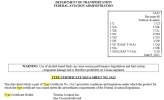
1788543214923.png

Not to mention the FAR 1.1. defiition:

Type:​
(1) As used with respect to the certification, ratings, privileges, and limitations of airmen, means a specific make and basic model of aircraft, including modifications thereto that do not change its handling or flight characteristics.​
 
Last edited:
So far, I have no problem understanding they are asking for make and model time, even if they say "type." Even in FAA usage, the word "type" when applied to aircraft is not limited to the "type" which requires a "type rating." I could probably grab a Chief Counsel letter or two on that, but this is easier.


View attachment 154770

Not to mention the FAR 1.1. defiition:

Type:​
(1) As used with respect to the certification, ratings, privileges, and limitations of airmen, means a specific make and basic model of aircraft, including modifications thereto that do not change its handling or flight characteristics.​
And according to both of those, a dash something or letter variant doesn’t change the type.
 
And according to both of those, a dash something or letter variant doesn’t change the type.
I don't think I see anything that says the term is exclusively limited in that way. I guess you have to be a non-lawyer to parse things that way :D.
 
I don't think I see anything that says the term is exclusively limited in that way. I guess you have to be a non-lawyer to parse things that way :D.
How would either of those examples indicate that a PA-32-260 a different type than a PA-32R-301T?
 
Last edited:
I think the salient points are covered above.

But I'd add, give some thought to what to do for the 10 hours.
Agreed.

I used a type-specific instructor for my Bonanza transition, and we covered a LOT of stuff - pretty much every system on the aircraft, various types of emergency procedures, operating and maintenance practices, nav systems, etc. If you have to pay for the CFI time, get your money's worth.
 
How would either of those examples make a PA-32-260 a different type than a PA-32R-301T?
So, you are saying they are the same make and model? I don't think they are.

But it doesn't matter. We're talking about insurance - a contract. So ultimately, it's about how the policy defines the term, not what you or I want it to mean. These days, most seem to use "make and model" but if a policy used the tern "type" and described it as a "PA-32R-301T," that's what "type" would mean in the policy.
That’s exactly what I said… insurance companies have their own meaning for the words.
 
I guess I don't include common English usage in the "their own meaning for words" category :D Now if they defined "red" as "PA-32R-301T," that would be a different story.
 
Back
Top