What impacts service ceiling?

ArrowFlyer86

En-Route
PoA Supporter
Joined
Jul 17, 2019
Messages
3,285
Location
Around
Display Name
Flight
Random friday morning thoughts...

What factors impact the service ceiling an airplane can reach?
Service ceiling (as I understand it): maximum altitude in standard conditions where the aircraft can still climb >= 100fpm.

The most obvious contributor I can think of is the engine: you're not climbing anymore once your aircraft can't make enough power.

But there's aspects that I really don't understand.

Here's one example: how does a 180hp Diamond DA40 with a Lycoming IO-360 and CSP have a lower service ceiling (14000) than the original 180hp Piper Arrow (also uses Lycoming IO-360, but C1C variant instead of M1A, but both have a CSP) (ceiling 15,000). The Diamond is faster, climbs significantly quicker, has better glide + less draggy (I think?). I think it's all around more aerodynamic? They both are within 35lbs of eachother for MTOW. What would make it top out at a lower altitude?

Is there that much difference in the engine variants where their output power varies with altitude differently? Wing design and ability to generate lift at altitude? IDK!
 
It's both engine performance and wing performance I would say.

I could see where plane A can go faster than plane B, but Plane A's wing just isn't that great a producing lift as you might see in Plane B.

For example, the U2 can go high not because it has a large engine, but it has a very high aspect wing that produces lift in thin cold air vs say the wing on my 182. You can give my 182 (that doesn't have that U2 wing) all the thrust in the world and it won't go that high because the wing isn't ever going to produce adequate lift in the thin cold air. You'll get to the speed of sound before you can continue to get lift to raise you higher.

The wing is a huge part of the U-2's capability, but it does have a very powerful engine for its size and weight as well. The current version is basically a non-afterburning version of the F110 that powers the F-15/F-16. That is why at sea level it can climb like a home sick angel, and still is able to produce enough thrust at very high altitude.
 
  • Like
Reactions: WDD
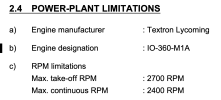
Here is a clue. The Lycoming IO-360 M1-A on the DA40 is limited to 2400 RPM (160HP) max continuous.
 
Here is a clue. The Lycoming IO-360 M1-A on the DA40 is limited to 2400 RPM (160HP) max continuous.
That does not sound right. It’s 180hp nominal and 75% MCP, just like the 172SP
 
how does a 180hp Diamond DA40 with a Lycoming IO-360 and CSP have a lower service ceiling (14000) than the original 180hp Piper Arrow (also uses Lycoming IO-360, but C1C variant instead of M1A, but both have a CSP) (ceiling 15,000).
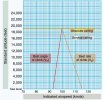
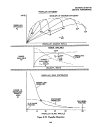
One is a Part 23 aircraft, and one is a CAR 3 aircraft. I don't believe CAR 3 was as specific as the Part 23 process. And per the old Part 23 it was determined by the entire aircraft performance as shown below. The current Part 23 process is a bit different and found in AC23-8.

1788536405972.png

Diamond doesn't actually publish a service ceiling,
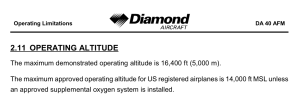
It's stated in the AFM Limitations section. For the DA40 its this:
1788536697945.png
 
I recall on some aircraft it may be dependent on unpressurized magnetos being unable to reliably supply spark above a certain altitude.

And, again, that would be published as a Maximum Operating Altitude, not a service ceiling.
 
That does not sound right. It’s 180hp nominal and 75% MCP, just like the 172SP
That's what it says. I have no reason to believe the manufacturer is wrong about their own aircraft.

The same engine can be rated differently, just like the 172R and SP engines are.

Screenshot 2026-09-04 at 11.47.14 AM.png
T
 
Last edited:
Extrapolating from the DA40 climb performance chart I do estimate the service ceiling would be ~14,000.

The lower ceiling compared to the PA28R-180 would be primarily due to the 2400rpm (160hp) continuous limitation.
 
Maybe diamond wanted to "leave it up to the reader" to discover the service ceiling, ya know, as an exercise for the student :)
 
The 14,000' limitation in the DA-40 manual says "unless a supplemental oxygen system is installed" so it has nothing to do with aircraft performance, only pilot regulations.

John
Reading the fine print
 
Service ceiling, if definied by rate of climb per part 23, is directly related to specific excess power:
Excess power = velocity(thrust-drag)/weight
Units are ft/sec, which when measured/calculated at 1g is the rate of climb available at those conditions and a measure of the acceleration capability. Assuming both airplanes use the same criteria for service ceiling (500 fpm climb rate at Vy), you can see exactly what affects it and decide what the difference is between airframes and engines.

I'm surprised the Diamond is lower (or is it...?) but they've got some odd definitions for other speeds (Vbg comes to mind from another discussion here) so who can say for sure. I'd expect them to be higher. Makes you wonder.

Nauga,
who trusts but verifies
 
Does overall drag also matter?
 
My pilots manual says that the service ceiling on my 1965 Anon A2 Aircoupe with a continental C90 (90HP) is 18,000 ft.

I guess that is overly optimistic and more sales brochure than actual performance.
 
Power rating limitation for the DA40 depends on the prop. I have a ton of hours on a Lycoming DA40 with the prop that removed all power restrictions.
 
I don’t think I know what the service ceiling of the DA40 is. But the maximum operating altitude in limitations is16,400 feet. I took mine up there once, it took a little bit of time, but it was still climbing 200 feet per minute even up to 16,400. Also hit my record speed on the way down, riding the Vne. A glider wing and decent power to weight are very effective at climbing.
 
Power rating limitation for the DA40 depends on the prop. I have a ton of hours on a Lycoming DA40 with the prop that removed all power restrictions.
Ah, I remember now. I've only flown with the Hartzell prop and not the stock prop. One of them also had a PowerFlow.
 
What factors impact the service ceiling an airplane can reach?
Lots... Engine power, weight, wing design, drag...

Service ceiling (as I understand it): maximum altitude in standard conditions where the aircraft can still climb >= 100fpm.
Correct. And for a twin, the single-engine service ceiling is where the aircraft can only climb 50fpm.

Here's one example: how does a 180hp Diamond DA40 with a Lycoming IO-360 and CSP have a lower service ceiling (14000) than the original 180hp Piper Arrow (also uses Lycoming IO-360, but C1C variant instead of M1A, but both have a CSP) (ceiling 15,000). The Diamond is faster, climbs significantly quicker, has better glide + less draggy (I think?). I think it's all around more aerodynamic? They both are within 35lbs of eachother for MTOW. What would make it top out at a lower altitude?
That service ceiling might be incorrect, for one. The certified ceiling is 16,400 but that is not a service ceiling - I suspect that is something driven by EASA certification rules, since the DA40 was certified by EASA and then FAA certified on that basis.

Doing some math from the ~780fpm climb full gross at sea level on a standard day, it does seem like the service ceiling would end up in the 14s. I've actually flown a DA40 to 14,000 feet but I was solo, it was cold, and I probably had 30-35 gallons left on board at the time. I'd set the autopilot at 500 fpm and just let the airspeed decay as I climbed, and it was just getting down to the sea-level MGTOW Vy of 76 knots when I got to 14,000. We also didn't have the MT prop with the 2400 limit.

Probably the most important item in determining service ceiling is how much power it takes just to keep the airplane in the air at Vy. It's the amount of horsepower you have above that that determines what your climb rate will be. It seems like keeping a DA40 flying at Vy and MGTOW should take about 97.5 horsepower. That means when you get to the altitude where the atmosphere only has 54% of the oxygen available that you do at sea level (and thus your engine can no longer make more than 97.5 hp), that is your absolute ceiling. That's about 16,000 and is likely the reason that Diamond didn't bother certifying it higher than 5,000m.

BTW, there is a supercharger available for the DA40, but the max ceiling doesn't change - Diamond did not want to cough up the engineering data required to change that limitation for the company that created the STC. Thus, the supercharger was engineered for peak performance around 15-16,000 feet rather than trying to get higher.
 
I don’t think I know what the service ceiling of the DA40 is. But the maximum operating altitude in limitations is16,400 feet. I took mine up there once, it took a little bit of time, but it was still climbing 200 feet per minute even up to 16,400. Also hit my record speed on the way down, riding the Vne. A glider wing and decent power to weight are very effective at climbing.

Careful on Vne. Such typically is based on TAS as flutter is generally the concern. There are exceptions to which IAS or Mach dominate due to dynamic pressure concerns. Guppie dive test comes to mind (though that could also have had slow gain of internal pressure). With TAS typically dominant, we have issue as most publish only IAS. Dive tests should be done in such a way that TAS is maximized from the achievable IASs but other factors come to play such as age and maintenance as control surfaces can get just a little looser making you more vulnerable. Note dive testing is generally higher risk than spin testing. Though they target 1.1 Vne as Vd test point. So they go faster than Vne. And if they can’t, the lower Vne to be 0.9 of achieved and redefined Vd.
But this term will get folks confused very quickly as it is actually an AOA not a speed and as both speed and AOA they’re not constant. AOAx is constant for jets but AOAy grows to meet AOAx (though we can get a shift with compressibility and Mach). In props, were we to have totally efficient propellers, then AOAy would be constant though at minimum power required AOA. The props aren’t perfect hence AOAy tend to be just lower than L/Dmax AOA at sea level though grows to meet minimum power required AOA at ceiling while AOAx decreases to the same minimum power required AOA at ceiling which is a much smaller shift. This means in terms of IAS, Vy slows the higher we go. In terms of TAS both Vx and Vy grow but Vy much more slowly.

Now, can you get above ceiling? If you use a traditional definition and you have a supersonic capable jet, yes you can. See Rutowski.

An interesting aside that stems from this conversation is optimum sustained turn. You can think of turning as pulling your ceiling down which in a relative sense is accurate. Reality is that the drag curve and the power required curve both go up and right. Generally we’ll be concerned with power required as we like to consider degrees per second as well as knots bled or altitude traded VVI. All with the time component. Sustained we want to zero those, optimum sustained turn is ceiling at increased load. And best you can do is minimum power required AOA. And this can make for a different sort of view as to “slow flight” taking an AOA view of it instead of speed. Note the Fly Onspeed organization recommends using onspeed AOA (Vref for current weight and load) in lieu of both Vx and minimum power required AOA as both are close to stall while you don’t need that extra ounce of performance.


This brings us to Boyd who did not bring energy to aviation, rather he brought concerns of maneuverability to energy in aviation. He also brought stored chemical energy to these in terms of comparing utility thereof. Rutowski more cleanly formalized energy while such previously existed qualitatively such as with Langeweische’s roller coaster. Lanchester and the Wrights clearly understood energy thinking. As did everyone in between.


IMG_1444.jpeg

IMG_1445.jpeg

IMG_1446.jpeg


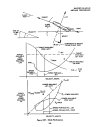
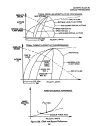
Another way to look at Vx and Vy is to consider how they sweep with altitude. It is easier to consider a jet first. Flat line thrust available of decreasing value as you increase altitude such that maximum excess is always at L/Dmax with ceiling being the meeting of the thrust available and the thrust required aka total drag. Similarly power available is like a windshield wiper attached at the origin. Excess power is Vy but power available sweeps down with altitude showing Vy decreasing till it meets the tangent at L/Dmax on the power required curve. Props do similar things but they aren’t as clean as the thrust and power available aren’t lines, they’re curves. Jets meet at minimum required thrust, jets produce thrust. Props meet at minimum required power, props produce power. These are your ceilings, the only flyable AOA at the highest achievable altitude.

 
But this term will get folks confused very quickly as it is actually an AOA not a speed and as both speed and AOA they’re not constant. AOAx is constant for jets but AOAy grows to meet AOAx (though we can get a shift with compressibility and Mach). In props, were we to have totally efficient propellers, then AOAy would be constant though at minimum power required AOA. The props aren’t perfect hence AOAy tend to be just lower than L/Dmax AOA at sea level though grows to meet minimum power required AOA at ceiling while AOAx decreases to the same minimum power required AOA at ceiling which is a much smaller shift. This means in terms of IAS, Vy slows the higher we go. In terms of TAS both Vx and Vy grow but Vy much more slowly.
Note ceiling has that nonlinear very slow at the end approach. As you would expect approaching a mathematical limit. And as you would approaching a minimum (or maximum) as the rate of change at such is zero. And also, as we’re dealing with AOAs not speeds yet we’re used to speeds while AOA and speed have a nonlinear relationship. “The slower you go the faster you go slow” - Mike “Vac” Vaccaro.
 
But this term will get folks confused very quickly as it is actually an AOA not a speed and as both speed and AOA they’re not constant. AOAx is constant for jets but AOAy grows to meet AOAx (though we can get a shift with compressibility and Mach). In props, were we to have totally efficient propellers, then AOAy would be constant though at minimum power required AOA. The props aren’t perfect hence AOAy tend to be just lower than L/Dmax AOA at sea level though grows to meet minimum power required AOA at ceiling while AOAx decreases to the same minimum power required AOA at ceiling which is a much smaller shift. This means in terms of IAS, Vy slows the higher we go. In terms of TAS both Vx and Vy grow but Vy much more slowly.
I'll need to revisit this later when I have time to think about it, but yes... As I understand it in the prop world, generally Vy decreases with altitude and Vx increases with altitude and they meet at the airplane's absolute ceiling.

As far as Vne, I know that it's often based on flutter but I would expect that in the piston world it's often based on other things too? In the turbine world we have the fancy airspeed indicators with the variable barber pole, but in pistons it's the static red radial line on the ASI. I can't see the FAA saying "Meh, only a few people will kill themselves not understanding this if we don't mandate any equipment or training for it."

The Vne is more a concern for both experimentals and gliders; your certified piston will have done Vd from ceiling so as to get the highest TAS with the lowest IAS then made the correlating 0.9 Vd IAS the published Vne value. So, theoretically, yes, they’ve thought about it. But I’d also argue such losses some integrity as pieces age and become looser hence more susceptible to flutter. You may find some pubs having different Vnes published based on altitude. Example can be found in many gliders. Such is because of accounting for TAS but only having IAS.

A different aside, Va, you can actually tell Va weight adjusted assuming you’re scaling down Va as you get lighter via AOA. But to do so you have to be at or above the AOAa while at or less than one g load. Now, why did I say “assuming you’re scaling down…” because forces break things, accelerations don’t. Rather than Va decreasing as you get lighter, your g limits get bigger until something other than the lifting structure becomes the critical limiting factor. Then the limit stays constant while Va decreases as weight continues further down. You might note such as you may see some craft having differing limits with differing weights. Or, if you look at a T-45 or an F/A-18, you’ll see the Vn taper inward limits reducing while on the heavy side. But, keep it simple, we don’t generally know when lifting structure is or is not the critical factor. Nor can the FAA as they make guidance agnostic of platform, so reduce Va with less weight, or if you have AOA that displays sufficiently fast a value, mark the correlating value and be sure you’re higher than it while one or less g before a full pull. This brings another point, Va kinda sucks as a concept as numerically it is calculated for longitudinal positive pull but textually it is any axis one throw any direction. We really should have separate roll and yaw limits. Big boys and fast boys do.
 
Last edited:
According to my POH, the service ceiling on my Comanche is 20,000. Something referred to as the absolute ceiling is 23,000 feet. I'm not sure I believe those numbers.
 
Service ceiling is just a definition, typically sustained climb of < 100 fpm. Absolute ceiling is where in theory there is no excess thrust left to climb even at the optimum airspeed (max L/D) at that altitude. It's a function of power, prop design, and airfoil design even for a constant mass being lifted.

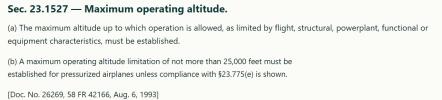
A certificated ceiling is just that - the altitude approved by regulation, not physics. Some turbocharged aircraft can climb above their certificated ceilings physically. Others may hit newer regulatory limits - some piston turbos at light weights could in theory climb into RVSM land, but of course can't by regulation.

Only max L/D AOA aka min drag or min thrust required AOA for jets (min pwr slides down to meet becoming coincident with); ceiling is at min power required AOA for props (though technically both change so as to meet at ceiling). For both you can use max endurance AOA. Though interesting aside, do you change the definition of absolute ceiling for supersonic capable jets and Rutowski?

 
Service ceiling is just a definition, typically sustained climb of < 100 fpm. Absolute ceiling is where in theory there is no excess thrust left to climb even at the optimum airspeed (max L/D) at that altitude. It's a function of power, prop design, and airfoil design even for a constant mass being lifted.

A certificated ceiling is just that - the altitude approved by regulation, not physics. Some turbocharged aircraft can climb above their certificated ceilings physically. Others may hit newer regulatory limits - some piston turbos at light weights could in theory climb into RVSM land, but of course can't by regulation.
Nothing says you can't get a piston turbo RVSM-approved, but most of them can't climb much higher than FL280 anyway so it's just not worth it, especially since the difference in fuel burn between, say, FL280 and FL300 is pretty negligible in a piston.

I would also say that most turbo pistons as well as most turbines can outclimb their certified ceiling, as there are various additional FAA requirements at various altitudes - Without looking, I would suspect exceeding FL250, FL410, and FL510 each come with a new set of certification requirements, just because a lot of planes are certified to those altitudes.

The jet I fly right now is certified to FL410 in the US, but in Europe it can go to FL430. The physics certainly aren't any different between the two! Also, I would bet that at the right weight and temperature it could easily exceed FL430. We don't go to 410 often, but I think I've seen around 800-1000 fpm when we do. We can't do that straight from takeoff at MGTOW, and there's a table we consult for temps/weights before climbing, but it's not clear where that table was generated from because climb performance is still excellent when we do climb even if we're at the limiting conditions in the table. :dunno:
 
Nothing says you can't get a piston turbo RVSM-approved, but most of them can't climb much higher than FL280 anyway so it's just not worth it, especially since the difference in fuel burn between, say, FL280 and FL300 is pretty negligible in a piston.
In terms of range, altitude makes no difference for a piston except for catching tailwind and avoiding head. Cherubs or angels won’t matter in still air. Speed and less time, however… flying faster than best range…
 
The pilot.

I've only flown NA piston single.
All of them could exceed my willingness to go up as high as they could.
Warrior II, 182J, H, K and S 35.
The highest I've ever been is 12.5 in the 182.
Didn't care for it.
 
Last edited:
The pilot.

I've only flown NA piston single.
All of them could exceed my willingness to go up as high as they could.
Warrior II, 182J, H, K and S 35.
The highest I've ever been is 12.5 in the 182.
Didn't care for it.
You don’t fly out west then, I guess. MEAs can easily exceed 12.5.
 
I think this is mainly focused on part 23 certification, but just realize that part 25 certification and other (military fighters for example) have drastically different criteria for the same thing/term.
 
In terms of range, altitude makes no difference for a piston except for catching tailwind and avoiding head. Cherubs or angels won’t matter in still air. Speed and less time, however… flying faster than best range…
Sure it does, to a point. TAS increases at higher altitudes with the same power available. Sure, you burn more in the climb the higher you go, but you'll go faster too. In theory, having about half of your trip or more at cruise is the way to go.

I've only flown NA piston single.
All of them could exceed my willingness to go up as high as they could.
Warrior II, 182J, H, K and S 35.
The highest I've ever been is 12.5 in the 182.
Didn't care for it.
I've flown NA piston as high as FL190, but only because I had to to go reasonably direct once. A few times at 14,000 or higher to clear terrain or maintain glide to shore over the Great Lakes. I definitely prefer not to need O2 though, so unless I have a good reason for it, I generally don't go above 11,000 or so.
 
Back
Top