
You are using an out of date browser. It may not display this or other websites correctly.
You should upgrade or use an alternative browser.
You should upgrade or use an alternative browser.
Shutting down NDBs
- Thread starter smv
- Start date

There are still NDBs around?

- Joined
- Sep 19, 2005
- Messages
- 9,486
- Display Name
- Pilawt
- Home Airfield
- KGYR
FAA needs to go back to charting AM broadcast stations on VFR charts.

We’ve got one here, but it’s just used as a Nav-aid.There are still NDBs around?
There are still AM Broadcast Stations?FAA needs to go back to charting AM broadcast stations on VFR charts.

smv
Pattern Altitude
- Joined
- Dec 30, 2019
- Messages
- 1,659
- Display Name
- smv


ktup-flyer
En-Route
There are still NDBs around?

luvflyin
Touchdown! Greaser!
- Joined
- May 8, 2015
- Messages
- 17,444
- Location
- Santa Barbara, CA
- Display Name
- Luvflyin
- Home Airfield
- KVUO
FAA needs to go back to charting AM broadcast stations on VFR charts.
When did that stop? There had to be some criteria for which ones were. Probably on air 24 hours. Do you have pic of it?

lancie00
Line Up and Wait
- Joined
- May 12, 2016
- Messages
- 863
- Display Name
- lancie00
FAA needs to go back to charting AM broadcast stations on VFR charts.
I was taught that they were removed because they didn't identify themselves often enough. I don't know if that's correct or not though.
- Joined
- Sep 19, 2005
- Messages
- 9,486
- Display Name
- Pilawt
- Home Airfield
- KGYR
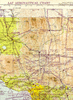
Here's a portion of a 1964 Los Angeles Local chart (what's now called a Terminal Area Chart). Several broadcast stations are charted here. It shows KNX 1070 just north of Torrance - a 24/7, 50,000 watt blowtorch that can be heard from a long way away. Just southeast of Van Nuys is KMPC 710 (my favorite station in those days). It was a 24-hour station, but at reduced power after dark. KABC, east of Santa Monica, was a low-power station, only 5,000 watts, I believe. And KDAY 1590 is charted as being "days only".When did that stop? There had to be some criteria for which ones were. Probably on air 24 hours. Do you have pic of it?

Surprisingly, KFI 640 is not charted. KFI is the 823' tower just west of Fullerton Airport. I learned to fly at Fullerton, and one was always aware of KFI. The top of the tower was 23 feet higher than the traffic pattern altitude in those days, so one kept bloodshot eyes peeled on smoggy days in the pattern. KFI was a 50,000 watt clear channel station -- with your ADF you could home in on that sucker from Mars. (Cold War-era trivia: KFI was one of the "Conelrad" stations. Remember AM radios that had the little "CD" logo at the 640 and 1240 spots on the dial?) I grew up just a mile from KFI's transmitter. You could faintly hear KFI programming over the dial tone on our home telephone. My mother swore she could hear it in the fillings in her teeth. KFI carried the Dodgers baseball broadcasts in the '60s and early '70s, so you could listen to Vin Scully's play-by-play as you're cruising all the way back home from Albuquerque. In a slow airplane you could hear the whole double-header.
Remember Flight Guide, those little brown loose-leaf books chock full of airport diagrams and information? For every airport, Flight Guide listed a nearby AM broadcast station. Came in handy sometimes.
Last edited:


Velocity173
Touchdown! Greaser!
- Joined
- Jul 3, 2012
- Messages
- 16,369
- Display Name
- Velocity173
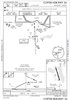
The Army is cornering the market on NDBs hoping they’ll be worth something in the future.

Datadriver
Cleared for Takeoff
- Joined
- Jan 26, 2012
- Messages
- 1,020
- Display Name
- Datadriver
- Home Airfield
- KGTU
The Army is cornering the market on NDBs hoping they’ll be worth something in the future.
View attachment 83133
My instructor said - a few years back - that the long term plan for NDBs was to stop performing maintenance on them. When they broke, they would get decommissioned. If that is still the case there is going to be a single last standing NDB at some point - kinda like winning Survivor.

- Joined
- Nov 6, 2018
- Messages
- 3,425
- Location
- Copperas Cove, Texas
- Display Name
- LNXGUY
- Home Airfield
- KILE
The Army is cornering the market on NDBs hoping they’ll be worth something in the future.
I was going to mention that approach, but didn't think it was worth mentioning.
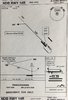
Iresh NDB is the worst navaid I have ever used and most of those Copter NDB 351 approaches ended at the shopette instead of the airfield.
I have given hundreds of instrument evals between Hood (HLR), Temple(TPL) and Killeen(ILE) and I always ended the eval with that approach in order to get back home in minimum time. Now, the ILS is gone at ILE and the VOR is gone at TPL, so there is nowhere left to do a hold unless you go to Waco or GRK...
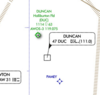
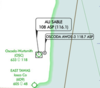
Get this: they decommissioned the VOR at TPL, but left the DME, so there is a square depicted on the chart and no approaches use it. Why?

RussR
Final Approach
Get this: they decommissioned the VOR at TPL, but left the DME, so there is a square depicted on the chart and no approaches use it. Why?
That's not uncommon now. The DME is retained in order to support DME/DME RNAV systems.


Kenny Phillips
Final Approach
- Joined
- Jul 29, 2018
- Messages
- 6,570
- Display Name
- Kenny Phillips
My only at-minimums approach was an NDB circle-to-land after three hours of in-the-soup-no-autopilot flying. I remember it unfondly.
Before I slid out the recalcitrant Narco ADF and tossed it on a shelf, we used to tune in to 700 WLW (now only 50 kilowatts, at one time half a million) if we were within four or five hundred miles. Its tower is north of Cincinnati, just over three miles from my present home. I get Reds on Radio quite clearly.
Before I slid out the recalcitrant Narco ADF and tossed it on a shelf, we used to tune in to 700 WLW (now only 50 kilowatts, at one time half a million) if we were within four or five hundred miles. Its tower is north of Cincinnati, just over three miles from my present home. I get Reds on Radio quite clearly.

aterpster
En-Route
- Joined
- Apr 15, 2011
- Messages
- 3,317
- Display Name
- aterpster
I thought the FCC limited AM radio to 50 kilowatts at least from the 1950s, on, and 5 KW at night unless it is a "clear channel" transmitter.My only at-minimums approach was an NDB circle-to-land after three hours of in-the-soup-no-autopilot flying. I remember it unfondly.
Before I slid out the recalcitrant Narco ADF and tossed it on a shelf, we used to tune in to 700 WLW (now only 50 kilowatts, at one time half a million) if we were within four or five hundred miles. Its tower is north of Cincinnati, just over three miles from my present home. I get Reds on Radio quite clearly.
flyingbrit
Pre-takeoff checklist
- Joined
- Apr 21, 2014
- Messages
- 431
- Display Name
- flyingbrit
WLW was 500kW only from 1934-1939. It is a "clear channel" and now has 50kW day and night.
There are several non-clear-channels with 50kW day and night. For example KMJ in Fresno, KBOI in Boise.
There are several non-clear-channels with 50kW day and night. For example KMJ in Fresno, KBOI in Boise.

jordane93
Touchdown! Greaser!
The NDB at my airport is still going strong, although in the 9 years I’ve been flying out of there, I haven’t heard one airplane fly the approach or practice it.
Velocity173
Touchdown! Greaser!
- Joined
- Jul 3, 2012
- Messages
- 16,369
- Display Name
- Velocity173
My instructor said - a few years back - that the long term plan for NDBs was to stop performing maintenance on them. When they broke, they would get decommissioned. If that is still the case there is going to be a single last standing NDB at some point - kinda like winning Survivor.
Well the Army has them at most of their active airfields so I’m sure they’ll keep them for awhile. All of their newest helos are still equipped with ADFs as well. Maintaining them is probably a drop in the bucket for their budget compared other things like PAR operating costs.
I’m sure deployment NDBs will become a thing of the past though, if they haven’t already.

donjohnston
En-Route
What else could you use an NDB for?We’ve got one here, but it’s just used as a Nav-aid.

kep5niner
Pre-takeoff checklist
- Joined
- Oct 5, 2018
- Messages
- 402
- Display Name
- Pete
What else could you use an NDB for?
Listening to the ball game, getting the timing right when you're executing a flyover so you can be on station at the last note of the National Anthem.
That was the plan anyway...didn't figure in the broadcast delay

donjohnston
En-Route
That's an AM radio station. It is my understanding that AM radio stations are not NDB's. While the ADF receiver on an aircraft can pick up AM radio stations, they aren't navaids.Listening to the ball game, getting the timing right when you're executing a flyover so you can be on station at the last note of the National Anthem.
That was the plan anyway...didn't figure in the broadcast delay
But I could be wrong.
flyingbrit
Pre-takeoff checklist
- Joined
- Apr 21, 2014
- Messages
- 431
- Display Name
- flyingbrit
While the ADF receiver on an aircraft can pick up AM radio stations, they aren't navaids.
But I could be wrong.
AM stations can be used as a makeshift NDB, at least for VFR use. Many years ago (before I had GPS) I wanted to stop at a rural airport on a long trip to get cheap fuel. No VORs or NDBs within 40 miles. So I found an AM station located in the nearby town using the FCC database and marked its location on my chart. Worked like a charm.
Brad W
En-Route
This old codger for one kinda hates to read this.
I certainly wouldn't want to have NDB's be the primary nav aid for everything....
but I value the simplicity of them.
Just speculating, VOR stations are probably much more complex and expensive to maintain....so I get the idea of letting them die out...but NDB's sure seem very basic and probably very cheap...and a network of them around seems like a great back-up in my thinking
donjohnston
En-Route
Right. I've done something similar to that. But what I'm saying is that an AM radio station isn't an NDB. It's a radio station that operates in the same frequency range as an NDB.AM stations can be used as a makeshift NDB, at least for VFR use. Many years ago (before I had GPS) I wanted to stop at a rural airport on a long trip to get cheap fuel. No VORs or NDBs within 40 miles. So I found an AM station located in the nearby town using the FCC database and marked its location on my chart. Worked like a charm.
donjohnston
En-Route
When I was learning to fly I asked my instructor about the different ways you could get to the airport if you were flying on instruments (just out of curiosity. He said: "An ILS will get you to the runway. A VOR will get you to the airport. An NDB will get to the ZIP code." 
But it was nice being able to listen to the Braves.
But it was nice being able to listen to the Braves.
smv
Pattern Altitude
- Joined
- Dec 30, 2019
- Messages
- 1,659
- Display Name
- smv
I'm struggling with the so what concerning this. I haven't flown in a plane equipped with a working ADF since like 1988.
Yay for you.


Ryan F.
Cleared for Takeoff
- Joined
- Dec 23, 2016
- Messages
- 1,382
- Display Name
- Ryan Ferguson 1974
With the ongoing march of time and technology it just isn't reasonable to expect NDBs to be maintained within the contiguous United States. We don't have 4-course ranges anymore, for a reason.
I personally wish LORAN had been kept around as a low-cost backup, but otherwise I'm in favor of NDBs hitting the dirt road outta here. I did NDB holds on my CFII checkride...
I personally wish LORAN had been kept around as a low-cost backup, but otherwise I'm in favor of NDBs hitting the dirt road outta here. I did NDB holds on my CFII checkride...
luvflyin
Touchdown! Greaser!
- Joined
- May 8, 2015
- Messages
- 17,444
- Location
- Santa Barbara, CA
- Display Name
- Luvflyin
- Home Airfield
- KVUO
I thought the FCC limited AM radio to 50 kilowatts at least from the 1950s, on, and 5 KW at night unless it is a "clear channel" transmitter.
FCC may have, but Mexico didn't, you might hear this a thousand miles from the border from a 'Border Blaster' station after sundown

David Megginson
Pattern Altitude
We've lost a few in my area (Eastern Ontario/West Quebec), but there are still enough left that I can always have one tuned in while I'm flying cross-country.There are still NDBs around?
Decommissioned: Smith's Falls, Brockville, Gatineau
Still here: Ottawa, Greeley, Maniwaki, Mont-Laurier, Pembroke, Kingston, Trenton, Peterborough (plus a couple around Montreal)
smv
Pattern Altitude
- Joined
- Dec 30, 2019
- Messages
- 1,659
- Display Name
- smv
So enlighten me as to why this is a big deal
There are many airports around the country with only two types of approaches: NDB and RNAV. Take away the NDB and without an IFR certified GPS (yah, believe it or not, not every IFR airplane has an IFR GPS), you are not getting in....
aterpster
En-Route
- Joined
- Apr 15, 2011
- Messages
- 3,317
- Display Name
- aterpster
I didn't know that. Guess what? I used to care about stuff like that. :-0WLW was 500kW only from 1934-1939. It is a "clear channel" and now has 50kW day and night.
There are several non-clear-channels with 50kW day and night. For example KMJ in Fresno, KBOI in Boise.
David Megginson
Pattern Altitude
In Canada, if both your main destination and your alternate have only RNAV approaches, they have to be at least 100 nm apart (in most of the country). That's a serious operational issue for small planes with limited ranges. I'm not sure if there's any similar rule in the US.Meh. I don’t see that as a big deal but that’s ok, I don’t have to.
Having a usable NDB or VOR approach at either the destination or the alternate removes the 100 nm restriction.