
You are using an out of date browser. It may not display this or other websites correctly.
You should upgrade or use an alternative browser.
You should upgrade or use an alternative browser.
shade tree engine mount repair
- Thread starter Ed Haywood
- Start date


Doc Holliday
En-Route
That's not terrifying. THIS is terrifying. Carb inlet filter. Yes, it FLEW into the maintenance airfield.
View attachment 144945
But it’s had an annual sign off each year.
Yet another reason I won’t get in an unknown to me airplane.
The FAA really screwed up when they dropped the requirements for IA’s to an easy multiple choice test that anyone can take.

Dan Thomas
Touchdown! Greaser!
- Joined
- Jun 16, 2008
- Messages
- 12,389
- Display Name
- Dan Thomas
Doesn't much matter. The lack of shoulder harnesses would kill him anyway in any crash.

Half Fast
Touchdown! Greaser!
- Joined
- May 7, 2016
- Messages
- 21,187
- Location
- Central Florida
- Display Name
- Half Fast
- Home Airfield
- KGIF
And somewhere in the USA tonight, there's a 1978 Chevette running around with Piper lap belts in the rear seat.

pfarber
Pattern Altitude
- Joined
- Jun 20, 2021
- Messages
- 1,653
- Display Name
- pfarber
Engine mounts are not made of unicorn tears. Its just tube.Engine mounts are not something to take lightly. What would happen to your CG if that mount failed and the engine fell off the front of the airplane? Would the airplane be able to glide?
That photo is a disaster, and being cut so close to the end means its not repairable.
The FAA really screwed up when they dropped the requirements for IA’s to an easy multiple choice test that anyone can take.
I agree the essay type format provided a better indication of the applicants
ability to locate and use Technical Data than the Multiple Guess replacement.
However; is any written test a valid evaluation of whether the applicant possesses the skills to actually Inspect?
Doc Holliday
En-Route
I agree the essay type format provided a better indication of the applicants
ability to locate and use Technical Data than the Multiple Guess replacement.
However; is any written test a valid evaluation of whether the applicant possesses the skills to actually Inspect?
It’s not just the test. Before if someone wanted an IA they would have to apply to the FAA and be granted an interview, and if they passed the interview only then were they allowed to test.
Today, ANYONE holding an A&P for 3 years can apply and is given authority to take a multiple choice test, which basically can be passed by rote.
Today we are flooded with IA’s that are clueless and have a higher interest in selling signatures. The overall condition of the GA fleet has suffered.
^^This. The interview is what kept the IA skill set at an upper level. And when it changed to a test only that skill set degraded noticeably IMO. For example, after that change and the mx recurrent training became FAA certified as an IA recurrent compliant, we had about additional 30% of the APs at the day job obtain their IA which was up from the 10% norm. However, within 2-3 years the company IA rolls dropped back down to about 15% as most realized having the IA was not as advantageous as they thought. With a couple of them almost losing their AP (and job) over some stupid side work sign offs.It’s not just the test. Before if someone wanted an IA they would have to apply to the FAA and be granted an interview, and if they passed the interview only then were they allowed to test.
However; the interview and test only applies to the First issuance.
After that it must be renewed by the beginning of the “ IA Year” which is
April 1st. Really!. This can be accomplished via videos or sleeping through a seminar.
The Interview sounds good but can be very subjective. Some folks even said
it was based on need for the area. I believe this was the previous DAMI system. My full-time job was as a civilian with MIL aircraft and only worked
about 40 hrs per week on certificated aircraft. I was young then. My home GADO said I was not eligible. So later I was at Bergstrom AFB on Active Duty filing nicks on a Cherokee prop while in uniform. A “ Suit” tapped me on the shoulder and wanted to see A &P. Five minutes later I was set to take the IA
Test. I doubt if many people have got the IA while on Active Duty.
My opinion is there are actually very few full-time IA’s. Many Techs work at
Repair Stations and doing A&P Work. Those people holding Inspection Authorization should not do “work”; they should make work for other people. “IA Work” is primarily Inspection and associated paperwork
signed under your Cert; not a Repair Station.
Doc Holliday
En-Route
Isn't that what's being discussed here?However; the interview and test only applies to the First issuance.
Not sure what your point is. (see above)After that it must be renewed by the beginning of the “ IA Year” which is
April 1st. Really!. This can be accomplished via videos or sleeping through a seminar.
But that subjectivity was needed to keep out the ones who didn't take it seriously or were only wanting the rating so they could sell their signature.The Interview sounds good but can be very subjective. Some folks even said
it was based on need for the area.
And before the "multi test for everyone" stage there was adequate coverage for IA services.
I believe this was the previous DAMI system. My full-time job was as a civilian with MIL aircraft and only worked
about 40 hrs per week on certificated aircraft. I was young then. My home GADO said I was not eligible. So later I was at Bergstrom AFB on Active Duty filing nicks on a Cherokee prop while in uniform. A “ Suit” tapped me on the shoulder and wanted to see A &P. Five minutes later I was set to take the IA
Test. I doubt if many people have got the IA while on Active Duty.
So there was apparently a need and you made it through the testing and evaluation. It wasn't a freebie.
The reason for a very few full time IA's as you put it is the market is saturated with IA holders. Once upon a time there were more full time IA's and they had standards.My opinion is there are actually very few full-time IA’s. Many Techs work at
Repair Stations and doing A&P Work. Those people holding Inspection Authorization should not do “work”; they should make work for other people. “IA Work” is primarily Inspection and associated paperwork
signed under your Cert; not a Repair Station.
Actually it was the Engine Mount Repair! The test impacts the initial issuance but not renewals. My point with “Subjective” was the eligibility interpretation varied depending on who was doing the evaluation.
FAR 65 states that if you are eligible then you are entitled to test.
FAR 65 states that if you are eligible then you are entitled to test.
Dan Thomas
Touchdown! Greaser!
- Joined
- Jun 16, 2008
- Messages
- 12,389
- Display Name
- Dan Thomas
How simplistic. Why, then, have I found several cracked tubes on various mounts, and a cracked mount cup on a 185 mount?Engine mounts are not made of unicorn tears. Its just tube.
The 185 seaplane mount:
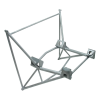
Those front mount points are formed steel cups, welded to the sheet-metal bracketry. Note that none of that is tube. I found one of those cups cracked 3/4 of the way around. If it broke right off, the other three mounts are instantly overloaded as the engine starts flailing around. There are several loads that the mount has to handle: weight, thrust, propeller torque reaction, gyroscopic precession.
FAR 23 specified 9G as the minimum strength for an engine mount. There was good reason for that, as I said. A departed engine means death.
Here's a broken Dynafocal engine mount on a Mooney:
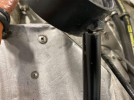
But it's "just tubing," so maybe it doesn't matter?
Last edited:

Stewartb
Final Approach
- Joined
- Nov 21, 2014
- Messages
- 9,026
- Location
- Wasilla, AK
- Display Name
- stewartb
- Home Airfield
- Wolf Lake
How many airplanes are out there flying with original mild steel engine mounts from mid last century? A bunch, and airplanes aren’t falling out of the sky. Seaplanes get beat up more than most planes. And yet they aren’t falling out of the sky, either. Engine mounts, engines, and props are held on by 4 bolts. Those do fine, too. Cessna wing struts? 1 bolt to the wing. There are lots of things pilots don’t know about that would scare them. Engine mounts aren’t high on the list.

hindsight2020
Final Approach
Yeah, I don't think poster 85 was saying it doesn't matter, I took it to mean it's saying it's just not an engineering moonshot to design nor repair/replace.
Regulations merely make it so that people have an economic incentive to be dangerous/stupid about it, it's not that deep. The guild has an economic incentive of their own to characterize everything in this space as a moonshot however. It could be argued we're all rent-seekers to some degree in this life, given the way we've chosen to economically organize our country, but I digress on that.
What I am confident on is, no amount of poor-shaming will make it so gravity flow doesn't seek the lowest path through anything. Hangar fairies will not be denied their existence, people can keep punching air/clutching pearls about it.
Doc Holliday
En-Route
Does anyone have an app to translate any of the previous? TIA.
Curious. How many current IAs do you think would have obtained their IA if they had to pass a subjective interview and document the prerequisite annuals, 337s, or progressive inspections each year that were required before the change to the current system??The Interview sounds good but can be very subjective.
Dan Thomas
Touchdown! Greaser!
- Joined
- Jun 16, 2008
- Messages
- 12,389
- Display Name
- Dan Thomas
Props are held by six bolts. Some had eight. The four bolts that mount the engine mount to the airframe are 3/8 AN bolts, each having a tensile strength of over 13,000 pounds. The Cessna wing strut bolts are 7/16" AN bolts that have a shear strength of around 12,000 pounds. In a crash it isn't the bolts that fail, usually. It's the aluminum or steel-tube structure.Engine mounts, engines, and props are held on by 4 bolts. Those do fine, too. Cessna wing struts? 1 bolt to the wing.
The Cessna 175 has an AD on it's steel brackets behind the firewall that carry the engine mount loads into the forward fuselage. Those steel brackets corrode and at least one engine tore loose on landing, pulling the upper firewall off. Other Cessna models use aluminum brackets in those spots. But there are service bulletins instructing mechanics to check those for cracks.
Yes, engine mount failures are rare, and we can thank annual inspections for that. But as the fleet ages, and based on what I found as a full-time mechanic, that will not continue forever. Cessna has an aging-airframe slideshow that I can't find now. But here's an interesting article: https://cessnaowner.org/upgrade-your-ride-keep-your-eyes-open-for-these-pitfalls/
pfarber
Pattern Altitude
- Joined
- Jun 20, 2021
- Messages
- 1,653
- Display Name
- pfarber
I agree on a few points, but the system is not 'flooded' with IAs.It’s not just the test. Before if someone wanted an IA they would have to apply to the FAA and be granted an interview, and if they passed the interview only then were they allowed to test.
Today, ANYONE holding an A&P for 3 years can apply and is given authority to take a multiple choice test, which basically can be passed by rote.
Today we are flooded with IA’s that are clueless and have a higher interest in selling signatures. The overall condition of the GA fleet has suffered.
The condition of the GA fleet is not on the shoulders of IAs. FAR 91.3.
The FAA/congress could raise the GA registration fee from $5 to say $100 and pay for more FSDO staff to spot check IAs/MX or add more DERs.

455 Bravo Uniform
Final Approach
Does anyone have an app to translate any of the previous? TIA.
It’s on the Apple App Store.
Yeah, I don't think poster 85 was saying it doesn't matter, I took it to mean it's saying it's just not an engineering moonshot to design nor repair/replace.
Regulations merely make it so that people have an economic incentive to be dangerous/stupid about it, it's not that deep. The guild has an economic incentive of their own to characterize everything in this space as a moonshot however. It could be argued we're all rent-seekers to some degree in this life, given the way we've chosen to economically organize our country, but I digress on that.
What I am confident on is, no amount of poor-shaming will make it so gravity flow doesn't seek the lowest path through anything. Hangar fairies will not be denied their existence, people can keep punching air/clutching pearls about it.
He thinks @pfarber is saying it’s not rocket-science.
Regulations make things expensive. Some people figure out a way around them because they are cheap. He thinks A&P/IA are protectionist. That could be said for most career/jobs in the US.
Cheapskates will be cheap, no matter what however, no matter how much is said.
Love me some @hindsight2020
Doc Holliday
En-Route
Before the IA free for all testing there were much fewer IA's per district. Now that any A&P can walk into a FSDO with 3 years experience, study a test guide and take a multiple choice written and get the IA issued those numbers exploded. Even the AW ASI's complain of all the renewals they have to do each March (odd year).I agree on a few points, but the system is not 'flooded' with IAs.
But these cheap owners seek out the guys that are more interested in the pay for signature types than going to a shop and getting an actual annual inspection. I've had numerous owners approach me with logbooks and ask "Can you sign off my annual, I looked it over and everything is OK." They didn't like my answer, so they went and sought out Billy Bob IA who gladly signed it off for a few hundred bucks.The condition of the GA fleet is not on the shoulders of IAs. FAR 91.3.
The FAA/congress could raise the GA registration fee from $5 to say $100 and pay for more FSDO staff to spot check IAs/MX or add more DERs.
It was under control back when entry to the IA was limited. Now each AW ASI has too many to do any routine surveillance for.
The reason the FAA went to the multi answer written and allowed anyone to apply and get one was driven by individuals who couldn't, for whatever reason, earn the IA through the process. They cried it was too subjective and the FSDO had too much control over the process. It WAS NOT driven for the need of more IA's. These individuals saw an opportunity for quick easy "signature for sale" annuals and pushed it.
Just a few threads ago someone posted pics of a gascolator full of garbage and a fuel screen almost clogged. That didn't happen since the last annual. I've looked at planes that had yearly sign offs and have found pulleys frozen due to lack of lubrication, cables frayed, inspection covers with painted screws that have never been open, leaking hydraulic cylinders, leaking struts, brake pads wore down to metal, wheel bearing almost dry, etc, etc, etc. But they all had annual sign offs.

Ed Haywood
Final Approach
Cheapskates will be cheap, no matter what however, no matter how much is said.
I resemble that remark!
Its more under 91.403 but it still falls on the IA to ensure the aircraft conforms to its type design which technically renews the AWC for another year. At one time when the CAA performed all annuals they actually reissued a new AWC each year which some current ICAO countries still do to meet that ICAO requirement.The condition of the GA fleet is not on the shoulders of IAs. FAR 91.3.
I don't believe that to be true for most mechanics rather its simply following the rules. A number of pilots/owners believe those rules to be too strict or not applicable to them. However, when I sign off on an aircraft I'm bound to follow them and when some hangar fairy or owner intently does work on an aircraft without the required record entry, I can be held accountable for that illegal work because of how the rules are written. And have been. So its not so much I'm protecting my job or lively hood as it is protecting my certificate from someone's else work who is too lazy to follow the existing rules and take responsibility for it.He thinks A&P/IA are protectionist.
Stewartb
Final Approach
- Joined
- Nov 21, 2014
- Messages
- 9,026
- Location
- Wasilla, AK
- Display Name
- stewartb
- Home Airfield
- Wolf Lake
A friend has an early model Cessna 180 with an IO-520 and 3-blade Mac. He’s on floats and wasn’t happy with available engine mounts so he welded one up for himself and got it field approved. No magic.
Dan- I meant the aggregate weight of engine and prop hang on the mount and the mount attaches to airframe with 4 bolts. In my Skywagon the static thrust is near 1200# so add that to the load on those bolts.
Dan- I meant the aggregate weight of engine and prop hang on the mount and the mount attaches to airframe with 4 bolts. In my Skywagon the static thrust is near 1200# so add that to the load on those bolts.
MauleSkinner
Touchdown! Greaser!
I know what an IA are, but what are a T-IA?Does anyone have an app to translate any of the previous? TIA.

- Joined
- Jun 7, 2008
- Messages
- 16,742
- Location
- DXO124009
- Display Name
- Light and Sporty Guy
- Home Airfield
- ONZ
I know what an IA are, but what are a T-IA?

Transient ischemic attack - Wikipedia

2-Bit Speed
Pattern Altitude
- Joined
- Nov 9, 2021
- Messages
- 2,137
- Display Name
- 2-Bit Speed
Half Fast
Touchdown! Greaser!
- Joined
- May 7, 2016
- Messages
- 21,187
- Location
- Central Florida
- Display Name
- Half Fast
- Home Airfield
- KGIF
I know what an IA are, but what are a T-IA?
Technology Investment Agreement
Dan Thomas
Touchdown! Greaser!
- Joined
- Jun 16, 2008
- Messages
- 12,389
- Display Name
- Dan Thomas
As I said, one of those 3/8" firewall/mount bolts is good for 13,000 pounds in tension. If the engine weighs around 430 pounds, we can add maybe 30 pounds more for muffler and baffling and so on, and maybe 60 for the prop. That's 520 pounds. Add in the 1200 pounds of thrust and we get 1720. The four bolts are good for a total of 52,000 pounds, or 30 times the tensile load on them. ONE bolt could take the whole load 7.5 times over. The bolts aren't the weak point; it's the mount itself and the firewall structure.Dan- I meant the aggregate weight of engine and prop hang on the mount and the mount attaches to airframe with 4 bolts. In my Skywagon the static thrust is near 1200# so add that to the load on those bolts.
I found cracked mounts. I never found cracked airframe bolts. I did find corroded bolts sometimes.
pfarber
Pattern Altitude
- Joined
- Jun 20, 2021
- Messages
- 1,653
- Display Name
- pfarber
You show a broken tube... my statement stands. Engine mounts are not magical. They are just tubes (ok some are box beams) but the stress analysis is overly complicated.How simplistic. Why, then, have I found several cracked tubes on various mounts, and a cracked mount cup on a 185 mount?
The 185 seaplane mount:
View attachment 145081
Those front mount points are formed steel cups, welded to the sheet-metal bracketry. Note that none of that is tube. I found one of those cups cracked 3/4 of the way around. If it broke right off, the other three mounts are instantly overloaded as the engine starts flailing around. There are several loads that the mount has to handle: weight, thrust, propeller torque reaction, gyroscopic precession.
FAR 23 specified 9G as the minimum strength for an engine mount. There was good reason for that, as I said. A departed engine means death.
Here's a broken Dynafocal engine mount on a Mooney:
View attachment 145082
But it's "just tubing," so maybe it doesn't matter?
As for brackets etc well i guess of
we play the symantics game no, they are not tubes, but the major stress members are.
Oh noes i made a generalized comment... the interwebs will not survive lol
MauleSkinner
Touchdown! Greaser!
We found one broken and two cracked once on an Ag Truck.I found cracked mounts. I never found cracked airframe bolts. I did find corroded bolts sometimes.
Dan Thomas
Touchdown! Greaser!
- Joined
- Jun 16, 2008
- Messages
- 12,389
- Display Name
- Dan Thomas
Show me where I said they were magical. This is what I said:You show a broken tube... my statement stands. Engine mounts are not magical.
Engine mounts are not something to take lightly. What would happen to your CG if that mount failed and the engine fell off the front of the airplane? Would the airplane be able to glide?
Now tell me what is wrong with that.
Engine mounts are as important as wing spars. Not to be taken lightly. Nobody, and I mean NOBODY, wants a structural failure in flight.
Steamflyer
Line Up and Wait
- Joined
- Mar 23, 2022
- Messages
- 954
- Display Name
- Steamflyer
I know of only one documented case of the entire engine leaving the aircraft and the pilot surviving. 300-500 pounds departing will almost certainly have cg way behind aft limit.The pilot would have to instantly stuff the nose down steeply and keep it there with near full-down elevator. The firewall would cause lots of drag.
But the L-3 is a Cub. A Cub can just barely kill you. Something like a 172 or 182 would be a different animal with no engine and prop weight.
Maybe Cub with huge elevator is exception, but a spam can with no engine is unlikely to be recoverable.

Interesting thought exercise.Maybe Cub with huge elevator is exception, but a spam can with no engine is unlikely to be recoverable.
Ran a quick W&B calculation, in a lightly loaded Cherokee (by definition nose heavy), losing 250 lbs in the engine area would put the CG just barely past the aft limit. 300 lbs puts it about 4 inches past the limit. There are stories of people taking off quite severely aft of CG limits and still making it back, barely. I wonder what the margin is. I suspect speed/flap setting plays a part in this, too.
Dan Thomas
Touchdown! Greaser!
- Joined
- Jun 16, 2008
- Messages
- 12,389
- Display Name
- Dan Thomas
A Cherokee has a Lyc O-320. It weighs around 280 pounds. Add the exhaust system, maybe 15 pounds. Add the cowling, since it will depart too. Another 15 pounds. Add the propeller, about 35 pounds. So far we're at 340 pounds. Where is the CG now?Interesting thought exercise.
Ran a quick W&B calculation, in a lightly loaded Cherokee (by definition nose heavy), losing 250 lbs in the engine area would put the CG just barely past the aft limit. 300 lbs puts it about 4 inches past the limit. There are stories of people taking off quite severely aft of CG limits and still making it back, barely. I wonder what the margin is. I suspect speed/flap setting plays a part in this, too.
bonefishpete
Cleared for Takeoff
- Joined
- Nov 10, 2024
- Messages
- 1,360
- Display Name
- Bonefishpete
Engine mounts are not made of unicorn tears. Its just tube.
That photo is a disaster, and being cut so close to the end means its not repairable.
My understanding is if one inch of tubing can be saved it's repairable.
Steamflyer
Line Up and Wait
- Joined
- Mar 23, 2022
- Messages
- 954
- Display Name
- Steamflyer
Big difference in a running engine and aft cg and no engine. All the interaction between the downwash of the wing and the elevator is gone, reducing its effectiveness. Even if the math says it might just barely be possible, suspect 999/1000 pilots would not be able to successfully land from an engine gone condition.Interesting thought exercise.
Ran a quick W&B calculation, in a lightly loaded Cherokee (by definition nose heavy), losing 250 lbs in the engine area would put the CG just barely past the aft limit. 300 lbs puts it about 4 inches past the limit. There are stories of people taking off quite severely aft of CG limits and still making it back, barely. I wonder what the margin is. I suspect speed/flap setting plays a part in this, too.
Not really. It falls more to what the person performing the repair determines. For example, at the CRS level they may determine a mount is not repairable by how the damaged mount assy fits in the fixture.My understanding is if one inch of tubing can be saved it's repairable
Aft of what's allowed on the chart by 5 inches. Hence why I asked "I wonder what the margin is" with regard to published vs tested CG envelope.So far we're at 340 pounds. Where is the CG now?
Yes, but... you DO want less elevator effectiveness. Remember, it pushes the tail down to pitch the nose up. You want it pushing down as little as possible.Big difference in a running engine and aft cg and no engine. All the interaction between the downwash of the wing and the elevator is gone, reducing its effectiveness.
Also, flaps might help. Deploying them moves the center of pressure aft, which will push the nose down a bit more.

bnt83
Final Approach
How in the heck??????? I have one of those and find maybe a hair and spec of lint in it every year....That's not terrifying. THIS is terrifying. Carb inlet filter. Yes, it FLEW into the maintenance airfield.
View attachment 144945
Doc Holliday
En-Route
How in the heck???????
When the only "tool" some IA's use............................