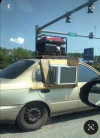
Personal cooling devices- anyone use one?

cowman

Final Approach
PoA Supporter
Joined
Aug 12, 2012
Messages
5,894
Location
Danger Zone
Display Name
Cowman
Home Airfield
KUIN
So it's summer and according to the news we're again facing the unprecedented situation of it being hot. Who could have predicted?

Anyway I am not a hot weather mammal. I hate being hot and sweat like a pig in even mild heat if I'm doing anything. Either way I've got yards to mow, work to do on my open tractor, motorcycle rides to go on, etc. I've seen all kinds of gadgets like neck fans, vests, etc advertised but they look kinda gimmicky and like they're more trouble than they're worth. Anyone have any experience with any of these types of things? Do any of them work? I kind of want to try one but I have a feeling it will just be another silly gadget that's more trouble than it's worth that I'll use once or twice before tossing in the back of a closet somewhere.
 
Mow the yard - hire a local kid
Work on the tractor - wait until evening when it cools off
Rides - in this weather????
 
Working the Dayton Air Show Sunday in 95 Degree Sunshine, I used one of those cooling rags under my hat and down my neck. Helped a little but needed resoaking every 30 minutes or so.
 
For an hour or so while mowing or using the tractor, just soak a towel in ice water, wring it out a bit, and drape it around the back of your neck and let it hang down over your lungs.

Easy peasy and effective.
 
Wet hat, wet shirt, cooling rag, and know when it’s time to quit.

My wife got me a neck fan that helped some when we were sitting around at her brother’s place where it was 85 degrees in the house. I used it piddling around in the garage some, and it was noticeable, but the other strategies and/or a fan in the doorway work better.
 
Go inside, find a closet, a winter coat, and a space heater. Go in closet, put on jacket, fire up space heater. Baste for an hour. Go outside and it will feel cool. It's all about acclimating.

You're welcome.
 
Al joking aside I have MS and the heat can really affect my vision. My wife and I still like to do alot of hiking and there are some really good cooling vests that can help. I really like the evaporative cooling shirts and hats. The ice pack vests and circulating vests work longer but they are super bulky and heavy. The evaporative stuff is easy enough to dunk in a stream or run under a faucet to make cool again. Its made out of similar materials like the cooling neck rag. Google MS cooling vests and you will find all kinds of brands and price points.
 
Hydrate like a mofo. Long sleeve shirt to keep the sun off and sweat. Once you're drenched any breeze at all feels refreshing.
 
Go inside, find a closet, a winter coat, and a space heater. Go in closet, put on jacket, fire up space heater. Baste for an hour. Go outside and it will feel cool. It's all about acclimating.

You're welcome.
I delivered a Hawker to prepurchase inspection on a ferry permit…the air conditioning system started to disassemble itself the first time we tried to deliver it. I landed in San Antonio after a 3-hour unpressurized/uncooled flight in August. It was 106 degrees on the ramp when i opened the door, and it was refreshingly cool. :eek:
 
My wife bought me a neck fan for my birthday. I pretend to like it, but it's more trouble than it's worth. Among other things, the plastic device rests on your skin and collects sweat. And the noise is more annoying than the sweating.

I find that wearing loose light colored clothing helps more in the Florida sun than anything else I have tried. Even just a little dark color absorbs the heat.
 
Go inside, find a closet, a winter coat, and a space heater. Go in closet, put on jacket, fire up space heater. Baste for an hour. Go outside and it will feel cool. It's all about acclimating.

You're welcome.
While Ed’s method isn’t exactly the most effective, the idea is correct. The human body is very adept at adapting to high temperatures, you just have to get through the first two weeks. From quick AI search:

The human body can acclimate to high temperatures over a period of a few weeks. This process, known as heat acclimatization, involves physiological adaptations that improve the body's ability to regulate its temperature in a hot environment. [1, 2, 3]
How it works:
  • Increased sweating: The body begins to sweat more readily and efficiently, allowing for greater heat loss through evaporation. [4, 4]
  • Reduced salt concentration in sweat: Sweat initially contains a high concentration of salt, but as the body acclimatizes, it reduces the salt content, conserving electrolytes. [4, 4, 5, 5]
  • Increased blood flow to the skin: The body dilates blood vessels near the skin's surface, bringing more heat to the surface for dissipation. [4, 4, 6, 6]
  • Changes in heart rate and blood pressure: The body adjusts its cardiovascular system to better manage the demands of heat stress. [7, 7, 8, 9]
  • Improved cellular heat shock protein production: The body produces proteins that help protect cells from heat damage. [10, 10, 11, 11, 12, 13]
How long does it take?
  • Generally, it takes about 10-14 days of regular exposure to heat to see significant acclimatization. [2, 14]
  • The intensity and duration of heat exposure play a role, with longer and more intense exposures leading to faster acclimatization. [2, 15]
  • Daily exposure to heat, for 60-90 minutes, is often sufficient for adaptation. [1]
Important considerations:
  • Individual differences: People acclimatize at different rates, with factors like age, fitness level, and pre-existing health conditions influencing the process. [2, 16, 16, 17, 17, 18, 19]
  • Humidity: Humidity makes it harder for sweat to evaporate, so acclimatization to humid heat may be slower than to dry heat. [5, 5, 20, 20, 21, 21]
  • Loss of acclimatization: The benefits of heat acclimatization can be lost within a few weeks if the body is not regularly exposed to hot conditions. [1, 1, 3, 3]”
Sitting forever inside in 65*F A/C? Yup, you’re going to feel like **** when you go out in the heat.
 
Sitting forever inside in 65*F A/C? Yup, you’re going to feel like **** when you go out in the heat.
Well, yeah, but going from “comfortably cool” to outside hot should have an intermediate step or two…65 seems like a good middle ground.
 
Well, yeah, but going from “comfortably cool” to outside hot should have an intermediate step or two…65 seems like a good middle ground.
Using that as a reference. I have friends who are motorcycle riders and have a very hard time with the heat. They keep their A/C set to 65 in the summer because they say anything higher is too hot, but wonder why they wilt outside when it’s 90.
 
Using that as a reference. I have friends who are motorcycle riders and have a very hard time with the heat. They keep their A/C set to 65 in the summer because they say anything higher is too hot, but wonder why they wilt outside when it’s 90.
Good news is it’s more socially acceptable to refuse to acclimate to the cold. I know lots of people like that.
 
kid[0] has a neck fan; good for making noise and blowing hot air around, I suppose.

I don't find 90-100 temps to be so bad so long as I'm in the shade. 65 sounds like a meat locker.
 
We keep our A/C at 74* during the day. I don't want to be sweating while washing dishes.

And despite living where every day is over 90* the vast majority of the time for almost four years now, I've never truly acclimatized to the heat. I can no longer handle the cold as well as I could, though. :raspberry: In the place we lived before, I kept the air at 78* during most of the day and 70* at night because it was so hard to keep it cool with all the leaks. I would put on the lightest, loosest, most reflective clothes I had before going out to mow the lawn. I always had a handtowel soaked in cold water around my neck, a straw hat for my head, and only mowed in hour increments, sometimes hour and a half, starting at 7:30am because it got way too hot to mow otherwise. After about twenty minutes, I'd drench my shirt/neck/hair with the hose, and again at the forty minute mark, just to keep myself from overheating to the point of being faint. And I still was overheated to the point of needing to sit on the cold tile floor inside and wait fifteen to twenty minutes before I could do anything afterwards. I don't miss mowing that lawn at all.
 
Got tired of the heat and humidity in Texas so I moved to Alaska. Well, saw 95 degrees in Fairbanks once. On the other side I saw -62f in Fairbanks.

New Mexico is working out. I have seen 0% humidity in the summer and shiver when a nice 15mph breeze comes up. At 85 degrees. On the other side though, during monsoon season I have seen 80% humidity and swelter in 80 degree days.

Currently it's 90ºF with 70% humidity. When I close the canopy on my low wing those numbers seem to increase significantly. I'm thinking I need to build one of these for the passenger seat:
 
I bought a little battery powered fan to survive sitting in the back of a 737 Max in EWR in the summer. It's been a lifesaver.
 
We keep our A/C at 74* during the day. I don't want to be sweating while washing dishes.
Then you should lower that a/c at least 6 degrees.

If it's above 70, I'm not falling asleep even with the fan on. Cooler temps produce better sleep. My house is small and is very tight, so I keep it at 68. Needed a blower door test to gain occupancy when I built it. Air sealing is as important as insulation.

Out in the heat and humidity. I'll sweat profusely, hydrating is critical.
We do turn it down to 69 at night to sleep, but if I keep it there during the day, even with all the shades shut, the A/C runs constantly. We should plant a tree that grows quickly and shades the roof or at least the walls to keep some of the heat off/out of the house and then maybe keeping it cool wouldn't be so hard...
 
I've used this while mowing. My wife uses hers while teaching horse lessons outside in Florida's sun. With humidity here they last about 3 hours. But extra refill packs in freezer is easy swap for another 3.

 
Other than air conditioning and hydration, my main non-aviation "cooling device" is one of those neck cooling towels or wraps. For aviation, it's the main reason I went to an in-ear headset - so I can wear a floppy or bucket hat for extra shade.
 
We do turn it down to 69 at night to sleep, but if I keep it there during the day, even with all the shades shut, the A/C runs constantly. We should plant a tree that grows quickly and shades the roof or at least the walls to keep some of the heat off/out of the house and then maybe keeping it cool wouldn't be so hard...
Just put tinfoil on the windows and doors. Keeps the sun out. And those pesky neighbors from wanting to say hello.

Also, Appropriately sized high efficiency HVAC equipment is designed to run nearly constantly.
 
While Ed’s method isn’t exactly the most effective, the idea is correct. The human body is very adept at adapting to high temperatures, you just have to get through the first two weeks. From quick AI search:

The human body can acclimate to high temperatures over a period of a few weeks. This process, known as heat acclimatization, involves physiological adaptations that improve the body's ability to regulate its temperature in a hot environment. [1, 2, 3]
How it works:
  • Increased sweating: The body begins to sweat more readily and efficiently, allowing for greater heat loss through evaporation. [4, 4]
  • Reduced salt concentration in sweat: Sweat initially contains a high concentration of salt, but as the body acclimatizes, it reduces the salt content, conserving electrolytes. [4, 4, 5, 5]
  • Increased blood flow to the skin: The body dilates blood vessels near the skin's surface, bringing more heat to the surface for dissipation. [4, 4, 6, 6]
  • Changes in heart rate and blood pressure: The body adjusts its cardiovascular system to better manage the demands of heat stress. [7, 7, 8, 9]
  • Improved cellular heat shock protein production: The body produces proteins that help protect cells from heat damage. [10, 10, 11, 11, 12, 13]
How long does it take?
  • Generally, it takes about 10-14 days of regular exposure to heat to see significant acclimatization. [2, 14]
  • The intensity and duration of heat exposure play a role, with longer and more intense exposures leading to faster acclimatization. [2, 15]
  • Daily exposure to heat, for 60-90 minutes, is often sufficient for adaptation. [1]
Important considerations:
  • Individual differences: People acclimatize at different rates, with factors like age, fitness level, and pre-existing health conditions influencing the process. [2, 16, 16, 17, 17, 18, 19]
  • Humidity: Humidity makes it harder for sweat to evaporate, so acclimatization to humid heat may be slower than to dry heat. [5, 5, 20, 20, 21, 21]
  • Loss of acclimatization: The benefits of heat acclimatization can be lost within a few weeks if the body is not regularly exposed to hot conditions. [1, 1, 3, 3]”
Sitting forever inside in 65*F A/C? Yup, you’re going to feel like **** when you go out in the heat.

The biggest problem is, you need to spend more of your time in the hot environment than in your ACed car, house, office, restaurant, .........

Years ago we were working some outdoors projects in the DC summer. Funny thing was, we got to the point we did not even turn on the AC in the house. Open windows and an exhaust fan were enough. Saved a lot on electric that year. :D
 
I've used this while mowing. My wife uses hers while teaching horse lessons outside in Florida's sun. With humidity here they last about 3 hours. But extra refill packs in freezer is easy swap for another 3.

This is what I was hoping to see when I first saw the thread title. :thumbsup:
 
65??? Youse guys like living in an icebox? 65 is OK in the winter, but in the summer?

Like an office I used to work in. Mid 60's all summer. I wore a sweater and took breaks outside to warm up.

It's been decades since my daily driver had functioning A/C.
 
Back
Top