Parts Price

brien23

Pattern Altitude
Joined
May 31, 2005
Messages
1,624
Location
Oak Harbor
Display Name
Brien
Home Airfield
76S
The loss rate of old Cessna and Piper aircraft for accident or just scrap old planes are not being replaced by new planes at any rate close to that being lost. With every plane loss the parts seem to be worth more as those making the parts have a smaller market to sell them to. Sometimes its hard to explain why a aircraft FAA approved tailwheel tire cost $88 and a tube $40 each and the same tire and tube not FAA approved can be had on Amazon tire and tube for $30.
 
Last edited:
Sometimes its hard to explain why a aircraft FAA approved tailwheel tire cost $88 and a tube $40 each and the same tire and tube not FAA approved can be had on Amazon 2 tires and 2 tubes for $30.
Not really. Given there are alternate routes like AC 23-27 or the VARMA program to replace parts on those "old" aircraft, its harder to explain why owners, or in most cases their mechanics, do not want to pursue those alternate routes.;)
 
Not really. Given there are alternate routes like AC 23-27 or the VARMA program to replace parts on those "old" aircraft, its harder to explain why owners, or in most cases their mechanics, do not want to pursue those alternate routes.;)
I only glanced at VARMA and AC 23-27 a while back, so I won't claim any competence in the matter, but they seemed to apply mostly to unobtanium parts for aircraft older and rarer than the average Cessna or Piper spam can.
Are you saying there is a legal path to take a 600x6 tire from Tractor Supply (if they have it) and mount it on a 172?

(2-Pack) 2.80/2.50-4" Tire & Inner Tube, Amazon $30.​

 
My 67 182 I sold could of used new door hinges. Two doors four hinges. Cessna was $1250 per hinge X four equals $5000. used was not much less maybe $600 per hinge. McFarline was something like $850 per hinge. I believe Textron would just like to see all the legacy models grounded and scrapped.
 
Are you saying there is a legal path to take a 600x6 tire from Tractor Supply (if they have it) and mount it on a 172?
Yes. And always has been a legal path via the Part 43 alteration or the separate COTS processes. Now whether that path is as economical as purchasing an existing "approved" part is subjective to the owner. AC 23-27 and VARMA are simply a relatively new option and apply only to select aircraft built/certified prior to 1980 and covers any applicable aircraft to include Cessnas and so on. However, with VARMA I have yet to see any formal guidance issued by the FAA.

To use the OPs tail wheel example, you could use 23-27 for the tube substitution but the tire may require a bit more research as it is part of the landing gear dynamics. But since there are a number of solid core tailwheel options out there I would pursue finding a TSC or Amazon solid option to simplfy the install "approval."
 
Does Textron or McFarlane actually stock door hinges for a '67 182? Even if they do they're not making many at a time. If you paid a machine shop to make four of those you'd be paying at least a few hundred apiece. Then add in required inspections, material quality certs, the costs of PMA certification, it's easy to see how McFarlane gets to $850. A bigger company like Textron with higher overhead might well have to charge more.

Now astronomical markups on commodity items just for an "approved" sticker, that's another matter entirely.

I too am very happy with my experimental. :)
 
Does Textron or McFarlane actually stock door hinges for a '67 182?
McFarlane probably does. As I understand it, McFarlane makes a number of production parts for Cessna with the ability to sell some of those parts under their PMA. But those hinges could also be produced as Part 21 owner-produced parts as well. And depending on the resources of the owner it could be done for less than an OEM or PMA part cost. At least thats what I've seen with helicopter door hinges for both an alteration hinge and a OPP hinge.

I believe Textron would just like to see all the legacy models grounded and scrapped.
I don't think so. Cessna already had the ability to start that scrapping process after they stopped producing those legacy models in 1986. So if that was the case they would have never restarted production of some of those legacy models in 1996 and when Textron entered the picture simply let the existing legacy fleet die on the vine through attrition and lack of support.
 
Last edited:
Now astronomical markups on commodity items just for an "approved" sticker, that's another matter entirely.

I too am very happy with my experimental. :)

I've been hugging my experimental a lot lately after reading these heartbreaking threads on certified aircraft cost ... ;)
 
I've been hugging my experimental a lot lately after reading these heartbreaking threads on certified aircraft cost ... ;)
… and parts availability. I've been waiting since last June for a propeller from McCauley for an O-200 and haven't found any inventory, new or used elsewhere :(
 
yabut the powerplant pricing and supply situation isn't solved by EAB tho, unless you break with the orthodoxy and go auto.

Of course, the irony is that I could find a spam can to replace the old one in present circumstances quicker than I can the RVs I've been looking (on and off) for now more than 4 years. The inventory situation is pathetic, which negates the so called savings. Well, unless you count not having an airplane as savings, in which case I'm winning like you read about lol.

At any rate, those who bought before 2020 are generally insulated from that pricing/inventory mess (born on 3rd base type of thing). I would know, I bought 3 airplanes in the 2010s. Like housing, it's a tone deaf affair to yap about costs from that vantage point. In fairness, if I was open to TW I prob could have found something in the price range by now. Digresing.

The concensus on reddit (a less affluent collective than here and thus less blind-spotted when it comes to aircraft ownership) is that this hobby has been dying a slow death for the last 40 years, and settling towards a volume stasis like Europe, complete with the airspace shrinkage for recreational use, probably complete in 20 years. I must say I agree with that assessment, and both regulators and OEMs (yes, even Cirrus, given their demographic) welcome that sunsetting. Parts and customer lead time is a big component of that suffocation.

I give the MOSAIC prayer rug crowd a lot of ish, but they're effectively finger on the pulse of the last corner of the ship above the water line. So I understand why they pin their hopes on that deus ex machina. LSA fanbois cope a lot, but the market rejected the things. The market wanted more performance and higher wing loading than what those kites offered, especially for no purchase price savings of consequence for a middle income wage earner. Hence why MOSAIC appears so much of a draw for the bottom of the market.

At this point, I'm rooting for everybody on a fire at will basis, auto conversions, EAB, LSA, whatever. This may be a case of carpe diem, cuz again like my fellow redditors all agree,I think this thing is toast (euro restricted access and affordability) in 20 anyways.

 
Yes. And always has been a legal path via the Part 43 alteration or the separate COTS processes. Now whether that path is as economical as purchasing an existing "approved" part is subjective to the owner. AC 23-27 and VARMA are simply a relatively new option and apply only to select aircraft built/certified prior to 1980 and covers any applicable aircraft to include Cessnas and so on. However, with VARMA I have yet to see any formal guidance issued by the FAA.

To use the OPs tail wheel example, you could use 23-27 for the tube substitution but the tire may require a bit more research as it is part of the landing gear dynamics. But since there are a number of solid core tailwheel options out there I would pursue finding a TSC or Amazon solid option to simplfy the install "approval."
The challenge I see (from my n=1 sample size) is that the handful of shops I have talked to are not open to the idea of owner supplied parts or alternate substitutes (on my certified plane). For instance, when I wanted to produce something as simple as the U-shaped bracket that holds my alternator this past summer my 2 A&Ps both said no, we need to order the official part ($300+) from Boeing or buy a certified used component.

That's despite it being a dead simple part with no moving components, publicly available dimensions and materials, and as simple as can be. It's outrageous.

It was a similar situation when I wanted to make a replacement tab for the passenger seat rail. It's a stupid simple 1" tab with a couple screw holes, I could have printed up a dozen of on SendCutSend for $50 (I ended up finding the lost one so we avoided having to find a new part). But again they didn't want to entertain that idea.

That's led me to this lesson: rules aren't the whole picture. Practically speaking the mech really has final say on whether you can put it in the plane. If they want to be more conservative and reject any substitutes, you really have no recourse to force them to accept it. And I get it -- for their own livelihood sake they're not usually incentivized to take on additional downside risk if they don't have to. And going with the FAA sanctioned part is probably the "safe" choice in nearly all scenarios.

In short, just because there's a provision in the rules for this, it doesn't seem like it's always achievable unless you have someone willing to play ball. Just my experience!
 
Hindsight isnt wrong, but I can still hope he is. I think most of us are drawn to this hobby/lifestyle/profession because we're dreamers. I dont know what the E-AB situation is in Europe, but we've got to be only a few news stories away from a nanny-state crackdown on all aspects of GA. Aviating isnt a right, and if enough people fuss about how dangerous GA is, dont be surprised if things get more difficult for us.
 
I can’t see EU airspace restrictions being practical in the US, but I can see user fees for ATC services. Once that can of worms gets opened, airport user fees will be standard, too.

That’ll be the real death of GA. Sure, the legacy fleet is going to age out of airworthiness for stupid things like unobtainium parts ruddervator skins, landing gear motor gears, corrosion, general neglect and abandonment. That’ll leave a much smaller inventory of available aircraft so partnerships/clubs or 141 schools will be the de facto way to access. I also expect Rotax to be the only engine maker around long because they’ve already figured out you don’t need 100LL.
 
In short, just because there's a provision in the rules for this, it doesn't seem like it's always achievable unless you have someone willing to play ball. Just my experience!
Exactly. However, just remember your mechanic assumes 100% of the responsibility on that part installation and you assume 0%. So what incentive to you give him to assist you? But as I mentioned above, it is more on the mechanic side that this route isn’t taken as much and usually is due to the same reasons with several owner related.

For example, I would only provide this type of work to owners I knew well and had a good relationship with. Any other fly-by owners I wouldn’t. However, other reasons could be if your mechanics work at a CRS or are at an authorized service center, the use of non-standards parts is usually not permitted. So perhaps its time to seek out an independent mechanic who is open to working with you on these projects?

Unfortunately, since GARA passed, the changes to the IA authorizing process, and the rewrite of the field approval process in 2002, the number of mechanics willing to follow all the guidance available have dropped in numbers. But there still are a number of them out there who are game. Just as there still are FAA ASIs who are willing to sign field approvals. You just need to find them.

I dont know what the E-AB situation is in Europe, but we've got to be only a few news stories away from a nanny-state crackdown on all aspects of GA.
Not really. Any comparison of the EU EASA to the US FAA is moot on several levels and namely on the regulatory difference and being the EASA is a fee based system. The main issue I see in the US is that the private, recreational side of GA has been declining at a steady rate and is slowly losing ground in the airspace they share with commercial GA and UAVs who are continually growing in numbers. So unless you can reverse or at least flatten out that decline its not really a nanny-state issue but an internal market issue as fewer young people think recreational flying is the thing when they can fly their drone and get a similar experience for a lot less money.
 
My take is Type Clubs and Groups can help. Placing large orders for parts

would help everyone. There are parts that Cessna refers to as MTO; Made to

Order. This starts with a quote and if accepted; the process moves forward.

Next is ordering raw materials and combining them with the print to the

department actually making the part. In many cases Heat Treatment and or

corrosion treatment and/ or paint. All this for a “ Production Run” of 1.

ONE!! Not 100! It takes as much time to mix paint and clean spray runs

for ONE as for many times that. Very difficult to HT at different temps or

apply 2 colors similar simultaneously. The mfg does not know if the next

order for that part is 1 week or 10 years away. Note that the PMA

and STC folks generally begin with the biggest market. Not the smallest.


ie Anyone know where you can get a new muffler for a Varga Kachina?
 
from personal experience from both sides of certified and exp with same plane... with an experimental 1989 c172 and finding parts. ... I think Bonefish Pete in saying Textron wants the legacy fleet parted out.... obviously to sell new planes, but mostly to eliminate the liability.

we needed new door lock assemblies and wasn't available from Cessna and salvage yards no help and quoted ridiculous price....turns out they r just filing cabinet cylinders and about $12 with 2 keys.

needed a brake caliper.... $350 from Cessna..... brought old one to CNC shop to copy and got new one for $50 and works great.

needed window handle, found exact part in a classic car parts catalog for about $12

point being there's nothing super special about 50 year old parts..... many were actually supplied by car part suppliers and can be easily replicated if not for FAA, even for non critical parts.

a buddy needed a new hinge for his c177, it cost us about $20 to make identical for original part costing well over $100 and not available.

experimental allows much more leeway in replacing parts.... even avionics...my c172 has full EFIS with wx and traffic on a iPad data supplied by a small box costing less than $900. if certified, it would cost about 12X the cost for same features. The non cert engine lowers cost to less than half of orig engine, to about $22/hr, so we fly it a lot more.

I think owning an older certified aircraft for most is far less desirable than EXP. for many reasons, including cost and performance and upgrading.

parts for older planes will only get increasingly scarce and salvage parts are just as old and worn as what you have. there was recommendation to allow a non cert parts approved as a field approval to then be sold without formal PMA but FAA denied it ....this would have allowed simple replacement parts to be cheaper and more available.
 
Another great case for an "owner maintained" or "formerly certified" category for antique aircraft. It wont help Cessna sell more $500k 172s, so it'll never stand a chance.
 
Another great case for an "owner maintained" or "formerly certified" category for antique aircraft.
Except they tried the Primary Non-Commercial category for certain aircraft here, yet it didn’t garner the same support as the Canadian Owner Maintained route. You have to wonder why the EAA and others dropped the PN-C attempt? But as to supporting legacy aircraft with non-certified parts, people have been doing that for years with even the FAA’s help via AC 23-27 and other guidance. While I’ll admit a number of mechanics prefer not to follow that guidance, in my experience, most owners prefer not to address the option nor offer any incentive to even try. The path is there, but it requires the owner to initiate it.
 
Except they tried the Primary Non-Commercial category for certain aircraft here, yet it didn’t garner the same support as the Canadian Owner Maintained route. You have to wonder why the EAA and others dropped the PN-C attempt?
There were one or two aircraft TC'd in the primary category, the ultralight-ish Quicksilver GT500 was one of them. There was also a procedure to "convert" a standard certificated aircraft to Primary category, allowing some owner maintenance. I looked into it for my T-Craft at the time, but it didn't make sense to do it. I don't remember the details, but IIRC there was a requirement for a non-A&P owner to get training from the aircraft manufacturer or something like that... which would make it a non starter for older aircraft with an out of business manufacturer, or one who chose not to participate. And I don't think there was a path to revert back to standard category.
But as to supporting legacy aircraft with non-certified parts, people have been doing that for years with even the FAA’s help via AC 23-27 and other guidance.
So have the hangar fairies...
 
There were one or two aircraft TC'd in the primary category,
The Primary Non-Commercial category I mentioned is not the same current Primary Category referenced in 21.184. The PN-C category I’m referring to never was approved and was heavily pushed by the EAA and others. It was a similar to the TCCA Owner Maintained Category.

So have the hangar fairies...
Except that is illegal vs my comment which is legal.;)
 
Except that is illegal vs my comment which is legal.;)
I would of course never suggest consorting with hangar fairies :rolleyes:, just observing that they exist.

Of course I share a hangar with three other experimentals so the hangar fairies are out of the closet there... :p
 
Of course I share a hangar with three other experimentals so the hangar fairies are out of the closet there...
Ha. Didn't realize E/ABr's were closet fairies. I always thought they were proud of their abilities? However, you might be careful how you identify as, given in some parts there are open seasons on hangar fairies.;)
 
The FAAs primary category charade was just that. ...they had no intention of making anything easier and was to pacify criticism of not doing anything in GA sphere for decades. Any meaningful mods they required same certification basis as standard category. It was a failure and few used the category.
 
McFarlane probably does. As I understand it, McFarlane makes a number of production parts for Cessna with the ability to sell some of those parts under their PMA.
They sure do. It isn't worth Cessna's time to manufacture a handful of slow-moving parts, or even some more popular stuff, when McFarlane is set up to do it just as well. We had McFarlane stuff arrive from Cessna several times.
For instance, when I wanted to produce something as simple as the U-shaped bracket that holds my alternator this past summer my 2 A&Ps both said no, we need to order the official part ($300+) from Boeing or buy a certified used component.

That's despite it being a dead simple part with no moving components, publicly available dimensions and materials, and as simple as can be. It's outrageous.
That bracket isn't just a chunk of bent metal. It's made of a heat-treatable steel, not the common 4130 used elsewhere in aircraft, and hardened and tempered. To make one and have it heat-treated is not cheap. If you used mild steel it wouldn't last long, and an alternator flopping around loose is going to do more damage and cost more money than you saved. Unfortunate, but there it is.

Homemade door hinges are just as critical. A failed door hinge can mean the door coming off and taking the horizontal stab with it. Suddenly you realize you didn't save anything at all.

In Canadian law it is permissible to make an "owner-produced part" but the requirement is in CAR 571.06 and looks like this:

(5) The person certifying a repair or the incorporation of a modification which includes the making and installing of a part must ensure that the following standards of airworthiness have been complied with:

  • (a) except as provided in paragraphs (b) and (c), all repair parts must conform with the applicable type design data. Where documents such as Maintenance Manuals, Structural Repair Manuals, or other service information do not provide all of the information required to fully describe the attributes of the part, it is necessary to obtain a copy of the manufacturer’s drawings and all associated specifications;
  • (b) no repair part made under these provisions shall be marked with the part number specified in the type design;
  • Information Notes:
  • The provisions of subsection 571.06(4) of the CARs prohibit that a “made” part be marked with the part number specified in the type design, or that the “made” part be offered for sale. Persons making and installing these parts cannot record that the original part was repaired, but shall state that the part was replaced with a made repair part. The individual will not be authorised to state that a new part has been installed, as a “new” part will require a release under Subpart 561 of the CARs manufacturing approval.
    (amended 2007/12/01)
  • (c) subject to subsection (6), where parts are no longer in production by the manufacturer of the part, or an authorised representative, and the type design data for the part is not available, the design data used for the making of the part may be established by inspecting and testing to determine the correct:
    • (i) materials;
    • (ii) dimensions;
    • (iii) hardness and temper;
    • (iv) surface finish; and
    • (v) protective coatings.
(6) Where the repair part constitutes a portion of the primary structure of the aeronautical product, the design data developed in accordance with paragraph (5)(c) above shall be approved pursuant to subsection 571.06(1) of the CARs.

It is not easy and quick to comply with that stuff. Cessna, for example, will not give you the drawings and specifications. Some others will, but not often. BTDT. Determining exactly what material and heat-treatment alone is expensive.
 
Canada owner maintenance appendix F only list the aircraft you can use, once you elect to do that you change the type to add a "S" after the type like 172M(S) and never able to go back or export to the US. The value of the aircraft drops a lot. Will it work here probably if people use the same care those in Canada do. The expermental aircraft works and is not a problem so the same should work too. If people abuse owner maint the public won't care, the outcry will demand federal law change and that won't go well for the rest of us.
 
T
4130 is hear treatable...
To get any significant hardness, and therefore higher tensile, you generally need at least 0.4% carbon in the alloy. 4130 has 0.3%.

That's according to my Machinery's Handbook. Big section on heat-treating.
 
That bracket isn't just a chunk of bent metal. It's made of a heat-treatable steel, not the common 4130 used elsewhere in aircraft, and hardened and tempered. To make one and have it heat-treated is not cheap. If you used mild steel it wouldn't last long, and an alternator flopping around loose is going to do more damage and cost more money than you saved. Unfortunate, but there it is.
What do you think the incremental cost is to produce one of those to the same specs?
I'd be willing to have one designed exactly like the spare I have in my hangar right now, get it printed up by Send-Cut-Send or Xometry, and then compare the finished price (as well as what it would cost if I got not 1 made, but 10 or 100 or 1000).
Personally -- I do not believe the part costs more than $20 per unit, absolute hard max, to make in any kind of quantity.
 
Canada owner maintenance appendix F only list the aircraft you can use, once you elect to do that you change the type to add a "S" after the type like 172M(S) and never able to go back or export to the US. The value of the aircraft drops a lot. Will it work here probably if people use the same care those in Canada do. The expermental aircraft works and is not a problem so the same should work too. If people abuse owner maint the public won't care, the outcry will demand federal law change and that won't go well for the rest of us.
The model and serial numbers get an X, not an S. The airplane can be recertified if the whole thing is rebuilt to Type Certificate standards. Totally uneconomical.
 
T

To get any significant hardness, and therefore higher tensile, you generally need at least 0.4% carbon in the alloy. 4130 has 0.3%.

That's according to my Machinery's Handbook. Big section on heat-treating.
4130 can be heat treated up to about 180 ksi depending on form and thickness according to MIL-HDBK-5, though in most cases you'd be better off with a different alloy if you want to go that high; 4130 would be rather brittle at that strength. It seems unlikely a seat bracket would be designed to need such a high strength material... but of course you'd need to be sure.
 
I'd be willing to have one designed exactly like the spare I have in my hangar right now, get it printed up by Send-Cut-Send or Xometry, and then compare the finished price (as well as what it would cost if I got not 1 made, but 10 or 100 or 1000).
One thing to keep in mind with owner parts, they still need to be produced with approved data. And its not always a cost per unit that drives the reason behind the effort. More than half of the owner parts I was involved with were produced due to OEM availability or lead times.

And using additive machining (manufacturing) as you suggest would only increase the cost as the 3D printing process would also require an approval which are few in the aviation industry. Regardless, in order for you to use 21.9(a)(5) you as owner must be involved in one of five specific tasks.

If you brought the U-bracket to me and we couldn’t get the OEMs drawings, I’d first get the metal spec ID’d per a know standard. Then I’d determine which approval route (DER 810-3 or FSDO 337) after which take it a machine shop to be scanned and CnC’d (subtractive machining) from a block of the appropriate metal with any additional finishing required.

Will it be “cheaper” than the original? Sometime yes, and sometimes, no. It really depends on the circumstance. But in the end, you have a Part 21 FAA approved replacement part. Unfortunately, you can't sell these parts, however, you can manage costs if you get a group of owners together who need the same part and have each one participate in some fashion and produce multiples.
I hear ya. Cost is just 1 motivator.
But the big gripe I have is that nearly all the costs you're talking about are fixed costs. They're regulatory overhead that should only ever be incurred 1x for a part. Not per unit, per batch, etc... But per part. Because the part doesn't change.
But because the way the regs are written, everyone who wants to do this has to reincur those fixed overhead costs, making it largely uneconomical.

That's entirely that's by regulatory design, it has nothing to do with the cost or complexity of manufacturing the part.
 
But the big gripe I have is that nearly all the costs you're talking about are fixed costs. They're regulatory overhead that should only ever be incurred 1x for a part. Not per unit, per batch, etc... But per part. Because the part doesn't change.
Interesting. While I think you’re making some assumptions here, need to make sure I understand your comment. So your position is, that once the 1st model of an aircraft rolls off the production line and is approved/certified by the FAA, that all subsequent individual replacement parts should be “sold” at a reduced price because the original part was previously approved?
 
Interesting. While I think you’re making some assumptions here, need to make sure I understand your comment. So your position is, that once the 1st model of an aircraft rolls off the production line and is approved/certified by the FAA, that all subsequent individual replacement parts should be “sold” at a reduced price because the original part was previously approved?
Sorry, I should have been more clear.
I meant for those who want to provide owner supplied parts (not buy them from the manufacturer), I believe that overhead work should only have to be done 1x (and then should be able to be shared). Not any parts by the mfr. Mfr is free to sell their parts for whatever price they choose.

For instance, lets keep using the alternator bracket for my PA28R which was in service since 1993.
If I go through the hassle of identifying all the materials and getting the schematics so a new one can be CNC'd and approved by my A&P (unlikely based on my A&Ps attitude towards OSP lol), why not allow me to produce 20 of them and hand them to other arrow owners so they can use? Or at a minimum, let me share my schematics and all the research done did so they can use it for their own work? That would allow the overhead of designing/researching the part and spreading it out over more units, and make it more economical for the overall group.

EDIT: I will concede that it doesn't matter what my wishes are or what the logic behind them is, I know the rules are what they are. There's no getting around them or modifying them in any way. If I want that I should have just gone experimental :p
 
If I go through the hassle of identifying all the materials and getting the schematics so a new one can be CNC'd and approved by my A&P (unlikely based on my A&Ps attitude towards OSP lol), why not allow me to produce 20 of them and hand them to other arrow owners so they can use? Or at a minimum, let me share my schematics and all the research done did so they can use it for their own work?

The rules require the owner to participate in making the part but I don't see anything prohibiting you from sharing the information you collected to make it. BTW, "schematics" generally refers to electrical circuit diagrams; a drawing of a mechanical part is just a "drawing".
 
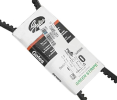
My favorite example of parts insanity. I don't have the Gates part # anymore, but it's about $20 or so at an auto parts store. The Piper sticker magically turns into a $170 part at Univar.

EDIT - It's a Gates 9380, $13 on Amazon.
Screenshot 2025-03-05 at 8.18.55 AM.png
 
Back
Top