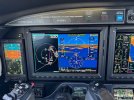
Netjets 680 down on Highway in Laredo

…..apparently now the investigation is focusing into possible fuel contamination and not to fuel exhaustion, it puzzles me the fact that there was not a post crash fire due to fuel remaining in the tanks which normally is also accompanied by a big explosion………especially after fuselage breakup……..
Maybe now you are see the problem inherent in trying to guess the cause of a mishap without access to all the information available to those tasked with determining a cause.

Nauga,
at the blindfolded darts match
 
…..apparently now the investigation is focusing into possible fuel contamination and not to fuel exhaustion, it puzzles me the fact that there was not a post crash fire due to fuel remaining in the tanks which normally is also accompanied by a big explosion………especially after fuselage breakup……..

The lack of explosion or major fire was a gift...

I'm sure helped a lot by a low impact angle, then flying it into the crash as long a possible. A sudden horizontal stop from impacting the concrete barrier and stout light pole appears caused most of the damage, rather than the initial contact with the highway.

Plus, I'd bet all power was switched off, the fuel tanks remained intact, and sealed batteries weren't breached.

Amazing that 5 out of 6 got out with what it sounds like are minor or no injuries. The cockpit voice recorder should reveal a lot.
 
iu
That could easily be 5606 or 2380. Is that the wing or a pylon by chance ?
 
…..apparently now the investigation is focusing into possible fuel contamination and not to fuel exhaustion, it puzzles me the fact that there was not a post crash fire due to fuel remaining in the tanks which normally is also accompanied by a big explosion………especially after fuselage breakup……..

Fuel is only one part of the fire triangle. Not every airplane crash is a fireball, and using lack of fire as a clue to fuel exhaustion is a poor correlation. Ignition is important and Jet fuel does not readily ignite unless atomized. If you look at the daytime photos of the crash site, you will notice a lot of floor dry spread on the roadway below.
 
The Navy taught me long ago that you can drop a lighted match into a bucket of JP-5 and it will not catch the fuel on fire.
 
That could easily be 5606 or 2380. Is that the wing or a pylon by chance ?
That's most likely fire fed by fuel from the broken line/s coming out of the left wing tank. Pictures also seem to show a large area of sanded or foamed fuel from the right wing on the lower level. They didn't run out of fuel due to not having enough. More than likely they were fueled for their original destination, KAUS. They most likely decided to forego a change to what they filed to avoid a possible delay and knew they were going to KLRD from brake release.
 
A brutal airplane crash from metal into concrete of the overpass (at probably 95+ Kts ) more than likely will create sparks during impact and rubbing, possibly starting the hydraulic fluid into a fire (or from the broken fuel lines too), but the wings did not catch fire, per the accident pictures ………(maybe just pure luck they did not, tanks remained intact upon the gruesome impact -no leaks whatsoever- or simply the tanks were empty!)

Recent airplane accidents trying to land have exploded or caught fire or both upon ground impact (FEDEX MD11, Greg Biffle C550 etc), that is very common but regretful episode on most airplane ground crashes………
 
Last edited:
Right, but perhaps that slipped through somehow?
You can't assume that what you know from G.A. transfers to airline or structured corporate flying. Some does, much of it does not.

I've never flow a C-680A, or similar, but a search found that it does have single-point refueling similar to airliners. The fuel truck is attached to the airplane's fueling port and the fueler fuels to the ordered fuel-on-board (FOB). He isn't pumping a set number of gallons or liters, as you do in over-wing fueling, he's fueling to the desired ramp fuel.

Others have pointed out how many things in the cockpit show you FOB and fuel at destination, including the alerts when arrival fuel is forecast to be below your minimum reserve fuel level. There's also the previously mentioned fuel level verification on the checklists before block out and again before takeoff. The later for long taxies to ensure that you haven't burned below your minimum takeoff fuel. If I load the route into the FMS before fueling has been completed, which I often do, I will receive a series of "USING RESERVE FUEL", AND, "INSUFFICIENT FUEL" alerts that won't stop until the airplane is fueled.

It would take many stacked failures/errors to fly that far without realizing that you were under-fueled. A private corporate jet flight might have fewer layers of redundancy, due to less structured procedures, but NetJets trains and flies like the airlines do.

A finding of them having taken off with insufficient fuel is very unlikely based on the information that is available at this time.

Also, the fuel slips that we get from Mexico show the uplift in pounds, not liters. Canada does liters--a major factor in the AC143 "Gimli Glider" accident.
 
After so many flights into Mexico (in piston and turbine) in three decades (and many other 135 Taxi or in-demand Operators that do fly into Mexico often ), I have never heard of any Turbine airplane being fueled with “contaminated fuel” in Mexico……….as it seems some doubts or questioning are now surfacing -or some comments made are suggesting-….
 
Last edited:
I have never heard of any Turbine airplane being fueled with “contaminated fuel”
Neither have I. Best guess would be contamination that eventually blocked fuel filters but that's a wild guess at how it could be possible. Turbines are not nearly as picky about what they burn as are reciprocating engines.
 
A brutal airplane crash from metal into concrete of the overpass (at probably 95+ Kts ) more than likely will create sparks during impact and rubbing, possibly starting the hydraulic fluid into a fire (or from the broken fuel lines too), but the wings did not catch fire, per the accident pictures ………(maybe just pure luck they did not, tanks remained intact upon the gruesome impact -no leaks whatsoever- or simply the tanks were empty!)

Recent airplane accidents trying to land have exploded or caught fire or both upon ground impact (FEDEX MD11, Greg Biffle C550 etc), that is very common but regretful episode on most airplane ground crashes………

Aluminum is non ferrous and doesn't spark on concrete. And again, it is about the state of the fuel, you can throw a lit match into a large puddle or tank of jet fuel and it will put out the match. Rupture that tank and cause the fuel to spray, that will burn and produce a fireball to make Michael Bay proud. Trying to press the case that no fire equals no fuel, especially in a jet, is a false premise. But don't worry, we will know more in a few weeks when the preliminary comes out.
 
Thanks for your explanation….

Gasoline vapors are more volatile that even a spark will ignite them; kerosene vapors need high heat to vaporize to make a flammable mixture, but still can ignite under the right circumstances such as under surface friction or abrasion, I.e like one produced during a crash elevates the surface temp and in contact with kerosene and a spark; otherwise no jet accident crash will ever catch fire or explode.

Jets are not made of aluminum metal exclusively, many parts are steel including many in the engine alone (Nickel/Chromium/Molybdenium steel alloys, Titanium alloys etc), for vanes ( stators), hot section casings, thrust reverses etc……
 
Last edited:
Neither have I. Best guess would be contamination that eventually blocked fuel filters but that's a wild guess at how it could be possible. Turbines are not nearly as picky about what they burn as are reciprocating engines.
Google "DEF jet fuel contamination". It usually shows up early in the flight. The three times I can think of it happened in the US.
 
Fuel contamination.... which becomes actionable that late in that flight's profile? Meh, pencil me as currently unconvinced of that theory. And no I'm not in the camp that thinks they ran out of gas either.

I'm thinking back about that video where something popped a big fireball in flight. Of course the video hasn't been verified as belonging to the accident flight, but I don't see fuel contamination fitting that fireball. I have seen plenty of FOD ingestion compressor stalls that lead to backpressure flame balls like that in the video. Can't see trailing smoke cuz it was night, further giving credence to the possibility they could have lost the energy surplus needed to go around or make it to the runway, due to dual ingestion. Even if partial on one engine and total on the other.
 
That's interesting. How did DEF get in the jet fuel?

Because the containers that DEF come in can look just like the containers Prist come in. At FBOs that mix Prist with the fuel at the truck when fueling, it is just a simple mistake. It has happened more than a few times in the US. The DEF crystalizes in the fuel, blocking ths fuel filters. In each case one or more aircraft lost partial or total power, but successfully landed. The failures have all happened relatively soon after takeoff, not at the end of flight.
 
Because the containers that DEF come in can look just like the containers Prist come in. At FBOs that mix Prist with the fuel at the truck when fueling, it is just a simple mistake. It has happened more than a few times in the US. The DEF crystalizes in the fuel, blocking ths fuel filters. In each case one or more aircraft lost partial or total power, but successfully landed. The failures have all happened relatively soon after takeoff, not at the end of flight.
And the DEF was most likely for the fuel trucks' diesel engines.
 
. The failures have all happened relatively soon after takeoff, not at the end of flight.
This last flight leg last for about 1:40 hrs-per FlightAware- but the emergency likely happened beyond the mid point…….somewhere close to LRD……hmmmmmm, very interesting if considering DEF as a possible factor, per above narrative….
 
Because the containers that DEF come in can look just like the containers Prist come in. At FBOs that mix Prist with the fuel at the truck when fueling, it is just a simple mistake. It has happened more than a few times in the US. The DEF crystalizes in the fuel, blocking ths fuel filters. In each case one or more aircraft lost partial or total power, but successfully landed. The failures have all happened relatively soon after takeoff, not at the end of flight.
Do they require DEF in Mexico?
 
That makes sense. We don't use Prist in transport jets. We have fuel/oil heat exchangers where heat is removed from the oil and transferred to the fuel.

It has been a big enough problem the FAA has put out multiple bulletins to airports and FBOs to ensure staff is properly trained, DEF and Prist are clearly marked and not stored together, and other methods to avoid the mix-up. It is only pure luck that this problem hasn't caused any death or injuries, just very expensive repairs to the aircraft.

Our FBO doesn't have trucks that use DEF yet, and all their Jet fuel comes pre-mixed so no Prist containers on the airport either.
 
Aluminum is non ferrous and doesn't spark on concrete. And again, it is about the state of the fuel, you can throw a lit match into a large puddle or tank of jet fuel and it will put out the match.
I don't think we need to debate whether a fire was possible. There was one. Regardless of how it happened.

The question is why the fuel in the tanks didn't burn. I was one of the early ones asking the question as to whether or not they might have run themselves dry and multiple people with experience with those systems have made very good arguments that it's basically impossible to launch without enough fuel on board. And it's not the "large puddle and a match" thing either, because there was a medium sized fire of *something* there. If the tanks were leaking, that would be enough heat to vaporize the fuel and cause it to burn. Seems like the only explanation is that, through some amazing luck, the tanks didn't breach.
 
250 IAS + true airspeed + tailwind….

I’ve seen ground speeds well above 300.
Probably could figure this out mathematically. But searched my photos with Apple AI, crazy technology. It found a pic of me doing 250 at 10,000 feet in my M600. That gives a true airspeed of 285, so only need a 15 knot tailwind to hit 300 knots ground speed. Not saying that sometimes people are coming in a little hot.

IMG_2383.jpeg
 
I don't think we need to debate whether a fire was possible. There was one. Regardless of how it happened.

The question is why the fuel in the tanks didn't burn. I was one of the early ones asking the question as to whether or not they might have run themselves dry and multiple people with experience with those systems have made very good arguments that it's basically impossible to launch without enough fuel on board. And it's not the "large puddle and a match" thing either, because there was a medium sized fire of *something* there. If the tanks were leaking, that would be enough heat to vaporize the fuel and cause it to burn. Seems like the only explanation is that, through some amazing luck, the tanks didn't breach.
I too posted the “dry tanks scenario” last Thursday and per the info I found on Aircraft Aluminum 2024, 6061 and 7025 , which may contain up to 0.5% Iron (for added tensile strenght ) do create tiny sparks if aluminum subjected to high speed friction or high pressure friction and dragging it on concrete (like an scenario of an airplane crashing against a concert barrier or a concrete runway), it generates tiny superheated shavings of metal burning which are enough to start a fire.
But also I do believe that with today’s advanced technology in business jets it is an impossibility to leave the field with not enough fuel because of several flags coming up.

A fuel leak in flight somehow is another possibility but remote.
Most people in here are not believers of the dry tanks factor, except one person (lol).
 
A fuel leak in flight somehow is another possibility but remote.
Most people in here are not believers of the dry tanks factor, except one person (lol).

I'm not saying its impossible, lord knows its happened. But I know Netjets operation very well, and I can't picture it. They operate more like a major airline that the average 91/135 operator. Their internal controls, plus the technology available in the aircraft, in my opinion would make the not taking off with enough fuel all but an impossibility. A leak in flight could be possible, but I wouldn't expect it. The way they circled away from the airport, seemingly under power, they had to think they would be able to land. Something happened at the point they turned for the highway. If that doorbell camera is to be believed, and I believe it is, something caused a bright flash at that point. Most likely an engine coming from together for some reason. There is also the dash video of the crane operator lifting the tail section, and you can see the underside of the right engine is blackened, but that wasn't where the fire was in the other videos.

Even then, losing one engine on final still shouldn't have caused the aircraft to not make the airport, so something else was going on. Fortunately the crew survived, the aircraft is investigable, and any black box data should be recoverable. The FAA and NTSB probably already have a good idea of the what if not the why. Given there haven't been any emergency ADs, SBs, or alerts put out, it probably is not something fleet wide.

 
Most places outside the US don’t pre-mix Prist. In fact Prist is not even available in many areas, you have to carry your own, and spray it in. Some places require that you spray it yourself as local rules may prohibit line workers from handling it due to it’s toxicity. In Mexico I have always had to order twist separately, and some places carry my own cans of Prist. I’ve never seen it available on the truck. I don’t usually to go to MMSD, I go to MMSL in Cabo, but since my plane needs Prist, I bring my own cans, or buy cans if it’s available. Here I think I am in Puerto Vallarta, and the fueler is spraying Prist under my watchful eye;-)

IMG_5599.jpeg
 
Most people speak very highly of Netjets as a well organized and safe 135 operation and run like a 121 in many aspects.
Per FlightAware, that day the crew departed DEN in the morning and when they got to LRD that night it had been 13 hrs duty time, it seems like a long duty day to me but I have never been a 135 or 121 pilot.

To pilots who know this operation well and present and ex Airline pilots:

Is 11 hrs-duty a long time that may have contributed to Fatigue of the pilots?
Is this type of duty time within the FAR guidelines for 121 and 135 parts, or maybe even within NetJet or an Airline own guidelines?
 
Last edited:
I'm not saying its impossible, lord knows its happened. But I know Netjets operation very well, and I can't picture it. They operate more like a major airline that the average 91/135 operator. Their internal controls, plus the technology available in the aircraft, in my opinion would make the not taking off with enough fuel all but an impossibility. A leak in flight could be possible, but I wouldn't expect it. The way they circled away from the airport, seemingly under power, they had to think they would be able to land. Something happened at the point they turned for the highway. If that doorbell camera is to be believed, and I believe it is, something caused a bright flash at that point. Most likely an engine coming from together for some reason. There is also the dash video of the crane operator lifting the tail section, and you can see the underside of the right engine is blackened, but that wasn't where the fire was in the other videos.

Even then, losing one engine on final still shouldn't have caused the aircraft to not make the airport, so something else was going on. Fortunately the crew survived, the aircraft is investigable, and any black box data should be recoverable. The FAA and NTSB probably already have a good idea of the what if not the why. Given there haven't been any emergency ADs, SBs, or alerts put out, it probably is not something fleet wide.
I have bought Prist in many places in Mexico, not a problem. Sometimes we carried our own. And always I was there when poured in by attendant!
 
Most people speak very highly of Netjets as a well organized and safe 135 operation and run like a 121 in many aspects.
Per FlightAware, that day the crew departed DEN in the morning and when they got to LRD that night it had been 13 hrs duty time, it seems like a long duty day to me but I have never been a 135 or 121 pilot.

To pilots who know this operation well and present and ex Airline pilots:

Is 13 hrs-duty a long time that may have contributed to Fatigue of the pilots?
Is this type of duty time within the FAR guidelines for 121 and 135 parts, or maybe even within NetJet or an Airline own guidelines?
The crew or the aircraft? It's not impossible that the crew changed. I don't know how to find that out unless NetJets has said so (which I could not find.)
 
The crew or the aircraft? It's not impossible that the crew changed. I don't know how to find that out unless NetJets has said so (which I could not find.)
For the crew. Do they change crews at NetJets in one day? I had thought only Airlines would do it…..
 
I was told early on by the recently retired NJ friend that the accident crew was on their third and last leg of the day when they diverted to Laredo.

If that information is correct, N523QS departed Denver mid-morning to Scottsdale. Changing crews in Scottsdale would make the next three legs: Scottsdale to Ensenada MX, Ensenada to Los Cabos, Los Cabos to Austin (diverting to Laredo)... which keeps them legal.
 
I was told early on by the recently retired NJ friend that the accident crew was on their third and last leg of the day when they diverted to Laredo.

If that information is correct, N523QS departed Denver mid-morning to Scottsdale. Changing crews in Scottsdale would make the next three legs: Scottsdale to Ensenada MX, Ensenada to Los Cabos, Los Cabos to Austin (diverting to Laredo)... which keeps them
From Scottsdale would have been 9 hrs duty time for the day for the crew…..
 
The crew or the aircraft? It's not impossible that the crew changed. I don't know how to find that out unless NetJets has said so (which I could not find.)
I apologize for my error, it would had been 11 hrs from DEN that day for the crew and not 13 hrs …..
 
Last edited:
Is 11 hrs-duty a long time that may have contributed to Fatigue of the pilots?
Is this type of duty time within the FAR guidelines for 121 and 135 parts, or maybe even within NetJet or an Airline own guidelines?
If you start in the morning, 14 hours is the duty limit under part 121 for a two-person crew. I wouldn't expect 91K to be more restrictive than that.
 
It would require equipment that isn’t necessarily required now, and would have the potential for dangerously slow airspeeds with strong tailwinds in some aircraft.
Could you imagine having to tailor your indicated speed for every change in altitude or direction under 10’000’ to produce a particular ground speed? You’d be setting power and retrimming every few seconds. That’s the biggest reason they don’t do it that way.

Keep it simple: use the airspeed that the airplane measures and at which it behaves aerodynamically, and accept the result. Everybody gets similar results when flying similar directions and altitudes and they don’t have to mess with distractions. And as you said, messing around too much with IAS could get problematic, quickly.
 
What's the chances of a bird strike?? I thought I saw a video where they were getting rid of fuel.
 
Back
Top