Netjets 680 down on Highway in Laredo

Question on this line from the prelim:

“As the airplane approached the US and Mexico border, the flight crew received a “FUEL BST PUMP ON R” CAS message, which indicated that the right fuel system had low fuel pressure.”

This to me seems to imply that the aircraft (or possibly the pilots) turned on a boost pump to help rectify the low pressure on the right engine fuel system. Is this a proper assumption?

I'm typed on the CE680 and have a QRH around here somewhere. I'll try to find it later.

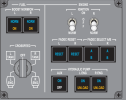
Here's the panel
1783872238042.png

From memory the boost switches are in NORMAL (blue) and activate automatically when low fuel pressure is sensed.

It's been a while since I flew one.
 
It certainly would have been elucidating if they had spoken to the condition of the crossfeed valve, as found. Kinda burying the lead there imo, given this is a pretty clear case of fuel leak causal dual flameout. Unless I missed it in the synopsis given by the uboobers.
 
I only wonder, per the Prelim report, after the pilots declared the emergency with Monterrey center due to multiple CAS messages and being handed off to Houston Center for a visual approach at KLRD for a 5 mile final, it was changed to a visual but longer 14 mile right turn 270 for 36R/L to loose altitude (Even when getting critical messages of Right Fuel press low and Fuel level low).
Unless we don’t know something else going on at the time - or I missed something in the prelim- could they not had stayed closer to the airport to loose altitude for a couple of laps down like the first choice was (within 5 miles from the airport), after all, the PIC during an emergency has priority for the type of decision making.
In The old days my instructor I remember telling me during an emergency at altitude stay as close to the airport as possible to loose altitude, don’t go too far out; Runways 36R/L at KLRD are over 8000 ft.
Again, Only a thought and we may hopefully know more at the final NTSB report probably in about 1-2 years.
 
Last edited:
I only wonder, per the Prelim report, after the pilots declared the emergency with Monterrey center due to multiple CAS messages and being handed off to Houston Center for a visual approach at KLRD for a 5 mile final, it was changed to a visual but longer 14 mile right turn 270 for 36R/L to loose altitude (Even when getting critical messages of Right Fuel press low and Fuel level low).
Unless we don’t know something else going on at the time - or I missed something in the prelim- could they not had stayed closer to the airport to loose altitude for a couple of laps down like the first choice was (within 5 miles from the airport), after all, the PIC during an emergency has priority for the type of decision making.
In The old days my instructor I remember telling me during an emergency at altitude stay as close to the airport as possible to loose altitude, don’t go too far out; Runways 36R/L at KLRD are over 8000 ft.
Again, Only a thought and we may hopefully know more at the final NTSB report probably in about 1-2 years.

The prelim seems noticeably vague, more than some. Part of me wonders what other indications they were receiving other than the CAS messages, fuel level, fuel flow, etc. I wonder if they thought the first issue was electrical, if the fuel warnings were also electrical faults rather than what it actually was. From the sounds of things, it was about 11 minutes from the first CAS message until touchdown, a fairly short window when getting bombarded with multiple warning messages and trying to react and troubleshoot while setting up for the emergency diversion. We also don't know yet the timeline when the fuel sensor port let go, was that the beginning of the CAS messages or earlier?

Yes hindsight says they maybe could have circled towards the airport instead of the 270 away, but they were following ATC direction and ATC probably didn't know the scope of the problem. The pilots may not have realized it either at that point. When things went downhill, they went downhill quickly and in a manner that isn't expected or trained for.
 
So this points to a mechanical failure, when do the AD’s or SB’s come out?
 
Agree, the failure of the fuel tube assembly warrants in my opinion an alert, SBI etc from the FAA to the rest of the fleet or any engine manufacturer this PN is used . Their silence tells me they are probably waiting for more research and data before they do it………
 
Agree, the failure of the fuel tube assembly warrants in my opinion an alert, SBI etc from the FAA to the rest of the fleet or any engine manufacturer this PN is used . Their silence tells me they are probably waiting for more research and data before they do it………

Maybe. We don't know yet whether the fuel tube was victim or attacker. The failure investigation has to be given time to drill down to root cause so that any AD, SB, etc., is directed toward the right thing.
 
Yes hindsight says they maybe could have circled towards the airport instead of the 270 away, but they were following ATC direction and ATC probably didn't know the scope of the problem. The pilots may not have realized it either at that point. When things went downhill, they went downhill quickly and in a manner that isn't expected or trained for.

I also wondered about the decision to set up for a straight in final, versus the option of maintaining as much altitude as possible to reach the field, and then circling on down for the possibility of conducting dead-stick landing if needed. Unless you're on fire, excess altitude is golden.

Wonder if a transcript of the CVR will ever be made available? It probably will have a bunch of WTF type expletive redactions... even so, it should offer a good example of how these two pilots managed to make the best of a terrible situation.
 
Agree, the failure of the fuel tube assembly warrants in my opinion an alert, SBI etc from the FAA to the rest of the fleet or any engine manufacturer this PN is used . Their silence tells me they are probably waiting for more research and data before they do it………
The mfg. of the engine will likely immediately know the stats; if this hasn't happened before, there won't likely be any action (that is, if it's a one-off caused by crappy maintenance, etc.)
 
I also wondered about the decision to set up for a straight in final, versus the option of maintaining as much altitude as possible to reach the field, and then circling on down for the possibility of conducting dead-stick landing if needed. Unless you're on fire, excess altitude is golden.

Wonder if a transcript of the CVR will ever be made available? It probably will have a bunch of WTF type expletive redactions... even so, it should offer a good example of how these two pilots managed to make the best of a terrible situation.
Yes, fly over the airport- or within few miles -and circle on down for a short downwind , base and final ; long runways in front (in this case 8200 and 8700 feet for rwys 36) in case you end up high on final …..after so many hours in an airplane the pilots should have an idea of the gliding characteristics of his/her airplane …. Prefer to end high than low and short of the runway ….my idea.
As far as the transcript of the CVR, I don’t think it will ever be released……probably too much lawyering going on too, my opinion again
 
Last edited:
The mfg. of the engine will likely immediately know the stats; if this hasn't happened before, there won't likely be any action (that is, if it's a one-off caused by crappy maintenance, etc.)

Company rumor has it that NJ has had similar (possibly identical) issues with this generator before, as have other operators. But, nothing more than hearsay at this time.
 
Agree, the failure of the fuel tube assembly warrants in my opinion an alert, SBI etc from the FAA to the rest of the fleet or any engine manufacturer this PN is used .
And in your opinion, what would the alert warn of?
Their silence tells me they are probably waiting for more research and data before they do it………
Now why would they bother to wait for more information, when the Internet (which has access to comparatively little information) has already figured it all out? :rolleyes:
 
Did they have an imbalance to start with? Did they respond to the fuel pressure low and follow the procedure which does have crossfeed involved. Does the procedure lead to determining a fuel leak and shutting down an engine and closing the spar valve? Did the electrical problems distract from finishing that procedure?
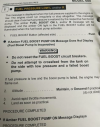
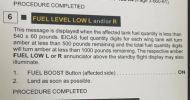
This is from a CE680 QRH. Should be similar to the 680A

1784045822185.png
 
Thank you, further speculation is pointless. First procedure may have led to warning not to Xfeed or Procedure Completed with boost pump on which wouldn't preclude Xfeeding. Neither procedure leads to suspecting a leak and closing the spar valve. NTSB only mentions right tank level low. NTSB doesn't mention any fuel balance CAS. Does the latitude have one?
 
Thank you, further speculation is pointless. First procedure may have led to warning not to Xfeed or Procedure Completed with boost pump on which wouldn't preclude Xfeeding. Neither procedure leads to suspecting a leak and closing the spar valve. NTSB only mentions right tank level low. NTSB doesn't mention any fuel balance CAS. Does the latitude have one?

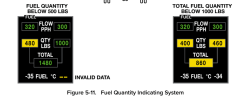
No, it doesn’t have a fuel imbalance CAS message. It does however give an indication on the fuel tank quantity and totalizer by changing colors at preset levels.
 
No, it doesn’t have a fuel imbalance CAS message. It does however give an indication on the fuel tank quantity and totalizer by changing colors at preset levels.
So we are left with having to deduce a fuel leak and shutting spar valve using systems knowledge while confronting compound problems.
 
"Lawyering" has nothing to do with a NTSB investigation.
I find it hard to believe that an aviation lawyer won’t be involved in an airplane accident investigation…be it a lawyer representing the airplane owner, insurance, pilots, victim survivors ….for their own investigation……this is a litigious society and the different parties want to find out their own conclusions and facts….I am not suggesting those lawyers will be involved in writing the NTSB prelim and final reports…..
 
And in your opinion, what would the alert warn of?
An Alert sent off to the operator of the airplane for the inspection of the suspect or failed part.
Now why would they bother to wait for more information, when the Internet (which has access to comparatively little information) has already figured it all out? :rolleyes:

I believe that all of our opinions , ideas, hipótesis, suggestions etc expresed herein of the issues at hand are just that ….and do not constitute a formal, official and legal root cause; I don’t see nothing wrong with that.
A media tool is just a form of communication for the people willing and wanting to participate and express their opinions, suggestions……
 
I find it hard to believe that an aviation lawyer won’t be involved in an airplane accident investigation…be it a lawyer representing the airplane owner, insurance, pilots, victim survivors ….for their own investigation……this is a litigious society and the different parties want to find out their own conclusions and facts….I am not suggesting those lawyers will be involved in writing the NTSB prelim and final reports…..
I have participated in numerous aviation mishap investigations (albeit military side, not civilian) and I can assure you that we don't let lawyers anywhere near our work. Lawyers can get access to factual information, but all of the personal statements, investigation deliberations, findings, and safety analysis are privileged information and will never be shared except in an appropriate safety report. If the lawyers want that stuff, they have to do their own interviews and investigation. The integrity of the safety investigation is absolutely critical to ensuring we get the best shot at figuring out what happened and how we can prevent it from happening again. People would never be honest if they thought it could be used against them.
 
I find it hard to believe that an aviation lawyer won’t be involved in an airplane accident investigation…be it a lawyer representing the airplane owner, insurance, pilots, victim survivors
I don't care what you believe or not, but the FACT is lawyers are not involved in the direct investigation. The manufacturer may have a lawyer, the insurance company or whatever but they are not allowed direct access.
….for their own investigation……
If they want information for their own investigation then they will wait like everyone else. It's not the job of the NTSB to be the investigative body for lawyers.
this is a litigious society and the different parties want to find out their own conclusions and facts….
Yep, and they wait for the professionals to do their work.
I am not suggesting those lawyers will be involved in writing the NTSB prelim and final reports…..
No, but you are alluding that attorneys could be on sight and influencing decisions for their clients, which is totally false.
 
Thank you, I don't remember ejectors as the primary fuel pumps from the tank in any of my birds. So would a ground school go over the last step of "If amber boost pump message on. PROCEDURE COMPLETED" with a discussion of why an ejector would not produce enough pressure, one being low or no motive fuel flow and why you might have low or no motive fuel flow? While the procedure is completed I don't think the troubleshooting is.
 
Thank you, I don't remember ejectors as the primary fuel pumps from the tank in any of my birds. So would a ground school go over the last step of "If amber boost pump message on. PROCEDURE COMPLETED" with a discussion of why an ejector would not produce enough pressure, one being low or no motive fuel flow and why you might have low or no motive fuel flow? While the procedure is completed I don't think the troubleshooting is.

Can't say I recalled that being discussed.
 
An Alert sent off to the operator of the airplane for the inspection of the suspect or failed part.

At the moment, we're looking at a damaged part. We don't know yet whether it failed or had damage inflicted upon it, and we don't know if some maintenance action may have been the proximate cause. Until there's a better determination, it's pretty tough to tell anyone what to inspect, and we don't want some sort of intrusive inspection that could itself induce a problem.

Patience.
 
I don't care what you believe or not, but the FACT is lawyers are not involved in the direct investigation. The manufacturer may have a lawyer, the insurance company or whatever but they are not allowed direct access.
That is what I stated!

If they want information for their own investigation then they will wait like everyone else. It's not the job of the NTSB to be the investigative body for lawyers.
That’s what I meant! Nothing prevents them from starting their own!
Yep, and they wait for the professionals to do their work.
Yep!
No, but you are alluding that attorneys could be on sight and influencing decisions for their clients, which is totally false.
I can assure you that lawyers have experts in this field and they don’t need the help from you or me!
 
As far as the transcript of the CVR, I don’t think it will ever be released……probably too much lawyering going on too, my opinion again

I am not suggesting those lawyers will be involved in writing the NTSB prelim and final reports…..
The transcript, if one is produced, will be in the docket for the investigation. By suggesting that lawers can suppress release you are very much suggesting that lawyers may be involved in the NTSB reports. I don't think it's malicious, I just don't think you understand the process. The docket will also contain a list of parties to the investigation by individual name and role. Look at dockets for closed investigations - I doubt you will find a lawyer listed as a party, even for those that released comms transcripts; but I encourage you to try to find one.

Nauga,
who has been privileged
It was never my intention to suggest that lawyers will be involved directly with the NTSB reports, but doing it alone on their own separate investigations; I clearly stated “ for their own investigation”; is it forbidden by law or unprofessional for them to do it that way: separate, independent, alone ?
 
It was never my intention to suggest that lawyers will be involved directly with the NTSB reports, but doing it alone on their own separate investigations; I clearly stated “ for their own investigation”; is it forbidden by law or unprofessional for them to do it that way: separate, independent, alone ?
How would a lawyer doing his own investigation have any influence over whether the NTSB releases a CVR transcript?
 
Can't say I recalled that being discussed.
So if the days of us having to know how to build the airplane, or know and understand the schematics are gone and all we need to know is how to read and follow steps on a screen it behooves the procedure writers to write procedures that take us to a safe point.
 
"Don't crossfeed" upon unexplained rapid fuel imbalance, or any fuel consumption question, is basic jet 101 in any operation. Certainly what we teach here day one in .mil multi-engine primary, whether pointy nose or fatty herbivore. Did their individual fuel quantities display(s) get taken out or something?
I don't think they had a rapid imbalance at first - At the time the pressure loss first happened, it would have still been balanced.

What's not clear from the report is whether the right engine was still developing full power until it flamed out. I find it hard to imagine that it could have with a fuel "leak" that big, but crazier things have happened.

One way or another, some fuel was getting to the engine and some was going out the hole. If the engine was still developing power, chances are the rate the fuel was exiting the tank was significantly higher. However, we don't know whether fuel flow was available to the pilots nor how it was measured, so we don't know what information they had available and whether or not it was good information.

I don't understand the alternative mechanism being proposed upon which an intact left plumbing engine gets flamed out at the same time as the one with the grand canyon hole in its independent manifold. The only possibility I can think of is crossfeed open.
Seems likely - I'd like to see the QRH for the 680A. It's possible that crossfeed is a troubleshooting step, or it's possible that NetJets maintenance control asked them to crossfeed for troubleshooting purposes, but somehow it seems that crossfeed was probably turned on and then not turned off in time.

Question on this line from the prelim:

“As the airplane approached the US and Mexico border, the flight crew received a “FUEL BST PUMP ON R” CAS message, which indicated that the right fuel system had low fuel pressure.”

This to me seems to imply that the aircraft (or possibly the pilots) turned on a boost pump to help rectify the low pressure on the right engine fuel system. Is this a proper assumption?
I think so. Turbines need high fuel pressure to run, and based on what Doc posted it seems like one way they ensure that's kept is with automated boost pumps.

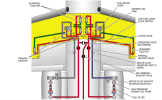
Ugh. That fuel system schematic looks VERY similar to the one for the jet I fly, and suffers from the same issue: Nowhere does it show where in the system things like fuel pressure/flow are actually measured. That matters when you're trying to figure out what's going on, and it drives me nuts that I have a cockpit indications that I don't know where in the system they're measured.
 
What I see lacking in the prelim report is anything about fire indications or FUEL LEVEL LOW L indication. I don’t see anything in the report confirming the fuel level or lack thereof to confirm the left side actually ran out of fuel.

I think we can accept that the video showing the external fire is real. The photos in the report showing the starter generator appear to show fire damage in the area. This seems to me that we should’ve seen a fire warning on the RH side with the appropriate checklist performed?

I realize that its a reach, but it wouldn’t be the first time the wrong engine got shut down…
 
I also wondered about the decision to set up for a straight in final, versus the option of maintaining as much altitude as possible to reach the field, and then circling on down for the possibility of conducting dead-stick landing if needed. Unless you're on fire, excess altitude is golden.

Wonder if a transcript of the CVR will ever be made available? It probably will have a bunch of WTF type expletive redactions... even so, it should offer a good example of how these two pilots managed to make the best of a terrible situation.

A release of the actual CVR recording will probably not be made available. A transcript most surely will.
 
Back
Top