
You are using an out of date browser. It may not display this or other websites correctly.
You should upgrade or use an alternative browser.
You should upgrade or use an alternative browser.
MOSAIC and Ron W question
- Thread starter Tony R
- Start date
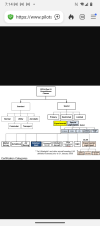
@wanttajaDoes this chart change with MOSAIC ?View attachment 151587

wanttaja
Final Approach
- Joined
- Jun 7, 2008
- Messages
- 5,667
- Location
- "War-Torn" Portland
- Display Name
- Ron Wanttaja
- Home Airfield
- Twin Oaks Airpark
As far as I know, the chart remains the same. The *definition* of the types of planes a Sport Pilot can fly has changed, EAB Condition Inspections can now be performed by owners with an LS-I Repairman Certificate, but offhand I don't see that the certification categories themselves have changed.
Ron Wanttaja
Ron Wanttaja

Kiddo's Driver
Pattern Altitude
And by holders of an LSRM, right?... EAB Condition Inspections can now be performed by owners with an LS-I Repairman Certificate....
Ron Wanttaja
The chart above applies to the Airworthiness Certificates and not any aircraft certification which MOSAIC creates a new Part 22 for that. So simply, S/E-LSAs will still operate under a Special Airworthiness Certificate as they do not have a type certificate.

Dana
Final Approach
Yes, the holder of an LSRI can inspect his own aircraft (which is new for E-AB with MOSAIC), and an LSRM can inspect anybody's aircraft (which hasn't changed).And by holders of an LSRM, right?
The chart still applies; MOSAIC just expands the existing SLSA category to larger and heavier aircraft.The chart above applies to the Airworthiness Certificates and not any aircraft certification which MOSAIC creates a new Part 22 for that.
Kiddo's Driver
Pattern Altitude
Oh, it absolutely has changed for LSRM. Being able to inspect non-ELSA experimental aircraft (E-AB) is new with MOSAIC. This was not allowed before. We could ONLY inspect E-LSA & S-LSA aircraft.Yes, the holder of an LSRI can inspect his own aircraft (which is new for E-AB with MOSAIC), and an LSRM can inspect anybody's aircraft (which hasn't changed).
The chart still applies; MOSAIC just expands the existing SLSA category to larger and heavier aircraft.
wanttaja
Final Approach
- Joined
- Jun 7, 2008
- Messages
- 5,667
- Location
- "War-Torn" Portland
- Display Name
- Ron Wanttaja
- Home Airfield
- Twin Oaks Airpark
But MOSAIC doesn't change the *certification categories* for aircraft, which was the original question. A Cessna 172 may now be flown by a Sport Pilot, but inspections must still be performed by an IA. If an airplane is in Standard category, its status is unchanged. Only aircraft in Special category have had their inspection requirements changed.Oh, it absolutely has changed for LSRM. Being able to inspect non-ELSA experimental aircraft (E-AB) is new with MOSAIC. This was not allowed before. We could ONLY inspect E-LSA & S-LSA aircraft.
Ron Wanttaja
Kiddo's Driver
Pattern Altitude
EDIT: Not agreed. You said "Only aircraft in Special category have had their inspection requirements changed." You also said "EAB Condition Inspections can now be performed by owners with an LS-I Repairman Certificate...".But MOSAIC doesn't change the *certification categories* for aircraft, which was the original question. A Cessna 172 may now be flown by a Sport Pilot, but inspections must still be performed by an IA. If an airplane is in Standard category, its status is unchanged. Only aircraft in Special category have had their inspection requirements changed.
Ron Wanttaja
EAB does not fall under the Special category. End Edit.
Agreed, but this is what I asked:

- Joined
- May 25, 2006
- Messages
- 21,997
- Location
- KTTA, North Carolina
- Display Name
- Who you kiddin?
- Home Airfield
- KTTA
Let's be careful with terminology here. Not trying to be the semantic police, but there was a lot of confusion introduced by MOSAIC changes.EDIT: Not agreed. You said "Only aircraft in Special category have had their inspection requirements changed." You also said "EAB Condition Inspections can now be performed by owners with an LS-I Repairman Certificate...".
EAB does not fall under the Special category. End Edit.
"Light Sport category aircraft" is a now a Part 22 certification category. It was expanded from the original mention in one section of Part 21 and the definition in Part 1. 21.190 basically defers to Part 22.
The term "Light sport category aircraft" has absolutely nothing todo with "sport pilot" privileges and limitations. You won't find the term "Light sport aircraft" mentioned anywhere in Part 61. As I've said in my presentations on the subject, if you use the term "LSA" in connection with a question about pilot privileges, you are automatically wrong.
Under MOSAIC, an LSRI may do the annual inspection on
Kit-Built ELSA
Converted SLSA to ELSA;
E-AB
they own. The privilege is no longer limited to builders.An LSRM may, in addition to returning to service light sport category aircraft, perform annual condition inspections on
Kit-Built ELSA
Converted SLSA to ELSA;
E-AB
whether or not they own the aircraft.I'm not sure what part of Ron's post you disagreed with, but a fully certified Part 23 (Car 5) aircraft like a Cessna 172 is definitely not a "Light Sport category aircraft," and cannot be maintained by an LSRI or LSRM.
Kiddo's Driver
Pattern Altitude
I disagree with the part where he said "Only aircraft in Special category have had their inspection requirements changed." E-AB do not fall under the special category yet their inspection requirements HAVE changed.Let's be careful with terminology here. Not trying to be the semantic police, but there was a lot of confusion introduced by MOSAIC changes.
"Light Sport category aircraft" is a now a Part 22 certification category. It was expanded from the original mention in one section of Part 21 and the definition in Part 1. 21.190 basically defers to Part 22.
The term "Light sport category aircraft" has absolutely nothing todo with "sport pilot" privileges and limitations. You won't find the term "Light sport aircraft" mentioned anywhere in Part 61. As I've said in my presentations on the subject, if you use the term "LSA" in connection with a question about pilot privileges, you are automatically wrong.
Under MOSAIC, an LSRI may do the annual inspection on
Kit-Built ELSAConverted SLSA to ELSA;E-ABthey own. The privilege is no longer limited to builders.
An LSRM may, in addition to returning to service light sport category aircraft, perform annual condition inspections on
Kit-Built ELSAConverted SLSA to ELSA;E-ABwhether or not they own the aircraft.
I'm not sure what part of Ron's post you disagreed with, but a fully certified Part 23 (Car 5) aircraft like a Cessna 172 is definitely not a "Light Sport category aircraft," and cannot be maintained by an LSRI or LSRM.
Previously, as an LSRM, I could only do condition inspections on S-LSA and E-LSA. My reading of MOSAIC says that I can now do condition inspections of E-AB, too. Don't read too far into my original question to Ron. He did not include LSRM in his statement about being able to do condition inspections on E-AB. I asked specifically about that statement. That is the only thing I was originally asking about.

tsts4
En-Route
To caveat the LRSI inspection privileges for E-AB aircraft, if the AWC OPLIMS were issued under previous versions of FAA Order 8130.2L, then an AWC change request has to be submitted to get the OPLIM wording changed that limits who can perform the condition inspection to the builder or an A & P.Let's be careful with terminology here. Not trying to be the semantic police, but there was a lot of confusion introduced by MOSAIC changes.
"Light Sport category aircraft" is a now a Part 22 certification category. It was expanded from the original mention in one section of Part 21 and the definition in Part 1. 21.190 basically defers to Part 22.
The term "Light sport category aircraft" has absolutely nothing todo with "sport pilot" privileges and limitations. You won't find the term "Light sport aircraft" mentioned anywhere in Part 61. As I've said in my presentations on the subject, if you use the term "LSA" in connection with a question about pilot privileges, you are automatically wrong.
Under MOSAIC, an LSRI may do the annual inspection on
Kit-Built ELSAConverted SLSA to ELSA;E-ABthey own. The privilege is no longer limited to builders.
An LSRM may, in addition to returning to service light sport category aircraft, perform annual condition inspections on
Kit-Built ELSAConverted SLSA to ELSA;E-ABwhether or not they own the aircraft.
I'm not sure what part of Ron's post you disagreed with, but a fully certified Part 23 (Car 5) aircraft like a Cessna 172 is definitely not a "Light Sport category aircraft," and cannot be maintained by an LSRI or LSRM.
wanttaja
Final Approach
- Joined
- Jun 7, 2008
- Messages
- 5,667
- Location
- "War-Torn" Portland
- Display Name
- Ron Wanttaja
- Home Airfield
- Twin Oaks Airpark
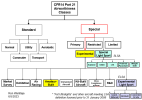
I used the wrong term. There are two airworthiness classes, Standard and Special. Special covers everything not, well, "standard"... Limited, Experimental, Special Light Sport, etc. Experimental *does* fall under Special Airworthiness.EDIT: Not agreed. You said "Only aircraft in Special category have had their inspection requirements changed." You also said "EAB Condition Inspections can now be performed by owners with an LS-I Repairman Certificate...".
EAB does not fall under the Special category. End Edit.
Ron Wanttaja
Kiddo's Driver
Pattern Altitude
Doh!I used the wrong term. There are two airworthiness classes, Standard and Special. Special covers everything not, well, "standard"... Limited, Experimental, Special Light Sport, etc. Experimental *does* fall under Special Airworthiness.
View attachment 151639
Ron Wanttaja
I stand corrected!
I zoomed in on the Special Light Sport box.
- Joined
- May 25, 2006
- Messages
- 21,997
- Location
- KTTA, North Carolina
- Display Name
- Who you kiddin?
- Home Airfield
- KTTA
That is correct.To caveat the LRSI inspection privileges for E-AB aircraft, if the AWC OPLIMS were issued under previous versions of FAA Order 8130.2L, then an AWC change request has to be submitted to get the OPLIM wording changed that limits who can perform the condition inspection to the builder or an A & P.
Kiddo's Driver
Pattern Altitude
Agree, but I didn't want to mention that since it is on the per E-AB airframe side, and this is already muddled enough.To caveat the LRSI inspection privileges for E-AB aircraft, if the AWC OPLIMS were issued under previous versions of FAA Order 8130.2L, then an AWC change request has to be submitted to get the OPLIM wording changed that limits who can perform the condition inspection to the builder or an A & P.
Kiddo's Driver
Pattern Altitude
So, 13 posts later...

right
wanttaja
Final Approach
- Joined
- Jun 7, 2008
- Messages
- 5,667
- Location
- "War-Torn" Portland
- Display Name
- Ron Wanttaja
- Home Airfield
- Twin Oaks Airpark
So, 13 posts later...
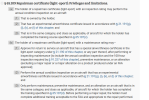
21.191(g) is the regulation that establishes Experimental Certificates for Experimental Amateur-Built aircraft. Hence 65.109(a) authorizes those with Light Sport Repairman certificates who own the aircraft (clause 1) to perform the annual condition inspection (clause 2). 65.109(b) authorizes those with Light Sport Maintenance certificates can perform the annual condition inspection on Experimental Amateur-Built aircraft, per clause 2.
Ron Wanttaja
Dana
Final Approach
Sorry, I meant that what doesn't change is that LSRM can inspect anybody's aircraft, unlike an LSRI who can inspect only his own. But yes, for both the ability to inspect E-ABs is new... but only if the operating limitations are updated to allow it. That's a no-brainer for the owner of an E-AB who holds an LSRI certificate, but an LSRM doing inspections for others will have to verify that the owner has updated the oplims first.Oh, it absolutely has changed for LSRM. Being able to inspect non-ELSA experimental aircraft (E-AB) is new with MOSAIC. This was not allowed before. We could ONLY inspect E-LSA & S-LSA aircraft.
Kiddo's Driver
Pattern Altitude
That whole updating the operating limits was an eye-opener for me when I saw it a couple of months ago. Seems like that could have been handled on the rule side without having to update every individual operating limit.Sorry, I meant that what doesn't change is that LSRM can inspect anybody's aircraft, unlike an LSRI who can inspect only his own. But yes, for both the ability to inspect E-ABs is new... but only if the operating limitations are updated to allow it. That's a no-brainer for the owner of an E-AB who holds an LSRI certificate, but an LSRM doing inspections for others will have to verify that the owner has updated the oplims first.
Kiddo's Driver
Pattern Altitude
Thanks, I was really just looking for a yes.View attachment 151665
21.191(g) is the regulation that establishes Experimental Certificates for Experimental Amateur-Built aircraft. Hence 65.109(a) authorizes those with Light Sport Repairman certificates who own the aircraft (clause 1) to perform the annual condition inspection (clause 2). 65.109(b) authorizes those with Light Sport Maintenance certificates can perform the annual condition inspection on Experimental Amateur-Built aircraft, per clause 2.
Ron Wanttaja

There are many posts about LSRI being able to perform E-AB condition inspections, and I don't want the expanded LSRM role to get lost in the discussion.
- Joined
- May 25, 2006
- Messages
- 21,997
- Location
- KTTA, North Carolina
- Display Name
- Who you kiddin?
- Home Airfield
- KTTA
I can sort of understand. The published limitations on the airworthiness certificate are the published limitations for that aircraft so I can understand the need for an update. But, although the AWC website isn't awful, it is complex enough to be subject to the usual user errors. What does surprise me, though is, if this is the only requested amendment, the FAA didn't come up with a more automated process than sending it to the local FSDO, given it's just a paperwork update.That whole updating the operating limits was an eye-opener for me when I saw it a couple of months ago. Seems like that could have been handled on the rule side without having to update every individual operating limit.
Unfortunately, there is no rule to handle that requirement. All experimental AWCs are issued operating limitations which are specific to that aircraft and are noted on the AWC itself. For context, a Standard AWC has the operating limitations and conditions listed in the type certificate which all aircraft conform to. So if an experimental aircraft never had a type certificate or no longer conforms to a type certificate, the operating limitations become the only method to regulate the requirements of that specific Exp-AWC and aircraft.Seems like that could have been handled on the rule side without having to update every individual operating limit.