Moonshot

I think a big factor is the willingness to accept risk was a lot higher in Apollo than it is in today’s space programs. The astronauts were willing to accept it, and everyone else was willing to let them.

They were figuring a lot of it out as they went, where today everything needs to be thoroughly checked and rechecked to ensure probability of failure is less than 10^-9 or something like that.

I think that's a big, big part of it. We wouldn't accept air travel today if it still carried the same risks the Wrights took.
 
I think that's a big, big part of it. We wouldn't accept air travel today if it still carried the same risks the Wrights took.

or the risk, time, and "comfort" of a DC-3 airline flight.

edit: now people will whine if they can't use their "smart" phone or don't have wifi available.
 
consider the challenge of simulating all the things that 4 biological units would do during the flight, consuming O2, producing CO2 (and waste products), moving around, heat load, etc etc etc.

I wonder if the mission is simply for the 4 astronauts to have a ride... I think not.


As an example of “tough to simulate” issues,...

 
As an example of “tough to simulate” issues,...

Human factors like this are some of the toughest aspects of space travel.

Story goes that when they were trying to design a toilet for use in space, they installed the prototype on the "Vomit Comet." Then there was a Second Lieutenant on standby, chugging down a lot of water. And when he finally had to "go", they bundled him into the airplane and took off so he could try out the facilities.

When I worked on Space Station in the '80s, wandered by a desk one day that had a book that undertook to scientifically study the, ummm, "waste ejection process." Had photos of naked men and women standing in front of a gridded background as they urinated. You could see exactly how it came out, and how it traveled in a 1-G environment. Don't recall if there were any photos of similar photography in the Vomit Comet.

As far as, mmm, "solid waste" is that we've got millions of years of evolution depending on gravity to pull the sticky substance away from our bodies. Otherwise, it's hard to achieve "separation." The ultimate solution is "Apollo Bags," dating from that program. This is just like the plastic bags you take along when walking your pooch...but are used to grab the material and pull it away from you. These are apparently still carried as a backup.

The shuttle toilet attempted to provide a more-familiar environment. It used suction past the user's nether regions to attempt to slurp the stuff away. Understand it didn't work real well. The user had to position their "exhaust port" very precisely to have any hope of it working. The seat included handles for the user to position themselves. The ground trainer had a camera in the drain of the loo, and the trainee would get used to the body position required by watching the camera. Story goes they had a camera in the shuttle head as well, this was not the case.

Mike Mullane's excellent book about his time in the Shuttle, "Riding Rockets," mentioned some civilian astronauts (typically those provided from industry, not NASA professionals) who tried to avoid having to "go" in-orbit just because it was such a messy process.

After slurping the stuff down, it was chopped up and dehydrated. Supposedly, two science fiction authors shared the drawings of toilet system, and one said, "Larry, the way I see it, the s*** is SUPPOSED to hit the fan...."

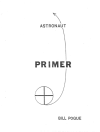
Working on the Space Station in the '80s, we had two Skylab astronauts as consultants... Bill Pogue and Jerry Carr. Pogue wrote a ~26 page book titled "The Astronaut Primer." It was formally published later, but he handed out xeroxed copies. In it, he very bluntly described the physiological issues of living in space. Takes all the romance out of it.....
1775152166810.png
Ron Wanttaja
 
AFAIK, only one nation has stuck a flag in the lunar soil.
The PR Chinese have also put a flag there- they seem to be recognized as the second country to do so:

I wouldn't be sure. The Soviets had a string of landers and rovers from 1965 to 1976, including at least one sample return mission and a couple of rovers. Wouldn't be surprised if there was a hammer-and-sickle on at least one of them.

Now, surely, only one nation's HUMANS have stuck a flag in the lunar soil....

Ron Wanttaja
That's a possibility about the Soviets. And no mere possibility about the humans- they did it!
 
You guys got it all wrong. The base on the dark side of the moon was built by the Deceptions. Buzz Aldrin discovered and concealed it.
 
AFAIK, only one nation has stuck a flag in the lunar soil.
but sadly we don't have anyone there standing watch
SpaceX does a much better job of both the video and the on-screen graphics. I did like that the speed, when it was displayed, as in mph instead of kph, though.
yes, but the ones I've watched live (a few of the Starship test flights) just give me a horrible feeling that they aren't taking it seriously. It's like they don't have any reverence for the big deal that it is.
 
About 1981, I was working for Boeing and was transferred to a new office. This was still the old "bullpen" setups. I went through my new desk, and found a small blue box atop a stack of magazines.

Turns out the box contained Lunar Orbiter cufflinks. About ten years ago, for Boeing's 100th anniversary, the Seattle Museum of Flight called for employees to bring in memorabilia for a celebratory display. My cuff links were accepted....
View attachment 151183
(I did the holder myself, with a 3D printer)

Provenance of such a find is always of benefits. The magazines in the drawer were Playboys from 1963. The museum declined to include them.

In my early days, I worked with a number of engineers who had been on the Lunar Orbiter program.

Ron Wanttaja
Ron…. What Boeing location were you at in 1981? I was working as a flight test engineer at Boeing Field.
 
yes, but the ones I've watched live (a few of the Starship test flights) just give me a horrible feeling that they aren't taking it seriously. It's like they don't have any reverence for the big deal that it is.
I'm not sure I understand. What leads you to that conclusion?
 
Everything is more difficult and costly now. Look at the time, expense, and bureaucracy involved in the simplest civil engineering projects now compared to the post-war era. It takes 15 years to plan and build a 12 mile passenger rail line these days.

How many new fighter jets or other military aircraft have we successfully developed this century? Especially compared to the Mercury and Apollo era.
How many years and dollars will it take to re-build the Key Bridge in Baltimore?
 
How many years and dollars will it take to re-build the Key Bridge in Baltimore?

insert Rondey's scene about business costs from "Back to School"
 
That was one of my points above.

You could tell in the broadcast that they were gushing about the feelings and emotions. I remember launches where they talked about the technical things (G’s, speeds, etc), stage separation. They actually missed the sep on video!
Not sure what broadcast you were watching, but the one I watched included all kinds of technical details, and I most definitely saw the SRB jettison.
 
Not sure what broadcast you were watching, but the one I watched included all kinds of technical details, and I most definitely saw the SRB jettison.
I was kind of half watching by that time. Did they call it out a few seconds before it happened and say "watch for this, its coming soon" or did they see it happen on the video and react?
 
Ron…. What Boeing location were you at in 1981? I was working as a flight test engineer at Boeing Field.
Started at the Developmental Center, working instrumentation for the MX (Peacekeeper) mobile basing concept.
1775165614108.png
When that went Tango Uniform, I worked out the Kent Space Center (18.26, 18-41, 18-61, 18-43 buildings) for about the rest of my career, though I did temporary duty at both DC and Plant II.

Ron Wanttaja
 
I was kind of half watching by that time. Did they call it out a few seconds before it happened and say "watch for this, its coming soon" or did they see it happen on the video and react?
My feed was something like “…throttle back and SRB separation in 10 seconds…”. Then they switched to about 15 seconds of crowd shots, and when they switched back the boosters had already left.
 
I was 3 something when the first person stepped on the moon. I remember, because I remember being bored and being told that I had to watch this anyway because it was important. They were right.

So I don't remember if there was much discussion back in those days about the virtues of funding space exploration. Much more recently, though, I remember hearing that the primary reason for walking away from Apollo was that we thought a much better use of the funds would be supporting some sort of endeavor in southeast Asia. Yeah, that was a good choice. (Not sure which color sarcasm is supposed to be.)

My takeaway now is that there's actually discussion about whether going to the moon again is a good idea. On the one hand I'm wondering what would have happened if, as a nation, we stayed within 300 miles of the Atlantic coast and just collectively wondered what was out there out west. One possibility is that would have been a peaceful future for us. More likely, though, is that someone else would have occupied the rest and pushed us off into the ocean.

And on the other, not to be political, but when I hear the argument that we'd be better off spending the money in something more worthy, I think back to what we've actually done that WAS worthy. We bought Alaska, that turned out pretty well. Might not have been kind, but the Spanish American war worked out OK for us, too. 1812? Not really our choice, sometimes a tutorial needs to be repeated. Interstate highway system wasn't perfect, but it worked out OK. Air traffic control, turns out that was a good idea. Lend-lease? Good plan. Maybe a dozen or so, in 250 years?

There really aren't that many things that have been done at a federal level that have actually worked out well, to me. NASA and before that NACA is one of them. Going to the moon, and coming back in one piece, isn't easy. Very much hope that this thing goes smoothly. One of the few bright points in the past 20+ years.
 
Not sure what broadcast you were watching, but the one I watched included all kinds of technical details, and I most definitely saw the SRB jettison.
I was at a friend’s and the wife and her friend had ABC on when we walked into the house. Not my remote control, lol!
 
I was watching the NASA feed. It cut away just before SRB separation and showed the crowd in the stands.
 
I was watching from the east causeway, booster sep looked great :cool:
 
Frank Borman still holds the record for venting from both sides on Apollo 8. Stuff floating everywhere!
I read “Rocket Men”. Yeah, that was pleasant. The recovery team members that opened the hatch after splashdown gagged at the smell.
 
You knew it was satirical. Everyone on this board knew it was satirical, even a 12 year old reading the whole para could pick up on the satire involved.

So, being intentionally obtuse is troll behavior.

Now, on to the incredibly important, serious, and world shaking developments of Artemis:


The program has an official plushie. (not satire, this time all the way to sarcasm)
The plushie is a long-time activity to get the public (these days the kids) involved. The crew is strapped down and the plushie is a quick and cute indication of rocket cutoff (duh - you can tell by the noise) and the environment is now in micro-gravity. From NASA website:
  • Purpose: As a Zero Gravity Indicator (ZGI), Rise floats when the capsule reaches microgravity, providing a clear, visual indicator for the crew and mission control.
  • Contents: A hidden SD card inside the plush holds the names of over 5.6 million people who participated in the "Send Your Name" campaign.
  • The Origin (1961): The tradition was actually started by Soviet cosmonaut Yuri Gagarin, who carried a small doll aboard Vostok 1 to observe the onset of weightlessness.
  • Snoopy and Apollo (1969): While NASA adopted plushies later, the character Snoopy has been a mascot since the Apollo era.
  • During Apollo 10, the Lunar Module was nicknamed " Snoopy".
  • The "Silver Snoopy" award. In the space community, it's the most coveted award possible.
 
There is a reason we have not found intelligent aliens. In the universe's 13 billions, at the very least the galaxy should be teeming with technological life. Imagine the technology attained by a million or billion year old civilization. They should be easy to see. They should be virtually everywhere. Why haven't we found them?

Because a single planet is a single point of failure.

While we live in a seemingly benign solar system orbiting a seemingly benign star, all it will take to wipe out humanity is a medium-sized asteroid. Or a coronal mass ejection stripping away the atmosphere in a heartbeat. Or a nuclear war. Or a bio-weapon induced zombie apocalypse. Or another inevitable ice age. Or Yellowstone's supervolcano to let loose. Or a magnetic field flip and a decade or two of a weaker magnetic field allowing the powerful rain of high-energy radiation from our "benign" star to fry us and our crops. Or any number of other earthbound and spacebound calamities.

History shows massive meteor hits have redirected evolution more than once. Another Carrington event or larger could wipe out massive amounts or all electronic tech.

Until we get off this rock, humanity has NO hope of long term survival. It's a race for survival.
I always thought the aliens looked at us and decided there was no intelligent life.

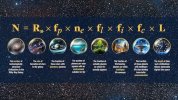
There's always the Drake Equation from 1961: https://en.wikipedia.org/wiki/Drake_equation


Drake_Equation.jpg
 
Human factors like this are some of the toughest aspects of space travel.

Story goes that when they were trying to design a toilet for use in space, they installed the prototype on the "Vomit Comet." Then there was a Second Lieutenant on standby, chugging down a lot of water. And when he finally had to "go", they bundled him into the airplane and took off so he could try out the facilities.

When I worked on Space Station in the '80s, wandered by a desk one day that had a book that undertook to scientifically study the, ummm, "waste ejection process." Had photos of naked men and women standing in front of a gridded background as they urinated. You could see exactly how it came out, and how it traveled in a 1-G environment. Don't recall if there were any photos of similar photography in the Vomit Comet.

As far as, mmm, "solid waste" is that we've got millions of years of evolution depending on gravity to pull the sticky substance away from our bodies. Otherwise, it's hard to achieve "separation." The ultimate solution is "Apollo Bags," dating from that program. This is just like the plastic bags you take along when walking your pooch...but are used to grab the material and pull it away from you. These are apparently still carried as a backup.

The shuttle toilet attempted to provide a more-familiar environment. It used suction past the user's nether regions to attempt to slurp the stuff away. Understand it didn't work real well. The user had to position their "exhaust port" very precisely to have any hope of it working. The seat included handles for the user to position themselves. The ground trainer had a camera in the drain of the loo, and the trainee would get used to the body position required by watching the camera. Story goes they had a camera in the shuttle head as well, this was not the case.

Mike Mullane's excellent book about his time in the Shuttle, "Riding Rockets," mentioned some civilian astronauts (typically those provided from industry, not NASA professionals) who tried to avoid having to "go" in-orbit just because it was such a messy process.

After slurping the stuff down, it was chopped up and dehydrated. Supposedly, two science fiction authors shared the drawings of toilet system, and one said, "Larry, the way I see it, the s*** is SUPPOSED to hit the fan...."

Working on the Space Station in the '80s, we had two Skylab astronauts as consultants... Bill Pogue and Jerry Carr. Pogue wrote a ~26 page book titled "The Astronaut Primer." It was formally published later, but he handed out xeroxed copies. In it, he very bluntly described the physiological issues of living in space. Takes all the romance out of it.....
View attachment 151216
Ron Wanttaja

According to a quick search, there's a copy at the Smithsonian Archives.
 
Working on the Space Station in the '80s, we had two Skylab astronauts as consultants... Bill Pogue and Jerry Carr. Pogue wrote a ~26 page book titled "The Astronaut Primer." It was formally published later, but he handed out xeroxed copies. In it, he very bluntly described the physiological issues of living in space. Takes all the romance out of it.....

According to a quick search, there's a copy at the Smithsonian Archives.
There's a copy in the Wanttaja archives, as well. :)

According to Google AI, "While it may not be available as a free official PDF, it can be found through used book retailers."

Ron Wanttaja

 
Back
Top