Meridian helo down in the Hudson river.

Yeah it’s a bit early to start putting blame on management / maintenance as well. I saw one post on FB that was titled there was no records for the aircraft. No, there was no flight recorder. The aircraft had maint records.
Let's leave the knee jerk flaming torches and pitchforks to the nitwits at large across the Internet. Calling for criminal investigations and such aren't called for at this early point in the investigation.

I feel such sadness for the family of those lost. What a horrible end to what was supposed to be a joyous occasion.
 
Or maybe they had reason to believe he was responsible. Or he got in a shouting match with the boss. Or he was just a dick and they were about to fire him anyway.
Well, if he was a dick and they were about to fire him anyway, after he got in a shouting match with the boss, because they had reason to believe he was responsible. It was well played. Because that is not what it looks like from the outside.
 
Oh, there's plenty of meaningful data. You do have to work at it though... And I've done that. Pretty much no matter how you slice it, 121 is safer than 135 is safer than 91.
Sure. But within the industry it’s a moot point due to a number of factors like different regulatory requirements or operational environments. So any comparative data serves no meaningful purpose as it lacks any common context between the different operational levels. For example, there are Part 91 operations that are just as safe as a Part 121 operation.

And nor do I believe the firing of the DO it indicative of anything at this point either.
 
The fact that someone seems to have survived to relay the story is pretty terrifying...

I investigated an accident in Vietnam that involved a UH-1H carrying troops, part of a Cav 'Blue Team'. Transmission lost fluid in level flight, about 1200 AGL. The transmission warning light was inop, which the pilot may not have recalled from inspecting the log book. So he had two indicators: pressure and temperature. Pressure read zero but temp was steady. Since he was over very hostile territory he voted 2 against 1 and kept flying. Rotor started slowing, he got out a mayday call, and the other aircraft saw the blades stop perpendicular to the fuselage and it spun in like a fixed wing from about 800 feet. There's more to the story but I'll leave it at that.
All died on impact. I was able to reach the crash site while it was still burning and retrieve the logbook which was still intact inside a protective case. Another long story I definitely won't go into. The accident was long ago, and some details are hazy and maybe blotted out.

After a few days of interviews with witnesses (another Huey along with Cobras) and a review of the aircraft maintenance records matched up to the logbook, I could visualize the scenario. The logbook showed a circle red x (inoperable but cleared for flight) for the transmission oil pressure warning light sending unit, if I recall correctly. First domino to fall, especially since the warning light bulb worked normally. The light would illuminate during self test, but the sending unit was bad. Circle red x notations were common, and typically only given a cursory review on preflight, if at all. Everybody was very fatigued in those days. What happened was there was a material failure causing loss of transmission fluid. In that particular aircraft, the only indication was the transmission oil pressure gauge went to zero. No warning light on the panel. No master caution light. The transmission oil temperature was in the normal range. So, the pilot was probably slow to notice the events, and possibly only after there was a tug he felt from decreasing rotor speed. As stated before, he had two out of three indications saying no problem, and he was over hostile territory. The clue to the investigation was that circle red x plus determining that transmission oil temperature will not change abruptly when fluid is evacuated, making it a misleading indication. Several dominoes fell in a row that day. The pilot weighed the risks as he saw them, kept flying, and lost his bet.
 
Last edited:
(The) transmission oil temperature will not change abruptly when fluid is evacuated, making it a misleading indication. Several dominoes fell in a row that day. The pilot weighed the risks as he saw them, kept flying, and lost his bet.
100 % a guess on my part. But the sending unit designed to measure a liquid's temperature, wasn't quick to measure the increasing air temperature?
 
100 % a guess on my part. But the sending unit designed to measure a liquid's temperature, wasn't quick to measure the increasing air temperature?
Don’t know. Maybe some of the folks out there who still operate surplus H models could answer that. I’ll see if I can find out. I’m curious now.
 
Isn’t it true the most dangerous flying is part 91 followed by part 135 then the safest, part 121 using hours flown, mileage flown, passengers flown? By far?

Not all 135 and 91 is created equal, but 121 is safer by several astronomical units.
 
100 % a guess on my part. But the sending unit designed to measure a liquid's temperature, wasn't quick to measure the increasing air temperature?
Nope. The air won't get as hot as the parts that aren't being cooled by oil anymore.
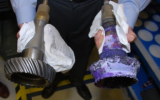
Some years ago a helicopter lost all its gearbox oil. Pressure went to 0 but the temperature stayed in the normal range. No other indications of a gearbox problem until the tail rotor drive failed.
Here's a pic of the failed tail rotor drive gear compared to a new one:
1744849164115.png
 
Nope. The air won't get as hot as the parts that aren't being cooled by oil anymore.
Some years ago a helicopter lost all its gearbox oil. Pressure went to 0 but the temperature stayed in the normal range. No other indications of a gearbox problem until the tail rotor drive failed.
Here's a pic of the failed tail rotor drive gear compared to a new one:
View attachment 139982
Just to clarify, did the transmission stay in its normal range, or did the sensor stay in its normal range?
 
Or maybe they had reason to believe he was responsible. Or he got in a shouting match with the boss. Or he was just a dick and they were about to fire him anyway.
Maybe... But the timing sure gives the appearance that it wasn't any of those things.

Sure. But within the industry it’s a moot point due to a number of factors like different regulatory requirements or operational environments. So any comparative data serves no meaningful purpose as it lacks any common context between the different operational levels.
That's why when I did my analysis I removed things like Alaska/foreign/oceanic ops, helicopters, tours, medevac, etc from the equation entirely. Each of those carries its own unique risks that simply aren't relevant to most other operations.

But, the different regulatory requirements are part of the reason for the differing levels of safety. That doesn't mean that comparative data is meaningless, especially when corrected for the sorts of operations that simply can't be done under 121.

For example, there are Part 91 operations that are just as safe as a Part 121 operation.
Yes... But that's mainly because the safe 91 (or 135) operations do most/all of the things a 121 operation would.

For example, there's plenty of corporate 91 operators that comply with IS-BAO. That means they have an SMS, a GOM, SOPs, plus LOTS of other safety oriented procedures in place, plus they are subjected to a thorough third-party audit each year as well has having an internal audit program throughout the year. Those are the safe ones, generally speaking. There's still a few that somehow manage to give the appearances to the auditors and slip through the cracks (I believe it was the Bedford crash that was IS-BAO Stage 3 certified, but IIRC that's been the only fatal by an IS-BAO organization).
 
I like Blancorio but a 91/135 comparison to 121 is ridiculous. 121 has far more safety controls & redundancy in place vs 91/135. But, just because 91/135 isn’t safer as a whole vs 121 doesn’t mean they’re dangerous either. Everyone uses “dangerous” these days in aviation as in “likely to cause harm or death.” It’s about levels of risk. There’s more risk involved in 91/135 but as a whole, not dangerous. It would be like saying flying on airlines decades ago (pre-2000s) was dangerous. No, higher risk than today but people still flew in relative safety back then.
 
That's why when I did my analysis I removed things like Alaska/foreign/oceanic ops, helicopters, tours, medevac, etc from the equation entirely. Each of those carries its own unique risks that simply aren't relevant to most other operations.
And that is my point. Perhaps you simply had a specific reason to compare the different segments. But technically, each segment is not completely separate as all ops segments have Part 91 requirements at their base. So Part 135 adds to or modifies Part 91 requirements. If you want to offer helicopter tours you must add on Part 136 to Part 135 and so on. Even trying to compare 135 < 9 pax to 135 >10 pax is moot simply because the differences are already listed in the rules. So unless I’ve completely missed your reasoning, I know of no industry level benefit for those comparisons based on my experiences outside of a generic accident rate per 100k hours.
 
Perhaps you simply had a specific reason to compare the different segments.
Mainly for sales purposes. When you fly single-engine turboprops and small jets, people want to know what the relative safety levels are, especially with the SETP.

So unless I’ve completely missed your reasoning, I know of no industry level benefit for those comparisons based on my experiences outside of a generic accident rate per 100k hours.
Naah, that's pretty much it. It's interesting to see the differences when you dig deeper too.
 
OK I’ll admit part 91 is not as dangerous as riding motorcycles in S Fla.
 
I like Blancorio but a 91/135 comparison to 121 is ridiculous. 121 has far more safety controls & redundancy in place vs 91/135. But, just because 91/135 isn’t safer as a whole vs 121 doesn’t mean they’re dangerous either. Everyone uses “dangerous” these days in aviation as in “likely to cause harm or death.” It’s about levels of risk. There’s more risk involved in 91/135 but as a whole, not dangerous. It would be like saying flying on airlines decades ago (pre-2000s) was dangerous. No, higher risk than today but people still flew in relative safety back then.
What bugs me is when people talk about the risks associated with the different types of flying and try to force 121 operational procedures as some kind of gold standard everyone needs to be safe. Its dumb. The different regulatory structures exist purposefully to accommodate different mission profiles.

Having flown 91, 135, 137, 121 and supplemental 121 and owned a 133 and 137 certificate I feel pretty comfortable stating none of it is inherently dangerous but it all has different risk profiles and due to that different requirements in day to day operations assessing/mitigating risks.

When some self proclaimed expert starts ****ting on a pilot or an operation based on nothing other than their 121 superiority biases I hit the ignore button pretty quickly.
 
I think too many people want "zero risk" until it interferes with their personal lifestyle. The minute risk reduction crosses with 121 flights costing 10% more, they'll be an outcry about cost and suddenly what was terrifying is now reasonable. I say this because other industries seem similar in comparison. Do commercial electrical work hot? It's seen as crazy dangerous these days, in a well lit building even with all the arc-flash gear in the world. Yes lineman are going to work high lines hot all the time, because we don't want to have people's AC units off in the summer. That's off topic, though.

Back to the 206... I've been trying to follow along, but the spinny wing things are not my forte. I know a transmission isn't ever supposed to just lock up, in terms of the input shaft becoming effectively locked to the case. Never heard of that happening in a car, probably because the clutch or torque converter would just eat the force as it's destroying itself. My question is, if the transmission did lock like that, should the resultant torque from the case to the rest of the helicopter be enough to de-mount it from the aircraft? Serious question, I have no idea.

Back to cars, I do know of a guy who managed to drop the transmission out of a pickup truck in the 80's. Apparently he drove it backwards, possibly up or down a grade, then shifted it from R to D. From the stories, the transmission apparently decided it wasn't going to do that, and dropped right out of the truck.

 
My question is, if the transmission did lock like that, should the resultant torque from the case to the rest of the helicopter be enough to de-mount it from the aircraft?
Not really. The more common failure path when a transmission has an internal fault is the transmission housing fails and either the top portion exits or everything self destructs in place. The NYC 206 roof failure points to a different failure path of which has been seen before with a MR impact ripping the deck structure out as one piece. With this model, the failure in flight is the anomaly and not the deck failure itself. And now that they have all the pieces I would expect a report sooner than later.
 
Are Bell blades unavailable or does bell wish these air frames were retired?
 
Are Bell blades unavailable
Yes. Bell blades are available.

or does bell wish these air frames were retired?
No. There are quite of few of those airframes and similar (206L-3) still flying commercially with over 10,000 hours on them. Even the latest Bell 505 certified in 2016 uses the same blades and drivetrain from the 206L-4.
 
Last edited:
Bet they start selling more of them.
I don't think so. The Van Horn L-model MR blades are not as popular as the B-model blades even though they give 3x the life limit. Not everyone is a fan of them. There were some ops that went to VH-L blades during a period where Bell had some blade vendor issues with long lead times. So if anyone would go back it might be those ops?? Regardless, the same "collective bounce" that the VH blades have per the ACS above, can happen with Bell blades installed and was noted in an old OSN. Its my understanding the reason behind that ACS was to follow up on that OSN and the VH Info Letter to see if it was more widespread than initially thought. While these ACS findings may be applied to this NYC accident in the future, it was issued for a separate incident in Sept 2024.
 
Copy. I didn't realize that. It had a file date of yesterday.
 
VH doing a bit of "nothing to see here":

To our valued 206 Long Ranger Operators and Partners:

This is an important update on Lightweight, High-Speed Vertical Vibration, and we appreciate both your attention to this message and assistance with relaying the information as widely as possible.

Over the last 6 years, this issue has been reported to VHA and the FAA on only 15 aircraft out of an installed fleet of nearly 300. While most aircraft will likely never experience this phenomenon, it remains imperative for all pilots be aware of the conditions in which it may arise and the appropriate recovery method to apply if it is encountered.

We have aggressively explored the issue over the past six months by conducting more than 60 instrumented flight tests using four different ships. The attached Service Bulletin, along with a forthcoming FAA-approved Flight Manual Supplement, represents the culmination of that effort.

The recovery method remains effective: DO NOT lower collective or enter an autorotation, but rather simply slow down and load the rotor; the vibration will cease almost immediately.

The range of corrective actions has been expanded based on several aircraft configuration and maintenance items that have been identified as contributors. In some cases, the correction of one or more of the contributors has been sufficient to eliminate the vibration entirely. In all cases a significant reduction in severity and increase in the speed at onset has been achieved.

This guy took a heli equipped with VH blades for a quick check with low fuel (400 lbs).
At 300 lbs he got the bouncing to happen, which he corrected with lateral cyclyc at the onset (0:11).
He thrn let it develop a second time (0:34) but for this instance he delayed the cyclic application. That resulted in the cyclic not having that much of an effect.

 
Back
Top