FlightmechH3
Line Up and Wait
- Joined
- Dec 30, 2021
- Messages
- 528
- Display Name
- FlightmechH3
4 on board. 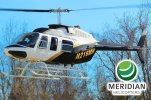

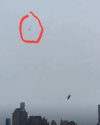


Three childrenI guess I'll be the first to say it: RIP to everyone involved in that tragedy.
Man, what an awful way to go.


Looks more like a tailboom mount failure in the full video. I'd be more interested to see what still attached to the tailboom mount ring at this point.Another video showed a very hard yaw to the right.
There's pics of where it hit the water.No one has said where that wound up.

What about a failure of the pylon isolation mount?Looks more like a tailboom mount failure in the full video. I'd be more interested to see what still attached to the tailboom mount ring at this point.
There's pics of where it hit the water.
From the videos, the loss of the MR is secondary to tailboom loss and the cabin spin to the right. I don't think an iso mount failure would give that sequence of events as it was in level flight and at speed. There was a 407 in Hawaii several years ago that went through a similar failure due to a tailboom mount bolt failure but all survived probably due to the difference in MR systems... and a bit of luck... as it had 6 people, at 1500 ft doing 130 knots when it happened.What about a failure of the pylon isolation mount?
Are there witness marks on the tail boom from the rotor (and vice-versa)? We'll hopefully find out.Another video showed a very hard yaw to the right. Tail boom folded and then the rotor head departed intact.
TR gearbox or driveshaft failure.
Are there witness marks on the tail boom from the rotor (and vice-versa)? We'll hopefully find out.


Not in this type helicopter but in others yes. However, the usual failure path for a seized transmission will cause the housing to fail along the internal gear lines and the MR would separate from the housing. In this case, the entire roof/deck structure failed due to more than just in a shear direction.Anyone ever had the transmission seize quickly enough to impart full-rotational force on the mounting structure?


Looks more like a tailboom mount failure in the full video. I'd be more interested to see what still attached to the tailboom mount ring at this point.
There's pics of where it hit the water.
In general yes. There are even some 407 parts that have been used to upgrade 206L4 tailbooms. However, the NTSB pictures show it wasn't the same failure point as the 206 tailboom mount rings remained attached through the breakup sequence. Instead the tailboom broke one bulkhead aft of the mount rings where the loads transfer from the mount fitting structure to the monocoque structure of the tailboom.Does the 206 use the same design as the 407 failure mentioned in this thread?

A lot of luck and skill mixed in that accident. That fact that he kept it upright was amazing. We get new bolts every 300 hrs now. Of course that aircraft had 24,000 hrs so there’s that. No telling how old the hardware was but the crack was actually in the fitting itself.Does the 206 use the same design as the 407 failure mentioned in this thread?

 rotormedia.com
Couldn’t be a A&P except my own planes. I give them credit. Had a local mechanic have a AeroStar go down. Bummed until they found out pilot just lost it in a thunderstorm.The day this happened and I saw the video I thought “there’s a mechanic on suicide watch somewhere.”
If the transmission is seized then no, you wouldn’t be able to auto. There would be nothing to disconnect the mast / rotor head from the xmsn. It would drag the rotor Nr down with it.Just wondering if the transmission seized, would the whole blade assembly with the transmission autorotate? So in the videos, would we be able to determine that by watching to see in the whole cowl is rotating versus just the blades?
The consensus I recall that was probably his saving grace was the aircraft weight and load kept the aircraft within a controllable envelope just as several other accidents that led to similar outcome. Back when the 407 TRs where hitting the t/boom, a 407 in the Gulf made it down minus the TR and vert fin because he had 3 bubbas in the back and a full bagg compartment. Same when a 412 lost a TR gearbox which normally would cause it to invert. However, they had 8 bubbas onboard and a full bagg compartment as well and even though the pilots counted 2 complete flips it hit the water upright and popped the floats. Sometimes people live right and reap the benefits.That fact that he kept it upright was amazing.
Some of the speculation points at a failed tail rotor driveshaft flailing around and severing the tailboom. The main rotor then impacts the departing tailboom, and that combined with the unusual loads from flying sideways causes the transmission attachment structure to fail.
Don't know enough about the 206's airframe to have an opinion on the theory above, but figured it would be worth sharing.

I investigated an accident in Vietnam that involved a UH-1H carrying troops, part of a Cav 'Blue Team'. Transmission lost fluid in level flight, about 1200 AGL. The transmission warning light was inop, which the pilot may not have recalled from inspecting the log book. So he had two indicators: pressure and temperature. Pressure read zero but temp was steady. Since he was over very hostile territory he voted 2 against 1 and kept flying. Rotor started slowing, he got out a mayday call, and the other aircraft saw the blades stop perpendicular to the fuselage and it spun in like a fixed wing from about 800 feet. There's more to the story but I'll leave it at that.If the transmission is seized then no, you wouldn’t be able to auto. There would be nothing to disconnect the mast / rotor head from the xmsn. It would drag the rotor Nr down with it.