Memory items and procedure suggestions - keep it simple

AlphaPilotFlyer

Line Up and Wait
Joined
Dec 15, 2020
Messages
509
Display Name
AlphaPilotFlyer
I’ve been a gold seal CFI for decades, instructing in single engine pistons to airliners. I still instruct GA locally occasionally and have found some of the procedures new pilots have been instructed to perform a bit concerning in terms of practicality and as a foundation to move forward to bigger flight decks.

I see more new pilots struggling with weird memory aids and techniques that have benefitted from this, including those retaking checkrides with far better results and confidence.

These are really fundamental skills that I would suggest all new pilots, and CFI s consider, especially CFIs as we set a standard that will be followed and engrained affecting students future progress.

I see more private, instrument and commercial pilots using abstract memory aids and odd procedures. I think this is mostly due to contemporary CFIs being new and coming from different schools that may not have consistency and picking up habits they hear. I have seen it mostly in part 61, but some from part 141 students, as well.

I recently worked with a pilot that failed a private ride, as well as a commercial applicant that wasn’t feeling great about upcoming ride….both appreciated the advice I gave and did great on their ride. Several others said it made them better in performing procedures as well, So thought I would share just one point that most believed made a big difference in their training. It’s simple stuff applicable to all planes and basis of airline training models developed by the industry.

Disclaimer… take this for what it’s worth, consider it or don’t. I’m always reluctant to give such advice online as there is always some contrarian to set me straight or pontificate on a better way and goes on about how it really should be done….if this is you, I find you annoying and please punch out of this post now. As I said, this has helped several pass check rides and make them more confident as well prepaid for the airline way of doing things…., and thought a few may find helpful after reading some posts.

I continue to see different procedures for basic events as takeoff, go around, etc… I recently worked with 2 pilots, for example, that used some ridiculous technique for their go around procedure they called the 4 C’s that called for “crunching” the throttle forward as step 1. Let’s start here….. the contemporary method of such procedures in big airplane world is typically called “LITANY” method…..which is a simple memorized repetitive verbal step by step procedure you would say aloud, it’s like mind muscle memory, and you simply follow the steps with action as you say your litany (litany basically means a list of repetitive actions), some may call it a memory item but difference being litany only includes actionable items, not conditions or triggers. For example, for a C172 go around it would be something like

“GO AROUND “,,,,,, MAX POWER,,,,,FLAPS 20,,,,,,FLAPS UP…….AFTER TAKEOFF CHECKLIST”

“FLAPS UP” as airspeed builds and descent rate reverses to climb and you are in control. (this works for a c172 as motorized flaps move slow but a mechanical flaps like a piper would require stopping at additional flap settings as airspeed increases.

So for go around its Simple items that will catch most significant errors. Some may call this a memory item procedure or trigger or action item depending your origins, but what’s important is it’s simple actionable items only, in a specific sequence that you follow while saying the item aloud.

By saying GO AROUND aloud, it sets your mind in the mode and brain muscle memory kicks in and you automatically say the litany….It’s almost like having a co-pilot reading you what to do step by step….you just need to have memorized the litany well so you you don’t have to think about it when distracted or under pressure.

Don’t use over complicated call outs like I’ve seen lately as , “power up, pitch up, trim, flaps one notch, speed, trim, flaps up, trim”…..you should know/be inherent you need to pitch up, trim, and establish Vy….. keep it simple. If you need to be reminded to fly away from the ground on a go around, consider different career or CFI.

These are basic verbal commands to yourself in a single pilot op, but necessary in crew cockpits to let the other pilot know what’s going on and follow…. it will help you or student transition to bigger and better aircraft… Learn the litany method early so you don’t have to relearn later or use such memory aids that don’t included things you don’t need to be reminded of like pitch up or trim….such things will soon be inherent. I’m sure there are several litany or like memory items example floating around the web, or make your own. Go arounds are not emergency procedures so take your time speaking the steps , allowing enough time to remain in control and trim as the plane changes configuration and power. I teach litany’s for other phases of flight as well, and its help many that were otherwise struggling from other learning methods.


One more thing….i see many pilots using different procedures for often the same mission. Example, when recovering from a stall, and either there’s no real procedure followed/used or it is a different memory aid specific for that maneuver. Find ways to use already known procedures for different events. For example, after stall and lowering nose and applying max power, at Vr (a speed you know the plane will fly in clean configuration) call “GO-AROUND” and use same go around litany procedure. It will get you safely climbing and cleaned up. Oh, and one more piece of advice for c172 drivers…. when applying full power, don’t push in the carb heat first then the throttle……the carb heat knob is positioned and has flat surface to ergonomically use your thumb to push it in as you push throttle in (at least from left seat)….its one less step.

Hope this may help someone going forward.
I think the real problem is treating the checklist procedure when studying as a bunch of steps that were written in a vacuum and not thinking about their purpose and reasoning.
 
I think it's funny anytime I see somebody write the word CRAFT down before copying a clearance.

No matter what you write down they're going to tell you what they're going to tell you just write down what they say it doesn't even make sense to have a memory item for something that somebody's going to tell you.

I think there's a lot of cfis who learned rote memorization stuff from cfis who learned rote memorization stuff and these things just get passed along and then everyone suddenly doing it and they can't tell you why.

I remember my instructor just berating me telling me I needed to twist 10 and turn 10 when flying a DME Arc and I'm like why don't I just stay 20 miles away from the fix? Why do I have to twist anything?
 
One thing that I always thought would be funny, conceptually, is if I went to an actual short field with my instructor and said "simulate maximum braking" while letting the airplane overshoot the runway.
 
I think it's funny anytime I see somebody write the word CRAFT down before copying a clearance
I agree but I think it’s downright hysterical that EFBs have a CRAFT scratchpad in which the the route has the same amount of space as the frequencies. I can’t see how anything more than “as filed” fits. Abbreviated.

I do understand CRAFT as an initial learning tool since it helps learn the order in which the clearance is given. Knowing that order has a benefit. But do you really need it after like three clearances (unless you file so rarely that you need the reminder).
 
I think it's funny anytime I see somebody write the word CRAFT down before copying a clearance.

No matter what you write down they're going to tell you what they're going to tell you just write down what they say it doesn't even make sense to have a memory item for something that somebody's going to tell you.

I have seen pilots miss the first couple items of a clearance because they were busy writing down C R A F T. I didn't know whether to laugh or cry.

I think there's a lot of cfis who learned rote memorization stuff from cfis who learned rote memorization stuff and these things just get passed along and then everyone suddenly doing it and they can't tell you why.

I remember my instructor just berating me telling me I needed to twist 10 and turn 10 when flying a DME Arc and I'm like why don't I just stay 20 miles away from the fix? Why do I have to twist anything?

I was one of those. I was taught turn 10 twist 10 in my instrument training, and when I became a CFI just taught it that way. For a while. Until I realized that while I understood it, it was really hard to explain. So then I started saying "just keep the DME at 10.0" and amazingly, they did fine (and didn't require brain gymnastics).

Incidentally, in my current job, we do this a lot. We fly a lot of arc segments and even complete circles, none of which are published. In the King Air the FMS has a "Circle" function, which will plot a circle of any radius around any waypoint, and the autopilot can couple to it - nice and easy. But in the Challenger, that function does not exist. So we fly it with the heading bug and just maintain that specified distance, just like we're talking about. (In a complete 360 degree orbit, this does get old rather quick.)
 
I was one of those. I was taught turn 10 twist 10 in my instrument training, and when I became a CFI just taught it that way. For a while. Until I realized that while I understood it, it was really hard to explain. So then I started saying "just keep the DME at 10.0" and amazingly, they did fine (and didn't require brain gymnastics).
I was lucky. The airplane I trained in didn’t have DME. I ended up teaching arcs to myself later. Of course, the books all talked about “turn 10, twist 10,” but it took exactly one DME arc to see how stupid it was. Making an incredibly simple procedure complicated. It was before I became a CFI, so I didn’t pass that silliness along.
 
I was lucky. The airplane I trained in didn’t have DME. I ended up teaching arcs to myself later. Of course, the books all talked about “turn 10, twist 10,” but it took exactly one DME arc to see how stupid it was. Making an incredibly simple procedure complicated. It was before I became a CFI, so I didn’t pass that silliness along.
Unfortunately some people take a lot more than one DME arc to see how stupid it is.

About the same number as how many licks it takes to get to the Tootsie Roll center of a Tootsie Pop…the world may never know.
 
Unfortunately some people take a lot more than one DME arc to see how stupid it is.

About the same number as how many licks it takes to get to the Tootsie Roll center of a Tootsie Pop…the world may never know.
It’s really related to my earlier comment about not thinking. And my sometimes repeated rant about instrument training making simple procedures seem as complicated as possible. DME arcs and holds are poster children.

I was lucky with DME arcs, probably because I wasn’t taught them. I wasn’t as lucky with holds. I had a horrible time with them, made worse by a post-rating CFII during an IPC. It took a decade for that light to come on.
 
I have seen pilots miss the first couple items of a clearance because they were busy writing down C R A F T. I didn't know whether to laugh or cry.

I've seeen pilots fall behind from the getgo because they get busy writing down "N123 you are cleared to Chicago Midway" - the pilot already knew he was N123 and was going to MDW. I tell students to write down stuff they already know, and scratch it off only if there are differences. Same with departure frequencies. You already know what its going to be - so best to write that down ahead of time, and scratch it off only if you are given something different.
 
I’ve been a gold seal CFI for decades, instructing in single engine pistons to airliners. I still instruct GA locally occasionally and have found some of the procedures new pilots have been instructed to perform a bit concerning in terms of practicality and as a foundation to move forward to bigger flight decks.

I see more new pilots struggling with weird memory aids and techniques that have benefitted from this, including those retaking checkrides with far better results and confidence.

These are really fundamental skills that I would suggest all new pilots, and CFI s consider, especially CFIs as we set a standard that will be followed and engrained affecting students future progress.

I see more private, instrument and commercial pilots using abstract memory aids and odd procedures. I think this is mostly due to contemporary CFIs being new and coming from different schools that may not have consistency and picking up habits they hear. I have seen it mostly in part 61, but some from part 141 students, as well.

I recently worked with a pilot that failed a private ride, as well as a commercial applicant that wasn’t feeling great about upcoming ride….both appreciated the advice I gave and did great on their ride. Several others said it made them better in performing procedures as well, So thought I would share just one point that most believed made a big difference in their training. It’s simple stuff applicable to all planes and basis of airline training models developed by the industry.

Disclaimer… take this for what it’s worth, consider it or don’t. I’m always reluctant to give such advice online as there is always some contrarian to set me straight or pontificate on a better way and goes on about how it really should be done….if this is you, I find you annoying and please punch out of this post now. As I said, this has helped several pass check rides and make them more confident as well prepaid for the airline way of doing things…., and thought a few may find helpful after reading some posts.

I continue to see different procedures for basic events as takeoff, go around, etc… I recently worked with 2 pilots, for example, that used some ridiculous technique for their go around procedure they called the 4 C’s that called for “crunching” the throttle forward as step 1. Let’s start here….. the contemporary method of such procedures in big airplane world is typically called “LITANY” method…..which is a simple memorized repetitive verbal step by step procedure you would say aloud, it’s like mind muscle memory, and you simply follow the steps with action as you say your litany (litany basically means a list of repetitive actions), some may call it a memory item but difference being litany only includes actionable items, not conditions or triggers. For example, for a C172 go around it would be something like

“GO AROUND “,,,,,, MAX POWER,,,,,FLAPS 20,,,,,,FLAPS UP…….AFTER TAKEOFF CHECKLIST”

“FLAPS UP” as airspeed builds and descent rate reverses to climb and you are in control. (this works for a c172 as motorized flaps move slow but a mechanical flaps like a piper would require stopping at additional flap settings as airspeed increases.

So for go around its Simple items that will catch most significant errors. Some may call this a memory item procedure or trigger or action item depending your origins, but what’s important is it’s simple actionable items only, in a specific sequence that you follow while saying the item aloud.

By saying GO AROUND aloud, it sets your mind in the mode and brain muscle memory kicks in and you automatically say the litany….It’s almost like having a co-pilot reading you what to do step by step….you just need to have memorized the litany well so you you don’t have to think about it when distracted or under pressure.

Don’t use over complicated call outs like I’ve seen lately as , “power up, pitch up, trim, flaps one notch, speed, trim, flaps up, trim”…..you should know/be inherent you need to pitch up, trim, and establish Vy….. keep it simple. If you need to be reminded to fly away from the ground on a go around, consider different career or CFI.

These are basic verbal commands to yourself in a single pilot op, but necessary in crew cockpits to let the other pilot know what’s going on and follow…. it will help you or student transition to bigger and better aircraft… Learn the litany method early so you don’t have to relearn later or use such memory aids that don’t included things you don’t need to be reminded of like pitch up or trim….such things will soon be inherent. I’m sure there are several litany or like memory items example floating around the web, or make your own. Go arounds are not emergency procedures so take your time speaking the steps , allowing enough time to remain in control and trim as the plane changes configuration and power. I teach litany’s for other phases of flight as well, and its help many that were otherwise struggling from other learning methods.


One more thing….i see many pilots using different procedures for often the same mission. Example, when recovering from a stall, and either there’s no real procedure followed/used or it is a different memory aid specific for that maneuver. Find ways to use already known procedures for different events. For example, after stall and lowering nose and applying max power, at Vr (a speed you know the plane will fly in clean configuration) call “GO-AROUND” and use same go around litany procedure. It will get you safely climbing and cleaned up. Oh, and one more piece of advice for c172 drivers…. when applying full power, don’t push in the carb heat first then the throttle……the carb heat knob is positioned and has flat surface to ergonomically use your thumb to push it in as you push throttle in (at least from left seat)….its one less step.

Hope this may help someone going forward.

I dislike acronyms with a passion - not just CRAFT but there are a bunch of them that even the FAA pushes. Here is a recent one I heard - "A TOMATO FLAMES" - apparently it stands for VFR equipment required. Then there are the 5 T's, 5 P's etc.. the list goes on. They are pushing the notion that we should just memorize and not think.
 
I dislike acronyms with a passion - not just CRAFT but there are a bunch of them that even the FAA pushes. Here is a recent one I heard - "A TOMATO FLAMES" - apparently it stands for VFR equipment required. Then there are the 5 T's, 5 P's etc.. the list goes on. They are pushing the notion that we should just memorize and not think.
There are lots of acronyms like TOMATO FLAMES and GRABCARD that are helpful for passing the written and oral that you never use again. Others like AVE-F and MEA you probably should refresh yourself on even thought the odds of you needing them are close to zero. The one that needs to be removed from every flight school is GUMPS. It becomes a useless mantra and has nothing to do with landing safely.
 
There are lots of acronyms like TOMATO FLAMES and GRABCARD that are helpful for passing the written and oral that you never use again.
I disagree…these two detract from one’s ability to pass an oral.
Others like AVE-F and MEA you probably should refresh yourself on even thought the odds of you needing them are close to zero.
Apparently I’ve survived pretty well without them…what are they for?
 
my point was less about acronyms as ground school memory aid, as I think most find them useful. as I. My point of contention was often homegrown procedures in flight. it seems they become more complicated and more detailed than they need and hindrance to modern procedures as one grows to bigger airplanes and learns crew concept procedures.

I don't blame the student, or even the new CFI as they learned a certain method. I am a huge fan of part 61 schools as many now 141 are mills and a $ grab. however. the lack of standardization is a issue in part 61 as there is no such standard across the board.
 
There are lots of acronyms like TOMATO FLAMES and GRABCARD that are helpful for passing the written and oral that you never use again. Others like AVE-F and MEA you probably should refresh yourself on even thought the odds of you needing them are close to zero. The one that needs to be removed from every flight school is GUMPS. It becomes a useless mantra and has nothing to do with landing safely.
The burning red fruit is probably the worst of the bunch since it's wrong and can lead to airworthiness violations. Non-scientific sample, but for years I've asked a simple airworthiness question online and during flight reviews and received far more incorrect answers from pilots who learned about burning red fruit than someone who didn't. Worst answer was, "it's not covered by TOMATO FLAMES so you're good to go" ... from a CFI.

The problem is that airworthiness starts with 91.213, but the use of the 91.205 mnemonic of the absolute minimum equipment required winds up in a special preferred position leading pilots to think it is only consideration. Worse, requiring it to be memorized, actively stops pilots from checking - or even knowing - there is are equipment and KOEL list in their POH.

I repeat this story so often its' a copy/paste:

It was my first student to take a checkride. When he went over the logbooks the morning of the checkride, he caught something that no one else had for months - an annual that had not been signed off by an IA. Apparently, with all the 100 hours before and after, it was missed and no one caught on. Fortunately, there was another airplane available.

Great, right? Student applicant reads the logs better than anyone else and understands what it means. Best indication of airworthiness knowledge in a private oral ever! I told my student to be sure to tell the DPE what happened. He did.

Yes he passed with flying colors. But the DPE's comment to me afterward? "I couldn't believe he didn't know TOMATO FLAMES."

That DPE is in prison now.
 
my point was less about acronyms as ground school memory aid, as I think most find them useful. as I. My point of contention was often homegrown procedures in flight. it seems they become more complicated and more detailed than they need and hindrance to modern procedures as one grows to bigger airplanes and learns crew concept procedures.

I don't blame the student, or even the new CFI as they learned a certain method. I am a huge fan of part 61 schools as many now 141 are mills and a $ grab. however. the lack of standardization is a issue in part 61 as there is no such standard across the board.
As you say, the student learns what they were taught and back up the line. But I'd be careful about the "home grown" label. It might just a different technique than you prefer. It probably doesn't apply to you (hope not), but there is a difference between procedure and technique. It can sometime be fuzzy, but the best description I've heard of the difference is that a procedures is what must be done while technique allows for differences and personal preferences in how it's done.

As CFIs it's essential we understand the difference. Understanding the difference is the basis of my First Commandment of Flight Instruction:
"Thou shalt not force a pilot to change a working technique just because you like another better."​

That doesn't mean ignore techniques you don't think work well. But it does mean that it's up to you to test whether it work for the client, and not force a change if it does.

I'll borrow an example from instrument training. Long before the AIM added a caution against loading Vectors to Final for an instrument approach, I ran into the issue it causes. So I think it's a lousy technique and never use it (unless it's the shortest path to recovering from something I screwed up). Some of that problem was mitigated by later Garmin navigators but not all.

So, let's say I am giving an IPC to a pilot who loads VTF when I announce "expect vectors to the final approach course." I just create an in-flight scenario where I end up sending them to a fix that is no longer in the flight plan. If they handle it by using a proper procedure such as reloading the approach (flying the moving map would not be proper procedure) I'm good. Other than "nice job," it might not even come up in the post-flight debrief.
 
But the DPE's comment to me afterward? "I couldn't believe he didn't know TOMATO FLAMES."
That was my point. You need to know some mnemonics because the examiner and the written expect them.
Same with IMSAFE and PPP. Does anyone you know use a personal preflight checklist with those items?

I had never heard of a KOEL until a few years ago because I had never flown an airplane with one.
 
TOMATO FLAMES is unneeded. Save acronyms for critical things - things that must absolutely be in memory because they are time and life critical, and cannot be looked up. No one ever died or bent metal because they took a few seconds to look in the POH or other source and find out if a particular instrument is required. Pilots have to know where to find the info, and have a pretty good general knowledge of equipment needs, but save RAM for the big stuff.

Same with GUMPS. For many planes, half of that list is useless. In a 150, let’s see: Gas - if the engine is running and we’re flying, duh, the fuel switch must be in the On position. Undercarriage - unless we hit a tree on departure, it’s down and locked. Mixture - legit. Prop - uh, yeah. It’s still there. Seat belts - ok. So, two items - and you still need a checklist to make sure nothing was missed because humans, yo.

If there’s an acronym that students need, it’s KISS.
 
That was my point. You need to know some mnemonics because the examiner and the written expect them.
Same with IMSAFE and PPP. Does anyone you know use a personal preflight checklist with those items?

I had never heard of a KOEL until a few years ago because I had never flown an airplane with one.
Yeah, but it didn't matter that my student didn't memorize the mnemonic, which I have never taught. And, after all, the DPE did go to prison, so if you want to place yourself in line with him, go right ahead :D

I really hate mnemonics because most of them become more important that what they stand for. And burning red fruit in particular actively detracts from pilot knowledge. All a DPE has to do is ask one of those equipment questions that is not covered and the checkride is over. And that's just bad.

OTOH, I do find certain mnemonics helpful. I mentioned CRAFT for initial training on taking down clearances. I think the 5Ts (not 6 or 7 or 8) can be helpful for both initial and rusty pilot recurrency - if they are uses as a prompt to anticipate what needs to be done next (not as what should have been done when you crossed a fix 10 seconds or 2 minutes ago). I use something different for that, but if you learned the Ts in training, might as well utilize that knowledge.
 
Last edited:
Short final: Down, Three Greens out loud was always drilled into me. My complex transition instructor would consider it a failure if you didn't not only observe the lights but fail to announce it.

Having the go around committed to memory is a good idea as well. Most planes it's just cram everything forward, raise the flaps and positive rate--gear up.
 
Prompted by a recent ad on FB…

Going back to Bryan’s comment, in the same vein as CRAFT are kneeboard/scratchpads with fill-in the boxes for ATIS. Unless you are a newbie or pilot who avoids airports with communications and never internalized the order, it’s hardly needed.
 
@AlphaPilotFlyer thanks for the post. Flows are where it's at, not memorizing the minutiae. For a go around "power flaps gear flaps flaps" will work in almost any aircraft. It's assumed you know what to do with pitch and trim along the way!

Never ever understood "CRAFT" - had to look it up and it turns out that's about what ATC is going to give you anyhow. No point to the useless acronym or any "learnings" associated with it. Go out and file three times and soon the student will learn that all the clearances are pretty much the same.

GUMP check do like since gravitate between low and slow and high and fast hence lots of opportunity to mess up. At least do the "U" part!
 
Never ever understood "CRAFT" - had to look it up and it turns out that's about what ATC is going to give you anyhow. No point to the useless acronym or any "learnings" associated with it. Go out and file three times and soon the student will learn that all the clearances are pretty much the same.
That's someone who sounds like they have been flying long enough to have forgotten what communications sounds like to the inexperienced. It's not about what ATC gives you, it's about the order in which it is given 100% of the time, which is really all that particular mnemonic is about. Those of us who teach see it all the time, even with certificated pilots who lack significant experience or who never quite got over mic fright.


(OMG! I can't believe I'm actually defending a mnemonic!!!)
 
Prompted by a recent ad on FB…

Going back to Bryan’s comment, in the same vein as CRAFT are kneeboard/scratchpads with fill-in the boxes for ATIS. Unless you are a newbie or pilot who avoids airports with communications and never internalized the order, it’s hardly needed.

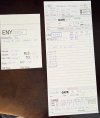
At the risk of sounding hypocritical, I do write a lot and I do have pre-made printouts I use to make sure I don't forget an important piece of information.
If we don't have a PDC, I have a sticky notepad of the sheets on the left that gets stuck to the panel (Normally the predeparture clearance goes there) Flight Num, Fuel Numbers, departure frequency typically get written on the PDC. We have a quick flow before departing and that little paper is helpful.

The larger page is for my personal clipboard when I am pilot monitoring. I guess I can't pick on the CRAFT kids. I have my own "system" I suppose.

_1_Untitled-1.jpg
 
who never quite got over mic fright.
See a lot of that on call-ups from presumably experienced pilots. Who you are, where you are, what you need. Done. Goal is to convey the most informations with the fewest words. We were recommended to listen to ATC when students, focussing on the 121 guys. Not perfect, but much more succinct than most.
 
The larger page is for my personal clipboard when I am pilot monitoring. I guess I can't pick on the CRAFT kids. I have my own "system" I suppose.
The CRAFT impersonator on the left - shouldn't "Squawk" be after "Dep. Freq."? :D I forget what it was, but I recall in some discussion someone dissing CRAFT but had their own acronym. The only thing I remember was that instead of R for "route, they used V for "Via."

I suspect we've all tried something like that as an organizational tool. They were pretty standard in the paper days for training purposes. The "problem" for me was that I don't really look at what I'm writing when I have a reason to look elsewhere (might be occupational habit). So those lines and boxes mean nothing to me anyway. As you and others described in not using CRAFT, I know what the order is, so writing a bunch of things, whether waypoints and airways or just a bunch of numbers, is more than enough.

I think that's also the reason I still use paper to take in-flight notes rather than my tablet. I still feel I have to look at what I'm writing when it's on the tablet. These days it's those 1/2 Gregg width reporter's notebooks. That seems to work best for me. The narrow field keeps it from getting too messy.
 
See a lot of that on call-ups from presumably experienced pilots. Who you are, where you are, what you need. Done. Goal is to convey the most informations with the fewest words. We were recommended to listen to ATC when students, focussing on the 121 guys. Not perfect, but much more succinct than most.
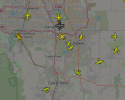
I flew out of KAPA for 20 years. One of the busiest Deltas in the NAS. When I moved to NC, I used to laugh when locals called RDU busy. Saturdays were especially busy with transients coming in for lunch and touch and goes in addition the the huge number of based aircraft and multiple flight schools. It's Sunday morning, traditionally quiet time, so not too busy at the moment.

1768151406639.png
Anyway, one Saturday, it was especially busy and the "um... this is...um..." initial calls were getting response like "aircraft calling Centennial Tower. Remain clear of the the Class Delta. Call us back in 20 minutes." OTOH, "Centennial Tower, Cessna 1234A. 7 south. Landing. Uniform" got landing instructions. People learned quickly. When I was teaching, I'd sometimes get the pushback that it was too short and "unfriendly." I made an analogy to Spok's line in Star Trek TOS's "Mirror Mirror." "It was far easier for you, as civilized men, to behave like barbarians than it was for them as barbarians to behave like civilized men." It's easier to add words when you are used to keeping things short than to subtract them if you are used to being wordy.
 
I see more new pilots struggling with weird memory aids and techniques that have benefitted from this, including those retaking checkrides with far better results and confidence.
Nothing wrong with memory aids, but they need to work for you (or the student). If something doesn't stick, have them talk to some other pilots or make up their own.

I've had some "stick" and be useful for years, and plenty of others I've heard and still don't know/can't remember what they mean. CIGAR TIPS? Uhhhh...

I continue to see different procedures for basic events as takeoff, go around, etc… I recently worked with 2 pilots, for example, that used some ridiculous technique for their go around procedure they called the 4 C’s that called for “crunching” the throttle forward as step 1. Let’s start here….. the contemporary method of such procedures in big airplane world is typically called “LITANY” method…..which is a simple memorized repetitive verbal step by step procedure you would say aloud, it’s like mind muscle memory, and you simply follow the steps with action as you say your litany (litany basically means a list of repetitive actions), some may call it a memory item but difference being litany only includes actionable items, not conditions or triggers. For example, for a C172 go around it would be something like

“GO AROUND “,,,,,, MAX POWER,,,,,FLAPS 20,,,,,,FLAPS UP…….AFTER TAKEOFF CHECKLIST”
See, I'd probably forget something in there, especially if I was a newer pilot. One of the ones that "stuck" was the go-around technique I learned from my primary CFI: "Climb it, clean it, cool it, and call it." Climb it by pitching and throttling up and verifying climb, clean it to get into the climb configuration, cool it (open cowl flaps or whatever you need to do to keep things cool on whatever plane you fly), and call it by announcing the go-around on CTAF or with ATC. Easy peasy lemon squeezy, and easy for me to remember.
 
That's someone who sounds like they have been flying long enough to have forgotten what communications sounds like to the inexperienced. It's not about what ATC gives you, it's about the order in which it is given 100% of the time, which is really all that particular mnemonic is about. Those of us who teach see it all the time, even with certificated pilots who lack significant experience or who never quite got over mic fright.


(OMG! I can't believe I'm actually defending a mnemonic!!!)
I'll defend it. I still wrote CRAFT on my notepad until my last day as F/O in 121. It helps keeps things organized. But when I hear influencers on social media use the term "CRAFT clearance" I cringe. Then again almost everything they do makes me cringe.
 
The larger page is for my personal clipboard when I am pilot monitoring. I guess I can't pick on the CRAFT kids. I have my own "system" I suppose.
I have been using a simple spiral notebook since before I got my instrument rating.

Get the ATIS. Write the letter in a circle.
Call for clearance. Copy it like:
RV HAFNR AF 30 E 90+10 4112 125.05
 
Call for clearance. Copy it like:
RV HAFNR AF 30 E 90+10 4112 125.05
You forgot C!

See, CRAFT is necessary here! :D

I do use FF"s "CRAFT" scratchpad. In my Scratchpads, I have ATIS (for departure), CRAFT, ATIS again (for destination), a blank one for writing down the phone numbers that ATC gives me :rofl:, and the PIREP one because otherwise I can never remember what all to give them or in what order.

The ATIS ones help me keep up with a faster ATIS by just putting a mark on OVC instead of writing OVC for example. CRAFT gives me a nice place to put everything and keeps me from being quite so messy as I would be freeform... And it helps to make sure I don't accidentally miss something. I don't see why that's a bad thing. :dunno:
 
Wow. Did not know there was so much hate for acronyms.

Personally, I'll keep using GUMPS and FHAATTT in the Cardinal, and ABCFAST is still great in an emergency and worked quite well for my engine out. Y'all don't like 'em, don't use them, but don't hate on those that find them useful.
 
I have been using a simple spiral notebook since before I got my instrument rating.

Get the ATIS. Write the letter in a circle.
Call for clearance. Copy it like:
RV HAFNR AF 30 E 90+10 4112 125.05
I circle the ATIS letter too.

I also typically leave out the destination when copying an IFR clearance. I’ve never received a departure clearance with a clearance limit other than the destination. And if I can’t recall where I’m going, it’s definitely time to quit flying.

But a difference. In mine, the squawk is last since it’s given last.
 
Back
Top