Let's Talk Sober DUI

They will never not back one of their own, no matter how wrong something is. Like the pilot in Colorado pulled over for some piddly reason, blinker or something. It is easy to see in the bodycam footage this guy is not impaired. First the I smell alcohol, then the I smell weed. But they are all so hell bent on giving him a DUI, the cops the prosecutor. Blood work shows something like a 1/4 tab of Benedryl in his blood. Instead of somebody saying "no this is wrong" and putting a stop to it they were trying to convict and destroy his life.

All of this to try and avoid a lawsuit for wrongful arrest.
Do you mean this case? https://www.businessinsider.com/harris-elias-colorado-400000-dui-arrest-passing-tests-2023-12

I didn’t see anything about the prosecutors. What conduct by prosecutors are you referring to, and where is it documented?
 
It’s absurd that police use driving violations as an excuse to get in peoples’ business. somebody doing something really unsafe summons them. but this piddly stuff giving them reasons to interrogate people is crazy and should not be acceptable
 
Do you mean this case? https://www.businessinsider.com/harris-elias-colorado-400000-dui-arrest-passing-tests-2023-12

I didn’t see anything about the prosecutors. What conduct by prosecutors are you referring to, and where is it documented?
That is probably it. I had not looked into if for a while. Back when it was going on they were still going to try to prosecute him.

This is whats wrong, the guy who arrests him simply just resigns and moves to another department. Then you have other cops retaliate against the falsely accused because somebody caused problems for their gang. To the cops it is simply a game because they know that no matter what their is no real consequences for them.
 
closing the resignation loophole would certainly go a long way to insulating the public from further injury by wilful omission. No idea how that could be accomplished in present circumstances, though I'm sure the legal brain trust on here could throw some ideas.
 
Let’s assume you are correct. Do you believe the average police officer has the resources to pay attorneys for nuisance lawsuits? How propose this brave new world you want gets funded?

The employing government entity or union could either pay or have attorneys on staff to handle "nuisance" lawsuits. In any case, I have no interest in further debating it with you, have a great weekend...
 
That is probably it. I had not looked into if for a while. Back when it was going on they were still going to try to prosecute him.

This is whats wrong, the guy who arrests him simply just resigns and moves to another department. Then you have other cops retaliate against the falsely accused because somebody caused problems for their gang. To the cops it is simply a game because they know that no matter what their is no real consequences for them.
Everything in that article is unproven allegations from the plaintiff. It's completely devoid of any facts. And this is the same guy who was mentioned earlier in the thread, still the only person who's been identified, and for some reason he keeps getting pulled over for DUI when he's sober. That's never happened to me even once. Has it happened to you? It's almost like he's doing something to convince the officers that he's intoxicated when he's not.
 
The employing government entity or union could either pay or have attorneys on staff to handle "nuisance" lawsuits. In any case, I have no interest in further debating it with you, have a great weekend...
And where do you think that money comes from Mr. Tax Payer? No debate, the kool aid you are drinking is coming the members of the ABA.
 
Everything in that article is unproven allegations from the plaintiff. It's completely devoid of any facts. And this is the same guy who was mentioned earlier in the thread, still the only person who's been identified, and for some reason he keeps getting pulled over for DUI when he's sober. That's never happened to me even once. Has it happened to you? It's almost like he's doing something to convince the officers that he's intoxicated when he's not.
The body cam is available or at least was. There was nothing he was doing that indicated intoxication. He was pulled over the second time for retaliation.

I am not anti police I just think there should be serious consequences for the individuals who violate rights, like a bad arrest. Otherwise it will never stop. It seems like the more "WE THE PEOPLE" tattoos they get the more bent they are on violating people rights. There should be higher decorum standards, face and neck tattoos screaming profanities would never be accepted in any other profession where somebody holds so much power.

When they give prizes and have competitions for the officers who give the most DUIs this garbage is going to happen.
 
I don't think the current status is all that terrible, on average, but that it's far from perfect. Especially if you're someone that isn't lucky and gets wound up in something silly. First, that the FAA is able to make decisions based on accusations rather than convictions is just silly. They're not doing that to protect the public, they're doing it to protect themselves. Just my opinion.

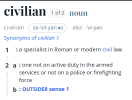
Second, I've worked with LE professionally for about 30 years. Kinda like pilots, they're mostly good people. Unlike pilots, they get picked on a lot, and some of them don't do well with that. Maybe because of that, they tend to isolate themselves, and many even view LE as different from what some will call "civilians". If you're not subject to UCMJ, you're a civilian. That isolationism isn't good for anyone, nor is special treatment, again in my opinion. It reinforces an us vs them mindset.

Most every profession is subject to being sued. If an engineer designs a bridge wrong, or a doctor botches an operation, they can expect to be sued. Sometimes even if they don't do anything wrong. There's a potential to lose a license even if there's no criminal intent. So doctors, engineers, even computer people carry liability insurance. It doesn't deter people from entering the field, and it may help protect against reckless behavior and even reckless training. There's no reason why a department or the union can't carry liability insurance for it's members. It would be an incentive for better training and better policies. Most of the time attorneys take contingency work only if they believe they're going to win, so if the doctor, engineer, police guy is clearly in the right, there usually isn't a problem.

Random true story, from a long time ago: I'm a kid, sitting in the office of a local insurance agent. No one pays attention to me because I'm just a kid. The discussion is between the agent and the local chief of police. It's a small town, maybe 3 officers. Insurance guy more or less has to tell the chief that his guys can't keep wrecking cars, especially out of town, on high speed chases for "stupid sh*t". This is in the 70's. Bottom line, the department changed the rules around pursuit and maybe saved some lives in the process. (First part fact, second part speculation based on the guys being viewed as nuts.)

My bottom line - different rules for different people doesn't lead to a good outcome. Whether that's immunity for LE vs a professional driver, or different medical rules for a guy flying an airplane vs a truck pulling 10,000 gallons of gasoline.
The use of the term civilian always irked the hell out of me when I was working as a patrol officer. Seriously MF’f you’re a civilian. WTF???
 
I don’t care dude. I’ve walked that line. I know it’s anecdotal but I’m telling you full stop. 100% of the conversations I had on the job with guys violating people rights were the guys calling our citizens civilians. You can wipe your ass with the dictionary.

When you use any word or term to separate yourself from the populace you are serving it is not a good outcome.

Edit to add:

This is not about law school vocabulary. It’s vital for the cops to be part of the community. Anything that allows the enforcement to be separated from the enforced is subversive. I’ll let you figure out the technical accuracy of the vocabulary. I’m just a grunt. But once upon a time I was the grunt that could take away your freedom based on nothing but my word. That authority needs reasonable constraint. Having a real emotional connection to the community is vital.

That’s the primary driver to my objection to qualified immunity. I can’t imagine anything more effective at making LEO feel superior and separate from the population than removing consequences to their decisions.
 
Last edited:
My bottom line - different rules for different people doesn't lead to a good outcome. Whether that's immunity for LE vs a professional driver, or different medical rules for a guy flying an airplane vs a truck pulling 10,000 gallons of gasoline.

But cops ARE different. Alone among professions, their job sometimes requires them to use force on citizens on behalf of the government. On behalf of us.

By using them in that capacity, the government incurs three obligations. First, to use leadership, discipline, training, and selection to ensure their actions are appropriate. Second, to punish them when their actions are wrong. Third, to protect them from outside punishment unless they cross very clear lines. Qualified immunity does that.

I was Army special forces for 20 years, and spent several of those years downrange interacting with populations that were trying to kill us. We had a lot more leeway to use force, and a lot more force to use. But using indiscriminate force was counter productive. The solution was a very high standard of discipline and training, and above all a very high degree of selectivity in who you put in those positions. Many people are just not suitable for such a work environment.

Not everyone is suitable for LEO. It takes a particular psychological makeup to be capable and willing to use force and yet exercise self restraint in a confrontation.

IMO LEO agencies are often unable to be selective enough in hiring. State and Federal agencies often pay well and can be selective (some are still duds). Some local departments are also highly professional. But local LEO in many cases do not pay enough and have trouble filling their ranks. That causes them to tolerate officers who should not be there, and to rehire those who have proven unsuitable elsewhere but are credentialed.

Unions play a negative role too. Cops have a very tough job and deserve the ability to advocate collectively for better conditions. But Unions getting involved in disciplinary actions is wildly inappropriate, because it impedes the government from meeting their responsibility to hold officers accountable and get rid of unsuitable ones.

My business does a lot of training support to military special ops. I sometimes hire local LEO as role players. Once I hired several dozen local cops to simulate a civil disturbance. 95% of them were great guys who did a fantastic job. Their experience was super valuable to the military guys being trained, who had very limited experience in that kind of situation.

But a handful of them were absolute mental cases. I watched them closely and they clearly enjoyed confrontation. I had to yank several off the line because they just could not restrain themselves from escalating situations, even in a pretend scenario.

As a society, we get what we pay for.
 
Last edited:
But LEO are different. Alone among domestic professions, their job sometimes requires them to do bad things to people on behalf of the government.

By using them in that capacity, the government incurs three obligations. First, to use leadership, discipline, training, and selection to ensure their actions are appropriate. Second, to punish them when their actions are wrong. Third, to protect them from outside punishment unless they cross very clear lines. Qualified immunity does that.

I was Army special forces for 20 years, and spent about 6 of those years downrange in various places interacting with populations that were actively trying to kill us. We had a lot more leeway to use force, and a lot more force to use. But using force except in a highly selective manner was counter productive. The solution was a very high standard of discipline and training, and above all a very high degree of selectivity in who you put in those positions. Many people are just not suitable for such a work environment.

Not everyone is suitable for LEO. It takes a particular psychological makeup to be capable of using force or legal power and yet exercise self restraint in a confrontation.

IMO LEO are unable to be as selective as they should be. State and Federal agencies often pay well and can be selective (some are still duds). Some local departments are also highly professional. But local LEO in many cases do not pay enough and have trouble filling their ranks. That causes them to tolerate officers who should not be there, and to rehire those who have failed elsewhere but are credentialed.

In some cases Unions play a role too. Cops have a tough job and deserve the ability to advocate collectively for better conditions. But unions getting involved in disciplinary actions is wildly inappropriate, because it impedes the government from holding officers accountable and getting rid of unsuitable ones.

My business does a lot of training support to military special ops. On occasion I have hired local LEO as role players. Once I hired several dozen local cops to simulate a civil disturbance. 95% of them were great guys who did a fantastic job. Their experience was super valuable to the military guys being trained, who had very limited experience in that kind of situation.

But a handful of them were absolute mental cases. I watched their behavior and they clearly drew pleasure from being confrontational. I had to yank several off the line because they just could not constrain themselves from escalating situations, even in a pretend scenario.

As a society, we get what we pay for.
This was a rather notorious cop locally before the incident.


TLDR- cop and his wife were stealing money from the police explorer program for years. Cop knew he was had and staged his own suicide. Manhunt ensues for weeks. True story comes out. Wife got 24 months probation. And just recently somehow was able to get a million dollar pension settlement for survivors benefits.

It's truly unfortunate the bad ones are able to stick around and get backing from the union. It makes them all look bad.
 
I strongly agree with the inappropriateness of any LEO referring to "civilians" in any context. They are sooner or later going to cause their force public embarrassment, or worse.

Having been shot at and missed as an ordinary citizen, and was a Drafted Citizen Soldier, I am not happy with the idea that only LEO's are to be respected for their actions during riots. Fire departments and ambulance crews are included, but utility employees are out there too, and get killed. They are not on the memorials. At my company, 6 months base pay, and sorry your husband was killed during the Martin Luther King riots. LEO, on the other hand were killed in the line of duty, and family had survivors income until eligible to receive retirement income.

I just happened to be on the weekend schedule that week, but others were paid overtime to cover all parts of Washington DC during the riots, and we did all that was needed to keep the electricity on . The company duty captain of the guard force had a bullet come in the drivers window (open) and out his side window (closed) which missed both of them.

Thread drift....
 
That's a really big question and one on which I'm unqualified to give a thorough answer as I can only answer for my own agency, not the hundreds or thousands of other agencies out there. So I will give you some info on how it works for us, but take this with that caveat in mind.

First of all, it depends on where an officer is in his career. What happens to a probationary staff member versus what happens to a guy 6 months from retirement are going to be different. If an officer is in his probationary year, there is no cause necessary for termination. If a rookie messes up, his response will determine what happens: if he takes the criticism, it's probably a non-event, but if he bucks, he might not be cut out for this line of work. Minor mistake, probably overlooked by supervisors and just addressed by more senior officers. Moderate mistake, dealt with by supervisors (Lieutenants usually, maybe the captain). A severe mistake gets referred straight to the top and usually ends in termination, or as someone referenced earlier in this thread, resignation. We all hate that because it means that they can theoretically come back later, or at least get a job with a different agency.

If it's a guy with a couple of years in, he will get addressed by senior officers for a minor error and maybe even a moderate one. For a serious error, it probably goes to the top again, but this time, more likely for suspension than termination. One guy messed up to the point that I'm not sure how he still has a job and he just got 30 days on the street with no pay. (And while he hasn't messed up like that again, he's still not a great officer.)

For somebody at retirement eligibility, for something severe, he may be told to put in his retirement paperwork. "Dude, you've put in 20+ years, but we can't keep you on with that infraction. You need to go, but we don't want to cheat you out of all that invested time, so just retire rather than get fired."

And I do have to add this: depending on the severity of the offense, if it happens on duty, we can be referred to the Office of Internal Affairs, Office of the Inspector General, or the FBI for prosecution. I have seen that a couple of times and it isn't pretty. (Off-duty stuff is separate and can still be prosecuted, but flows through a different chain, although it can still result in suspension/termination from work.)

As far as performance metrics, I won't go into the details, but I get evaluated quarterly and annually on 5 primary criteria. If I get Outstanding ratings on at least three of them for the year (which is a culmination of the quarterly evals) then I am in line for a pay raise, cash incentive, or additional time off. That motivates a lot of people to perform well and not mess up too badly. (One of the metrics is communication, which, based on the length of these posts, you can probably guess, I usually get an O on that one! lol)

Thanks for that background.
 
Totally personal, but I’ve always referred to myself as a civilian. I consider the alternative to be military, which I am/was not. My dad was military, both of my grandfathers were military, but I consider myself a civilian.
 
The problem is registering no BAC/no detectable alcohol or drugs doesn’t prove a person wasn’t impaired.

I'd argue that the average American driver is impaired to the point of being a safety risk, purely due to their limited hand eye coordination, depth perception, awareness of surroundings, and probably their own limited mental faculties. Booze is just an amplifying factor. Nearly nobody is competent behind the wheel at any point in time.
 
I'd argue that the average American driver is impaired to the point of being a safety risk, purely due to their limited hand eye coordination, depth perception, awareness of surroundings, and probably their own limited mental faculties. Booze is just an amplifying factor. Nearly nobody is competent behind the wheel at any point in time.
You left out “abject illiteracy,” as in being unable to understand STOP signs because the words are too big and the metaphors too deep.
 
I'd argue that the average American driver is impaired to the point of being a safety risk, purely due to their limited hand eye coordination, depth perception, awareness of surroundings, and probably their own limited mental faculties. Booze is just an amplifying factor. Nearly nobody is competent behind the wheel at any point in time.

I agree and that’s without complicating factors distracting attention inside the car such as passengers and cell phones.
 
I saw that pop up as well. It is disturbing and sad. Law enforcement is the only only field in which a person can be blatantly bad at what they do, intentionally or otherwise and be lauded a "hero".
 
I saw that pop up as well. It is disturbing and sad. Law enforcement is the only only field in which a person can be blatantly bad at what they do, intentionally or otherwise and be lauded a "hero".
Hardly. Any first responder or military can fill that description. As a 20yr Vet and now a 15yr DoD civilian, I’ve seen my share.
 
To be clear, I don't think police officers overall are the problem. The problem is we have a set of laws, rules, and regulations that effectively make it so someone is guilty until proven innocent simply on one individual's judgement without evidence or trial.
 
This would be like borrowing 8 of the same model airplanes from 8 different people and crashing them all from running them out of fuel. Doesn't matter to you, not your money, let the owner worry about it. Each time you just shrug your shoulders and say the gauge must be faulty or the owner should have put more fuel in.

Not only did you do it but the governing bodies just said, "oh who cares". The general public says, "give the guy a break managing fuel is an extremely hard job". If another person was not to hot to let you borrow their airplane next you get your ego all hot and bothered and take the airplane by force and toss them a beating for good measure.
 
This system that doesn't work just arrested the guy doing the thing we all hate. Yep. System's broken.
 
It is disturbing and sad. Law enforcement is the only only field in which a person can be blatantly bad at what they do, intentionally or otherwise and be lauded a "hero".
Not the only field. Cabinet Secretary also comes to mind.
 
But cops ARE different. Alone among professions, their job sometimes requires them to use force on citizens on behalf of the government. On behalf of us.
I'd argue that, as citizens, it is sometimes our duty to use force on behalf of society. On behalf of us. Cops are not special in this regard, other than the frequency that they are put in this position.
 
This came across my feed this morning

Not watching clickbait. Is this another someone who expects everyone the police arrest to be guilty? That would be a weird take for an attorney. I hope he's not a criminal-defense lawyer.
 
Here is my own personal experience. I was called in to work at around midnight, finished what I needed to do, and started driving home around 1 am. About 1 mile from my house I got a flat tire. I changed the tire and when I put the car back down the spare was also flat. Since I was so close to my house I decided to drive on home slowly on the shoulder of the road. I was off the road, had my flashers on, and there were absolutely no cars on the road. Well, there was one. A deputy drove by, put on his lights and stopped me. His first question was have I been drinking. I said no. He asked where I was coming from, and I explained the situation. He said he smelled alcohol and asked me if I "was sure I had not been drinking and had been at a bar, not work." He then asked how I got the flat tire and implied I had been in an accident because he thought he could see scratches on my car. In any event, it went on like that for a while and he asked me to do the sobriety check. I said sure. I don't know if you have ever tried doing some of that, but I would suggest you refuse as that is your right. In the middle of nowhere, in the dark with no lighting other the the flashing lights from the police car, when tired, it is easy to make a misstep. So after I ran through all of that, he put the cuffs on me and put me in the back of his car. I told him again I hadn't been drinking and he said "that's for the courts to sort out." Just then another patrol car pulled up. The two officers spoke, and the new deputy came and talked with me. The two officers talked for a while, then came back, took me out of the car, took the cuffs off and said have a nice night. So if the other officer hadn't come, I would in all likelihood have been arrested. If I had been, even if they just took me in, did some blood tests and found I had nothing impairing me and released me, it would have required I go through the HIMS process. In addition as a physician I would have to report the arrest to the medical board and the hospitals I worked. My mugshot would be in the local paper destroying my reputation. It could have been a disaster for me. From the start this officer was just looking for a reason to arrest me, and didn't care a bit if it was a legitimate arrest or not. This is a real problem and those who think it isn't are kidding themselves.
 
If I had been, even if they just took me in, did some blood tests and found I had nothing impairing me and released me, it would have required I go through the HIMS process. In addition as a physician I would have to report the arrest to the medical board and the hospitals I worked. My mugshot would be in the local paper destroying my reputation. It could have been a disaster for me. From the start this officer was just looking for a reason to arrest me, and didn't care a bit if it was a legitimate arrest or not. This is a real problem and those who think it isn't are kidding themselves.

And that is the problem with allowing civil agencies and boards to use an arrest as determination of guilt, versus actual conviction. In my mind, this is a clear violation of constitutional rights.
 
Here is my own personal experience. I was called in to work at around midnight, finished what I needed to do, and started driving home around 1 am. About 1 mile from my house I got a flat tire. I changed the tire and when I put the car back down the spare was also flat. Since I was so close to my house I decided to drive on home slowly on the shoulder of the road. I was off the road, had my flashers on, and there were absolutely no cars on the road. Well, there was one. A deputy drove by, put on his lights and stopped me. His first question was have I been drinking. I said no. He asked where I was coming from, and I explained the situation. He said he smelled alcohol and asked me if I "was sure I had not been drinking and had been at a bar, not work." He then asked how I got the flat tire and implied I had been in an accident because he thought he could see scratches on my car. In any event, it went on like that for a while and he asked me to do the sobriety check. I said sure. I don't know if you have ever tried doing some of that, but I would suggest you refuse as that is your right. In the middle of nowhere, in the dark with no lighting other the the flashing lights from the police car, when tired, it is easy to make a misstep. So after I ran through all of that, he put the cuffs on me and put me in the back of his car. I told him again I hadn't been drinking and he said "that's for the courts to sort out." Just then another patrol car pulled up. The two officers spoke, and the new deputy came and talked with me. The two officers talked for a while, then came back, took me out of the car, took the cuffs off and said have a nice night. So if the other officer hadn't come, I would in all likelihood have been arrested. If I had been, even if they just took me in, did some blood tests and found I had nothing impairing me and released me, it would have required I go through the HIMS process. In addition as a physician I would have to report the arrest to the medical board and the hospitals I worked. My mugshot would be in the local paper destroying my reputation. It could have been a disaster for me. From the start this officer was just looking for a reason to arrest me, and didn't care a bit if it was a legitimate arrest or not. This is a real problem and those who think it isn't are kidding themselves.
I had a similar situation in college...actually picking up a friend from a bar as a designated driver. Roadside field sobriety test then breathalyzer at the cop shop. I wish there were dash cameras back then as it would have demonstrated the dishonesty in the state trooper's claims. I was released without a ticket but the hassle was disturbing and no consequences to the trooper.

Much later in life, driving home around 1:00 am after a late trauma case, while driving home on an interstate service road I noticed a vehicle about 500yds back turn off their headlights. I kept watching my rearview mirror and noticed a shadow loom behind my Suburban. A quick, light press of the brake pedal uncloacked the bogey in the light from my tail lights; it was a sheriff's deputy in a patrol car. About a half mile later I pulled into the parking lot of a truck stop and he followed and lit me up. I got out of my vehicle with driver's license in hand along with the sheriffs personal calling card given to me for such an instance (the sheriff's daughter in law was an employee of mine and the sheriff hand his family had been patients). As he got out of the car I asked him why he was riding my bumper with no lights in an unsafe manner. He asked my if I had been drinking as I was driving in an erratic manner. I did get a bit indignant and a bit of a smart a$$ when I told him I had been in the OR for the last 6 hours and was ready to get home and had little time for his crap. I then handed him my license and the sheriff's card and told him to give that number a call if he had any further questions. He knew that he didn't have a DUI collar at that point, appologized for the incident, and wished me a good night. I understand that, in south Louisiana and my area in particular, if they randomly pulled over every vehicle for suspicion of DUI on that service road at 12:00-3:00 am, they would probably have a 50% or better positive rate. What I found objectionable was the unsafe manner in which he was less than 15ft off my bumper and outright lied about my driving. I would have eventually been exonerated but would likely have had to reschedule my entire next morning of cases, at least, and been at the cop shop pleading my case.
 
I guess the answer to where we are in the pendulum swing lies in how many cops are falsely accused with equal consequences.

If it’s about the same, I don’t know what to do…

If it’s significantly less, there need to be more consequences for the cops.

The same applies to hims. However, I’m CERTAIN the ratio of consequences for airmen vs AMEs is NO WHERE near equal. THAT is the problem.

The agencies involved (faa, ntsb, dot, alj) don’t care. The legislators are resisting…. The AMEs and other aeromedicals are all that’s left. We gotta start calling out the malpractice even if condoned (or required) by the faa.
 
I saw a youtube video where this guy in his late 70's got pulled over for a tag issue and when the officer tried to perform a field sobriety test he flat out refused. Said he'd do a breathalyzer or blood test but wasn't going to try do any acrobatics. Now that I'm in my 70's I can see the point, it's easy to feel like you're still in your 20's but fact is you ain't. I was on a hike a while back and tripped over a rock, 50 years ago I would have recovered like Neil Armstrong on the Moon but instead I went down like a sack of potatoes. Wised up and bought me some trekking poles :happydance:
 
I was driving from LaJolla to la on friday night after long cross country flight and intense meeting. i was speeding and weaving in and out of traffic. i got pulled over by chp. he was sure i was drinking. he asked me and i said no and explained that i was exhausted and rushing to get to my hotel in la. he could tell i wasnt drunk and gave me a warning and sent me on my way. so not all cops are headhunters
 
I saw a youtube video where this guy in his late 70's got pulled over for a tag issue and when the officer tried to perform a field sobriety test he flat out refused. Said he'd do a breathalyzer or blood test but wasn't going to try do any acrobatics. Now that I'm in my 70's I can see the point, it's easy to feel like you're still in your 20's but fact is you ain't. I was on a hike a while back and tripped over a rock, 50 years ago I would have recovered like Neil Armstrong on the Moon but instead I went down like a sack of potatoes. Wised up and bought me some trekking poles :happydance:
That whole recite the alphabet backwards? Don’t think I could do it front words now.
 
Back
Top