Lancair IV-P Fatal, Fort Worth Hicks Field, 10/7/2026

Lancairs…

 
I knew a IV-P builder in Michigan who made a gorgeous IV-P airplane. His engine went out on departure and the plane crashed in the woods. I don't think there was any fire and he made it out safely. I think he wanted to tow it back and fit it, though I've no idea how any of that went. Only problem with them that I can see is they land pretty fast and I think they're runway hogs. That means your emergency landing is going to be fast with nothing between you and Mr. Ground but some fiberglass.
 
Only problem with them that I can see is they land pretty fast and I think they're runway hogs. That means your emergency landing is going to be fast with nothing between you and Mr. Ground but some fiberglass.

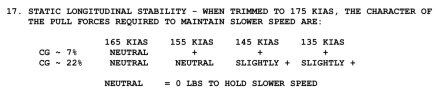
It ain’t just the speed. It is also lack of feel with speed changes. They’re more susceptible to stall which in the engine out on takeoff you’re already susceptible towards as they lack longitudinal static stability meaning they lack speed stability. And they have no feel for incipient stall. Rather instead sudden departure. Put the startle and distraction of losing the engine with these poor flying qualities…

Granted these two regard TP as opposed to P, and the engineer in the one discussed how the TP was made less stable which may impact results in the other:


“The Lancair IV was a progression from the Lancair 235 and the 320... According to Lancair, the IV is essentially a scaled-up version of the 320 with a 30-ft wingspan and a turbo-charged 350-hp reciprocating engine equipped with a three-blade constant-speed propeller.”

“Lancairs' stall characteristics are critical (abrupt, unusual) when compared with more traditional certified aircraft. In character, "the stall occurs abruptly, even during a slow deceleration”


IMG_1736.jpegIMG_1737.jpegIMG_1738.jpeg

Consider that progression from 320 (and through 360), typically mods from a design that aren’t specifically made for the purpose of improving handling not only don’t address handling, they tend to make it worse…


I remember the discussion about making them use the warbird arrival at OSH because of the speed and handling characteristics.
 
A photo taken by a drone in today's Dallas Morning News shows the airplane hit the ground flat and burned to ashes. It appears there was no forward movement at the time of impact.
 
I remember the discussion about making them use the warbird arrival at OSH because of the speed and handling characteristics.
On the lancair forum the consensus recommendation is to use the warbird arrival. It makes sense as these aircraft require the faster speed similar with the other traffic that would be using that arrival. Aircraft of vastly different speed don't mix well in a traffic pattern.
 
Aircraft of vastly different speed don't mix well in a traffic pattern.

Good reason to think our pattern designs and strict adherence to them are stupid.


I remember the discussion about making them use the warbird arrival at OSH because of the speed and handling characteristics.

One crashed two years ago on the Fisk arrival because of a stall-spin on base to final.
 
One crashed two years ago on the Fisk arrival because of a stall-spin on base to final.

Thought there was more to it with controller demands to tighten turn. Really really want AOA indications probably both audio and visual. Airspeed may reflect absolute kinetic energy (and it ain’t even this seeing it ain’t TAS), but AOA reflects kinetic energy relative to sufficiency and always does so. Harder for the Lancair due to the longitudinal static stability concern, should still try to practice constant AOA turns too not constant airspeed. We should be teaching constant AOA turns in slow flight.


The irony of trying to laugh and mock the wisdom of realizing strict adherence of rules is stupid by posting a character who exemplifies thinking and survival over compliance and strict rule adherence…
The post was because trying to explain how that statement was wrong would be trivial.

Nobody is saying or has said traffic pattern rules are rigid and must blindly be followed to the death. At the very least you can always go around. However, if you want to fly a fighter jet pattern and use phraseology not used anywhere just because traffic patterns are stupid. You're the one that makes the pattern less safe for the simple fact nobody knows what you're doing.

But also to get the thread back on topic, what does traffic pattern ops have to do with a Lancair crashing on short final? If the Lancair was following a 150 that was slow he could have extended downwind. Or if someone was still on the runway, go around.

Both of those scenarios might be fiction at this point and completely irrelevant. And you're trying to make this accident about something it isn't.
 
Last edited:
At the very least you can always go around.

No, you cannot always go around. Some fields, especially one-way in other way out fields, have a point of commitment. As do high DA fields with SE twins. There are also weird anomalies like the Cessna attempting to reject the landing at Carlisle which turned what likely would have been a survivable crash into a fatal midair.

What it has to do with Lancair is your statement that the speeds of Lancair and traffic patterns don’t mix which therefore gives a logical conclusion.
 
Any idea how soon NTSB will provide any analysis about this accident? Would like to know what specific type of engine failure or other issue occurred. This was a piston or turboprop? One accident photo looks like there’s an intercooler for turbo setup.
 
No, you cannot always go around. Some fields, especially one-way in other way out fields, have a point of commitment. As do high DA fields with SE twins. There are also weird anomalies like the Cessna attempting to reject the landing at Carlisle which turned what likely would have been a survivable crash into a fatal midair.

What it has to do with Lancair is your statement that the speeds of Lancair and traffic patterns don’t mix which therefore gives a logical conclusion.
ecfr 91.3
 
Any idea how soon NTSB will provide any analysis about this accident? Would like to know what specific type of engine failure or other issue occurred. This was a piston or turboprop? One accident photo looks like there’s an intercooler for turbo setup.
Final report comes out in a year, preliminary report in a month or two. The preliminary often contains the detail you're looking for.

Ron Wanttaja
 
It’s funny sometimes how humans can look at a set of facts and reach a conclusion that is fundamentally wrong. Often accomplishing the exact opposite of what is desired.

Regardless I always learn something when interacting with other pilots. I appreciate all of the input in this thread.
 
What makes an airframe stall quickly without warning? Higher elevator, no split leading edge? Or is it as simple as "it can decelerate below critical AOA quickly?"
 
What makes an airframe stall quickly without warning? Higher elevator, no split leading edge? Or is it as simple as "it can decelerate below critical AOA quickly?"
Some airfoil/airframe combinations don't give good pre-stall feedback. Whether we're talking stick force gradient or aerodynamic buffeting. That ain't great. Then, if you combine a lack of pre-stall warning with an airplane that has nasty post-stall behavior, well, you get bad outcomes, particularly at low altitudes. "I wasn't anticipating a stall, then I was inverted."
 
What makes an airframe stall quickly without warning? Higher elevator, no split leading edge? Or is it as simple as "it can decelerate below critical AOA quickly?"

‘Decelerate’ means increasing AOA and with this increase there is little to no stick displacement and no back stick force required. This means it can bleed off with no warning. It also lacks imminent stall buffet, everything is smooth till snap. This is why I said it is like the F-4. And why the F-4 needed to adapt the two-tone audible AOA feedback which Burt Rutan took from the Brits putting into the F-4.
 
Maybe thread drift (ah, no “maybe” to it…) - with an AOA indicator, if the sensor is a probe like the one from Alpha Systems which is on one wing, isn’t the reading less correct turning in one direction vs the other? And if so, on this particular model plane, wouldn’t it be a safety issue due to erroneous reading and dependence on it?

Plus, if the consensus, seemingly from the things I see above, is that you shouldn’t mess with stall testing, how would one ever calibrate the AOA indicator like the Alpha Systems?
 
Last edited:
The current recommendation put forth by LOBO (as of the last I heard) was to not perform stalls as part of transition training or otherwise. I believe this came from some of the IV models having a wing drop tendency when stalling. Also these gather speed quickly when pointed down and spins may not be recoverable. Rather, (again the last I heard) the recommendation was to focus on flying by the numbers and using rounded patterns as opposed to squared corner patterns.

When I took transition training in my old 235 we did stall it (that was prior to the current recommendations). The stall was straightforward with no wing drop and straightforward recovery. From what I hear that is typical of the 2 seat variants as well as some other models. My 360 has a Dynon HDX and the prior owner did numerous stalls to calibrate the AOA; it was also straightforward. Truth is though these are typically flown well above stall speed even when on approach as the sink rate increases significantly when one starts getting slow.
 
Last edited:
Aircraft ModelWing Loading (lb/ft²)Engine Type
1903 Wright Flyer1.5Piston
Piper J-3 Cub6.8Piston
Cessna 15210.5Piston
Piper PA-28 Cherokee14.3Piston
Cessna 172S Skyhawk14.7Piston
Grumman AA-5B Tiger16.1Piston
Lancair 23518.4Piston
Mooney M20R Ovation19.3Piston
Beechcraft Bonanza G3620.4Piston
Lancair 32022.2Piston
Lancair 36022.2Piston
Lancair ES / Super ES22.9Piston
Lancair Legacy23.0Piston
Cirrus SR2223.5Piston
Beechcraft Baron G5825.6Piston
Lancair Evolution29.0Turboprop
Cessna 310R30.7Piston
Cessna 208 Caravan31.1Turboprop
Beechcraft Duke B6031.8Piston
Lancair IV-P32.2Piston
Cessna 421C Golden Eagle34.7Piston
Piper Aerostar 700P35.4Piston
Lancair IV36.2Piston
Pilatus PC-12 / PC-12NG37.6Turboprop
Daher-Socata TBM 93038.2Turboprop
Beechcraft King Air 350i48.2Turboprop
Beechcraft Premier I / 1A50.6Jet
Cessna Citation CJ4 / Gen351.4Jet
Learjet 3158.6Jet
 
Correct. It's not that high, it's the same as a Texan II. It's the airfoil selection and lack of elevator authority when slow that makes it bitey.

For instance, the Texan has enough authority to crunch the ventral fin on no-flap landings; the small tailed Lancairs don't have enough tail authority to even do a full stall touchdown without getting into 'unsociable' sink rates. The Texan vertical and horizontal assemblies are massive. Which you need to in order to un-spin across 1,100 SHP when the student decides he wants his mommy on turn 3 lol. The design choices all balance out airframes as designed for a specific purpose.
 
Careful not drawing errant conclusions from

… the small tailed Lancairs don't have enough tail authority to even do a full stall touchdown without getting into 'unsociable' sink rates.
(@hindsight2020, not saying you are thinking such, but a casual reader readily could misinterpret)

This does not mean such is an unstallable airplane. Ground effect shifts the aerodynamic center making the wing’s nose down moment stronger the further you are into ground effect. Aero for Naval Aviators, H.H. Hurt, has some interesting discussions for early lift offs and some planes while being unstallable in ground effect being mushy and unable to escape ground effect in such condition. These discussions apply here. The Aussies put together a nice report while looking into sea skimmers that also applies showing the shifting ac (Wing in Ground Effect Craft Review, Halloran/O’Meara). Canard Boulevard also has a good inadvertent early liftoff takeoff video showing good corrective action bunt the nose on the departure side of it for any plane that shows the ground effect kinda concerns. What you’re seeing with unarrestable sink in landing is in part due to increased longitudinal stability and increased speed sensitivity due to being in ground effect with this increased wing down moment.

if the sensor is a probe like the one from Alpha Systems which is on one wing, isn’t the reading less correct turning in one direction vs the other? And if so, on this particular model plane, wouldn’t it be a safety issue due to erroneous reading and dependence on it?

A valid technical concern though most probes are adequate through a range of beta rendering this particular issue moot.

Specific to the pressure diff, you can have an issue with accelerated stall measurement though such can be resolved in one of two ways and is still far less an error than is airspeed if left unmitigated. The easiest is to have the critical angle occur at a point half way between the forward and the lower pressure sensing points. This is why many probes have thirty-six degrees between ports as many GA stall in the vicinity of eighteen degrees. The other method is to electronically crunch it out.

Note further concern comes with systems that normalize as they may introduce common points of failure. Dynon normalizes by tapping off the static port to enable it which means static issues affect their AOA as well as ASI. Garmin uses a separate static to normalize and also account for speed-pressure concerns but they like Dynon still share the pitot as forward AOA sense port. So shared block vulnerabilities. Lift and Alpha are nice in being truly independent. Search for “Vac”on Van’s Air Force, follow his postings for more info; also see Fly Onspeed organization and the technical papers tab.

.. if the consensus, seemingly from the things I see above, is that you shouldn’t mess with stall testing, how would one ever calibrate the AOA indicator like the Alpha Systems?

Yes and no. You can calibrate it to the highest AOA of comfort having it derive values relative to this as if this be the stall. But, I agree with your sentiments, and would want to calibrate through stall. And would want to document stall characteristics. Note, if you did calibrate to the non-stall highest AOA of comfort, you might want to make “onspeed” something other than 1.3 so as not to be landing too fast.


Don’t let such worries deter from AOA systems. They are by far the best things you can have for helping your flying. Except maybe APM (airfoil performance monitor (listens to the vorticity of the boundary layer)) though such is essentially AOA with healthy wings only becoming something better should your wings be contaminated (iced) or damaged.

 
Which you need to in order to un-spin across 1,100 SHP when the student decides he wants his mommy on turn 3 lol.

Love it! Can’t say that wouldn’t be me since I’ve always been civilian, but hilarious nonetheless.
 
I'll add my favorite family trucksters to the loading chart: the Kodiak 100 (noted for STOL abilities), and its speedier brother, the 900 (noted for benign handling near stall), which are at 30.23 and 33.33 respectively. I had expected lower, but wing loading isn't the sole criterion for performance at low speeds.
 
Was that a IV or one of the smaller lancairs
The one at Oshkosh was a Super ES. Fixed gear, bigger wing, more docile stall and a typical approach is 75 kts, vs 100+ kts in the IV-P.
 
Back
Top