These two aircraft have been compared extensively in the past, but I have some questions. First off, how expensive are parts compared to one another? The initial purchase price of the G3 seems to be lower, and at one point they were typically priced around half of a LL, though this was around a decade ago. Also most G3’s are powered by a Lyc io540, and most LL’s are powered by Cont io550 (there are exceptions; I’ve seen a LL for with an io540, though it was a fixed-gear). Some newer io540’s have a TBO of 2,600 hours, though there’s no telling how many of those models are mounted on a G3. Other models have a TBO of 2k hours, as do many io550’s. Both engines seem to be neck in neck on overhaul costs from what I’ve read, but would you pick one engine to go longer between overhauls than the other? Both aircraft look cool and have very similar performance, but I’d sway towards the G3 due to the lower purchase price. If I have to ask which airplane would be easier on the bank account, I don’t have any business purchasing either one. But hey, asking these kinds of questions is how I’ve gotten to where I am in life. As far as insurance, I’d either do liability or self-insure (insurance will probably be far more than typical maintenance).

You are using an out of date browser. It may not display this or other websites correctly.
You should upgrade or use an alternative browser.
You should upgrade or use an alternative browser.
Glasair 3 or Lancair Legacy RG a better purchase?
- Thread starter DMD3.
- Start date
I don’t know about the Glasair, however, about all Lances have stability issues. Particularly being neutral in longitudinal hence lacking speed stability. Some also have lack of lateral issues. Also, having only one flight in a Lance 360 big tail, the inside was cramped. Would definitely recommend a personal fit check.
I’m 6’3”, but the Legacy’s and 3’s are supposed to have more cockpit space, though I’ll definitely try on before buying.I don’t know about the Glasair, however, about all Lances have stability issues. Particularly being neutral in longitudinal hence lacking speed stability. Some also have lack of lateral issues. Also, having only one flight in a Lance 360 big tail, the inside was cramped. Would definitely recommend a personal fit check.
I’m 6’3”, but the Legacy’s and 3’s are supposed to have more cockpit space, though I’ll definitely try on before buying.
Before buying, yes, though sooner the fit check the better as such may remove models from your search. Save you the effort of searching.
I don’t know about the Glasair, however, about all Lances have stability issues. Particularly being neutral in longitudinal hence lacking speed stability. Some also have lack of lateral issues. Also, having only one flight in a Lance 360 big tail, the inside was cramped. Would definitely recommend a personal fit check.
And a third; https://n91cz.com/Stability/Comparative_Stability_Study.pdf

Let'sgoflying!
Touchdown! Greaser!
all Lances have stability issues. Particularly being neutral in longitudinal hence lacking speed stability. Some also have lack of lateral issues. URL]
Seems like a blanket condemnation of the type.
I have a Lancair IV and don’t have any stability issues and I don’t remember seeing any such comment on the main Lancair chatgroup in my admittedly short 9 years of membership.
Let'sgoflying!
Touchdown! Greaser!
My hangar neighbor and close friend has a Glasair III (RG) for a few years now, and parts cost has not been a huge complaint.These two aircraft have been compared extensively in the past, but I have some questions. First off, how expensive are parts compared to one another?
I failed to mention that I’m not a wrench-turner and will have to pay someone for maintenance. Someone else on POA has said they have a G3 but have a mechanic work on it.My hangar neighbor and close friend has a Glasair III (RG) for a few years now, and parts cost has not been a huge complaint.
Seems like a blanket condemnation of the type.
I have a Lancair IV and don’t have any stability issues and I don’t remember seeing any such comment on the main Lancair chatgroup in my admittedly short 9 years of membership.
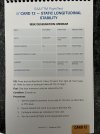
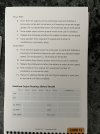
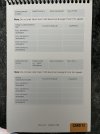
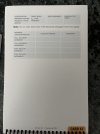
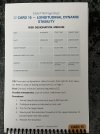
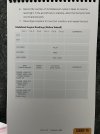
Show me the test cards.
Attachments
-
 IMG_4796.jpeg1.7 MB · Views: 8
-
 IMG_4797.jpeg1.7 MB · Views: 8
-
 IMG_4800.jpeg4.1 MB · Views: 6
-
 IMG_4801.jpeg2.5 MB · Views: 6
-
 IMG_4802.jpeg2.5 MB · Views: 8
-
 IMG_4803.jpeg1.9 MB · Views: 9
-
 IMG_4804.jpeg2.1 MB · Views: 8
-
 IMG_4805.jpeg1.9 MB · Views: 4
-
 IMG_4806.jpeg1.7 MB · Views: 5
-
 IMG_4807.jpeg1.9 MB · Views: 8
Show me the test cards.
And also
Attachments
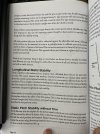
Note neutral speed stability can be mitigated though not eliminated with good AOA indications both audio and visual; careful with these for power backup. Example, in my RV I have a Lift reserve which is completely pneumatic with the probe on the right wing (and the gauge rotated ninety clockwise to make more sense) while having the combo pitot-AOA Dynon probe on the left feeding an audio indication (don’t like Dynon’s reverse fill so that display is turned off). I’ve also added a Recreational Mobility Flare Assist radar mounted over a plexiglass plate so as not to be a block of drag.. combining RALT with AOA is King Kong for landings. But the AOA is what helps keep you safe. AOA is kinetic energy relative to sufficient kinetic energy. Will help give you a sense of slowing when the stick forces fail to do so due to neutral stability. (Though it is a good idea for all fixed wing aircraft even those with solid positive longitudinal stability and robust stall warning cues.)
don’t like Dynon’s reverse fill so that display is turned off
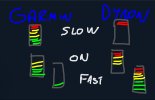
Dynon’s makes perfect engineering sense but **** poor pilot sense.
Let'sgoflying!
Touchdown! Greaser!
I can tell you’ve read a lot about the type.
Tell me again your ownership & flying experience with Lancairs?
Tell me again your ownership & flying experience with Lancairs?
Seems like a blanket condemnation of the type.
I have a Lancair IV and don’t have any stability issues and I don’t remember seeing any such comment on the main Lancair chatgroup in my admittedly short 9 years of membership.
May I ask what parts cost is like for your Lancair? Though the IV is a different beast than the Legacy.I can tell you’ve read a lot about the type.
Tell me again your ownership & flying experience with Lancairs?

- Joined
- Apr 18, 2013
- Messages
- 5,324
- Location
- The independent worm saloon
- Display Name
- Mantis Toboggan, MD
Nauga,
who wonders if there's a volume discount
I have a glasair 2rg (Not 3). Parts are readily available and not expensive. Glasairs are tight but I'm 5'9" and have to sit on a cushion and another behind my back for good visibility. When I'm seated, I have at least 6 inches between my head and ceiling of the plane. Glasairs have may beefier landing gear, otherwise they are both excellent airplanes. My annuals are typically in the $2-3K range.

Rein Hart
Pre-takeoff checklist
- Joined
- Dec 25, 2018
- Messages
- 196
- Display Name
- TOGA
These two aircraft have been compared extensively in the past, but I have some questions. First off, how expensive are parts compared to one another? The initial purchase price of the G3 seems to be lower, and at one point they were typically priced around half of a LL, though this was around a decade ago. Also most G3’s are powered by a Lyc io540, and most LL’s are powered by Cont io550 (there are exceptions; I’ve seen a LL for with an io540, though it was a fixed-gear). Some newer io540’s have a TBO of 2,600 hours, though there’s no telling how many of those models are mounted on a G3. Other models have a TBO of 2k hours, as do many io550’s. Both engines seem to be neck in neck on overhaul costs from what I’ve read, but would you pick one engine to go longer between overhauls than the other? Both aircraft look cool and have very similar performance, but I’d sway towards the G3 due to the lower purchase price. If I have to ask which airplane would be easier on the bank account, I don’t have any business purchasing either one. But hey, asking these kinds of questions is how I’ve gotten to where I am in life. As far as insurance, I’d either do liability or self-insure (insurance will probably be far more than typical maintenance).
Fly Risen
- Joined
- Apr 18, 2013
- Messages
- 5,324
- Location
- The independent worm saloon
- Display Name
- Mantis Toboggan, MD
It does, but the posted references all refer to the small tail/big tail issues of the original 320/360, not the Legacy the OP asked about. A quick look shows Lancair claims the Legacy was "redesigned from the tail forward" so one would hope the relaxed longitudinal (in)stability was addressed. Personally I'd make sure, but it's certainly knowable.Seems like a blanket condemnation of the type.
Nauga,
from way back when

hindsight2020
Final Approach
Theyre both composite bathtubs, there's not much in the way of airframe parts differentiation that's a cost inflection. These things aren't certified captured, a gear pump or actuator isnt going to rip your recreational life apart like a Cessna/piper/PMA-potato thing.
They both glide pretty fast for engine outs, thats the only thing that gives me pause for personal ownership, absent BRS.
Why the six bangers anyways? If cost is a concern, why not a glas 2 or lanc 360? Theyre fast enough for govt work. If you're not gonna race the thing, these always struck me as all hat no cattle compared to their 4 banger variants. These layflat over-engined golfcarts need FOWLER flaps more than they needed the 100-140 extra hp. I'd argue the lower hp variants make a more versatile choice, if xc is part of the calculus.
Why the six bangers anyways? If cost is a concern, why not a glas 2 or lanc 360? Theyre fast enough for govt work. If you're not gonna race the thing, these always struck me as all hat no cattle compared to their 4 banger variants.
Extra weight forward could shift cg up so as to help the longitudinal stability concern.
This could be weight forward which would be good, or it could be longer fuselage to empennage also good, but it could be volume not mass forward which would be bad.It does, but the posted references all refer to the small tail/big tail issues of the original 320/360, not the Legacy the OP asked about. A quick look shows Lancair claims the Legacy was "redesigned from the tail forward" so one would hope the relaxed longitudinal (in)stability was addressed. Personally I'd make sure, but it's certainly knowable.
Nauga,
from way back when
@Let'sgoflying!
Here is at the Lancair IV: “In 2001, Lancair selected the Walter/General Electric 601E as the trial turboprop engine to design/retrofit the airframe for higher performance. As part of this design modification, the airframe structure underwent several significant changes including: the nose became about 13 inches longer (more with the inclusion of the propeller and spinner), and the fuel tank located in the belly increased from 9.5 gals to 35 gals. With the heavier airframe structure and engine/equipment, the gross weight increased. The engineer further stated that other aerodynamic changes occurred during this modification. Specifically, with the increase of nose length, the airplane's pitch and yaw axes were destabilized, and with the larger diameter propeller (that had greater inertia), the two axes were destabilized further. In effect, these changes resulted in the nose section becoming a destabilizing ‘flying nose,’ that, in response to an increase in pitch, would produce lift, generating an additional nose-up pitching moment.”
Think about the Legacy being “a 320 reconfigured from the tail forward with longer…” yeah, with similar concern of more surface area potentially forward of cg???
This report also stated “At the time of this report, of the 57 Lancair IV-TPs that were registered (and presumably flying), there is an accident rate of 26-percent and a fatal accident rate of 19-percent.” These are terrible numbers.
https://data.ntsb.gov/carol-repgen/api/Aviation/ReportMain/GenerateNewestReport/83435/pdf
The Legacy transition training manual gives “Due to the experimental, amateur‐built nature of the Lancair, stall characteristics – and more importantly stall recovery techniques – have not been determined for each and every Lancair. Therefore, at no time will the instructor or PT intentionally stall the aircraft!”
https://lancairowners.com/wp-content/uploads/2024/11/LOBO-FITS-2023-LLEG-Training-Guide.pdf
Can you imagine Vans saying that? EAA? This is a huge signal. And the signal is that the longitudinal stability is not good.

I feel like there is some conflating of different Lancair models and their design concerns/considerations going on here.
At 6 ft 3, I’m too tall for most L360’s/G2’s. There may be some exceptions built and customized by tall pilots, but those aren’t the norm.Theyre both composite bathtubs, there's not much in the way of airframe parts differentiation that's a cost inflection. These things aren't certified captured, a gear pump or actuator isnt going to rip your recreational life apart like a Cessna/piper/PMA-potato thing.
They both glide pretty fast for engine outs, thats the only thing that gives me pause for personal ownership, absent BRS.
Why the six bangers anyways? If cost is a concern, why not a glas 2 or lanc 360? Theyre fast enough for govt work. If you're not gonna race the thing, these always struck me as all hat no cattle compared to their 4 banger variants. These layflat over-engined golfcarts need FOWLER flaps more than they needed the 100-140 extra hp. I'd argue the lower hp variants make a more versatile choice, if xc is part of the calculus.
I’ve always found the cockpit size of a C172 or Cherokee adequate. I have some time in a C150, but after 45 minutes of flight I was ready to get out of the cockpit. And if I had a passenger/CFI riding along, I was already miserable after the engine run-up. I also grew up riding in a Luscombe, which is even tinier than a C150 if you can believe that (not to mention slower)! So I’m no stranger to small cockpits. I’m not sure how the 360’s and G 1&2’s compare to the C150, but if they’re so small I can’t stand riding for more than 30 minutes, then they’re a hard sell.
Let'sgoflying!
Touchdown! Greaser!
May I ask what parts cost is like for your Lancair? Though the IV is a different beast than the Legacy.
add:
Odyssey batteries PC680 x 2 = $360 every 5-7 years.
I chased some electrical gremlins, had the alternator tested, then the standby alternator and both regulators tested, (Buying a new alternator fixed the problem even though it passed their test.) Intermittent problem so there were some parts-cannon costs - cb’s, switches, capacitors. testing was free, so $2000.
The sensors below; oilP, fuelP, EGTx1, fuelflow; all total <$700
None of it out of the ordinary or shocking.
Let me work on this, I'll attempt what I remember now and might get back here with more once I review my notes.
edit; this is since purchase in 2018 with 2 years down due to a busted crankshaft (TSIO-550)
Far and away my biggest expense is firewall forward; engine, accessories, sensors. Not prop, so far.
None of that is Lancair specific; it's going to happen with any large bore engine regardless of aircraft type.
(If buying, make sure you get a good quality engine because replacing that is going to be far and away the largest expense.)
Second is probably landing gear consumables; brake disks, linings, tires, tubes. All from Aircraft Spruce and nothing $hocking, just a regular item; results in higher gear costs than a 172, due to the landing speeds and lack of main gear oleos.
Every year I have to buy $25 of McMaster-Carr compressed gas strut for the nosegear emergency extension, it's a preventive purchase.
Overhaul of electric fuel pump. Also common in most low wings, not a Lancair specific cost.
Airframe: almost nothing. I'm going into the Lancair guru at the end of the month to have a little area of the main gear doors worked on and a few other cosmetics taken care of (chipped paint, wing root tape).
Oh, I did buy a hundred bucks of door seal pump parts a few years ago.
A hydraulic accumulator, I think it might have been $500.
Our chatgroup owner has dedicated himself to establishing a parts supply chain; some he will carry and others he provides a source for owners to follow.
More as I remember, but you'll find it's like the Glasair - pretty boring stuff such that the entire topic should not sway the buyer against it.
Last edited:
Let'sgoflying!
Touchdown! Greaser!
Exactly. And they all have widely varying wings, tails, engines, flying characteristics and accident rates.I feel like there is some conflating of different Lancair models and their design concerns/considerations going on here.
models I'm aware of:
200
235
320
320/360 (many were 'converted to 360' by changing engine hence "320/360")
360
all the above could be 'small, original tail' or MkII tail
many different engines but all 4 cylinder; some carb some FI
Legacy FG (usually 6 cylinder non-turbo)
Legacy RG " "
ES (FG)
Mako
Barracuda
IV (4-seater, many but not all turbocharged 6-cyl)
IV-P (pressurized)
IV-PT (turbine)
Evolution (largely, but not all turbine)
cousins: Columbia 300, 350, 400, "Corvalis".
To lump them all together for any reason, especially describing a particular risk is well, just wrong and shows a lack of knowledge about the aircraft.
Let'sgoflying!
Touchdown! Greaser!
I won't try to reproduce the LOBO (Lancair Builders and Owners) 2016 Whitepaper on safety here but I believe you will find that a study was done back then to address a spate of accidents in the mid to late 2000s and into 2010's. You can read which models were affected in the paper. It was determined that yes, for fatals, there were a lot of new-to-Lancair pilots losing control in flight (LOC-I) and this was mainly due to pilots failing to do what pilots are normally expected to do: maintain adequate airflow over the wing and control surfaces. You can't fly it like a 172 - in general, it needs more speed, and coordinated flight. If you want to compare that to jet flying, well ok I guess. But "stability" is not a factor in those accidents; basic piloting skills ie paying attention, is.
The conclusion I heard was that initial and recurrent training has had a favorable impact on those accidents (however there is a subset of all Exp owners that abhor, and will never participate in such training - as it impinges on their freedom - and this adversely affects the results of training on the accident rate).
The only thing I remember about stability is the (I think) 235/320/360s with the original, small tail would run out of elevator authority at slow speeds, typically landing, and prang the gear - as a result many were upgraded to the Mk.II tail and that solved the problem. (edit - I do recall some on the chat group saying they have a small tail, learned how to fly it, and the small tail causes them no problem) Is that longitudinal stability, though? I don't remember anyone in the chat group saying these models had problems with either static or dynamic longitudinal stability.
I know they are all sensitive in pitch, compared to the more boat-like, certified GA aircraft. Does it condemn a type if pilots are not up to learning the finer skills involved or is that on the pilot?
The first time I rode in a Lancair was with Suzie Azar in El Paso, she generously allowed me a ride when I was investigating the IV.
She's had it for decades and a few engine changes, is probably 80 years old now and still has it. She has no problem flying it.
Last edited:
I feel like there is some conflating of different Lancair models and their design concerns/considerations going on here.
Exactly. And they all have widely varying wings, tails, engines, flying characteristics and accident rates.
To lump them all together for any reason, especially describing a particular risk is well, just wrong and shows a lack of knowledge about the aircraft.
Lump them together like the FAA and NTSB did? Interpolate not extrapolate which generally is accepted in aviation? 320s and 360s had significant issues. Legacy and IV both started from the 320 as an initial design reference. Legacy done before the IV while the IV also had stability issues. That readily makes the Legacy suspect.
From the IV NTSB crash report previously linked, “The FAA convened two safety groups specifically to address, as stated in their documents regarding the studies, the Lancair's ‘unusually high accident and fatality rate compared to other amateur-built aircraft.’” And further “ These conclusions were derived based on accident statistics between 2004 and 2008 that indicated that amateur-built aircraft experienced a fatal accident rate of about 5-6 accidents per 100,000 flight hours; the overall general aviation accident rate for that period was about 1-2 accidents per 100,000 hours. The Lancair fatal accident rate in the same time period was about 7-8 accidents per 100,000 flight hours. Specifically, in 2008 Lancair comprised 3.2-percent of the amateur-built aircraft fleet and 19-percent of the fatal accidents that occurred that year, with 78.6-percent of Lancair accidents being fatal. The internal study noted that based on the statistics, Lancairs are involved in fatal accidents at ‘a rate that is disproportionate to their fleet size.’”
Further cited across all Lancair platforms and readily connecting to stability issues “The study found that… Lancairs' stall characteristics are critical (abrupt, unusual) when compared with more traditional certified aircraft.”
But "stability" is not a factor in those accidents; basic piloting skills ie paying attention, is.
Stability is at the heart of this. How is the pilot supposed to pay attention? The stick does not get heavy as your AOA increases. Stick forces are flat relative to AOA changes. This is the definition of neutral static stability. There is no feel of getting slow.
Rein Hart
Pre-takeoff checklist
- Joined
- Dec 25, 2018
- Messages
- 196
- Display Name
- TOGA
AOA indicators help with this issue.Stability is at the heart of this. How is the pilot supposed to pay attention? The stick does not get heavy as your AOA increases. Stick forces are flat relative to AOA changes. This is the definition of neutral static stability. There is no feel of getting slow.
AOA indicators help with this issue.
Big fan of the AOA indicators. See comments eleven and twelve. Now I’m also “APM” or airfoil performance monitor which acts essentially like a pressure diff AOA in normal conditions but also accounts for icing.
But, while AOA is a big boost, you still have neutral longitudinal stability and wild ride stalls while you also have far too many out there taught to be airspeed focused when they should be AOA sensitive. And you still have standards written to airspeed when they really should be at AOA.
Do all the Lances have AOA display?
Note: it sounds like the old Rhino, aka the F-4 Phantom, and the Lances all have some similarities in this. Interesting one of Burt Rutan’s first jobs in the AF was adopting and integrating a two-tone AOA indication system to the F-4 from similar systems the Brits had.
Let'sgoflying!
Touchdown! Greaser!
I try to take a practical view of aircraft; they are all out to bite us if we don't apply the specific precautions which each requires.
There is no perfect airplane, and all are probably due some criticism.
From time to time on POA and other forums, a participant will single out an airplane they find offensive and will lay into it.
I experienced this with the Viking I owned.
I've seen it many times with the Cirrus and other types.
It makes me shrug; it's hardly valid to be so vehemently hateful of any type. They are all damn fine airplanes in their own way.
Those of us who own them are just going to continue flying and enjoying them, despite what uninvolved people have to say about them.
I think the most clear answer is watching airspeed and flying the numbers -- that is how the pilot pays attention.How is the pilot supposed to pay attention? The stick does not get heavy as your AOA increases. Stick forces are flat relative to AOA changes. This is the definition of neutral static stability. There is no feel of getting slow.
The point of being airspeed focused -- in conjunction with acknowledging your flight configuration (e.g., flaps, landing gear up/down, etc) -- is that you know when you're operating within the safe flight envelope. Those are easily measurable, defined things. I know when I have full flaps deployed in landing configuration at max gross what my stall speed is, and I know how that stall speed varies with bank angle/load factor. I leave myself plenty of margin to stay out of trouble.
Practically speaking, what do you mean by that? Pilots are already trained to think about AoA.while you also have far too many out there taught to be airspeed focused when they should be AOA sensitive. And you still have standards written to airspeed when they really should be at AOA.
The Legacy came after the IV by about a decade: https://lancair.com/about/Legacy done before the IV while the IV also had stability issues. That readily makes the Legacy suspect.
Sure. But the Legacy came after those. It also came after Lancair created the MK-II tail, which was specifically designed to help with the issues related to the 320/360. In short, this wasn't an unknown concern to Lancair when they designed the Legacy, they'd already addressed years earlier.Lump them together like the FAA and NTSB did? Interpolate not extrapolate which generally is accepted in aviation? 320s and 360s had significant issues.
Ultimately -- these are fast aircraft designed for speed, and that choice requires certain concessions/tradeoffs. You want high performance and the high wing loading and a sleek wing? Great -- you got it. Now you can go faster than most piston twins for the price of a piston single. On the flip side - it's not going to be very forgiving if you zone out and get outside the safe flight envelope -- so leave yourself plenty of margin. Seems reasonable.
There is no perfect airplane, and all are probably due some criticism.
From time to time on POA and other forums, a participant will single out an airplane they find offensive and will lay into it.
But some are orders of magnitude more aggressive with larger and sharper teeth for biting. The Lancair truly deserves the scorn and derision and while such may be offensive it is practical to so lay into it. Giving offense can serve useful purpose.
@ArrowFlyer86 airspeed is stupid. Airspeed is ridiculously stupid. Adhering to airspeed gets you killed. The only exceptions are red lines and blue line. Of one red line and the blue, and also only in the asymmetric condition. And no, I don’t look at airspeed in the landing pattern (except should my AOA be unavailable).
https://www.flyonspeed.org/post/the-great-divide

 www.flyonspeed.org
https://www.flyonspeed.org/post/the-great-divide
Applied AOA
With the late 2024 FAA SAIB publication advocating for adoption of AOA by all GA, there has been much discussion about mitigating loss of control (LOC) risk by providing accurate AOA feedback to the pilot in one form or another. What hasn’t been discussed as widely, is the increased precision...
The Legacy came after the IV by about a decade: https://lancair.com/about/
Fair enough, but doesn’t change the fact both are derivatives of the 320 and inherited issues from there.
No one is disputing the lack of positive static longitudinal stability. Such is a problem regardless of if you’re a fast mover or a slow goer.
Well, not quite.Fair enough, but doesn’t change the fact both are derivatives of the 320 and inherited issues from there.
No one is disputing the lack of positive static longitudinal stability. Such is a problem regardless of if you’re a fast mover or a slow goer.
That is essentially asserting the Legacy will suffer any problem the 320/360 initially had, and I just don't think that's a fair assessment.
This write up by our very own @wanttaja is helpful as well: https://www.kitplanes.com/safety-is-no-accident-2/
Perhaps this particular quote is worth mentioning in why he buckets the Legacy in with with the 320/360: "The last category [Lancair 2 seaters] includes accidents involving Lancairs from the original 1980s Lancair 200 to today’s Legacy. Lancair has taken considerable effort to improve the breed, so it’s a tad unfair to combine the early and late designs. However, the number of accidents of the individual models is so low as to make comparisons difficult. There are just seven Lancair Legacy accidents in my 10-year database (1998 to 2007)"
But I think we've hammered this out enough. I understand you don't like Lancair and you feel they're dangerous and unstable. I won't try to change your mind any further, if for no other reason than I don't want to have to compete with +1 person in the marketplace when I someday buy a Legacy

@ArrowFlyer86 That KitPlanes article reads a lot like blame the pilot so we don’t have to consider the system.

wanttaja
Final Approach
- Joined
- Jun 7, 2008
- Messages
- 5,667
- Location
- "War-Torn" Portland
- Display Name
- Ron Wanttaja
- Home Airfield
- Twin Oaks Airpark
Oh, I consider the system. My main goal when I started my accident analysis was to find cases where the aircraft was at fault. When I started, I had only one "Pilot Error" category. I quickly realized I needed some "flavors" in that, but, still, only ten of my ~55 or so cause categories cover stick-and-rudder mistakes by the pilot.@ArrowFlyer86 That KitPlanes article reads a lot like blame the pilot so we don’t have to consider the system.
It's ironic that one of the reasons I started this project was to compare the competitors; Lancair vs. Glasair, Avid vs. Kitfox, etc.
I did the analysis for the article ArrowFlyer linked almost twenty years ago. Let me update it based on my 1999-2024 homebuilt accident database.
A few caveats before I start.
First, I'm dependent on the NTSB to identify the homebuilt aircraft type. If the investigator just puts down "Lancair", that doesn't tell us if it was an original Lancair 235 or a Lancair IV. I do my best to extract the exact model numbers, but sometimes I have only the base type. This can really bite on the RVs. The NTSB investigator writes down that it was an "RV-6" but the "landing gear" configuration is tricycle. It's actually an RV-6A, but the investigators may not understand the subtleties.
Looking over my database, I see the NTSB doesn't do too bad on the Lancairs....but there are a lot of just plain "Glasairs" in there.
BTW, I "normalize" the aircraft types. The NTSB report has "Make" and "Model" fields, I manually combine them to normalize the designation into a unique field that I call "Kennel Name". So if the NTSB says it was a "Smith Lancair IV," I enter "Lancair 4" in the Kennel Name field. Since I don't understand all aspects of all homebuilt models, some features may not get included.
(BTW, in my Kennel Names, the two seat Lancairs are listed as "Lancair2", plus whatever designation is available in the report. So don't have a cow if something says "Lancair2". I've normalized all the Lancair IVs into Lancair 4s.)
The second point is that I make a hard line between mechanical issues and pilot issues. If the pilot stalls during a normal approach, I flag the accident appropriately. But if the engine fails and the pilot stalls during the forced landing, I blame the engine...not the pilot. I do a separate procedure for these cases, which I'll discuss in a bit.
Third, my categories aren't the same as those used by other analysts. I don't have a "Loss of Control" category, though such cases are easily identified in my database. If the pilot stalls on a normal approach, I note the "Initiator" (my equivalent to "Probable Cause") as "Pilot Miscontrol", with a secondary initiator marking the stall. Each accident has only one Initiator, but may have several secondary factors (wind, etc.). "Pilot Miscontrol" refers to stick-and-rudder errors; I track judgment errors separately.
Finally, the causes listed in my database are based on *my* reading of the accident narrative...not just what the NTSB Probable Cause says. My causes sometimes differ from the NTSB's PC. The "stall during a forced landing" is one example; the NTSB may attribute the accident to the pilot's failure to maintain airspeed, while my analysis considers the cause whatever made the engine quit.
And yes, I've got over 5,000 entries in my homebuilt accident database, and I'm read each and every narrative to assign a cause. PLUS figure out the "Kennel Name" for each entry.
So, anyway: On to the analysis.
Only had a few Lancair Legacies in the original Kitplanes article. Quite a few since, it's a total of 32 accidents in the 1998-2024 timeframe.
Now, 32 accidents is normally below my reporting threshold. Normally, I want to see at least 50; that means that each accident is two percent or less of the total. With only 32 accidents, an accident more or less can cause a 6% change in the percentages. But, let's go for it right now.
The biggest category is Pilot Miscontrol. Here are the values:
Overall homebuilt fleet: 40.8% of all 5228 accidents
Lancair Legacy: 34.4% of 32 accidents
Glasair: 38.3% of 120 accidents.
Now, this may seem counterintuitive: The Lancair and the Glasair are "hot" aircraft...surely more of their accidents are due to Pilot Miscontrol!
Well, you're forgetting one factor. Pilot experience.
One of the old chestnuts about homebuilt accidents with hot aircraft is that they're all low-time pilots in over their head. Sure, it happens. But in the main, the pilots in these accidents are pretty experienced. This may be driven by realistic assessments by the builders themselves...or it may be due to insurance company requirements.
Here are the median total flight times for accident aircraft:
Overall homebuilt fleet: 1000 hours
Lancair Legacy: 1550 hours
Glasair: 1600 hours
The time-in-type is higher for those high performance homebuilts as well...just 60 hours overall, vs. 140 for the Lancair2 Legacy and 86 for the Glasairs.
So, overall the pilots lose control LESS than the overall homebuilt fleet, because they're more experienced.
How often a stall is part of that Pilot Miscontrol event? For the overall homebuilt fleet, this is true of 22% of their Pilot Miscontrol cases (again, with the engine fully operational, not a forced landing).
This is where the small sample size for the Lancair Legacy bites. Only 11 of its 32 accidents involved Pilot Miscontrol... and just three of those involved a stall. That's about 27%. But one more or one less case would have shot the value higher or lower than the overall case. Can't really compare the frequency of occurrence here. The Glasair comes out at 19%, but with three times the number of accidents, it's likely to be more accurate.
Now, that's based on accidents with fully-operational engines. What about cases where the engine is out?
I don't track that, precisely. But I do a keyword search of the Probable Cause, looking for mentions of stalls or airspeed control issues. This, I'm assuming, gathers in *all* stall events.
And it gets interesting.
Overall homebuilt fleet: 10.4%
Lancair Legacy: 18.8%
Glasair: 16.7%
Finally, I have an experimental report process in my accident database. I've attached summaries for the Glasair and the Lancair Legacy. The results for the overall fleet are included later in each report.
Ron Wanttaja
Attachments
The second point is that I make a hard line between mechanical issues and pilot issues. If the pilot stalls during a normal approach, I flag the accident appropriately. But if the engine fails and the pilot stalls during the forced landing, I blame the engine...not the pilot. I do a separate procedure for these cases, which I'll discuss in a bit.
Is stall a pilot problem? Or is it an airplane problem? If you have neutral longitudinal stability, it is an airplane problem. But it is also that particular airplane’s normal operation hence nothing flags it as an airplane problem.
Look at Dutch roads versus American.
Similarly, Air France 447, pilot problem or airplane? Both. Boeing 737 max 8 MCAS? Confluence.
https://www.theatlantic.com/ideas/a...h-human-error-causes-most-car-crashes/620808/

tsts4
En-Route
Out of curiosity, since you apparently dislike the make, what’s your background in Lancairs? Way back in post #2 you stated you took a ride a 360 but what else? Truth in lending, I don’t know anything about Lancairs or Glasairs other I know 2 Lancair owners (builder of a IVP and the buyer of an already built 320) and my college roommate worked for a hired gun operation building Glasair II RGs and IIIs before the FAA crackdown in the 90’s. Both of Lancair guys love them. IMO if you are going to come across as some kind of expert on a type you need to post your bona fides and not just a bunch of links to other peoples work. Not saying you’re wrong, just that you haven’t established anything in the way of credibility as someone with experience in the model under consideration.Is stall a pilot problem? Or is it an airplane problem? If you have neutral longitudinal stability, it is an airplane problem. But it is also that particular airplane’s normal operation hence nothing flags it as an airplane problem.
Look at Dutch roads versus American.
Similarly, Air France 447, pilot problem or airplane? Both. Boeing 737 max 8 MCAS? Confluence.
https://www.theatlantic.com/ideas/a...h-human-error-causes-most-car-crashes/620808/
Last edited: