Jump Start Low Aircraft Battery

WDD

Final Approach
PoA Supporter
Joined
Oct 16, 2019
Messages
8,855
Location
Atlanta / Marietta
Display Name
Vintage Snazzy (so my adult children say)
Home Airfield
KPUJ
Early morning flight delayed because of frost, I walked past a couple of guys trying to start their plane - battery was dead / low. I offered to jump start it, and they weren't sure that was possible. I asked if it was 12 or 24 volts, they said 12, and I responded that it would work just fine.

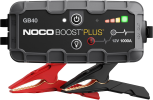
I lent them my 12 volt jump start battery pack, and low and behold the starter twisted the engine without blowing up, a black hole appearing, etc.

I'm not sure why some folks think it would be harmful. Thoughts?
 
Years ago, before I got a new Concorde and a battery tender, I jumped my plane from my truck. Had long jumpers so I nosed the truck up to the plane, attached the jumpers, started the truck, hopped in the plane and bumped the starter as a test. The prop jumped, made half a turn, and stopped when it encountered the truck's hood.

Oops!

It left a tiny little dent.
 
I've jumped the Navion a few times, but more often than not, I pull the battery and wander around looking for someone who can just put a charge on it.

I have an auxiliary power plug as well, but it is AFTER the battery contactor so if the battery is completely flat, you won't get it back on line if you start the plane that way. I've been meaning to hack a solution to that problem.
 
I think most people don't even know what voltage their cars operate on. Of those that do, a significant percentage don't understand that a 14V airplane and a 12V car are really the same thing.

Here's one that came up that I'm still not sure about because I'm somewhat ignorant to the workings of lithium batteries....My EarthX battery in my Lance says not to charge it above 10 amps, and that if you have to jump start the plane, not to apply more than 10 amps. While we were cranking the engine to pre-lube it, the battery was getting a little low (it had been sitting for 5 months...), so we went to hook up the shore power, and I remembered that restriction. The power supply they use can supply up to 50 amps, so I went and got the fancy lithium battery charger I bought which is limited to 9.5A.

Of course, once we started the engine, the alternator immediately charged the battery with....50 amps. I suspect the shore power charger would've been just fine, but since it's a restriction in the flight manual supplement....we obeyed.
 
The battery tenderizer works good for keeping the avionics alive, and my car battery charger can be throttled back to 2A anyhow.
 
Thoughts?
I'm sure they have already crashed.
I have an auxiliary power plug as well, but it is AFTER the battery contactor so if the battery is completely flat, you won't get it back on line if you start the plane that way. I've been meaning to hack a solution to that problem.
Same problem if you hand prop and the battery does not have enough juice to close the master solenoid.

 
Yeah, nice thing about the Navion (in addition to the 14V electrics) is that the battery in mine is right inside the baggage door behind the wing. You can jump the thing without going anywhere near the prop. If you have someone to grab the cables, you don't even need to get out of the seat. But if you're OK to toss them on the ground, you can just reach over the rear seat and chuck them out the door without even exiting the plane.
 
I called AAA once for a jump start; they refused when they learned it wasn't an automobile.
 
I lent them this to use. Twisted the prop quite nicely.

1742743410311.png
 
I'm not sure why some folks think it would be harmful. Thoughts?
I see no issues. Now using vehicle battery chargers on aircraft batteries is not recommended. But using a vehicle start pack to get things going sure and one I recommend given how cheap these start packs are now. I'd recommend making an adapter to use an existing EPU plug if installed, or even installing a plug into the system to use one. However, one word of caution, if you need to remove the cowling to access the battery, you may want to rethink that before trying to jump it.;)
 
  • Like
Reactions: WDD
Oh yeah - the Cherokee I was helping had battery in back seat, and my 183 has battery behind baggage compartment.
 
A dead flooded cell battery no problem still not a good idea to recharge a G-25 or G-35 at 50a alternator rate once the engine starts. A sealed battery not a good idea, their not good at dead to 50a charge without damage to the plates, they like a slow recharge rate. Overcharging sealed lead-acid batteries (SLAs) can cause damage, including excessive heat, gassing, and premature aging, potentially leading to a shorter lifespan and even explosion in extreme cases.
 
While the aviation equivalent of the flooded cell batteries tend to be lighter and more prone to warping the plates, there's nothing magic about charging them. You don't want to hit your modern sealed car battery up with a 50A charge rate either, and most charges with automatic controls are smart enough not to do that. As for the others, dial them down.
 
If the batteries are standard lead acid or AGM any discharge below 12.2 Volts has damaged the battery. 12.2 is about a 50% charge rate from 12.8 fully charged. If you need to jump a battery it has been damaged and will carry less charge. The question is how much degradation are you willing to accept. One discharge I probably woukd keep in service. A second time and I would consider replacing it if this is a IFR airframe.
 
Gill and Concorde have a battery test, many FBO have the test set and do the test for free. If you use your plane IFR it would be nice to know if your battery will last more than 10 minutes, if the alternator fails. You can do the test yourself if you have a load for the 12v or 24v battery, or at least run the avionics and other items you might use under IFR, and see how long the battery last. our local shop has the required test set that Gill and Concorde recommend, good investment for a shop, and he sells a lot of batteries. Most aircraft battery life is around 3 to 4 years or one day after the warranty expires whichever comes first.
 
The question is how much degradation are you willing to accept.
To add to the above, following the battery OEM capacity test procedures will tell you the health of your battery. And if you perform these tests on a regular basis you can also develop a life expectancy for your batteries. Some aircraft OEMs will recommend an annual or regular capacity check as part of there inspection program especially if IFR capable. Regardless, with proper care after an excessive discharge event one can still determine whether the battery's capacity has fallen below what you are willing to accept.

I'm not sure why some folks think it would be harmful. Thoughts?
Another thing to keep in mind before attempting a jump, is to have a good idea what caused the need. Leaving the master on or a similar event is pretty straight forward and understood. However, if the reason is out of the blue, perhaps look things over beforehand. Sometimes throwing an inrush of high amperage at an unknown problem can also cause a new problem.
 
In this case the Piper Cherokee had been flooded and they kept hitting the starter without a start.

They eventually got it going.
 
I lent them this to use. Twisted the prop quite nicely.

View attachment 139274
I’ve carried one of these for years. Never had to use it for real, but started both my o-360 and io-540 with it to verify it would work. Doubles as a nice phone charger that will last just about forever in that capacity.
 
  • Like
Reactions: WDD
Assuming the voltage is right, and the polarity is right, and there's nothing in the way of the prop, I can only think of two things. One is if the battery is frozen. That seems unlikely in GA in March, but my understanding is that charging an actually frozen battery is a bad plan. Never heard of anyone doing it, though. The second problem relates to some old PA-28's that had aluminum wire from the battery to the engine compartment. Apparently if that is corroded badly enough, and you start with a near dead battery, the high charging current can cause a fire. Pretty sure I've read at least one NTSB report on that, but believe it's pretty rare. No idea when they switched to copper wire in PA-28's, or how damaged the aluminum has to be, or how dead the battery has to be, for it to be a problem.

Yeah, I'm the guy that reads pretty much every single accident report on type before flying one.
 
I lent them this to use. Twisted the prop quite nicely.

View attachment 139274

I've really considered adding one of these to the line up.

At the airport the other day a Cessna 172 was thought to have a low battery so I brought our fuel cart over to jump start it (12v deep cycle battery installed). Turned out the starter solenoid was faulty. There was a brief discussion between the CFI & pilot about hand propping it. I stayed out of that conversation but was relieved when they decided that hand propping was not a great idea and declined to do that. BTW ... It's even possible to hand prop a Cirrus but I don't recommend it:

 
I'm not sure why some folks think it would be harmful. Thoughts?
Because airplanes are PFM.

There are "things" that can happen if you don't follow the checklists, though... One that comes to mind was a DA42 with a dead battery. Checklist specifically said DO NOT start both batteries from external power - You can start one, but if the alternator on that engine can't charge the battery, you should shut down and get the battery charged before attempting to fly.

Well, a couple of guys really wanted to fly, and started both engines from external power. Battery was dead enough that it couldn't excite the alternator enough to get things charging. They took off, lifted the gear handle, the electric gear motor pulled the voltage way down and tripped all four engine control units offline, resulting in a dual engine failure and early meeting with the earth, as well as a subsequent AD that put backup batteries on the ECUs. Whoops.

I called AAA once for a jump start; they refused when they learned it wasn't an automobile.
Did you remind them that AAA stands for the American Airplane Association? :D
 
Checklist specifically said DO NOT start both batteries from external power
I believe there is also a limitation on taking off under night VFR or IFR with a dead battery on the 42 and 62. I recall a 62 doing a similar thing in Dallas and landed on a road. He also had a secondary issue but to lose 5 independent power sources at the same time.... At least some legacy SELs have a "built in feature" where if the battery has a low OCV theres not enough juice to pull the master relay closed and nothing works in the cockpit even with the engine running which has stopped a few people from making a bad mistake.
 
In my Hatz the combination of a new AGM battery (which requires higher charge voltage in cold weather) and a long battery cable (the battery is behind the rear cockpit) made it difficult to get started in cold weather. Sometimes I would hand prop it to go flying. I've owned several planes that had no starter so hand propping is no big deal. If the battery was completely dead also no big deal, all it powers is the com radio and I've owned NORDO planes before, too.

Later I started using a portable jump starter pack. The master solenoid was easily accessible inside the cockpit so that's where the jump starter got connected. Of course, keeping it on a trickle charger specifically made for AGM batteries during the winter was the real fix.

Now I have the Parrakeet, which gets hand propped every time I fly. :)
 
Back
Top