Is rigging a science or art?

MountainDude

Cleared for Takeoff
PoA Supporter
Joined
Jul 29, 2011
Messages
1,466
Display Name
MountainDude
Home Airfield
KPDX
My C182 is out of rigging a bit, as it wants to roll to the left. I fix it with the right rudder trim, but that leads to a bit of a drag and reduces the TAS a bit. The mechanic said that the ailerons are not rigged properly and it would cost $1200 to fix them. However, that may not be the only problem with rigging, and more work may need to be done. It seems this can turn into a large and costly project.

My questions:
- Is rigging an objective process that, within a finite number of hours, can properly rig a plane with high certainty?
Or is it more of a trial and error, whose outcome can be costly and uncertain?
- Is the rigging process simple enough that any mechanic can do it, or does it take experience/art to do it right?
- If it takes a specialist, is there such a person in the PNW?

Thank you
 
I only have my Comanche to compare but $1,200 seems high.

My plane when level, the yoke would be noticeably to the right. When I held the yoke level, the plane would roll to the left.
Outside the plane when the yoke was neutral, both ailerons were up slightly vs. inline with the wing. Additionally there was some wiggle due to worn bearings.
I bought new bearing / rod ends to eliminate the wiggle.
At annual he installed the new ones and adjusted them so the ailerons were both neutral and yoke level.
The plane flies true right now with the yoke level and obviously the wiggle is gone.
I believe it was a few hundred bucks. I am not sure if this is the same type of out of rigging issue you are describing and there were no needed adjustments to the rudder.

182 and your particular issue may be different but that is my experience.
 
Not really art; just knowledge of principle and proper equipment.

All bets are off if something is bent or incorrect wing twist.If that is the case it can pricey. Rather easy to fabricate items to verify.

My thought is you rig to book spec; test fly and adjust if needed.

Edit: There is more to it than just lining up in Neutral. Do you want it to
be ok strictly for level flight or proper maneuvering as was designed?
 
Last edited:
Not really art; just knowledge of principle and proper equipment.

All bets are off if something is bent or incorrect wing twist.If that is the case it can pricey. Rather easy to fabricate items to verify.

My thought is you rig to book spec; test fly and adjust if needed.

Edit: There is more to it than just lining up in Neutral. Do you want it to
be ok strictly for level flight or proper maneuvering as was designed?
I just want it to fly straight without having to correct with the right rudder and cause a drag.
 
I just want it to fly straight without having to correct with the right rudder and cause a drag.

Let’s say we apply that reasoning to your car.

It then goes straight ; but the tire wear is crazy.

Or you are startled by tire noises when turning .

You want this?

1. If the rigging does not conform to theTCDS the aircraft is not airworthy.

2. Deviating from the mfg specs may result in an improvement in one

area at the risk of adding new issues that could be severe. Suggest OP

become familiar with Cessna SM instructions. Generally you would:

a. Assure retracted Flap position is correct.

b. Control Wheels - NEUTRAL

c. Aileron Bellcranks -NEUTRAL per SM. Adjust via Turnbuckles and

tension cables to spec. If Bellcranks are not positioned properly

you may not have correct travel and Adverse Yaw may come into

the picture. This would present as difficulty centering the Ball

in turns as you are flying somewhat uncoordinated.

d. Adjust pushrods to align Aileron Trailing Edge with Flaps.

Ignore Tip/Aileron position.


Please follow SM as my directions are only intended to provide the scope.

Determining Time on Task will vary between particular aircraft depending

on gaining access to the Turnbuckles. Normally you have to adjust

3 when rigging.
 
Isn't that good for higher speed?

It may on some aircraft. However; on some you will find the as the Aileron

moves UP that the bottom Aileron now protrudes into the slipstream.

This is DESIRABLE and intended to provide drag on the inner wing in turns.

Other points ; will it pass Annual in that condition and is low speed handling

affected? May be others.
 
Things that make your airplane turn when you don't want it to.
That stupid propeller that turns in one direction causes swirly whirly airflow around the airframe and the so called P factor. Tweeks like offset thrust line, vertical fin at a touch of an angle, rudder trim tab are employed to somewhat un-yaw/roll. You want the engine to point in the direction that God intended (the design engineers have a direct line...).
Wings not at the same angle of attack. Could be they done been tweeked due to an "incident" (if it wasn't logged, it didn't happen) or wasn't built straight to begin with. Some aircraft have a little adjustment to fine tune the wings. I moved two washers under the drag strut attachment (rear wing mount) on the right wing and two washers over fitting on the left on my ride. Big difference. Tweekatized tail surfaces can cause some rolypoly behavior as well. I don't recommend using a B.F.H. to fix them, but I ain't no A&P so I could be wrong.
Ailerons not "neutral". If the problem is wings not at the same angle of attack, all you do is move the stick/yoke position without fixing the problem. But getting the ailerons rigged properly can potentially make things less badder.

How much it costs to fix depends on what the problem is and who does the work. I spent a buck or so on washers.
 
Last edited:
Is rigging an objective process that, within a finite number of hours, can properly rig a plane with high certainty?
Yes.
Or is it more of a trial and error, whose outcome can be costly and uncertain?
No. However, if there are worn components in the system, or as mentioned, something is bent or out of spec, then yes it can be a bit costly. But never uncertain when done properly.
Is the rigging process simple enough that any mechanic can do it,
In general, yes. But for a number of mechanics a full-rigging tends to rank up there with major electrical work, avionics work, and sheetmetal. All of which can be very time consuming and "meticulous" in nature.
If it takes a specialist, is there such a person in the PNW?
No clue.
 
Ailerons out of rig won't cause a stick free roll tendency as they'll both trail equally. They may be both up too much or down too much, but they'll be equal, though the yoke may not be centered at that point. A misadjusted aileron trim tab (if there is one) or a bent aileron acting like a trim tab, that can mess up the roll trim.

If the flaps are misadjusted, that could cause a roll trim issue. Should be easy to check

Does the 182 have any kind of rudder / aileron spring interconnect like some other planes do? If so, that could be pulling the ailerons one way or another.

If there isn't one, is it legal to add a trim tab to a 182?

To the OP, if you "fix" the roll with rudder trim, does the ball stay centered when you let go of the yoke? If yes, you don't have a problem.
 
It’s not well understood. THAT is why it’s treated like a art…

Find someone who KNOWS, it’s methodical and effective. Problems will manifest themselves efficiently.

Someone who doesn’t KNOW, WILL chase their tail, and you’ll spend a frustrated fortune.

A little off topic, my dad just spent SIX GRAND with FOUR mechanics and they ALL missed the root problem, a bad spark plug, at least it was cleaned and gapped….

Rigging is pure science. There are compromises though…
 
Ailerons out of rig won't cause a stick free roll tendency as they'll both trail equally. They may be both up too much or down too much, but they'll be equal, though the yoke may not be centered at that point. A misadjusted aileron trim tab (if there is one) or a bent aileron acting like a trim tab, that can mess up the roll trim.

If the flaps are misadjusted, that could cause a roll trim issue. Should be easy to check

Does the 182 have any kind of rudder / aileron spring interconnect like some other planes do? If so, that could be pulling the ailerons one way or another.

If there isn't one, is it legal to add a trim tab to a 182?

To the OP, if you "fix" the roll with rudder trim, does the ball stay centered when you let go of the yoke? If yes, you don't have a problem.
Thank you.
The mechanic saw (during annual) that the ailerons are not rigged properly (do not remember his explanation, but it was something in the wings). He said the wing and flaps look great.
When I correct the roll with the rudder trim, the ball is not centered, which is why I think my plane is slightly slipping and slowing down.
I am not sure we can add a trim tab, but that was not suggested.
 
Do the tanks feed evenly? A fuel imbalance could cause a roll trim issue.

A trim tab, if allowed, is a band aid covering some other issue like a twisted wing, but if it's still within specs to be airworthy, it may be the most practical solution.
 
An aileron deflected DOWN has more drag than when deflected UP.

Starting a turn to the left via ROLL the right ( DOWN ) aileron has more drag

and will try to induce a YAW to the right . “Adverse Yaw” is the term for this

and is addressed with some some features incorporated in most airplanes in

the last 70 years.


Aileron Bellcranks or Aileron Horns are assymetrical to provide more UP

travel than DOWN to avoid Adverse Yaw. This does reduce the need for

Rudder use as was the case with some aircraft of the ‘40’s. The “Frise”

type aileron described in #9 is almost universal today.


Mechanics tend to be active in their “ Comfort Zone” such as engines,

fabric, electrical etc. Why take on something outside that zone. “Rigging”

is included in the AMT Curriculum. Most schools address this but not on

“Live” aircraft. They should be able to properly rig an airplane IF the

instructions in the Service Manual are followed. I once met an Ercoupe

that had quirks. Rigging is “ unique” but when done the airspeed increased

dramatically and the quirks disappeared.


If I encounter a Trim Tab on a most Cessna ailerons during a Pre-Buy the

value of the aircraft takes a hit. My presumption is rigging options have

been exhausted and the Wing Twist ( wash-out) is incorrect. It is relatively

easy to verify this. Again ; per the Service Manual.
 
rigging is not particularly hard to do. what makes it difficult is there is generally restricted access to the things you need to rig.
I am very good at rigging doors on a CRJ because it's easy to access the rig holes and eyebolts/torque tubes.
My BD-4 is also dead simple because everything is accessible. but doing a 150 or worse a Piper takes all day because of limited access. It's not hard, just time consuming. $1500 to rig ailerons? I'll take that action if you give me a day or two.
 
Do the tanks feed evenly? A fuel imbalance could cause a roll trim issue.

A trim tab, if allowed, is a band aid covering some other issue like a twisted wing, but if it's still within specs to be airworthy, it may be the most practical solution.
Ah, dang. Did not think of that. I do have uneven tank emptying and did not connect the two. Thank you.
 
That isn’t necessarily a rigging issue.
It sure is.
Does the 182 have any kind of rudder / aileron spring interconnect like some other planes do? If so, that could be pulling the ailerons one way or another.
Only in a 182 floatplane.
If there isn't one, is it legal to add a trim tab to a 182?
What for? That's just one more example of ad-libbing the repairs instead of consulting the manuals.

The 182 has adjustable rudder trim. It changes the length of the steering bungee between the rudder bar whiffletree and the nosewheel steering collar, which is locked straight-ahead when the nosewheel is off the ground. Turning the trim wheel works sprockets and a chain to adjust a screw in the bungee.

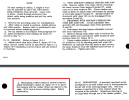
One MUST rig the rudder system in accordance with the manual before rigging the rudder trim, and the rudder is supposed to be offset 5/16" (one degree) to the right when the rudder pedals are neutral and locked there by the nosewheel steering:

1735170571504.png

Note what it says in the paragraph in the red box. This has the same effect as a properly-set fixed trim tab. But if the mechanic doesn't read the manuals, he'll center that rudder, and the pilot will have to crank in a bunch of right trim. Or he'll add a fixed tab and mess things up even more.
It’s not well understood. THAT is why it’s treated like a art…
Exactly. Anything we don't understand sometimes looks like some sort of black magic. That's why Cessna and Piper and Mooney and everyone else publish service manuals. Mechanics who study the manuals end up being magicians widely respected by customers and coworkers.
but doing a 150 or worse a Piper takes all day because of limited access. It's not hard, just time consuming. $1500 to rig ailerons? I'll take that action if you give me a day or two.
A day or two to rig the 150's ailerons? Better stick the the CRJ's doors. The whole aileron system can be corrected in a couple of hours, max. It's not black magic and the stuff isn't that inaccessible. I have spent most rigging time repairing the misrigging done by mechanics who don't pay attention to the manual.

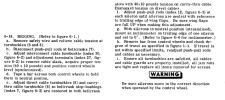
This is the entire aileron rigging stuff for the 182, which is similar to the other Cessna singles:

1735171242155.png

Not a big deal if it's done EXACTLY as described. Getting the bellcrank slots centered on the stop bolts is the biggest hassle, so I made small wooden tapered plugs to fit into those slots to center the bellcrank exactly, then did the cable adjustments. Long red flags on those plugs so you don't forget them.

Failing to tape a bar across the control wheels (paragraph d) will result in the wheels being tilted in wings-level flight.

This does not take two days.

The flaps must be full-up because the inboard corners of the ailerons align with them. Ignore the misalignment of the outer aileron corners with the wingtip fairing. The flaps should be rigged so they stop with their rollers up against the forward end of their slots in the flap tracks.

Many wing-heavy instances are due to angle-of-incidence problems. All strutted Cessnas have eccentrics in the rear wing spar attach points that are adjusted to move the wing's trailing edge up or down a bit. This is what needs changing if the flaps are rigged properly. Fooling with ailerons to correct and wing-heavy condition will do nothing, and those ailerons are interconnected and moving one down or up will simply force it to move toward neutral and move the other aileron opposite until the air loads are balanced, and now you have a slower airplane with cockeyed control wheels.

This adjustment takes time, and since rotating those eccentrics also moves the spar in or out and changes the flap and aileron cable tensions, those will need rerigging, too. I have found too many airplanes with under- or overtensioned cables because someone moved the eccentrics without following up on the aileron and flap systems. Slack cables can cause flap assymetry and sloppy aileron control and reflexed ailerons, and overtight cables make ailerons stiff and wears out lots of stuff.

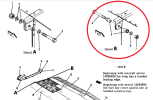
Front spar attach on the left. Just a bolt. Rear spar on the right, eccentrics are #5 in the picture. They rotate in the fuselage's spar carrythrough, moving the bolt up/down and in/out, and since the bolt is in the hole in that rear spar, it moves the spar. Tightening the bolt clamps the spar between the ends of the eccentrics. The eccentrics must be rotated together to avoid cocking the bolt and damaging structure.

1735172242105.png
 
Last edited:
Adjusting those eccentrics is easy IF done properly and may cause damage if

done incorrectly. They must be moved simultaneously. It seems easiest to

have 3 people for a few minutes. Front , rear and the 3rd person to

coordinate. Do not rush!

Cessna had “ Rig holes” in the skin and Bellcranks to enable using Rig Pins.

Very accurate. Wonder why they changed?

Safety wiring the turnbuckles through the access holes can be challenging.

Taping the edges of the holes may save some blood!
 
It sure is.

Only in a 182 floatplane.

What for? That's just one more example of ad-libbing the repairs instead of consulting the manuals.

The 182 has adjustable rudder trim. It changes the length of the steering bungee between the rudder bar whiffletree and the nosewheel steering collar, which is locked straight-ahead when the nosewheel is off the ground. Turning the trim wheel works sprockets and a chain to adjust a screw in the bungee.

One MUST rig the rudder system in accordance with the manual before rigging the rudder trim, and the rudder is supposed to be offset 5/16" (one degree) to the right when the rudder pedals are neutral and locked there by the nosewheel steering:

View attachment 136540

Note what it says in the paragraph in the red box. This has the same effect as a properly-set fixed trim tab. But if the mechanic doesn't read the manuals, he'll center that rudder, and the pilot will have to crank in a bunch of right trim. Or he'll add a fixed tab and mess things up even more.

Exactly. Anything we don't understand sometimes looks like some sort of black magic. That's why Cessna and Piper and Mooney and everyone else publish service manuals. Mechanics who study the manuals end up being magicians widely respected by customers and coworkers.

A day or two to rig the 150's ailerons? Better stick the the CRJ's doors. The whole aileron system can be corrected in a couple of hours, max. It's not black magic and the stuff isn't that inaccessible. I have spent most rigging time repairing the misrigging done by mechanics who don't pay attention to the manual.

This is the entire aileron rigging stuff for the 182, which is similar to the other Cessna singles:

View attachment 136541

Not a big deal if it's done EXACTLY as described. Getting the bellcrank slots centered on the stop bolts is the biggest hassle, so I made small wooden tapered plugs to fit into those slots to center the bellcrank exactly, then did the cable adjustments. Long red flags on those plugs so you don't forget them.

Failing to tape a bar across the control wheels (paragraph d) will result in the wheels being tilted in wings-level flight.

This does not take two days.

The flaps must be full-up because the inboard corners of the ailerons align with them. Ignore the misalignment of the outer aileron corners with the wingtip fairing. The flaps should be rigged so they stop with their rollers up against the forward end of their slots in the flap tracks.

Many wing-heavy instances are due to angle-of-incidence problems. All strutted Cessnas have eccentrics in the rear wing spar attach points that are adjusted to move the wing's trailing edge up or down a bit. This is what needs changing if the flaps are rigged properly. Fooling with ailerons to correct and wing-heavy condition will do nothing, and those ailerons are interconnected and moving one down or up will simply force it to move toward neutral and move the other aileron opposite until the air loads are balanced, and now you have a slower airplane with cockeyed control wheels.

This adjustment takes time, and since rotating those eccentrics also moves the spar in or out and changes the flap and aileron cable tensions, those will need rerigging, too. I have found too many airplanes with under- or overtensioned cables because someone moved the eccentrics without following up on the aileron and flap systems. Slack cables can cause flap assymetry and sloppy aileron control and reflexed ailerons, and overtight cables make ailerons stiff and wears out lots of stuff.

Front spar attach on the left. Just a bolt. Rear spar on the right, eccentrics are #5 in the picture. They rotate in the fuselage's spar carrythrough, moving the bolt up/down and in/out, and since the bolt is in the hole in that rear spar, it moves the spar. Tightening the bolt clamps the spar between the ends of the eccentrics. The eccentrics must be rotated together to avoid cocking the bolt and damaging structure.

View attachment 136542

Thank you. That is a lot of good info.
 
I’ve called a few places that do Cessna rigging. Some are out of business, one has a year lead time. Finding a place that really knows what they are doing seems to be somewhat difficult.
 
The issue is, any A&P can do it. But they may not do it right.

It is not rocket science, it is all laid out in the maintenance manual. Just have to have a mechanic that actually does that.
 
FAR 65.81 states “ a mechanic may not perform a task unless they have

previously successfully accomplished that task”.

I think the intent allows that if you timed a mag on a O-320 than it’s fine to

do so on a IO-360 too. Following the Service Data in both cases. Maybe

not true on a R-1830 though.


Control Rigging on a 152, 177 and a Cherokee are all similar , just different.

Trying to do one the way you did another is a recipe for problems. The

Service Manual MUST be used. Then any A&P should be able to do it.

Plumb Bobs, Levels, Inclinometers, String, Tape Measures and a Tensiometer

are some of the tools common to many. However, there are Special Tools

REQUIRED that not all shops will have. Mooney Landing Gear Rigging Tools

comes to mind. Some of these may be fabricated per Service Data or loaned

from a Type Club. A simple item is a sharpened rod used position Cessna

Rudder Pedals is made quickly. The Rig Fixture for Grumman ailerons

would be more involved. As far as I’m concerned fabricating the fixture

is a chargeable part of the job. Research and discussing availability of

these items prior to committing on these tasks is to everyone advantage.


Human Factors does play a part as well. There are Techs who will not

accept advice and also those that will not give it even if asked. Some even

take pride with a “I know something you don’t so I’m better than you”

attitude. I absolutely despise the more experienced folks that will not

give a few words of wisdom to the younger people. Some even give

deliberately wrong info! Does that really make them better?

It might be I’m clueless but it seems the Medical Folks have this addressed

with a system of Interns and Residents. USAF does the same via the

Skill Level.
 
Back
Top