IN DEFENSE OF THE 60+ HOUR PRIVATE CERTIFICATE

That said, clearly experience as a CFI matters.
Definitely. And while I have no hard evidence to back it up, I suspect that most time building CFIs move on with less instruction given than 30 or 40 years ago. I had several contemporaries with a couple thousand hours of dual given before they moved on to a flying job, and I don’t see that anymore.
 
The responses to my tread are just about what I expected. A lot of the responses fixate on the “60+” HOUR aspect. I believe that you are missing the point, we need competent pilots not just people that have reached an arbitrary minimum hour mark and passed a minimum checkride. (Oh boy, but a different thread). The 60+ remark was that it gives more time to develop a pilots attitude. It gives more time for their CFI to weed out the unsafe. (The 250 hr CFI, Oh boy, but a different thread). More time training gives more time to realize how real and complex flying is.

All of you have probably had the feeling at XXX hours, boy am I better than I was at XX hours. That feeling never goes away. You will say at XX,XXX hours, boy I’m better than I was at X,XXX hours. If you don’t feel that way you are becoming complacent not competent. Time to get out.

Please do not fixate on the hours, please fixate on the SAFE and COMPENT.

To the poster that says “their CFI would eat me up”. I’m glad you have faith in your instructor. I will talk aviation with anyone anytime, whether they share my views or not.
1750618922914.jpeg
 
I think the only way you could increase competency would be to encourage students to do more solo cross country as soon as they are able. Make sure they have enough fuel and that the weather wont kill them but leave the details to the student.

If you are one of the "paper only" cfis this would probably not be a good idea. But if they have the basics pretty well understood, a decent EFB and an understating that plans change it should work out.

More experience is the only way to build competency. You don't know what you don't know and the kids in the story didn't really understand why doing what the were doing was a bad idea.
 
Wow.

Self-awareness seems to be the key to the OPs example.

As a fairly new pilot (just under 200 hours), I’m well aware that I have a lot left to learn. Every flight I make at least one mistake, and I actively go back and consider counter-measures to try to improve for the future. I’m not scared of flying, but I am well aware than I am one minor error from becoming a statistic, and I have to maintain a guard against that by constantly trying to learn and improve.

I find myself wondering whether A) Making those mistakes means I am not a good pilot or B) recognizing them and working to improve every single flight means that I will someday be a good pilot. C) A bit of both?
 
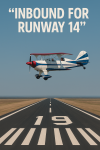
Two weeks ago I gaggled with 2 friends for a 100 dollar hamburger. I followed one in a biplane. He entered downwind 19 and reported downwind 14. He flew the 19 pattern and landed 19, all while making calls for 14. On his last call he was maybe 100 yards off the threshold, staring straight at a huge 19 painted on the runway.

He is a former USAF and retired airline pilot. He's a fine pilot. We all get confused.

Someone tell me more about those darn kids sharing "our" airspace.

My buddy, who has become a raving A-hole with AI art, whipped this up while we were eating:

IMG_20250622_150626.png
 
Last edited:
A lot of the responses fixate on the “60+” HOUR aspect.
To be fair, that was literally the title of your post.

I didn't see any actual recommendations in your post on how to create better pilots. As in, what additional training requirements you would like to see. What you'd like to see added to the ACS. Specific items.

If you had suggested increasing the XC requirements back to what they were before 1997, I could get behind that. I think the current XC requirements are extremely minimal and the greater requirements in the past would serve pilots well. Other than that, though, how would YOU suggest pilot training improve? Like I said, I don't see any actual suggestions in your post, so none of us are sure what you might be aiming for.

Just making the requirement 60 hours isn't going to have a meaningful effect, since most pilots already take longer than that. You'd have to add stuff to 61.109 or to the ACS to make a difference.
 
Two weeks ago I gaggled with 2 friends for a 100 dollar hamburger. I followed one in a biplane. He entered downwind 19 and reported downwind 14. He flew the 19 pattern and landed 19, all while making calls for 14. On his last call he was maybe 100 yards off the threshold, staring straight at a huge 19 painted on the runway.

He is a former USAF and retired airline pilot.

Someone tell me more about those darn kids sharing "our" airspace.

My buddy, who has become a raving A-hole with AI art, whipped this up while we were eating:

View attachment 142183
Perhaps, many years ago, it was Rwy 14 . . . derned polar drift!
 
The things I see and hear from 22 YO flight instructors are sobering. They are kids with no real experience. They have never flown a cross country VFR in ****ty weather. They have never used an airplane for its intended purpose - taking people and stuff somewhere, maybe at the limits of the W/B envelope. They have flown canned training programs in and around their local area and are repeating the watered down version to their students. They have little knowledge about the realities of flying. The only thing they are trying to do is get enough hours to qualify for a job with a regional, so they churn students.

Like Evil Eagle, I earned my license with 43 hours. The gentleman who did 90% of my instruction landed on the beach in Normandy and drove a tank to the Rhine. After the war, he used the GI bill to gain his license then flew professionally and instructed for the next 50 years. He wasn't looking to rack up 1000 or 1500 hours to get the next gig like almost all of the current instructors. He was out to teach pilots. Most every evening he could be found in the shopworn FBO with a circle pilots around him sharing stories. He'd seen everything and he'd taught enough students to adapt to different learning styles. He was an aviator. That type instructor is few and far between today.
Well, here's another problem. I'm one of those old instructors with a ton of real-world flying experience. U.S. Air Force, combat hours in Vietnam, a lifetime of flying small airplanes and lots of long cross-country trips. Been teaching since 2001, more than 3600 hours of dual given.

But at the beginning of this year, the flight school where I worked with other CFIs in their 20s, told me I could no longer be insured and had to stop working there. It is because I will turn 80 later this year.

I am trying to continue as an independent, but it is much harder when I no longer have access to the school airplanes.
 
I've had CFI's who were old school, thousands of hours, etc. One in particular was good, he knew how to teach. The other was a stereotypical old fart "I'm better than you" whose teaching style would make Ayn Rand and Lee Ermey feel bad about themselves while simultaneously not only transferring no information but moving your training backwards.

So, a guy who fought the Germans in Normandy might be a good CFI, might not be. Just like a 20 something might be a good CFI, or might not.
 
I’m curious about the comments about the dangers of flying from KFMN (Farmington NM) to 67L (Mesquite NV). Unless I mucked something up horribly, that looks like a benign trip passing well north of the Grand Canyon special flight rules area. Another curious thing (to me at least) the initial post seemed to indicate the hapless pilot was unprepared for mountainous terrain. His home airport was reportedly KAPA (Denver CO). Maybe his response was less of an indication of inexperience and more reflecting the frustration of having some random “experienced” pilot trying to fly his plane. Probably didn’t want you to go away mad.
 
I’m curious about the comments about the dangers of flying from KFMN (Farmington NM) to 67L (Mesquite NV). Unless I mucked something up horribly, that looks like a benign trip passing well north of the Grand Canyon special flight rules area. Another curious thing (to me at least) the initial post seemed to indicate the hapless pilot was unprepared for mountainous terrain. His home airport was reportedly KAPA (Denver CO). Maybe his response was less of an indication of inexperience and more reflecting the frustration of having some random “experienced” pilot trying to fly his plane. Probably didn’t want you to go away mad.
based on what I’ve seen here, the validity of some “experienced” pilot trying to fly someone else’s airplane often depends upon whether or not there’s an accident report.
 
I’m curious about the comments about the dangers of flying from KFMN (Farmington NM) to 67L (Mesquite NV). Unless I mucked something up horribly, that looks like a benign trip passing well north of the Grand Canyon special flight rules area. Another curious thing (to me at least) the initial post seemed to indicate the hapless pilot was unprepared for mountainous terrain. His home airport was reportedly KAPA (Denver CO). Maybe his response was less of an indication of inexperience and more reflecting the frustration of having some random “experienced” pilot trying to fly his plane. Probably didn’t want you to go away mad.
There are at least two elements to what a person perceives about reality: his own worldview and his external senses. Sometimes, the former eclipses the latter.
 
Well, here's another problem. I'm one of those old instructors with a ton of real-world flying experience. U.S. Air Force, combat hours in Vietnam, a lifetime of flying small airplanes and lots of long cross-country trips. Been teaching since 2001, more than 3600 hours of dual given.

But at the beginning of this year, the flight school where I worked with other CFIs in their 20s, told me I could no longer be insured and had to stop working there. It is because I will turn 80 later this year.

I am trying to continue as an independent, but it is much harder when I no longer have access to the school airplanes.
Sorry to hear that.
 
Even if it was required, I doubt there would be much effect. I’ve known plenty of professional pilots with one or both of those qualifications that didn’t seem to help.

Like any training/testing requirement, people who want to will find a way to meet it without learning.
It won’t affect judgment errors, but it will affect skill, and that is not without value.

Also, are you seriously arguing that minimum qualifications have no value? 'Cause I don't think I like the direction that line of argument leads to.

Just imagine how much WORSE those pro pilots you know would be without that...
 
Some threads on this site worry me. I’m admittedly an old Graybeard pilot, but I have survived 60 some years of flying. I am an Enthusiastic supporter of all forms of aviation. I love talking to people just starting in flying. The community needs enthusiastic support. We need a continuing source of pilots. I see starting pilots really struggle to support their flying habit. Been there, done that. Admittedly C150’s probably rented for $12 hr wet but I made $1.75 per hour at the time. About the same thing.

I have mentioned how it scares me to share the sky with amateurs. I’m not talking about the professional vs nonprofessional pilots. I’m talking about people in my airspace who do not have any business there.

I have read several threads about how to obtain certificates as cheap as possible. Not how do I become a proficient and safe pilot, it's HOW CHEAP CAN I GET THE PAPER. The money issues seem to outweigh common sense.

I survived with some good instruction, good luck and a lot of common sense. Did I do some stupid things, sure but I’ve always had a lot of respect for how fast aviation can go south. The people looking for cheap certificates do not seem really aware of how dangerous flying can be to themselves and others.

Forty hours is in no way enough to create a competent pilot. Wishful thinking, before carrying passengers every pilot would receive some real instrument time, upset training and glider solo time. There are lots of other “advanced” training areas beyond these. Obviously, all of this can not be done in 40 hours. More expensive, YES; Safer, YES. Keep the incompetent away from other flyers.

Attached is just one story out of the 60 years. A long read but interesting.

FLAME AWAY (but read first) :stirpot:


Springtime trip about 20 years ago; BJC-VEL-FMN-TUS-RTN. Work/golf trip. Nice VFR. Work completed late Friday afternoon at VEL, Departed for FMN. I pulled up ATIS about 25 -30 out and switched to listen to tower.

First thing I hear is “Cessna XXX, where is the airport” TWR “what”. Cessna XXX “I’m over your city I cannot find the airport”. TWR “airport is on a mesa NW of city”. Cessna XXX ”no its not”. TWR, sounding frustrated: “standby”. At this point obviously tower called center to find them on radar. Farmington did not have radar at that time. TWR to Cessna XXX “can you squawk AAAA?”. Cessna XXX “ok”. About 2 minutes dead air.

TWR “Cessna XXX, you are over Aztec, about 8 miles away, can you fly 240”. Cessna XXX “ok”. About 5 min dead air in which I made my initial call, TWR to me “call right base 25”. Cessna XXX “over another city, where is airport”. TWR “airport is on a mesa NW of city, cleared to land runway 23, call ball”. Cessna XXX “what, what, what?” TWR “disregard but you are lined up for the wrong runway, cleared to land any runway”. Tower controller seems to be in a good mood on a light traffic early evening. He had just saved a lost pilot.

I entered base and called “Right base, ball, Cessna, 100 pounds”. Tower keyed mike and (laughing) to me ”cleared to land”. TWR to Cessna XXX , “Cessna XXX taxi parking and that’s on your left” Anyone familiar with FMN knows that parking is should have been VERY obvious to Cessna XXX. I landed and after receiving “taxi parking” I responded with “two wire fair”. TWR (laughing) “been there done that”.

Parked next to a C172 with two 20’ ish young men, a 50’ ish man and a small dog crawling out. The sun was just setting. I went inside to arrange fuel for the next morning. I am RON’ing; no real future in FMN-TUS night single engine. Plus: golf course in Farmington I’ve always wanted to play. Went back to plane for bags and found all 3 out of Cessna XXX under wing using flashlight (sun is down by now) over as sectional.

As I walked by, I overheard the word “Mesquite”. Stopping I inquired about their destination. “Mesquite”. I asked young pilot “where are you from”. Answer “APA” (Denver area). After just hearing tower/center pull their fat out of the fire, I had to intervene. I said “do not descend into Mesquite until you see the runway lights, there is a big mountain just east”. Young man pilot on ground with flashlight looked up at me for the first time “A mountain????”. Oh boy! The stupid little dog bit my heel.

Here was a guy that had done enough to pass his private cross country and met the required night flying requirement but was set to kill three people. I was lost as to what to do. Finally saying to him “I have been flying this area for over 25 years and have done this trip hundreds of times. I can file IFR but would not make that trip at night unless it was a real emergency”. That was just lost on him. The same guy that couldn’t find Farmington in the day was going to launch over one of the most desolate areas of the US at night. When it was obvious that he believed himself a Chuck Yeager/ Bob Hoover type of pilot because the FAA had approved him, He was bound and determined to proceed. Oh boy!!

I played my last card, I said to the older man (father?), “You are going to be flying over the Grand Canyon at night”. All three looked up from the sectional on the ground and said “really, the Grand Canyon?”. Oh boy!!! I had done my best so I left. Passed them all in the lobby of the hotel later. Felt good about probably saving some lives. Probably wouldn’t have felt bad about that dog. Aircraft was gone next morning by the time I departed. Hope he stayed alive long enough (and did not take anyone with him) to become a competent pilot.

Meanwhile ww2 pilots were sololing after 8 to 10 hours. Its the training and the individual, not the hours exclusively.
 
It won’t affect judgment errors, but it will affect skill, and that is not without value.
It will affect skill, but possibly only long enough to meet the requirement, in which case learning has not occurred per the FAA definition.
Also, are you seriously arguing that minimum qualifications have no value? 'Cause I don't think I like the direction that line of argument leads to.

Just imagine how much WORSE those pro pilots you know would be without that...
No, I’m not arguing that. But I’ve dragged enough pilots kicking and screaming up to standard every six or twelve months that I know the minimum standard isn’t going to be effective in the long term for people who don’t want it to be.
 
It will affect skill, but possibly only long enough to meet the requirement, in which case learning has not occurred per the FAA definition.

No, I’m not arguing that. But I’ve dragged enough pilots kicking and screaming up to standard every six or twelve months that I know the minimum standard isn’t going to be effective in the long term for people who don’t want it to be.
Given your situation, I don't doubt that, but I still think they'd be even worse if they had less training.
 
Meanwhile ww2 pilots were sololing after 8 to 10 hours. Its the training and the individual, not the hours exclusively.
Yes, and many of them - 15,000 - died as a result. Only about 1/3 of US aircraft losses were in combat (23k out of 65k), with the rest being from other accidents.

I'm not sure that this is a good sales pitch for shorter training programs.
 
If you put any stock into The Killing Zone's analysis, you need to be north of 300 hours before you're less likely to drill a hole in the ground.

If you require 270 hours solo before you can take a checkride, you might increase the safety of an actual PPL, but you'd just see more student pilots doing stupid sh*t.

If you require more dual instruction, you always have the CFI to bail you out.

If you're able to meet the standards that are currently used, you shouldn't need additional training for that certificate or rating. If the OP's position is that CFIs and DPEs are pushing through candidates that don't meet the standards, I think we could have that discussion, but if you're suggesting that a PPL that meets all the standards in the ACS is not qualified to be in "your" airspace, then I think maybe it's time for you to hang up your headset because that attitude that you're such a great pilot that new ones should be grounded while you're flying is pretty awful.
 
60 hours isn’t going to change a thing. Most people don’t even get their ticket until around that time.
 
but if you're suggesting that a PPL that meets all the standards in the ACS is not qualified to be in "your" airspace,
Since it seems to be generally accepted that one should peak on the checkride, how do you feel about a pilot who doesn’t meet all the standards the day/week/month/year/whatever after the checkride?
 
Comparing my humble pilot stuff today to when I passed the PPL check ride, got to say I am farther down the road with my 500 hours. So no, I didn’t peak on the check ride.
 
IMO PPL training could actually be made shorter and cheaper than it used to be. :stirpot:

In olden days, XC training was mostly focused on navigation. GPS did not exist. We burned 10-15 hours of flight time practicing the use of paper charts, nav logs, and VOR radials. While some nav training is still necessary, that much is excessive.
 
Since it seems to be generally accepted that one should peak on the checkride, how do you feel about a pilot who doesn’t meet all the standards the day/week/month/year/whatever after the checkride?
So do we need to checkride again every 6 months? Every 3 months? Maybe you just never get a certificate at all, you're just always a student pilot and need to ride with a CFI.

The standards have to be set somewhere and that should include the continuing education requirements. We have a set of standards that seem to be working OK. Again, referencing The Killing Zone, pilots die at a much lower rate today than they historically have. That is at least a data driven analysis. It also shows that stick and rudder skills are not the problem. The only data the OP supplied to say the current standards are not sufficient is that he's scared by threads here and he has survived 60 years of flying.
 
I think there is a good point about the experiences. If they want to make sure that PPLs are safer when they pass the checkride, I would consider more experiences (longer/more cross country, a couple more hours of foggles, maybe some upset recovery?) but I think arbitrarily adding the hours would just mean more laps around the pattern.
 
So do we need to checkride again every 6 months? Every 3 months? Maybe you just never get a certificate at all, you're just always a student pilot and need to ride with a CFI.
Are those your suggestions?
The standards have to be set somewhere and that should include the continuing education requirements. We have a set of standards that seem to be working OK. Again, referencing The Killing Zone, pilots die at a much lower rate today than they historically have. That is at least a data driven analysis. It also shows that stick and rudder skills are not the problem. The only data the OP supplied to say the current standards are not sufficient is that he's scared by threads here and he has survived 60 years of flying.
Yes, the standards need to be set somewhere. My question is should a pilot reasonably be expected to continue to meet those standards without supervision after the checkrides?
 
Back
Top