Flying clubs - the good , bad and ugly

Pugs

Pattern Altitude
PoA Supporter
Joined
Oct 24, 2018
Messages
1,801
Location
New Hampshire
Display Name
Pugs
Home Airfield
KLCI
It sorta of came up on another thread and I thought it would be a good one for discussion. There are a lot of reasons to be a member of a flying club and some good ones not to. Of course the clubs can all vary in their makeup, rules, airplanes, fees etc. so its not a one and done answer.

I’ve been a member of three clubs. Two in MD and one in NH and I’m hitting 2 out of 3 for what I consider a good club for me.

Why a club?
Costs - a well managed club may well give you access to airplanes(s) at a considerable savings to owning your own or ones nice than you would own on your own. (and I have other expensive hobbies to fund!)
Fellowship- Nice to have people to fly with even if it’s just hanging around the hangar or swapping safety pilot duties for instrument currency.

Why not a club?
Scheduling - It’s a shared resource so you may not get a plane every time you want one. A good club though has rules that spread the access. In two of my clubs only a handful of guys flew for various reasons so access to the plane was easy. In another (65 members — 5 planes) it was almost impossible for a weekend without planning months ahead.
Personalities. I was in a club that had an unofficial two tiered system. The guys that had been there a long time felt they were better and they worked it out so they got planes when they wanted. The club instructors made sure the rules were such they had a steady stream of checkouts and annual flight reviews to make some money. Changes to the rules that impinged on the “senior”members were soundly rejected even though it was them being self-serving that created the rules.

Good club characteristics
Transparency in all things, especially finances and directions the club is going to go.
Welcoming - All members are equal and the clubs rules are designed of folks to be able to have access to the plane regardless of their time in the club (or role)

Caveats
Volunteerism - In my experience you get about 30% participation in club stuff like plane and hangar cleanup and serving in leadership roles.

Thoughts?
 
I have also been involved with two clubs, and considered joining a couple more.

The one I did my training is was/is excellent. They take great care of their planes, do the occasional avionics upgrade, have a good mix of planes (all PA28's, but Arrows, Archers, Dakotas, and a Warrior) and when they get above 10 members/plane, they buy another one. They require the purchase of minimum two hours of flight time per month, which keeps the income steady, the planes flying, and the pilots (somewhat) proficient. The reasonable rates and nice planes mean they are constantly growing. I quit when I bought my plane because I just couldn't justify flying their planes 2 hours a month and owning a plane. Technically an equity club, but the buyin is small and you don't have to sell your own share when you leave, the club buys it back at a prorata rate depending on how long you were a member. If the club was dissolved while you were a member, you'd get a decent payday.

That lead me to the club I'm currently in. They have a 172 that is safely maintained, but with 1976 avionics and a really ugly paint job that's about half flaked off. The only reason it exists is because it's cheap. $50/month to be a member is the only requirement. There's a lot of members who haven't flown the plane in years. The hourly rate is also pretty cheap, so it's a popular time builder for the flight school students. Am I painting a picture? It has saved my butt a couple times when my plane was down, but I'm looking forward to finishing my RV and quitting this club. I naively thought when I joined that I could do stuff like organizing a day to wash the plane and clean all the junk out of the hangar. Maybe get club meetings going and get people interested in growing the club and upgrading the plane. The reality is that it's run by a couple old guys (who don't have medicals anymore) who are totally uninterested in improving things. I don't know what happens when they die/lose interest, but I'm glad it's not an equity club. It's too bad, because there's room for another well run club plane at this airport, to the extent I've toyed with the idea of starting one.

Four other clubs I've looked at; all equity clubs. I dislike the 172 so much I strongly considered buying into one, but decided to put that money towards building the RV instead. Various buy in prices from 8-20K depending on the planes they have. A lot of them have pretty high monthly mx costs as well which is a turnoff to me, but my situation is atypical.

I really enjoyed being in the first club, and miss the fellowship aspect of it. If I had to sell my plane, I'd be a member with them again the next day.
 
I have instructed in a club airplane where only about three or four of the ten members were regularly flying. I didn't understand why the inactive members kept paying monthly dues... I guess just to say they had an airplane. They also had to share the expense of an engine overhaul.

Lately I have been instructing in a smaller club - five members - but it has an interesting feature that allows the relatives of club members train or rent the airplane. So far I have flown two members and one of the children of a member who is getting ready for her PP checkride. The airplane doesn't get a lot of use, so scheduling is not a problem.
 
They also had to share the expense of an engine overhaul.
This brings up a good point. Make sure you find a flying club that collects maixtenance and overhaul reserves. Otherwise you might find out that you have a multi thousand dollar assessment shortly after joining because the motor but the dust. It’s impossible to predict when things will fail, but many clubs ignore building reserves to make the hourly rates cheap. Pay now or pay later.
 
if the club collects mx and OH costs, how does it work when you leave the club? or if one person flies a ton and someone else rarely flies and either one of those peeps leave?
 
if the club collects mx and OH costs, how does it work when you leave the club? or if one person flies a ton and someone else rarely flies and either one of those peeps leave?
Depends on the legal structure of the club. Equity vs non equity. I’ve gotten my money back in other clubs. My current one you don’t if you leave. That’s one factor that keeps non-flyers in IMO as they are always saying they’ll get back to flying.
 
Depends on the legal structure of the club. Equity vs non equity. I’ve gotten my money back in other clubs. My current one you don’t if you leave. That’s one factor that keeps non-flyers in IMO as they are always saying they’ll get back to flying.

ok so for those clubs where u get your money back, in the end, aren't you mostly flying for free or close to it? let's just say you have 4 peeps in an equity club. $25k each to own the plane, then you come up with a monthly rate to cover fixed costs and an hourly rate to cover gas, oil, engine/prop OH......when u leave, u sell your share for whatever amount, maybe more or less than 25k, and what about the mx fund? in my personal opinion, the mx fund you shouldn't be able to recoup (sell) any more than 1/4 of it. that money "belongs to the plane" now. however, if the guy who hardly every flies leaves, he's making money on that portion, where the guy who flies 90% of the time would be losing money. what am I missing?
 
ok so for those clubs where u get your money back, in the end, aren't you mostly flying for free or close to it? …
I can only speak for our equity club. We are structured as a non-profit corp and active shares are sold by current members to a new member.

The valuation starts as an equal share of the value of the assets of the club, which is basically the insured hull value plus the reserve account. What our records show is the value is discounted by the buyer. Most members are not savvy in the marketing of their share nor are they willing to say ‘no’ and wait for a better price, the sale of shares is really a buyer’s market.

Since most members don’t fly the block of hours that comes with their assessment, much less fly over that amount, those members are actually losing money each year since our assessment covers fixed expenses plus the OH and mx reserve. We charge a premium for hours that a member flys beyond their block allocation. Those are the guys getting the most annual value from their assessment.

If I sold my share (bought pre-covid), I would recoup my purchase price and a few years’ worth of assessments, but not all get all my money back, especially considering I fly well more than my block of hours, even last year when the plane was down for six months for OH and various other stuff.
 
...Since most members don’t fly the block of hours that comes with their assessment...
what does that mean, the monthly fee you charge includes x amount of assumed flying hours for the month?
 
what does that mean, the monthly fee you charge includes x amount of assumed flying hours for the month?

We have one annual assessment. That charge includes a block of use or lose hours by the end of the year. The hours are not transferrable and expire on 12/31 of the current year.

If you fly beyond your block of included hours, those hours for the previous year are billed at the same time our assessment for the current year is billed.

It’s clunky, but for 12 members it works. I’d actually like to move to a different billing structure, but that’s not supported by most other members.

We’re looking to buy a TAA 182 this year and that’s going to drive some changes anyways, so what’s worked for the last 15 years of 8-12 pilots with one plane won’t work for 12-16 pilots and two planes at slightly different base rates to operate.

Somebody’s going to get screwed and I won’t let our well-financed cash position be the one getting screwed. We’ve made it this long (3x OHs + ADSB + G5s/GTN650 panel upgrade + no special assessments by prudent financial planning using board dedicated reserves looking forward 3-5yrs based on 15 years of historical data.
I don't get it, but if it works, cool. I guess it's "incentive to fly" money but why would the club care if people fly or not, other than getting free money for those who don't fly. maybe it makes planning/budgeting for OH's easier? dunno.
 
I guess it's "incentive to fly" money...

That’s exactly the mindset of some members…entice the low hour flyers to fly at least 1.5hrs/mo. And about a quarter won’t even do that. Meanwhile the club banks the delta and sends it to the OH reserve and the maintenance fund.
 
...why would the club care if people fly or not...
My club has way too many members for one plane yet the plane is still not flying enough. I'm fine w/ it b/c more division of fixed costs and more availability for me :-) Rather than add yet more members, the club is considering the approach of use it or lose it hours (1) b/c the plane really does need to be in the air more and (2) apparently insurance considerations.
 
My club has way too many members for one plane yet the plane is still not flying enough. I'm fine w/ it b/c more division of fixed costs and more availability for me :-) Rather than add yet more members, the club is considering the approach of use it or lose it hours (1) b/c the plane really does need to be in the air more and (2) apparently insurance considerations.
My experience is the non-flyers won’t magically start flying more with block hours.

For reference, we have 12 members and a 172. The plane averages close to 300hrs/year with about 1/3 flying over the block, 1/3d flying the block, and 1/3 flying under the block. On a per pilot basis, 15 years of data tells us the club’s average pilot flies 16 hours/year.

One of the things we’re considering is requiring one flight every 90 days to retain scheduling privileges. We already enforce FR and Medical/BM currency to schedule.

Our insurer doesn’t do a pilot survey, but if we did, I wonder if we could get a premium break. We currently pay ~6% of hull value.
 
Our club has 100 members and 4 planes, two Skyhawks and two Skylanes. The only times the Skyhawks aren't in the air is when the weather is too poor to fly. We recently had somewhat of a turnover in leadership, with almost all new board members. This has led to refurbishing the interiors, getting the paint taken care of, getting new avionics; a lot of deferred upkeep.

We pay a monthly fee, and pay a per tach hour charge that covers gas and a pro rated maintenance fund and a pro rated engine replacement fund. We consider those consumables, so if you leave the club, no refunds - you just stop paying.

Even though I have my own airplane, I still pay the monthly fee and stay in the club. There are some outings, I enjoy flying with club members to shoot approaches, and I just like volunteering to do things like organizing the interior refurbishment, getting a partial repaint, etc.
 
the club’s average pilot flies 16 hours/year.
:eek:

Our insurer doesn’t do a pilot survey, but if we did, I wonder if we could get a premium break. We currently pay ~6% of hull value.
The well run club I mentioned does this...each year every member is required to fill out a form listing their hours, training, FR status, medical status, etc. All the stuff on an insurance renewal. I was always amazed that even with a high percentage of student and low time pilots, and 4 planes at the time, they were paying about what I pay now for my one plane. That was five years ago, and we all know what insurance has done in that time, but still.

They allowed you to bank up to 12 months worth of the required 2 hours per month, but after that you lost it. Seemed like there was always a member or two who was maxed out, but they would generally quit after paying it for a couple months. They did have a provision to pause the monthly flight time if you had a good reason like being out of the area or losing your medical, but you couldn't schedule in that status, and you still had to pay the monthly MX to remain a member and keep your banked time. Made it a lot easier to budget as it had an income smoothing effect. The club still took in money when a plane was down or the weather sucked.
 
ok so for those clubs where u get your money back, in the end, aren't you mostly flying for free or close to it? let's just say you have 4 peeps in an equity club. $25k each to own the plane, then you come up with a monthly rate to cover fixed costs and an hourly rate to cover gas, oil, engine/prop OH......when u leave, u sell your share for whatever amount, maybe more or less than 25k, and what about the mx fund? in my personal opinion, the mx fund you shouldn't be able to recoup (sell) any more than 1/4 of it. that money "belongs to the plane" now. however, if the guy who hardly every flies leaves, he's making money on that portion, where the guy who flies 90% of the time would be losing money. what am I missing?
It's still all about how structured. We discuss this all the time on certain assumptions about structure without considering that there are many options. When I was advising and drafting club bylaws and joint ownership agreements, there was often a discussion that started with this and was repeated many times about specific choices:
They: What can we do?​
Me: What do you want to do?​

Leaving start-up issues aside, in some equity clubs, the buy-in price is the equivalent of a share purchase. If maximum membership is fixed, a later buy-in usually means a purchase from a selling member at whatever price is negotiated between them. Depending on such things as the types of aircraft, the reputation of the club, the reason the member is selling, and a multitude of others, a seller or buyer may get a great deal financially. Or a bad one. That can happen with sole ownership too.
 
I was in a club for a period of time, and was on the Board for awhile. Be very skeptical of a club with a lot of non-flying members. Depending on club structure, those members still have a vote and many of them will never vote for any sort of improvements that cost them money. They're usually content paying whatever nominal monthly dues are owed, but any efforts to raise dues or impose an assessment to do upgrades can be difficult if not impossible to get done. And board members who aren't actively flying can be even worse.

Another thing, particularly as it relates to larger clubs - many "members" still just view themselves as a renter and do not take care of the airplanes. They'll break things and not report it, keep them over their reservation, not clean them, etc.

I think clubs can be a really valuable resource, when well run. But poorly run, they can just be a mess.
 
^^ that. Non-flying members are not usually an asset to the club other than solely defraying costs for others.

A weird Stockholm syndrome can get started where flying members don’t want the low/no timers to sell their share because that might result in another active pilot to schedule against.
 
In school, I was the guy who hated group projects because I did all the work and shared the grade. I suspect that this is the same personality trait that compels me to sole ownership. But I did have one project in undergrad where everyone else in my group was the same way, we miraculously found a way to work together, and we still got along after delivering our epic project in which each of us did the component he was best at. If those guys started a flying club, I would join.
 
Good or bad, our members don't vote on spending money, any updates on the planes, setting the rental price, establishing policy. All of that is done by the six people on the board.

In a way I see us with being more of a non profit renters club. Trying to get things done is a flash back to your corporate job. You literally had to put a plan together, do a power point presentation, lobby each board members, and convince enough of the "managers" to fund the plan. Getting support of the members was helpful because it added some pressure/provided some cover to the board member to vote for your plan.

It all seems to work somehow.
 
They'll break things and not report it, keep them over their reservation, not clean them, etc.
Keeping the cleaning stuff in the hangar and enforcing a "clean all your dead bugs and cockpit skittles/ M&M's out" is a critical policy and it needs to be enforced.
 
Only way I'd buy into a club/partnership is if there was a more advanced option (HP retract or twin), well-funded, and the owners group had decent time standards (like >1000h). Ironically, I wouldn't even qualify for my own club yet!

I've just seen too many dummies operating rentals that I have no interest in trusting my life to a machine that gets regularly abused.
 
Keeping the cleaning stuff in the hangar and enforcing a "clean all your dead bugs and cockpit skittles/ M&M's out" is a critical policy and it needs to be enforced.
A club I am with does that. The bug cleaning after every flight really seems to engender respect for the equipment.
 
I have instructed in a club airplane where only about three or four of the ten members were regularly flying. I didn't understand why the inactive members kept paying monthly dues... I guess just to say they had an airplane. They also had to share the expense of an engine overhaul.
That is a strange phenomenon. But a friend was in a 3 person partnership. Each person paid the hangar rent every third month. Big things were split 3 ways. Scheduling was that each person "owned" the plane every 3rd week. If you wanted to fly it on a week that was not "yours" you had to ask the person whose week it was.

One guy lost his medical, but did not sell his share and kept paying his part. Another guy got out of flying, but same thing. He kept his share and paid his bills.

So my friend ended up with an airplane that only he flew, but other than gas, he only paid 1/3 the costs.

Weird.
 
Ah yes. the B.F.Club, at my old home base. For years run by the same set of directors, these barely legal airplanes existed to support the time those directors flew in the Cutlass, the money loser.

ON day one of independent CFIs grounded the Cutlass for oil on the gear saddles (Crack AD!!) and I instantly became unpopular with the board. The mech said, "fly to next annual". I said "no". Nobody said thanks, nine months later when the AD came out and we were early in line for replacement part.

I said, "bye bye". I sure hope that deadwood board has changed because that board was going to injure someone.
 
Last edited:
I prefer the 1 member club I belong to. No arguing about anything.
All the same, I’m getting some good ideas from this thread for revisions I can make to my 1-member club. Minimum 2 hours per month would help get me out of the house more. Maybe I’ll write it in as minimum 2 hours per week, though.
 
Lots of ways to do it, pros and cons to many.

We have 10 members on a 172, equity club. Shares are generally priced at 1/10 value with an engine and mx fund, so figure new engine and decent IFR avionics. Price is set by share buyer and seller.

We recently changed fee structure a bit. Monthly dues cover fixed costs(hangar, average annual, insurance) and 2 hours wet. Like others, idea is to keep people flying and exercise the plane. We also charge and attempt to budget appropriately so that non flyers wouldn't really vote against reasonable Mx or upgrade - it's already budgeted. Over the 20 years my family has been involved with the plane non flyers have been a net positive to keep it inexpensive for the rest. Recent change was hours beyond 5 per month upped rate and 10 went to basically local rental rates. Idea is we don't want someone buying in to smash out 1500 hours on the cheap. Students exempt to 10 hours per month as we want to encourage them.

Scheduling is generally pretty decent, last couple years it's seen 250 hours a year. We manage via google calendar and allow 2 bookings out. Overnights require permission but it's never been denied. Multi day trips require minimum 2 hours per day but even that has had allowances made. Variety of flyers from student to weekend warrior(or a day every 2 or 3 months).

3 main ways we keep it cheap:
- We base at a local mom and pop strip, have since the 50's. Fixed costs are cheap.
- We burn mogas and trailer it to the hangar. Everyone is expected to keep the airplane clean. Overall it works but we find ~30% of members step up for fueling, Mx, and volunteer for leadership.
- I'm the current Mx guy(working with a local IA). I do everything I can to keep us running safe, legal, economical, and max uptime. Annual in April(2025) found a cracked cylinder at 2100 hours. Had 4 new cylinders on in 2.5 weeks for $6611 all in. Not bad.

If we were at our local "fancy" airport and just paid a mechanic for everything our rates would double or more.

Overall it works, and has worked really well. One bad apple could potentially spoil it, but we've had good luck so far, knock on aluminum.

I also partner with my Dad on a super cub and 180. Luckily we don't need to take on members in those planes though it would help on costs, but we'd be super picky on who we'd take on and would have very strict currency requirements. Sole ownership has its perks too.
 
Clubs can be a great way to fly. Before my situation supported ownership, I was always on the lookout for a good club.

Back in the day, most military bases with an airfield had a flying club. The few I flew at were all quite well run. Got my PPL at Fort Bragg Flying Club in 1992.
 
Clubs can be a great way to fly. Before my situation supported ownership, I was always on the lookout for a good club.

Back in the day, most military bases with an airfield had a flying club. The few I flew at were all quite well run. Got my PPL at Fort Bragg Flying Club in 1992.
I wish I’d flown the $50 an hour T-34s at NAS Whidbey more!
 
Since I still don't own, I'm in a couple clubs and help run one of them. The one I help run has 4 planes (PA28R, 172, 152), 100 +/- 10 or so members. Only half are current in planes and maybe only 30 fly frequently. That being said, we still see 100+ hrs a month on these planes in the summer. Our niche is that until recently we had a fully open application process and some of the lowest rates in the area. We achieve this by having a couple A&Ps in the membership (to whom we give special treatment) who help maintain the planes and we max out on owner and supervised maintenance. We also achieve this by not wasting any money on modern avionics (see exhibit A below).

For the most part we achieve our mission very well. I don't know whether I'd go the club route for instruction, even though we have great CFIs. But the club route was (is) a great path for access to some variety of airframes for a variety of missions prior to buying a plane.

do not take care of the airplanes
We have some of this. The biggest thing is people ride the brakes. Our impact is minimized given our approach to maintenance but it's still annoying.


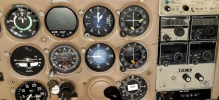
with 1976 avionics
you rang? (yes that's an AV30 matched with those awesome radios)
1747097181422.png
 
I wish I’d flown the $50 an hour T-34s at NAS Whidbey more!
No kidding. I was paying $55/hr wet for a T-41B or T-41C at Peterson AFB in Colorado Springs back in the early 2000's. Unbelievable deal (had I known it at the time) and I was on the cusp of knocking out my Commercial with an eye on CFI when for some stupid reason I decided to switch to Medicine instead of Aviation. If I could go back and punch myself in the head for the decision, I'd do it. Talk about being able to build hours cheaply!
 
I used to be a fan of non profit clubs. Today I can’t say that. Unrealistic budgets, deferred maintenance, lack of preventative maintenance are on the top of the list. Club members who act like renters. Then toss too low of recurrent training requirements for members.
 
clubs are usually split into two groups... the folks that are just passing through (aka time / rating builders) and people who are long term. the former is at the whim of the latter.

my last club had a cap of 200 people with 6 planes. At $250 a month for dues that's $50,000 per month or $600k a year JUST FOR DUES. Rental was $150/hr for a decent 172. We didn't even have hangar space. this was about 4 years ago.

tell me how my dues of $3000 a year benefitted me.

So I will always pass up on a club unless the numbers were sane.
 
Clubs can be a great way to fly. Before my situation supported ownership, I was always on the lookout for a good club.

Back in the day, most military bases with an airfield had a flying club. The few I flew at were all quite well run. Got my PPL at Fort Bragg Flying Club in 1992. I got my Commercial and MEL add on at the Camp LeJeune flying club base
In 1980 I got my Commercial and MEL add on at the Camp Lejeune Flying Club based at MCAS New River.
 
I used to work for a guy who claimed there was absolutely no reason to own your own airplane, as a club would work for everybody.

ME: I’m a rugged individualist, I need my Maule to do what I want where I want when I want.
HIM: You just need to find a group of like-minded rugged individualists.
ME: Did you hear what you just said? :rofl:
 
Back
Top