
"Enter controlled airspace on course .." on IFR clearance

flyzone

Pre-takeoff checklist
Joined
Oct 10, 2014
Messages
116
Display Name
Flyzone
When you receive this as part of a clearance, I'm uncertain as to exactly what they are telling me.

I assume if I'm departing from a non-towered airport they are telling me as I leave Class G to Class E or higher airspace boundaries I have a clearance to enter, but I'm not exactly sure.
 
Generally, this would be for when you are departing an airport underlying an airspace that requires clearance and 2 way radio communication to enter, but that you may not have time after departure to make the radio switch and receive the clearance. They are issuing you the clearance into the airspace and and telling you how they want you to do it so that the overlying controller knows who you are and what you are doing. You still need to make that 2-way radio communication as soon as practicable.
 
Don't read too much into it. Like most uncontrolled airports, you are in Class G at the surface up to 700 AGL. This clearance just means that upon entering controlled airspace (so, climbing through 700 AGL), they want you on a heading of XXX. That's it. It's mostly a traffic flow/control instruction in my experience until radar contact is established.

For example, at one of my local uncontrolled fields, HSD, every IFR clearance includes "enter controlled airspace heading 260", which quite obviously takes you away from the nearby Class D (PWA). Once ATC gets you in radar contact they will send you on course, or whatever else they need to do for traffic.

1751373862747.png
 
I get this clearance on the ground, usually on the phone. I never ask for them in the air. Maybe one day I'll try it but without a modern autopilot taking a clearance and flying a plane is a bit more flying than I like to do. However I'm trying to figure out what kind of clearance they are giving me at that precise point.
 
Don't read too much into it. Like most uncontrolled airports, you are in Class G at the surface up to 700 AGL. This clearance just means that upon entering controlled airspace (so, climbing through 700 AGL), they want you on a heading of XXX. That's it. It's mostly a traffic flow/control instruction in my experience until radar contact is established.

For example, at one of my local uncontrolled fields, HSD, every IFR clearance includes "enter controlled airspace heading 260", which quite obviously takes you away from the nearby Class D (PWA). Once ATC gets you in radar contact they will send you on course, or whatever else they need to do for traffic.

View attachment 142448
OK. This is pretty much what I figured. Tnx. So, they are really telling me what to do as I leave 700'.

I got this once (for the first time) in more complicated overlapping and overhead airspace at an uncontrolled field and it confused me a bit.
 
I get this clearance on the ground, usually on the phone. I never ask for them in the air. Maybe one day I'll try it but without a modern autopilot taking a clearance and flying a plane is a bit more flying than I like to do. However I'm trying to figure out what kind of clearance they are giving me at that precise point.
That is what the two prior posters are talking about. You are not in controlled airspace on the ground. They are clearing you into controlled airspace with a heading, altitude or both. It's a standard instruction.
 
I get this clearance on the ground, usually on the phone. I never ask for them in the air. Maybe one day I'll try it but without a modern autopilot taking a clearance and flying a plane is a bit more flying than I like to do. However I'm trying to figure out what kind of clearance they are giving me at that precise point.
That's typical of getting a clearance on the ground at a non-towered field. I get it at my homebase for every IFR clearance but with a slight variation: "UPON entering controlled airspace, fly heading 090". As stated, this is all just an additional instruction to help you enter and get identified in the NAS. Your clearance to enter the overlying airspace was granted when they said "cleared to" and gave you a release.
 
Simply, ATC can’t “control” you (assign you headings and altitudes) until you are actually IN controlled airspace.


Sent from my iPhone using Tapatalk
 
Russ much nailed it.

I got this a lot where I did my IFR accelerated training since we always departed from an uncontrolled field on an IFR flight plan. Basically they want to know which way you're going to be going when you pop up on their scope, and they don't want you pointed at something that's going to cause a problem if for some reason you don't come up on frequency and get radar identified as quickly as they might need you to. I always liked this because it usually meant once I was on frequency I was probably already aimed the direction or close to the direction they wanted me anyway so it was slightly less workload on climb-out while running checklists. Getting an "on-course upon entering" instruction is a bonus. :)
 
OK. This is helpful. I can see that they are really telling me about is what to avoid and how to do that.
 
I got this once (for the first time) in more complicated overlapping and overhead airspace at an uncontrolled field and it confused me a bit.
That's just means you tried too hard to find complexity in something simple. Sometimes I think "Overcomplication tendency" should be listed as one of the FAA's "hazardous attitudes" :D

OK. This is helpful. I can see that they are really telling me about is what to avoid and how to do that.
Traffic yes, but not necessarily obstacles. Until you hear the words, "radar contact," you are not being vectored and obstacle clearance your responsibility, not theirs.

Part of the reason for the "upon entering controlled airspace" instruction is the definition of "controlled airspace." You've probably noticed that many of the IFR rules in Part 91 talk about "under IFR in controlled airspace." Basically, controlled airspace is airspace where ATC has a right to tell you what to do, Until you get there, ATC can't tell you to do anything.
 
When you receive this as part of a clearance, I'm uncertain as to exactly what they are telling me.

I assume if I'm departing from a non-towered airport they are telling me as I leave Class G to Class E or higher airspace boundaries I have a clearance to enter, but I'm not exactly sure.
You will already have a Clearance in that case, most likely with a Clearance Limit all the way to your Destination. ATC does not have the authority to issue control instructions in Uncontrolled Airspace. That’s why if the give you a heading to fly it cannot apply until in Controlled Airspace. With rare exceptions that will be 700 or 1200 AGL.
 
Maybe one day I'll try it but without a modern autopilot taking a clearance and flying a plane is a bit more flying than I like to do.

You better learn how to do this. It is not unheard of to get a complete re-route in the air.
 
The above is correct, while you can operate IFR in uncontrolled airspace, ATC can not issue you a clearance there. That's why it only becomes effective "upon entering controlled airspace."
 
Bring your best shorthand. As in, going to KFRG you can get anything. And I like to leave a whole 5.5x8" blank so I can scribble LARGE.

("No Sir, you are NOT going to see me barf").
 
This isn’t directly related, but I sometimes get the following exchange, which always makes me smile:

ATC: Skylane 123, say your on-course heading.
Me: 030.
ATC: Skylane 123, maintain heading 030.
Me: Maintaining 030.
 
This isn’t directly related, but I sometimes get the following exchange, which always makes me smile:

ATC: Skylane 123, say your on-course heading.
Me: 030.
ATC: Skylane 123, maintain heading 030.
Me: Maintaining 030.
I get something like that a lot but it’s usually what’s your on course heading to your destination followed by cleared direct XXX.
 
I get something like that a lot but it’s usually what’s your on course heading to your destination followed by cleared direct XXX.
And sometimes it’s not the destination but a remote waypoint in your flight plan. That’s the last one of those I got.

All it is, is the controller having some room to give you a shortcut but not knowing the location because it’s out of their area.

I heard @sarangan’s version more often when pilots were using handhelds for GPS enroute navigation :D
 
You better learn how to do this. It is not unheard of to get a complete re-route in the air.
I've done it. It's just not pretty or pleasant. If I can avoid it by a phone call on the ground, I do.
 
I've done it. It's just not pretty or pleasant. If I can avoid it by a phone call on the ground, I do.
So would everyone if it were possible. But what you pick up on the ground is no guarantee that there won’t be changes in the air. Even an initial “cleared as filed” means nothing.

I generally fly in an area where reroutes are relatively few and my initially cleared route doesn’t often change in the air. But even then it happens from time to time. I recall one where I filed something, got a clearance on the ground that was different, and at first contact with the affected facility, got, “that route doesn’t work. We have an amendment…” If you know the area, some of those are predictable.

And there are busy areas where it happens on a regular basis all the time, even if you file and are initially cleared for a route that has worked before.

Think of the computer as checking what you filed for viability and issuing a clearance that works generally. I don’t think it even knows what kinds of routing LOAs are out there(*). Think of a local change on the ground as what the departure control agency knows about their own area, its LOA with the next facility on your route, and current conditions. But leave that area and think of enroute amendments as being what that works for ATC there.
 
This isn’t directly related, but I sometimes get the following exchange, which always makes me smile:
Roanoke Approach has done this to me on a couple of occasions:

ROA: Naion 5327K, Roanoake Approach. We have a new route for you, advise when ready to copy.
(me get paper and pencil ready).
27K: 27K ready to copy.
ROA: 27K is cleared direct Culpeper (my destination)
27K: I needed to write that down?
That's actually a little bit strange since it was direct to a waypoint already on your flight plan. But those are fun to get. I got that one coming back home from New Jersey this past year. Once southeast of the DC area, I was cleared destination (TTA).
 
ATC: Skylane 123, say your on-course heading.
Me: 030.
ATC: Skylane 123, maintain heading 030.
They are either ensuring that you will not enter airspace that they can't let you enter or ensuring that separation will be maintained with another aircraft. You should stay on that heading, even if it drifts off of direct to your next fix.

And there are busy areas where it happens on a regular basis all the time, even if you file and are initially cleared for a route that has worked before.
I just finished four days of flying. During which, I had three holding patterns, and, on two legs, was assigned four different STARs.
 
They are either ensuring that you will not enter airspace that they can't let you enter or ensuring that separation will be maintained with another aircraft. You should stay on that heading, even if it drifts off of direct to your next fix.
You're reading more into it than necessary. It's simply a serious and formal way of saying, "Where are you going?" "I'm going to X." "Alright, continue to X."
 
You're reading more into it than necessary. It's simply a serious and formal way of saying, "Where are you going?" "I'm going to X." "Alright, continue to X."
True that’s all it might mean to the pilot, but the two are not mutually exclusive. Direct to the ‘X’ ATC doesn’t know might cross remote boundaries your local ATC might not be authorized to send you to or in the way of known departure or arrival routes.
 
Last edited:
You're reading more into it than necessary. It's simply a serious and formal way of saying, "Where are you going?" "I'm going to X." "Alright, continue to X."
Assigning a heading does not mean, "Alright, continue to X".

That would be something like, "Fly heading (heading), direct (fix) when able."
 
That's actually a little bit strange since it was direct to a waypoint already on your flight plan. But those are fun to get. I got that one coming back home from New Jersey this past year. Once southeast of the DC area, I was cleared destination (TTA).

That's nothing. I got direct to my destination after a SID. From Denver to NE Maryland. About 1300 nm direct.
 
When you receive this as part of a clearance, I'm uncertain as to exactly what they are telling me.

I assume if I'm departing from a non-towered airport they are telling me as I leave Class G to Class E or higher airspace boundaries I have a clearance to enter, but I'm not exactly sure.
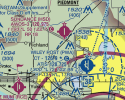
They are expecting (and clearing) you to enter Class E on course heading.
 
Also, they will usually (at least IME) ask for your departure runway when assigning this sort of clearance. Knowing that, plus assigning the vector, gives them a pretty good idea where you will be when you call them in the air. I mention that only because, while not technically illegal, it probably would not be wise to take an indirect route from your departure runway through uncontrolled airspace to the assigned heading unless you have a really good reason to do so. If you told the controller that you are departing runway 9 and they tell you to enter controlled airspace on heading 360, they probably aren't expecting you to pop up 5 miles east of the field on heading 360 because you decided for whatever reason to continue on 090 at 600 feet for two minutes before turning north and climbing into controlled airspace.

(Edited for better example.)
 
Last edited:
For the sake of education of an instrument pilot student, what are some of the clearances y'all are seeing in the northeast? I'm curious.
 
They can't issue you clearances or other instructions in uncontrolled airspace. The clearance and the heading apply for once they are allowed to exercise control.

Other handy things to know about was "I can maintain terrain clearance to altitude XXXX" and other games to get IFR from random points in space.
 
For the sake of education of an instrument pilot student, what are some of the clearances y'all are seeing in the northeast? I'm curious.​
Kinda depends on where you are going. From the south and only to Philly, but this was my filed and cleared route from the Raleigh NC area to PHL.
KLHZ HOUKY T295 SHLBK T224 ENO T224 JIIMS KPHL​
There were no enroute amendments.
 
When doing my instruemnt rating XC I filed what I thought was sensible (bunch of airways). My instructor thought it was reasonable. On picking up my clearance, I got an entirely different route, but I was prepared for that. Shortly after being radar contact, I get a "new route for you, advise when ready to copy." I copy the new route. Hey, this is what I filed originally.
 
Back
Top