
Rene
Line Up and Wait
- Joined
- Jul 5, 2024
- Messages
- 541
- Display Name
- Rene
Or when the Royal Swiss Navy attacked Pearl Harbor?Don't let the truth get in the way of a good story. Wasn't that how they reported the Hindemburg disaster?

Or when the Royal Swiss Navy attacked Pearl Harbor?Don't let the truth get in the way of a good story. Wasn't that how they reported the Hindemburg disaster?

Can you give me the time stamps for the audio involved that indicate this was due to a post-9/11 change, or that a “VIP” was training, or that Larry’s dying mom would be denied that route?What?
It’s all on ATC audio
Ah…aviation safety is all about emotion, not procedures or facts. I understand now.You guys are odd, maybe just imagine it was your wife, or for many here great grandkids on that flight
That would be the traffic in sight partCan you give me the time stamps for the audio involved that indicate this was due to a post-9/11 change, or that a “VIP” was training, or that Larry’s dying mom would be denied that route?
I didn’t think you could.That would be the traffic in sight part
Or even allowing that crap show, flying into a 121 approach path that close would be a hard no if it wasn’t a DC Blackhawk BS route

Well there was a comment earlier about how this route isn’t supposed to be used with 33 arrivals. As bad as the media reports have been, I’d take that with a grain of salt though. It’s possible but I’d think ATC would’ve squashed the route 4 request in a heartbeat if that were true.Well, the training flight went horribly wrong because it was flying a route that took him across final approaches for two runways at a major international airport - hell, I am gonna go out on a limb here and say that these two facts are related.
Yes, these routes do exist and yes indeed ,airline pilots do need to pay attention when landing parallel but my point is that we should be in the business of minimizing risks and having a route like that being accessible to anyone for any reason is the very opposite of minimizing risks.Well there was a comment earlier about how this route isn’t supposed to be used with 33 arrivals. As bad as the media reports have been, I’d take that with a grain of salt though. It’s possible but I’d think ATC would’ve squashed the route 4 request in a heartbeat if that were true.
Simple fact is these routes exist in other places. If everyone is doing what they’re supposed to be doing there isn’t an issue. I will say there isn’t much room for error on the part of the helicopter pilot. But there isn’t much room for error for airline pilots or ATC when running parallel ops either. Austin TRACON proved that just a couple weeks back.
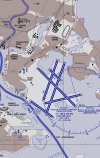
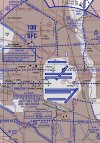
You can see here, Logan’s runs (no pun) right off the departure end. Not much room for error. Heck, O’hare’s makes my head hurt just looking at it. Can’t believe they don’t lose sep there on a regular basis with that maze. The caution listed for “vortex encounter” is pretty applicable when running that close to airline arrivals.
You guys are odd, maybe just imagine it was your wife, or for many here great grandkids on that flight
Maintaining visual separation didn't allow the helicopter pilots to go off route and bust altitude. That's unless they were avoiding traffic. These pilots weren't avoiding anything because they were likely looking at / 'avoiding' the wrong plane that was further away.The aircraft were not being separated by altitude. In no situation would a helicopter be allowed to fly under an airplane landing on 33 at that position based on the helicopter staying at, or below, 200'. The separation standard being applied was visual separation.
Yes. Or a police helicopter, or a medivac helicopter, etc.
The Metro already goes to IAD.
The interwebs make the information about them much more available and causes the news to spread quickly.

I have no idea what you're saying.Yeah no, medevac flying your dying mom would be denied the routes those baclhawks flew
They would also deny fixed wing into that airport
How wide is the helicopter route?Maintaining visual separation didn't allow the helicopter pilots to go off route and bust altitude. That's unless they were avoiding traffic.

Yes, these routes do exist and yes indeed ,airline pilots do need to pay attention when landing parallel but my point is that we should be in the business of minimizing risks and having a route like that being accessible to anyone for any reason is the very opposite of minimizing risks.
A flight carrying “Larry’s dying mom” ( as somebody mentioned in one of the posts ) would have represent a risk worth taking but a military training flight taking the same route should classify as unnecessary and reckless.
The route hugs the eastern edge of the Potomac. For some reason, that helicopter was a little west and gained about 150' of altitude right before impact. Watch Blanco Lirio for confirmation of that.How wide is the helicopter route?
What is the precision of the Mode-C reporting?
Do your night training when there are no passenger jets landing.How would you train a pilot to fly the route without flying the route? Or check their proficiency? I believe this flight was a proficiency check and if so, I would guess it will be scored as “Fail.”

I agree and am confused. It seems like everyone here and on TV are saying the Helo route was 200 or below. Yet the PAT25 was well above that for the crash and leading up to it.How would you train a pilot to fly the route without flying the route? Or check their proficiency? I believe this flight was a proficiency check and if so, I would guess it will be scored as “Fail.”

It seems like everyone here and on TV are saying the Helo route was 200 or below. Yet the PAT25 was well above that for the crash and leading up to it.
Maybe they were concerned, so climbed above it? Emergency authority and all that?Apparently no one in the PAT 25 was concerned about wake turbulence from the jet.
 Might not have seen the correct jet or misjudged closing rate. Or another one of those optical illusion scenarios like this one: https://en.wikipedia.org/wiki/1965_Carmel_mid-air_collision
And when are they supposed to do that? They’ve got quiet hour / noise abatement rules, fuel restriction times in effect at Davison AAF. They’ve got to get off at a decent time to get back before those restrictions are in place.Do your night training when there are no passenger jets landing.
For some reason, that helicopter was a little west and gained about 150' of altitude right before impact. Watch Blanco Lirio for confirmation of that.
Which was my point earlier. Maintaining visual separation is a fallacy. Especially at night. It's not the first time it's gone horribly wrong. Sure there's seemingly other factors in play. But 150 foot visual separation at night is playing a 110 knot game of chicken.There are at least a couple visual illusions, potentially combined, that I can think of which might have contributed to this. Seems bizarre to any of us not in the situation, but the eyes are powerful in the brain hierarchy, and they fool us frequently at night. Just determining aspect, or track crossing rate, can be challenging in a saturated lighting scenario. Some non-sensical course/altitude corrections could have been the result of that entirely.

An RJ on final for 01 in front of the mishap aircraft was asked if they would accept a visual for 33, and the reply was "unable." ATC immediately cleared them to land on 01.RJ from what I heard was asked to circle to 33. I suppose they were planning rwy1. Could the RJ refuse the circle 33 and insist on a rwy 1 approach? If yes then we wouldn't be talking about this.

100% Agree on the understaffing and night time issues. I could be wrong, but I understand TCAS is silenced below 500ft.When pretty much every facility in the NAS is understaffed, aircraft aren't equipped with TCAS and/or ADS-B, you're down to visual separation and it's nighttime... Well, there's the holes in the swiss cheese lining up.
It appears PAT25 didn't know the CRJ was going to turn to the runway? CRJ turns into the path of the Blackhawk because it's on a procedure to land. The Blackhawk, responsible for separation, misses that or..???
Blackhawk didn't know the CRJ was going to the airport?
View attachment 137606
The controller told PAT25 "PAT 25, traffic just south of the Woodrow Bridge, a CRJ, it's 1200 feet setting up for runway 33."Is ATC obligated to inform PAT25 of the runway change? Especially if there are more urgent calls to be made in such busy airspace?
Either way, I was taught visual separation means sufficient distance to avoid an aircraft, anticipating that they may change heading or altitude at any time. Not to assume that they are going to continue doing what they were last instructed to do or what I think they are going to do. Once ATC clears visual separation, I shouldn’t rely on them to tell me what I need to do or to relay information necessary for separation. That’s my job.
Don’t care about noise restriction at Davidson AF or if Davidson AF even exists.And when are they supposed to do that? They’ve got quiet hour / noise abatement rules, fuel restriction times in effect at Davison AAF. They’ve got to get off at a decent time to get back before those restrictions are in place.

It's not a "controller on duty" ATC issue, it's a systemic ATC issue with the procedures that seem to be in place that put traffic in close proximity in this particular area.I’m in the ATC issue camp right now.
However, if the Blackhawk reported the wrong a/c in sight, that matters.
Pendulum swinging back, reporting the wrong a/c in sight, especially at night, isn’t even unusual.
This is an ATC issue.
It's very easy to spot traffic at night if it's near or above your altitude. It's much harder to spot if it's mixed in with a billion city lights, unless there's relative motion. In the case of a mid-air about to happen, there's no relative motion.well, I'm questioning this, as a general statement. I regularly fly around the CLT bravo at night and I can see a gazillion planes that I would NEVER be able to spot during the day. however, I'm usually at 3k', I can't say I've ever flown at 400' around a metro area, I have to imagine it's a much, much different viewpoint. but to say it's hard to spot traffic at night, I've always had the opposite opinion.
Agreed.#1 - how do you have visual separation at night in a congested airspace? That is insanity. Pilot looked at wrong airplane in my opinion.
Again, I don't view this as "lazy" on the part of the controllers. It's a procedure that appears to be in constant use, and I'm sure it isn't something that was made up on the fly. I'd love to see what the LOA binder in DCA tower has in it.#2 - ATC is at fault and got lazy. Due the constant flights to Reagan and mixing helicopters, the Swiss Cheese holes lined up again.


The "jinking" is most likely an artefact of the not-very-accurate MLAT positioning system that sites like Flightaware use to track non-ADS-B flights like the helicopter, rather than being reflective of the physical reality.I just watched Hoover’s Pilot Debrief video. As a controller for almost 33 years and counting, I can’t remember the hundreds of times I’ve looked out the window and asked, “what the hell is he doing?” Most the time it’s a helicopter. I see a lot of jinking back and forth on the replay flight of Pat25 moments before impact. It seems to me that the pilots told the tower they had the RJ in sight long before they should have. As a controller we don’t often question pilots if they say they have someone in sight, we take them at their word. When the last time you ever heard a controller ask “are you sure?”? There is very little time to second guess pilots. The jinking right and left indicates to me that they were trying to find the RJ because they had either lost sight of it or didn’t actually see it in the first place. One rule I’ve adopted and accepted as a controller is, “you can’t fly it for ‘em”.
Who ignored it?I agree and am confused. It seems like everyone here and on TV are saying the Helo route was 200 or below. Yet the PAT25 was well above that for the crash and leading up to it.
I'm a simple VFR pilot but anytime I was on a proficiency check I would get a smack for busting altitude. Mostly because I'm usually under one of 2 Class B airspaces.
Is this typical behavior to ignore that type of error?

Why are you so obsessed with the VIP thing? This was not a VIP flight, there were no VIPs on board. Assuming it was correctly reported as a proficiency check flight, it was probably a standard Army currency requirement for chopper pilots; this one just happened to be in a squadron that often carries VIPs.If it’s going to get me killed so a “VIP” can get his training done, I sure as hell will
Well, this one certainly got a "smack"... (Too soon?)I'm a simple VFR pilot but anytime I was on a proficiency check I would get a smack for busting altitude.

I see it as there were a bunch of levels of safety in the system, and because of one reason or another they were not effective at the time of the crash.It's almost as if the universe decided this was going to happen and there wasn't anything anyone could do to stop it.
Serious questions here.Yeah no, medevac flying your dying mom would be denied the routes those baclhawks flew
They would also deny fixed wing into that airport
This has not been confirmed beyond people like you saying it to be true. Do you have any actual authoritative source showing this to be true?RW33 and the heli route were not to be used at the same time.

In today's world, we are nearly to the point where looking at the screen would be a better use of time. Sort of like when backup cameras in cars started showing up; people complained they weren't as good as your head on a swivel. But overall, they are vastly superior, and supply most of the information needed.I figured that they probably had ADS-B-OUT because the ground track information was available almost immediately after the accident from the flight tracking sites.
That MIGHT be true when they do what they’re supposed to, but polishing backup camera lenses every time you get in the car takes way more time than putting your head on a swivel.In today's world, we are nearly to the point where looking at the screen would be a better use of time. Sort of like when backup cameras in cars started showing up; people complained they weren't as good as your head on a swivel. But overall, they are vastly superior, and supply most of the information needed.


Does anyone know what the latency is between the appearance of an ads-b target on a screen and the actual relative position of the target aircraft?
